


BJP scripts history in Kerala as 86-year-old Rajagopal wins Nemom Seat

[email protected] (CD Network)
May 19, 2016

Thiruvananthapuram, May 19: Scripting a new chapter for the BJP in Kerala, party veteran and former union minister O Rajagopal today won from Nemom constituency here to help the party make its debut in the state assembly.
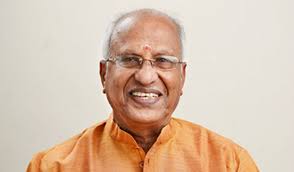
rajagopalanNemom was one of the segments where the BJP had pinned its hope the most in the present election to open its account in the Assembly.

86-year-old Rajagopal, who had lost by a narrow margin in previous Lok Sabha and Assembly elections, wrested Nemom from sitting MLA and vibrant CPI(M)-LDF leader V Sivankutty defeating him by 8,671 votes

When many of his party colleagues were trailing, Rajagopal, former Union Minister in the A B Vajpayee government, maintained a clear lead since the beginning itself.

The historic victory is a sweet revenge for Rajagopal, as he had lost in the constituency in a photo finish to Sivankutty in the 2011 assembly polls.

Garnering 43,661 votes, he had come second to Sivankutty last time. He had also garnered 50,076 votes in Nemom against Congress's Shashi Tharoor who got 32,639 in the last Lok Sabha elections.

In the last civic polls, of the total 22 wards in Nemom, BJP and LDF got nine seats each and UDF four.

Born on September 15, 1929 to Madhavan Nair and O Kunhikkavu Amma at Pudukkod Panchayath in Palakkad district, he completed Law graduation in Chennai and began practicing law in 1956 at the Palakkad District Court.

In 1980, the Janata Party split and the Bharatiya Janata Party (BJP) was formed and he served as its Kerala president until 1985. He became All India Secretary, General Secretary, and the Vice President of BJP and was elected in 1992 and 1998 to the Rajya Sabha from Madhya Pradesh.

In the year 1999, he became the Minister of State in the Ministry of Law, Justice and Company Affairs and Minister of State in the Ministry of Parliamentary Affairs and then became the Minister of State in the Ministry of Railways between 2000 and 2002.

He later held the positions of Minister of State in the Ministry of Urban Development and Poverty Alleviation, Minister of State in the Ministry of Defence and Minister of State in the Ministry of Parliamentary Affairs.

Having fought several assembly and parliamentary elections from various constituencies in Kerala, Rajagopal had finally managed to win a seat.

Also Read :

After defeat BJP workers turn violent across Kasaragod; CPI MLA attacked

No major surprise in Kasaragod district: Muslim League 2, CPI(M) 2, CPI 1

CPI(M) worker killed in a bomb attack in Kannur amid LDF victory celebrations

Thanks for all the love... It's just a beginning, says Sreesanth after defeat

LDF regains power in Kerala, BJP opens account; CPI(M) focuses on finalising CM

Abdul Razak retains Manjeshwar; BJP loses by 89 votes

No Modi wave in Kasaragod: Muslim League's Nellikkunnu defeats Thantri

Comments

Rikaz
 - 
Thursday, 19 May 2016

Congratulations! Great job!

Ahmed
 - 
Thursday, 19 May 2016

In happy this person may have heart attack thus BJP loose again.

HARRIS
 - 
Thursday, 19 May 2016

FINALLY THIS GREAT POLITICIAN WON HIS LAST BATTLE ...A SALUTE
THIS MOST PROMINENTAND CLEAN POLITICAL PERSONALITY IN BJP, HE IS EDUCATED AND EXPERIANSED NON CONTROVERSIAL POLITICIAN OF DECADES HOPE HE WILL DO HIS BEST ...JAI RAJ GOPAL

\EVERY FAILURE WILL BRING A TASTE OF SUCCESS \""

Kanthappa Chen…
 - 
Thursday, 19 May 2016

This time Modi compared kerala with SOMALIA and fool keralies rewarded him with 1 Seat.
Next time he will compare with BANGALI and same people will reward him with 10 seat.

Jai Somalia Jai ho Somalies.

Add new comment

  • Coastaldigest.com reserves the right to delete or block any comments.
  • Coastaldigset.com is not responsible for its readers’ comments.
  • Comments that are abusive, incendiary or irrelevant are strictly prohibited.
  • Please use a genuine email ID and provide your name to avoid reject.
News Network
April 10,2020

Kasaragod, Apr 10: The death of five cats in the general hospital-turned-Covid-19 isolation centre here recently has evoked a little bit of scare among the health authorities who are eagerly awaiting the viscera test results of the dead animals.

The death of the cats has evoked anxiety in the backdrop of a tiger in a zoo in United States tested positive for Covid-19 recently.

It was recently that the hospital authorities had noticed the death of the cats, which include two male and a female adult and two kittens, were long been seen in and around the hospital compound.

Comments

Add new comment

  • Coastaldigest.com reserves the right to delete or block any comments.
  • Coastaldigset.com is not responsible for its readers’ comments.
  • Comments that are abusive, incendiary or irrelevant are strictly prohibited.
  • Please use a genuine email ID and provide your name to avoid reject.
coastaldigest.com web desk
June 25,2020

Bengaluru, Jun 25: In the wake of unexpected surge in the coronavirus positive cases in Bengaluru, the special task force team assigned with the task of creating Covid Care Centres (CCC) has made elaborate arrangements the Haj Bhavan.

Civic authorities have already shifted around 50 Covid-19 patients to Haj Bhavan. 

BBMP Commissioner B H Anil Kumar said on Thursday that due to an increase in the number of cases and due to shortage of beds in hospitals, the Haj Bhavan has been converted into CCC.

Headed by Rajendar Kumar Kataria, Secretary, Horticulture and Sericulture department, the CCC task force has arranged 400 beds at Haj Bhavan. 

“The facility at Haj Bhavan has already been made operational. Doctors, nurses, paramedical and house-keeping staff from BBMP have been deployed as per SOPs. All essential equipment, medicines and other facilities have been made available in adequate numbers at the Haj Bhavan,” Kataria explained.

In the second phase, the task force team has identified hostel rooms of seven engineering colleges, which would fetch about 3,200 beds to house asymptomatic Covid-19 patients. 

If need arises, the task team in the third and final phase, will consider the facilities such as Palace Grounds, Bengaluru International Exhibition Centre, Indoor Stadiums at Kanteerava and Koramangala to be converted as CCC.

Comments

Add new comment

  • Coastaldigest.com reserves the right to delete or block any comments.
  • Coastaldigset.com is not responsible for its readers’ comments.
  • Comments that are abusive, incendiary or irrelevant are strictly prohibited.
  • Please use a genuine email ID and provide your name to avoid reject.
Agencies
May 8,2020

Washington D.C., May 8: The prime time for brain development in a child's life is the first year, where the infant spends most of the time asleep. It is the time when neural connections form and sensory memories are encoded.

However, when sleep is disrupted, as occurs more often among children with autism, brain development may be affected, too.

New research led by the University of Washington finds that sleep problems in a baby's first 12 months may not only precede an autism diagnosis but also may be associated with altered growth trajectory in a key part of the brain, the hippocampus.

The study, which was published in the American Journal of Psychiatry, researchers report that in a sample of more than 400 taken of 6- to 12-month-old infants, those who were later diagnosed with autism were more likely to have had difficulty falling asleep.

It also states that this sleep difficulty was associated with altered growth trajectories in the hippocampus.

"The hippocampus is critical for learning and memory, and changes in the size of the hippocampus have been associated with poor sleep in adults and older children.

As many as 80 per cent of the children with autism spectrum disorder have sleep problems," said Annette Estes, director of the UW Autism Center and senior author of the study.

"In our clinical experience, parents have a lot of concerns about their children's sleep, and in our work on early autism intervention, we observed that sleep problems were holding children and families back," added Estes, who is also a UW professor of speech and hearing sciences.

"It could be that altered sleep is part-and-parcel of autism for some children. One clue is that behavioural interventions to improve sleep don't work for all children with autism, even when their parents are doing everything just right. This suggests that there may be a biological component to sleep problems for some children with autism," said Estes.

To consider links among sleep, brain development, and autism, researchers at the IBIS Network looked at MRI scans of 432 infants, surveyed parents about sleep patterns, and measured cognitive functioning using a standardized assessment.

At the outset of the study, infants were classified according to their risk for developing autism: Those who were at higher risk of developing autism -- about two-thirds of the study sample -- had an older sibling who had already been diagnosed.

Infant siblings of children with autism have a 20 per cent chance of developing autism spectrum disorder -- a much higher risk than children in the general population.

In the current study, 127 of the 432 infants were identified as "low risk" at the time the MRI scans were taken because they had no family history of autism.

They later evaluated all the participants at 24 months of age to determine whether they had developed autism. Of the roughly 300 children originally considered "high familial risk," 71 were diagnosed with autism spectrum disorder at that age.

Problems with sleep were more common among the infants later diagnosed with an autism spectrum disorder, as were larger hippocampi. No other subcortical brain structures were affected, including the amygdala, which is responsible for certain emotions and aspects of memory, or the thalamus, a signal transmitter from the spinal cord to the cerebral cortex.

The authors note that while parents reported more sleep difficulties among infants who developed autism compared to those who did not, the differences were very subtle and only observed when looking at group averages across hundreds of infants.

Sleep patterns in the first years of life change rapidly as infants transition from sleeping around the clock to a more adult-like sleep/wake cycle. Until further research is completed, Estes said, it is not possible to interpret challenges with sleep as an early sign of increased risk for autism.

Comments

Add new comment

  • Coastaldigest.com reserves the right to delete or block any comments.
  • Coastaldigset.com is not responsible for its readers’ comments.
  • Comments that are abusive, incendiary or irrelevant are strictly prohibited.
  • Please use a genuine email ID and provide your name to avoid reject.