


Black money: SIT asks agencies to share data on ongoing case

June 29, 2014

New Delhi, Jun 29: The Special Investigation Team (SIT) on black money has sought details of all major cases of tax evasion and criminal financial fraud being probed by various investigative agencies which are mandated to keep a check on such instances.
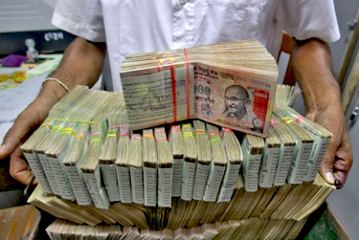
Black moneySources said that the SIT headed by retired Supreme Court Justice M B Shah has asked the 11 departments on its panel to furnish fine details of these cases and the status of their probes, including any problems being faced by investigators in taking the cases forward for prosecution or penalty.

The member departments/agencies of SIT are the Department of Revenue (under the Ministry of Finance), RBI, Intelligence Bureau, Enforcement Directorate, CBI, Income Tax department, Narcotics Control Bureau, Directorate of Revenue Intelligence, Financial Intelligence Unit, Research and Analysis Wing and the Foreign Tax and Tax Research wing under the Central Board of Direct Taxes (CBDT).

The sources said the SIT has asked for the data in order to understand the trends and magnitude of the menace of black money and generation of illegal funds in the country, which is done through a variety of ways like evasion of taxes and duties, flouting of foreign exchange laws, creation of disproportionate assets, creation of 'benami' properties within the country and outside and laundering of wealth obtained through illegal and corrupt means.

The departments, they said, are in the process of submitting these details in the stipulated format to SIT and these will be taken up during the next meeting of the panel, expected to take place some time next month.

RBI has recently directed all banks and financial institutions to provide the information and documents sought by the high-profile panel.

The SIT, formed upon the directions of Supreme Court, had its first meeting earlier this month here at the North Block office of the Finance Ministry.

The high-level team has also decided to look into the contentious issue of secrecy clauses in India's tax treaties with Switzerland and other countries.

Retired apex court judge Arijit Pasayat is the Vice Chairman of the SIT while top officials of the 11 high-profile agencies and departments are its members.

After the first meeting of the SIT, the government had said the detailed modalities of proceeding further with the Supreme Court mandate were discussed and the road map decided.

The SIT's mandate, as notified, requires it to go into "all issues relating to matters concerning and arising from unaccounted monies of Hasan Ali Khan and Kashinath Tapariah".

Pune-based Khan, a stud farm owner, was arrested by Enforcement Directorate in connection with money laundering and tax evasion cases. Tapariah is his aide.

The other tasks of SIT include all investigations already started and pending or awaiting to be initiated with respect to any other known instances of the stashing away of unaccounted cash in foreign bank accounts by Indians or other entities operating in India.

The panel has also been empowered "to further investigate even where charge-sheets have been previously filed and SIT may register further cases and conduct appropriate investigations and initiate proceedings for the purpose of bringing back unaccounted monies unlawfully kept in bank accounts abroad."

The SIT will also keep the apex court informed about all major developments by filing periodic status reports in this regard, the government notification had said.

Comments

Add new comment

  • Coastaldigest.com reserves the right to delete or block any comments.
  • Coastaldigset.com is not responsible for its readers’ comments.
  • Comments that are abusive, incendiary or irrelevant are strictly prohibited.
  • Please use a genuine email ID and provide your name to avoid reject.
Agencies
February 8,2020

New Delhi, Feb 8: A 26-year-old woman sub-inspector (SI) of the Delhi Police was shot dead near Rohini East Metro station on Friday night, officials said.

The SI, Preeti Ahlawat, was posted in Patparganj Industrial Area Police Station, police said.

A call about the incident was received around 9.30 pm, they said, adding she received gunshot wounds on her head.

"We have identified the suspects and CCTV footage of the area has been collected," said SD Mishra, Additional Commissioner of Police (Rohini).

Three empty cartridges were found from the spot, the officer said, adding a case has been registered and a probe is on.

Personal enmity is suspected to be the reason behind the killing, the officer said.

Ahlawat joined the Delhi Police in 2018.

Comments

Add new comment

  • Coastaldigest.com reserves the right to delete or block any comments.
  • Coastaldigset.com is not responsible for its readers’ comments.
  • Comments that are abusive, incendiary or irrelevant are strictly prohibited.
  • Please use a genuine email ID and provide your name to avoid reject.
Agencies
June 29,2020

From March through May, around 1 crore migrant workers fled India’s megacities, afraid to be unemployed, hungry and far from family during the world’s biggest anti-Covid-19 lockdown.

Now, as Asia’s third-largest economy slowly reopens, the effects of that massive relocation are rippling across the country. Urban industries don’t have enough workers to get back to capacity, and rural states worry that without the flow of remittances from the city, already poor families will be even worse off -- and a bigger strain on state coffers.

Meanwhile, migrant workers aren’t expected to return to the cities as long as the virus is spreading and work is uncertain. States are rolling out stimulus programs, but India’s economy is hurtling for its first contraction in more than 40 years, and without enough jobs, a volatile political climate gets more so.

“This will be a huge economic shock, especially for households of short-term, cyclical migrants, who tend to come from vulnerable, poor and low-caste and tribal backgrounds,” said Varun Aggarwal, a founder of India Migration Now, a research and advocacy group based in Mumbai.

In the first 15 days of India’s lockdown, domestic remittances dropped by 90%, according to Rishi Gupta, chief executive officer of Mumbai-based Fino Paytech Ltd., which operates the country’s biggest payments bank.

By the end of May, remittances were back to around 1750 rupees ($23), about half the pre-Covid average. Gupta’s not sure how soon it’ll fully recover. “Migrants are in no hurry to come back,” Gupta said. “They’re saying that they’re not thinking of going back at all.”

If workers stay in their home states long term, policymakers will have more than remittances to worry about. If consumption falls and the new surplus of labor drives wages down, Agarwal said, “there will also be a second-order shock to the local economy. Overall, not looking good.”

India announced a $277 billion stimulus package in May and followed it up with a $7 billion program aimed at creating jobs for 125 days for migrants in villages across 116 districts. Separately, local authorities are also looking for solutions.

Officials in Bihar have identified 2,500 acres of land that could be made available to investors, said Sushil Modi, deputy chief minister of Bihar, a state in east India. “We can use this crisis as an opportunity to speed up reforms,” he said.

The investors haven’t materialised yet, and in the meanwhile, state governments are relying on the national cash-for-work program that guarantees 100 days worth of wages per household.

Skilled workers don’t want to do manual labor offered through the program, and even if they did, says Amitabh Kundu of RIS, many think of it as beneath their station. “There will be an increase in social tensions,” he predicts. “Caste may again start playing a role. It’s absolute chaos.”

For skilled workers, initiatives vary:

* Uttar Pradesh, which received 3.2 million people, is compiling lists of skilled workers who need employment and trying to place them with local manufacturing and real estate industry associations. So far, the government says, it’s placed 300,000 people with construction and real estate firms.

* Bihar has placed returners in state-run infrastructure projects and hired others to stitch uniforms and make furniture for government-run schools, even as they waited in quarantine centres, said Pratyay Amrit, head of the state’s disaster management department.

* The eastern state of Odisha announced an urban wage employment program aimed at putting as many as 450,000 day labourers to work through September. Some 25,000 people have been employed, so far, under the scheme, G. Mathivathanan, principal secretary for housing and urban development said.

Attracting Investments

It’s not clear any of this will be enough to make a dent, says Ravi Srivastava, professor at New Delhi-based Institute of Human Development, adding that the states don’t have much of a track record on economic development.

“It was the failure of these states to improve governance and put development plans in place that led to the out-migration in the first place,” he said.

But officials and workers’ rights advocates see opportunity. Uttar Pradesh has established liaisons to encourage companies from the US, Japan and South Korea to establish manufacturing in the state. There and in Madhya Pradesh and Rajasthan, the government has made labour laws more friendly to employers, making it easier to hire and fire workers.

Modi, the minister from Bihar, said the migration may also give workers--historically a disenfranchised group--new power, particularly as urban centres struggle. “The way industries treated workers during the lockdown -- didn’t pay them, the living conditions were poor -- now these industries will realize the value of this force,” Modi said.

“In the days to come, labour will emerge as a force that can’t be ignored anymore,” he added. “That’s the new normal. We will work out how to ensure dignity, rights to our people who are going to work in other states.”

Bihar is due for elections by November, a vote that could be an early test of the mass migration’s political consequences. The state is currently governed by a coalition that includes Prime Minister Narendra Modi’s Bharatiya Janata Party. Amitabh Kundu, a fellow at the Research and Information System for Developing Countries, a New Delhi-based government think-tank, said migrant workers are likely to be angry voters.

“Chief ministers are telling these migrants that they will not have to go back for work,” he said. “But their capacity to do something miraculous in the next four to five months is doubtful. If they can retain even one-fourth of the migrants, I would call it a success.”

Comments

Add new comment

  • Coastaldigest.com reserves the right to delete or block any comments.
  • Coastaldigset.com is not responsible for its readers’ comments.
  • Comments that are abusive, incendiary or irrelevant are strictly prohibited.
  • Please use a genuine email ID and provide your name to avoid reject.
Agencies
July 1,2020

Sopore, Jammu And Kashmir: A three-year-old boy survived as his grandfather was killed in a terror attack on the Central Reserve Police Force (CRPF) in Jammu and Kashmir's Sopore town this morning. A CRPF jawan was also killed in the line of duty as terrorists opened fire on a patrol team.

In heart-wrenching images, the child is seen sitting on the blood-splattered body of his grandfather, a civilian caught in the crossfire. The boy was numb with fear when he was picked up by policemen, according to the police.

The Kashmir police also tweeted a photo of the child being carried to safety by a policeman.

"Jammu and Kashmir police rescued a three-year-old boy from getting hit by bullets during the terrorist attack in Sopore," said the tweet by the Kashmir Zone Police.

The child was travelling in a Maruti car with his grandfather from Srinagar to Handwara when it was hit by a spray of bullets in Sopore town, which is in Baramulla district about 50 km from Srinagar.

The police said terrorists hiding in a mosque fired indiscriminately at the patrol team as it was getting off a bus. The CRPF troops retaliated but the terrorists managed to escape.

According to the CRPF, the grandfather stopped the car and got out to run to a safe spot but was shot dead in the firing by terrorists. The boy was later rescued by a policeman standing nearby.

Last week, a six-year-old boy was killed during a terror attack on the CRPF in Anantnag.

Little Nihaan Bhat was sleeping in a parked car when he was hit by a bullet. Police say the terrorist was on a bike and opened fire from a pistol on a CRPF patrol. One jawan was killed. The child's killing drew widespread anger and condemnation.

The terrorist believed to be involved in the Anantnag attack escaped yesterday after an encounter with security forces. Police said two other terrorists who were hiding with him at a village were killed.

Comments

Add new comment

  • Coastaldigest.com reserves the right to delete or block any comments.
  • Coastaldigset.com is not responsible for its readers’ comments.
  • Comments that are abusive, incendiary or irrelevant are strictly prohibited.
  • Please use a genuine email ID and provide your name to avoid reject.