


Black money: SIT asks agencies to share data on ongoing case

June 29, 2014

New Delhi, Jun 29: The Special Investigation Team (SIT) on black money has sought details of all major cases of tax evasion and criminal financial fraud being probed by various investigative agencies which are mandated to keep a check on such instances.
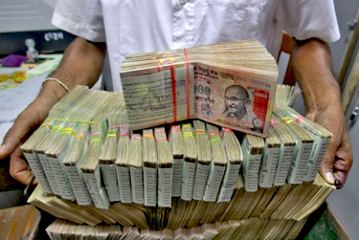
Black moneySources said that the SIT headed by retired Supreme Court Justice M B Shah has asked the 11 departments on its panel to furnish fine details of these cases and the status of their probes, including any problems being faced by investigators in taking the cases forward for prosecution or penalty.

The member departments/agencies of SIT are the Department of Revenue (under the Ministry of Finance), RBI, Intelligence Bureau, Enforcement Directorate, CBI, Income Tax department, Narcotics Control Bureau, Directorate of Revenue Intelligence, Financial Intelligence Unit, Research and Analysis Wing and the Foreign Tax and Tax Research wing under the Central Board of Direct Taxes (CBDT).

The sources said the SIT has asked for the data in order to understand the trends and magnitude of the menace of black money and generation of illegal funds in the country, which is done through a variety of ways like evasion of taxes and duties, flouting of foreign exchange laws, creation of disproportionate assets, creation of 'benami' properties within the country and outside and laundering of wealth obtained through illegal and corrupt means.

The departments, they said, are in the process of submitting these details in the stipulated format to SIT and these will be taken up during the next meeting of the panel, expected to take place some time next month.

RBI has recently directed all banks and financial institutions to provide the information and documents sought by the high-profile panel.

The SIT, formed upon the directions of Supreme Court, had its first meeting earlier this month here at the North Block office of the Finance Ministry.

The high-level team has also decided to look into the contentious issue of secrecy clauses in India's tax treaties with Switzerland and other countries.

Retired apex court judge Arijit Pasayat is the Vice Chairman of the SIT while top officials of the 11 high-profile agencies and departments are its members.

After the first meeting of the SIT, the government had said the detailed modalities of proceeding further with the Supreme Court mandate were discussed and the road map decided.

The SIT's mandate, as notified, requires it to go into "all issues relating to matters concerning and arising from unaccounted monies of Hasan Ali Khan and Kashinath Tapariah".

Pune-based Khan, a stud farm owner, was arrested by Enforcement Directorate in connection with money laundering and tax evasion cases. Tapariah is his aide.

The other tasks of SIT include all investigations already started and pending or awaiting to be initiated with respect to any other known instances of the stashing away of unaccounted cash in foreign bank accounts by Indians or other entities operating in India.

The panel has also been empowered "to further investigate even where charge-sheets have been previously filed and SIT may register further cases and conduct appropriate investigations and initiate proceedings for the purpose of bringing back unaccounted monies unlawfully kept in bank accounts abroad."

The SIT will also keep the apex court informed about all major developments by filing periodic status reports in this regard, the government notification had said.

Comments

Add new comment

  • Coastaldigest.com reserves the right to delete or block any comments.
  • Coastaldigset.com is not responsible for its readers’ comments.
  • Comments that are abusive, incendiary or irrelevant are strictly prohibited.
  • Please use a genuine email ID and provide your name to avoid reject.
News Network
May 27,2020

New Delhi, May 27: Professor Johan Giesecke of the Karolinska Institute, Sweden, on Wednesday claimed that India will ruin its economy very quickly if it had a severe lockdown.

Claiming that a strict lockdown may disrupt India's economic growth, Giesecke during an interaction with Congress leader Rahul Gandhi said: "In India, you will do more harm than good with strict lockdown measures. India will ruin its economy very quickly if it had a severe lockdown."

While calling for a soft lockdown approach in India, he suggested that India has to ease restrictions one by one. It may, however, take months to completely come out of lockdown, he said.

He further criticised countries across the globe for having no post-lockdown strategy.

Emphasising on the disease, the Swedish health expert said that coronavirus is spreading like a wildfire across the world. "It is a very mild disease. Ninety-nine per cent infected people will have very less or no symptoms," he added.

Meanwhile, Ashish Jha, Director Harvard Global Health Institute and a recognised public health official, in interaction with Gandhi, called for a need to go in for an 'aggressive' COVID-19 testing to create confidence among people.

"When the economy is opened post-lockdown, you have to create confidence. There is a need for aggressive testing strategy in high-risk areas," he said.

He asserted that COVID-19 is not the last pandemic in the world, adding that "We are entering the age of large pandemics".

Jha further said that countries like South Korea, Taiwan and Hong Kong have responded the best to COVID-19 pandemic, while Italy, Spain, the US and the UK have responded the worst.

A few days ago, the Gandhi scion had interacted with former Reserve Bank of India Governor Raghuram Rajan and Nobel Prize Winner Abhijit Banerjee to discuss various issues related to the COVID-19 crisis.

Comments

Add new comment

  • Coastaldigest.com reserves the right to delete or block any comments.
  • Coastaldigset.com is not responsible for its readers’ comments.
  • Comments that are abusive, incendiary or irrelevant are strictly prohibited.
  • Please use a genuine email ID and provide your name to avoid reject.
Agencies
January 21,2020

New Delhi, Jan 21: With the IMF lowering India's economic growth estimate for the current fiscal to 4.8 per cent, senior Congress leader P Chidambaram on Tuesday claimed an attack on the world body and its chief economist Gita Gopinath by government ministers was imminent.

He also alleged that the growth figure of 4.8 per cent given by the International Monetary Fund (IMF) is after some "window dressing" and he won't be surprised if it goes even lower.

"Reality check from IMF. Growth in 2019-20 will be BELOW 5 per cent at 4.8 per cent," Chidambaram said in a series of tweets.

"Even the 4.8 per cent is after some window dressing. I will not be surprised if it goes even lower," the former finance minister said.

IMF Chief Economist Gopinath was one of the first to denounce demonetisation, he noted.

"I suppose we must prepare ourselves for an attack by government ministers on the IMF and Dr Gita Gopinath," Chidambaram said.

The IMF lowered India's economic growth estimate for the current fiscal to 4.8 per cent and listed the country's much lower-than-expected GDP numbers as the single biggest drag on its global growth forecast for two years.

In October, the IMF had pegged India economic growth at 6.1 per cent for 2019.

Listing decline in rural demand growth and an overall credit sluggishness for lowering of India forecasts, Gopinath, however, had said the growth momentum should improve next year due to factors like positive impact of corporate tax rate reduction.

Comments

Add new comment

  • Coastaldigest.com reserves the right to delete or block any comments.
  • Coastaldigset.com is not responsible for its readers’ comments.
  • Comments that are abusive, incendiary or irrelevant are strictly prohibited.
  • Please use a genuine email ID and provide your name to avoid reject.
News Network
July 18,2020

New Delhi, Jul 18: The Covid-19 lockdown-led reduction in air pollution levels across five Indian cities, including Delhi and Mumbai, may have prevented about 630 premature deaths, and saved USD 690 million in health costs in the country, according to a new study.

Scientists, including those from the University of Surrey in the UK, assessed the levels of harmful fine particulate matter (PM2.5) from vehicles and other sources in five Indian cities -- Delhi, Mumbai, Kolkata, Chennai and Hyderabad -- since the beginning of the lockdown period.

The study, published in the journal Sustainable Cities and Society, compared these lockdown PM2.5 figures from 25 March up until 11 May, with those from similar periods of the preceding five years, and found that the measure reduced pollution levels in all these places.

According to the scientists, during this period, the levels of these harmful air pollutants reduced by 10 per cent in Mumbai, and by up to 54 per cent in Delhi.

"The percentage reduction for the other cities ranged from 24 to 32 per cent, which was slightly smaller than the measured values for Delhi and Mumbai," the scientists noted in the study.

"While the reduction in PM2.5 pollution may not be surprising, the size of the reduction should make us all take notice of the impact we have been having on the planet," said Prashant Kumar, a co-author of the study from the University of Surrey.

The scientists said these reductions in PM2.5 were comparable to those reported in other cities across the world, such as in Austria's capital Vienna (60 per cent), and Shanghai (42 per cent) in China.

They also calculated the monetary value of the reduced mortality due to air pollution and found that the lowered levels of PM2.5 may have saved 630 people from premature death, and USD 690 million in health costs in India.

Coronavirus India update: State-wise total number of confirmed cases, deaths on July 17

According to the researchers, the present lockdown situation offers observational opportunities regarding potential control systems and regulations for improved urban air quality.

They said an integrated approach might help in understanding the overall impacts of Covid-19 lockdown-style interventions and support the implementation of relevant policy frameworks.

"This is an opportunity for us all to discuss and debate what the 'new normal' should look like - particularly when it comes to the quality of the air we breathe," Kumar said.

Comments

Add new comment

  • Coastaldigest.com reserves the right to delete or block any comments.
  • Coastaldigset.com is not responsible for its readers’ comments.
  • Comments that are abusive, incendiary or irrelevant are strictly prohibited.
  • Please use a genuine email ID and provide your name to avoid reject.