Black money: SIT asks agencies to share data on ongoing case

June 29, 2014

New Delhi, Jun 29: The Special Investigation Team (SIT) on black money has sought details of all major cases of tax evasion and criminal financial fraud being probed by various investigative agencies which are mandated to keep a check on such instances.
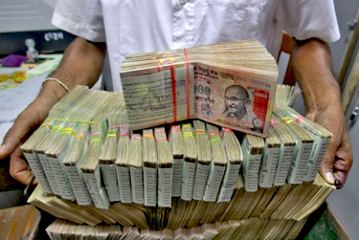
Black moneySources said that the SIT headed by retired Supreme Court Justice M B Shah has asked the 11 departments on its panel to furnish fine details of these cases and the status of their probes, including any problems being faced by investigators in taking the cases forward for prosecution or penalty.

The member departments/agencies of SIT are the Department of Revenue (under the Ministry of Finance), RBI, Intelligence Bureau, Enforcement Directorate, CBI, Income Tax department, Narcotics Control Bureau, Directorate of Revenue Intelligence, Financial Intelligence Unit, Research and Analysis Wing and the Foreign Tax and Tax Research wing under the Central Board of Direct Taxes (CBDT).

The sources said the SIT has asked for the data in order to understand the trends and magnitude of the menace of black money and generation of illegal funds in the country, which is done through a variety of ways like evasion of taxes and duties, flouting of foreign exchange laws, creation of disproportionate assets, creation of 'benami' properties within the country and outside and laundering of wealth obtained through illegal and corrupt means.

The departments, they said, are in the process of submitting these details in the stipulated format to SIT and these will be taken up during the next meeting of the panel, expected to take place some time next month.

RBI has recently directed all banks and financial institutions to provide the information and documents sought by the high-profile panel.

The SIT, formed upon the directions of Supreme Court, had its first meeting earlier this month here at the North Block office of the Finance Ministry.

The high-level team has also decided to look into the contentious issue of secrecy clauses in India's tax treaties with Switzerland and other countries.

Retired apex court judge Arijit Pasayat is the Vice Chairman of the SIT while top officials of the 11 high-profile agencies and departments are its members.

After the first meeting of the SIT, the government had said the detailed modalities of proceeding further with the Supreme Court mandate were discussed and the road map decided.

The SIT's mandate, as notified, requires it to go into "all issues relating to matters concerning and arising from unaccounted monies of Hasan Ali Khan and Kashinath Tapariah".

Pune-based Khan, a stud farm owner, was arrested by Enforcement Directorate in connection with money laundering and tax evasion cases. Tapariah is his aide.

The other tasks of SIT include all investigations already started and pending or awaiting to be initiated with respect to any other known instances of the stashing away of unaccounted cash in foreign bank accounts by Indians or other entities operating in India.

The panel has also been empowered "to further investigate even where charge-sheets have been previously filed and SIT may register further cases and conduct appropriate investigations and initiate proceedings for the purpose of bringing back unaccounted monies unlawfully kept in bank accounts abroad."

The SIT will also keep the apex court informed about all major developments by filing periodic status reports in this regard, the government notification had said.

Comments

Add new comment

  • Coastaldigest.com reserves the right to delete or block any comments.
  • Coastaldigset.com is not responsible for its readers’ comments.
  • Comments that are abusive, incendiary or irrelevant are strictly prohibited.
  • Please use a genuine email ID and provide your name to avoid reject.
News Network
February 19,2020

London, Feb 19: Indian universities had a good performance year within the emerging economies of the world as a record 11 made it to the top 100 Times Higher Education's (THE) Emerging Economies University Rankings 2020.

Only China has more universities than India in the top 100 at 30 from a total of 47 countries and territories included in the analysis released in London on Tuesday evening.

A total of 56 Indian universities appear in the full ranking of a total of 533 universities across emerging economies of the world.

The Indian Institute of Science (IISc), ranked 16th, is India’s top-ranked institution followed by the Indian Institute of Technologies (IITs).

"There has long been a debate about the success of Indian universities in world rankings, and for too long they have been seen as underperforming on the global stage," notes Phil Baty, Chief Knowledge Officer for the THE.

"The Emerging Economies University Rankings 2020 suggests that real progress is being made by a number of institutions in a number of metrics across our robust methodology, and could mark an exciting turning point for Indian higher education, enabled in part by the Institutes of Eminence scheme," he said.

The Indian government’s Institutes of Eminence scheme was established in 2017 and one of its participating universities, Amrita Vishwa Vidyapeetham, has entered the top 100 for the first time, moving up a huge 51 places from joint 141st in 2019.

The other universities included in the Institutes of Eminence scheme that appear in the top 100 mark the biggest improvers in the ranking with IIT Kharagpur moving up 23 places to 32nd, IIT Delhi improving by 28 places to joint 38th and IIT Madras climbing 12 places to joint 63rd.

The Institutes of Eminence scheme provides participating universities with government funding and greater autonomy with the aim of moving them into the top 100 of the world university rankings, including Times Higher Education’s World University Ranking, over time.

The expectation is that this will be achieved through a number of changes including an increase in foreign students and staff, offering online courses and encouraging academic collaboration with other top universities around the world.

This year marks only the second time that 11 Indian institutions have held top 100 positions since the ranking began in 2014, when much fewer universities took part in the ranking globally.

Comments

Add new comment

  • Coastaldigest.com reserves the right to delete or block any comments.
  • Coastaldigset.com is not responsible for its readers’ comments.
  • Comments that are abusive, incendiary or irrelevant are strictly prohibited.
  • Please use a genuine email ID and provide your name to avoid reject.
coastaldigest.com news network
August 8,2020

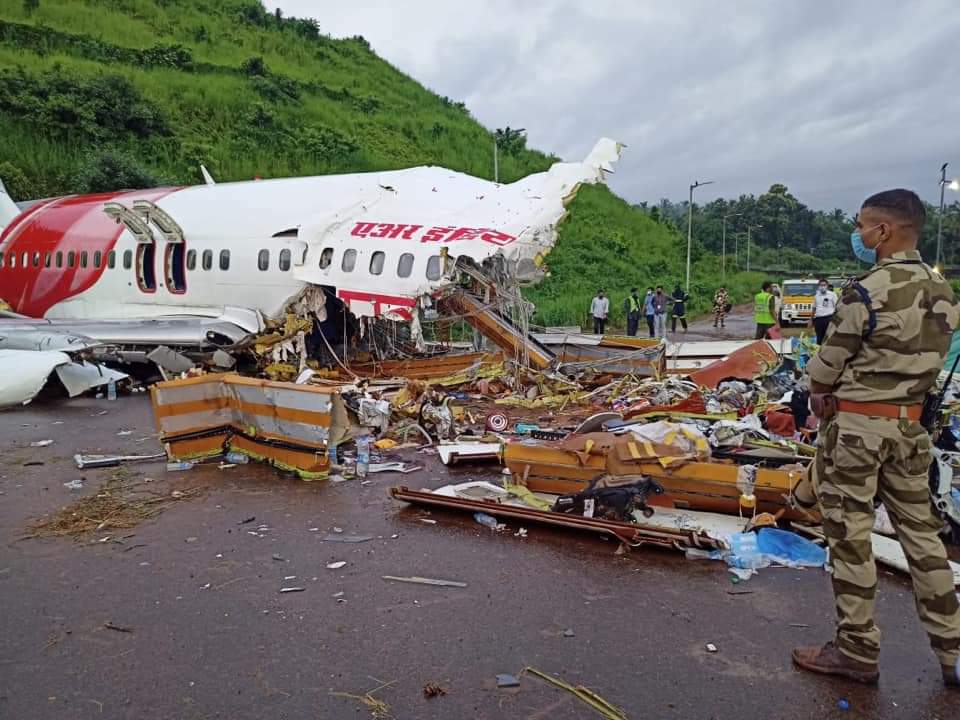
Kozhikode, Aug 8: A tailwind or crosswind could be the reason for the Air India Express flight mishap at Kozhikode international airport in Kerala, according to some aviation experts. 

Team of DGCA and AIE already reached the spot. With the death of the captain and co-pilot in the mishap, the investigation would be focusing mainly on the voice recorders and other technical aspects.

It is learnt that the ill-fated aircraft, IX 1344 with 190 onboard including crew, was initially planning to land on runway-28 of the airport. But later the pilot opted runway-10 which is toward the other direction. Pilots would be taking the decisions on the basis of inputs from ATC.

The questions now doing the rounds are what made the pilot opt runway-10 and whether the tabletop runway lacked adequate safety parameters.

An aviation expert, who didn't want to be quoted, said that Capt Deepak Sathe, who was commandeering the aircraft, was a well-experienced pilot and was also familiar with the terrains. Hence the chances of any error from his part was very unlikely. Hence a fair in-depth probe was required to find the exact cause.

Though the Kozhikode airport has an Instrument Landing System, it was of category-I for which pilot's visibility is very crucial toward a touchdown. Since it is a tabletop airport and rough weather prevailing in the region, the chances of tailwind was also high, said sources.

There had been safety concerns about the airport over quite some time. In 2011 aviation safety consultant captain Mohan Ranganathan reportedly gave a report citing the safety issues, especially the buffer zones at the end of the runway.

However, an AAI officer said that rectification steps were already done by last year by widening the Runway End Safety Area (RESA) from 90 metre to 240 metre. However, the length of the runway had to be reduced to 2,700 metre from 2,850. The AAI was also constantly pressing for increasing the runway length to 3,150 metres. But that was getting delayed due to land acquisition issues pending with the state government.

stm88 info live rtp slot

slot auto scatter hitam

Comments

Add new comment

  • Coastaldigest.com reserves the right to delete or block any comments.
  • Coastaldigset.com is not responsible for its readers’ comments.
  • Comments that are abusive, incendiary or irrelevant are strictly prohibited.
  • Please use a genuine email ID and provide your name to avoid reject.
Agencies
March 16,2020

New Delhi, Mar 16: Chief Justice of India Sharad Arvind Bobde on Monday said that rules for preventing overcrowding in the courts to avoid the spread of coronavirus cannot be relaxed for journalists alone on the basis of profession.

"Can't make an exception on the basis of profession," CJI Bobde said while asking journalists to share information and notes and suggesting that a system can be put in place to facilitate daily media briefing by Secretary-General.

Video conferencing facility being contemplated may be brought into place but not sooner than one week from now and reporters may take turns to attend hearings, CJI Bobde said.

He said that the court does not wish to prevent any reportage.

Attorney General KK Venugopal and Solicitor General Tushar Mehta informed the Chief Justice of India about the crowded corridors on account of restricted entry inside courtrooms.

CJI Bobde said that he himself wishes to assess and take stock of the situation and may do so tomorrow at 10.30 am.

This comes after the top court introduced several precautionary measures to prevent the spread of coronavirus and allowed only restricted entry of lawyers, litigants, and journalists in the courtroom.

Thermal-screening of the lawyers, litigants, and media persons were also conducted in the Supreme Court on Monday amid coronavirus fears.

Comments

Add new comment

  • Coastaldigest.com reserves the right to delete or block any comments.
  • Coastaldigset.com is not responsible for its readers’ comments.
  • Comments that are abusive, incendiary or irrelevant are strictly prohibited.
  • Please use a genuine email ID and provide your name to avoid reject.