


Black money: SIT asks agencies to share data on ongoing case

June 29, 2014

New Delhi, Jun 29: The Special Investigation Team (SIT) on black money has sought details of all major cases of tax evasion and criminal financial fraud being probed by various investigative agencies which are mandated to keep a check on such instances.
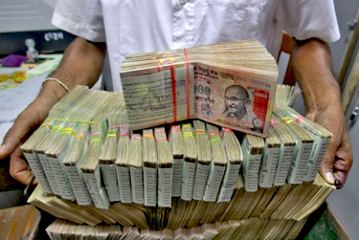
Black moneySources said that the SIT headed by retired Supreme Court Justice M B Shah has asked the 11 departments on its panel to furnish fine details of these cases and the status of their probes, including any problems being faced by investigators in taking the cases forward for prosecution or penalty.

The member departments/agencies of SIT are the Department of Revenue (under the Ministry of Finance), RBI, Intelligence Bureau, Enforcement Directorate, CBI, Income Tax department, Narcotics Control Bureau, Directorate of Revenue Intelligence, Financial Intelligence Unit, Research and Analysis Wing and the Foreign Tax and Tax Research wing under the Central Board of Direct Taxes (CBDT).

The sources said the SIT has asked for the data in order to understand the trends and magnitude of the menace of black money and generation of illegal funds in the country, which is done through a variety of ways like evasion of taxes and duties, flouting of foreign exchange laws, creation of disproportionate assets, creation of 'benami' properties within the country and outside and laundering of wealth obtained through illegal and corrupt means.

The departments, they said, are in the process of submitting these details in the stipulated format to SIT and these will be taken up during the next meeting of the panel, expected to take place some time next month.

RBI has recently directed all banks and financial institutions to provide the information and documents sought by the high-profile panel.

The SIT, formed upon the directions of Supreme Court, had its first meeting earlier this month here at the North Block office of the Finance Ministry.

The high-level team has also decided to look into the contentious issue of secrecy clauses in India's tax treaties with Switzerland and other countries.

Retired apex court judge Arijit Pasayat is the Vice Chairman of the SIT while top officials of the 11 high-profile agencies and departments are its members.

After the first meeting of the SIT, the government had said the detailed modalities of proceeding further with the Supreme Court mandate were discussed and the road map decided.

The SIT's mandate, as notified, requires it to go into "all issues relating to matters concerning and arising from unaccounted monies of Hasan Ali Khan and Kashinath Tapariah".

Pune-based Khan, a stud farm owner, was arrested by Enforcement Directorate in connection with money laundering and tax evasion cases. Tapariah is his aide.

The other tasks of SIT include all investigations already started and pending or awaiting to be initiated with respect to any other known instances of the stashing away of unaccounted cash in foreign bank accounts by Indians or other entities operating in India.

The panel has also been empowered "to further investigate even where charge-sheets have been previously filed and SIT may register further cases and conduct appropriate investigations and initiate proceedings for the purpose of bringing back unaccounted monies unlawfully kept in bank accounts abroad."

The SIT will also keep the apex court informed about all major developments by filing periodic status reports in this regard, the government notification had said.

Comments

Add new comment

  • Coastaldigest.com reserves the right to delete or block any comments.
  • Coastaldigset.com is not responsible for its readers’ comments.
  • Comments that are abusive, incendiary or irrelevant are strictly prohibited.
  • Please use a genuine email ID and provide your name to avoid reject.
Agencies
March 15,2020

New Delhi, Mar 15: The new rules for debit and credit cards to increase security and reduce frauds kick in from Monday. In January, the Reserve Bank of India (RBI) had issued new rules to improve user convenience and increase the security of card transactions. These rules will help in curbing the misuse of debit and credit cards.

RBI has directed banks to allow only domestic card transactions at ATMs and PoS terminals in India at the time of issuance/reissuance of card. For international transactions, online transactions, card-not-present transactions and contactless transactions, customers will have to separately set up services on their card.

These rules will be applicable for new cards from March 16. Those with old cards can decide whether to disable any of these features.

As per the existing rules, these services used to come automatically with the card, but now it will start at the request of the customer.

Debit or credit card customers who have not yet done any online transaction, contactless transaction or international transaction with the card, then these services on the card will automatically stop from March 16.

The Reserve Bank has asked all banks to provide mobile banking, net banking option to enable limit and enable and disable service 24 hours a day, seven days a week.

If the customer makes any change in the status of the card, the bank will alert the customer through SMS/email and send the information.

Issuers shall provide to all cardholders facility to switch on/off and set/modify transaction limits (within the overall card limit, if any, set by the issuer) for all types of transactions -- domestic and international, at PoS/ATMs/online transactions/contactless transactions, etc.,

The provisions, however, are not mandatory for prepaid gift cards and those used at mass transit systems.

The latest instructions come in the wake of rising instances of cyber frauds and the huge increase in the use of cards.

Comments

Add new comment

  • Coastaldigest.com reserves the right to delete or block any comments.
  • Coastaldigset.com is not responsible for its readers’ comments.
  • Comments that are abusive, incendiary or irrelevant are strictly prohibited.
  • Please use a genuine email ID and provide your name to avoid reject.
Agencies
February 4,2020

New Delhi, Feb 4: Saying the matter had been adjourned many times and it will have to hear it someday, the Supreme Court on Tuesday fixed April 14 for hearing a plea by Zakia Jafri, wife of slain MP Ehsan Jafri, challenging the SIT's clean chit to then Gujarat chief minister Narendra Modi in the 2002 riots.

A bench comprising Justices A M Khanwilkar and Dinesh Maheshwari posted the matter for hearing in April after Zakia's counsel sought an adjournment and urged the court to post it after the Holi vacation.

When advocate Aparna Bhat, appearing for Zakia, told the court that the issue in the matter is contentious, the bench said, "It has been adjourned so many times, whatever it is, we will have to hear it someday. Take one date and make sure you all are available." Zakia had filed a petition in the apex court in 2018 challenging the Gujarat High Court's October 5, 2017 order rejecting her plea against the decision of the Special Investigation Team.

Ehsan Jafri was among the 68 people killed at Gulberg Society on February 28, 2002, a day after the S-6 Coach of the Sabarmati Express was burnt at Godhra killing 59 people and triggering riots in Gujarat.

On February 8, 2012, the SIT filed a closure report giving a clean chit to Modi and 63 others, including senior government officials, saying there was "no prosecutable evidence" against them.

Comments

Althaf
 - 
Tuesday, 4 Feb 2020

No use.. will Supreme court gives justice??? 

Add new comment

  • Coastaldigest.com reserves the right to delete or block any comments.
  • Coastaldigset.com is not responsible for its readers’ comments.
  • Comments that are abusive, incendiary or irrelevant are strictly prohibited.
  • Please use a genuine email ID and provide your name to avoid reject.
News Network
January 22,2020

Jan 22: India's ranking in the latest global Democracy Index has dropped 10 places to the 51st spot out of 167 owing to violent protests and threats to civil liberties challenging freedoms across the country.

Prime Minister Narendra Modi's government has been criticized by rights groups and western governments after shutting off the internet and mobile phone networks and detaining opposition politicians in Kashmir.

Modi’s government has also responded harshly to ongoing protests against a controversial, religion-based citizenship law. Muslims have said their neighborhoods have been targeted, while the central government has attempted to ban protests and urged TV news channels not to broadcast “anti-national” content. Some leaders in Modi’s ruling party called for “revenge” against protesters. India’s score in 2019 was its worst ranking since the EIU’s records began in 2006, and has fallen gradually since Modi was elected in 2014.

The Economist Intelligence Unit’s 2019 Democracy Index, which provides an annual comparative analysis of political systems across 165 countries and two territories, said the past year was the bleakest for democracies since the research firm began compiling the list in 2006.

“The 2019 result is even worse than that recorded in 2010, in the wake of the global economic and financial crisis,” the research group said in releasing the report on Wednesday.

The average global score slipped to 5.44 out of a possible 10 -- from 5.48 in 2018 -- driven mainly by “sharp regressions” in Latin America, Sub-Saharan Africa, the Middle East and North Africa. Apart from coup-prone Thailand, which improved its score after holding an election last year, there were also notable declines in Asia after a tumultuous period of protests and new measures restricting freedom across the region’s democracies.

Asia Declines

Hong Kong, meanwhile, fell three places to rank 75th out of 167 as more than seven months of violent and disruptive protests rocked the Asian financial hub. An aggressive police response early in the unrest, when protests were mostly peaceful, led to a “marked decline in confidence in government -- the main factor behind the decline in the territory’s score in our 2019 index,” the group said.

In Singapore, which ranked alongside Hong Kong at 75th, a new “fake news” law led to a deteriorating score on civil liberties.

“The government claims that the law was enacted simply to prevent the dissemination of false news, but it threatens freedom of expression in Singapore, as it can be used to curtail political debate and silence critics of the government,” EIU analysts said.

China’s score fell to just 2.26 in the EIU’s ranking, placing it near the bottom of the list at 153, as discrimination against minorities, repression and surveillance of the population intensified. Still, in China “the majority of the population is unconvinced that democracy would benefit the economy, and support for democratic ideals is absent,” the EIU said.

Comments

Add new comment

  • Coastaldigest.com reserves the right to delete or block any comments.
  • Coastaldigset.com is not responsible for its readers’ comments.
  • Comments that are abusive, incendiary or irrelevant are strictly prohibited.
  • Please use a genuine email ID and provide your name to avoid reject.