


Black money: SIT asks agencies to share data on ongoing case

June 29, 2014

New Delhi, Jun 29: The Special Investigation Team (SIT) on black money has sought details of all major cases of tax evasion and criminal financial fraud being probed by various investigative agencies which are mandated to keep a check on such instances.
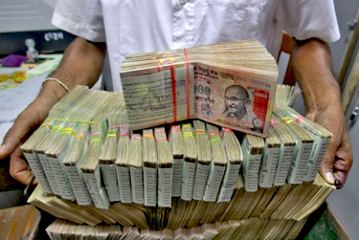
Black moneySources said that the SIT headed by retired Supreme Court Justice M B Shah has asked the 11 departments on its panel to furnish fine details of these cases and the status of their probes, including any problems being faced by investigators in taking the cases forward for prosecution or penalty.

The member departments/agencies of SIT are the Department of Revenue (under the Ministry of Finance), RBI, Intelligence Bureau, Enforcement Directorate, CBI, Income Tax department, Narcotics Control Bureau, Directorate of Revenue Intelligence, Financial Intelligence Unit, Research and Analysis Wing and the Foreign Tax and Tax Research wing under the Central Board of Direct Taxes (CBDT).

The sources said the SIT has asked for the data in order to understand the trends and magnitude of the menace of black money and generation of illegal funds in the country, which is done through a variety of ways like evasion of taxes and duties, flouting of foreign exchange laws, creation of disproportionate assets, creation of 'benami' properties within the country and outside and laundering of wealth obtained through illegal and corrupt means.

The departments, they said, are in the process of submitting these details in the stipulated format to SIT and these will be taken up during the next meeting of the panel, expected to take place some time next month.

RBI has recently directed all banks and financial institutions to provide the information and documents sought by the high-profile panel.

The SIT, formed upon the directions of Supreme Court, had its first meeting earlier this month here at the North Block office of the Finance Ministry.

The high-level team has also decided to look into the contentious issue of secrecy clauses in India's tax treaties with Switzerland and other countries.

Retired apex court judge Arijit Pasayat is the Vice Chairman of the SIT while top officials of the 11 high-profile agencies and departments are its members.

After the first meeting of the SIT, the government had said the detailed modalities of proceeding further with the Supreme Court mandate were discussed and the road map decided.

The SIT's mandate, as notified, requires it to go into "all issues relating to matters concerning and arising from unaccounted monies of Hasan Ali Khan and Kashinath Tapariah".

Pune-based Khan, a stud farm owner, was arrested by Enforcement Directorate in connection with money laundering and tax evasion cases. Tapariah is his aide.

The other tasks of SIT include all investigations already started and pending or awaiting to be initiated with respect to any other known instances of the stashing away of unaccounted cash in foreign bank accounts by Indians or other entities operating in India.

The panel has also been empowered "to further investigate even where charge-sheets have been previously filed and SIT may register further cases and conduct appropriate investigations and initiate proceedings for the purpose of bringing back unaccounted monies unlawfully kept in bank accounts abroad."

The SIT will also keep the apex court informed about all major developments by filing periodic status reports in this regard, the government notification had said.

Comments

Add new comment

  • Coastaldigest.com reserves the right to delete or block any comments.
  • Coastaldigset.com is not responsible for its readers’ comments.
  • Comments that are abusive, incendiary or irrelevant are strictly prohibited.
  • Please use a genuine email ID and provide your name to avoid reject.
Agencies
July 13,2020

Kolkata, July 13: Debendra Nath Roy, a member of the West Bengal legislative assembly (MLA) from the Bharatiya Janata Party (BJP), was found dead near his house in north Bengal’s Uttar Dinajpur district on Monday morning.

BJP leaders and his family members have alleged that he was murdered. 

BJP president JP Nadda has expressed “shock” at Roy’s “deplorable and suspected heinous killing” and condemned the incident.

He questioned the rise of “gunda raj” in West Bengal under Chief Minister Mamata Banerjee’s watch amid the worsening law and order in the state, which is slated to hold assembly polls next year, where the BJP is seen to be the primary challenger to the CM’s citadel.

“The suspected heinous killing of Debendra Nath Ray, BJP MLA from Hemtabad in West Bengal, is extremely shocking and deplorable. This speaks volumes of the gunda raj and failure of law and order in the Mamata Banerjee-led government. People will not forgive such a government in the future. We strongly condemn the incident,” he tweeted.

The BJP has demanded a Central Bureau of Investigation (CBI) probe into the lawmaker’s unnatural death.

His body was found in the balcony of a shop near his house at Bondol in Hemtabad, Uttar Dinajpur district, on Monday morning.

“The body has been sent for autopsy. We are investigating the case. No one has been detained for questioning or arrested so far,” said a police official from Uttar Dinajpur district, requesting anonymity.

“Roy was murdered. The way his body was found suggests that it was a premeditated murder and the accused tried to pass it off as a suicide. The ruling TMC (Trinamool Congress) is involved in his murder,” alleged Rahul Sinha, national secretary, BJP.

The TMC, however, refuted the BJP’s allegations.

“I heard that he (Roy) died by suicide. Police are investigating the case. Let the truth come out. If he has been murdered, then the culprits should be identified and punished as per law,” said Kanhaiyalal Agarwal, a TMC leader from Uttar Dinajpur district.

BJP leaders said some people had called Roy around 1 am on Monday and he went out of his home. His body was found on Monday morning.

Roy had won the Bengal assembly elections from Hemtabad on a Communist Party of India (Marxist) ticket in 2016, but joined the BJP last year.

Comments

Add new comment

  • Coastaldigest.com reserves the right to delete or block any comments.
  • Coastaldigset.com is not responsible for its readers’ comments.
  • Comments that are abusive, incendiary or irrelevant are strictly prohibited.
  • Please use a genuine email ID and provide your name to avoid reject.
News Network
March 5,2020

New Delhi, Mar 5: Retirement fund body EPFO on Thursday lowered interest rate on provident fund deposits to 8.5 per cent for the current financial year, said Labour Minister Santosh Gangwar on Thursday.

The EPFO had provided 8.65 per cent rate of interest on EPF for 2018-19 to its around six crore subscribers. The decision was taken at a meeting of the the Employees' Provident Fund Organisation's (EPFO) apex decision making body -- the Central Board of Trustee.

"The EPFO has decided to provide 8.5 per cent interest rate on EPF deposits for 2019-20 in the Central Board of Trustees (CBT) meeting today," Gangwar told reporters after the meeting here.

Now, the labour ministry requires the finance ministry's concurrence on the matter. Since the Government of India is the guarantor, the finance ministry has to vet the proposal for EPF interest rate to avoid any liability on account of shortfall in the EPFO income for a fiscal.

The finance ministry has been nudging the labour ministry for aligning the EPF interest rate with other small saving schemes run by the government like the public provident fund and post office saving schemes.

The EPFO had provided 8.65 per cent rate of interest to its subscribers for 2016-17 and 8.55 per cent in 2017-18. The rate of interest was slightly higher at 8.8 per cent in 2015-16.

It had given 8.75 per cent rate of interest in 2013-14 as well as 2014-15, higher than 8.5 per cent for 2012-13.

Comments

Add new comment

  • Coastaldigest.com reserves the right to delete or block any comments.
  • Coastaldigset.com is not responsible for its readers’ comments.
  • Comments that are abusive, incendiary or irrelevant are strictly prohibited.
  • Please use a genuine email ID and provide your name to avoid reject.
News Network
February 19,2020

New Delhi, Feb 19: India will switch to the world's cleanest petrol and diesel from April 1 as it leapfrogs straight to Euro-VI emission compliant fuels from Euro-IV grades now - a feat achieved in just three years and not seen in any of the large economies around the globe.

India will join the select league of nations using petrol and diesel containing just 10 parts per million of sulphur as it looks to cut vehicular emissions that are said to be one of the reasons for the choking pollution in major cities.

Sanjiv Singh, Chairman of Indian Oil Corp (IOC) - the firm that controls roughly half of the country's fuel market, said almost all refineries began producing ultra-low sulphur BS-VI (equivalent to Euro-VI grade) petrol and diesel by the end of 2019 and oil companies have now undertaken the tedious task of replacing every drop of fuel in the country with the new one.

"We are absolutely on track for supplying BS-VI fuel from April 1. Almost all refineries have begun supplying BS-VI fuel and the same has reached storage depots across the country," he said.

From storage depots, the fuel has started travelling to petrol pumps and in the next few weeks all of them will only have BS-VI grade petrol and diesel, he said. "We are 100 per cent confident that fuel that will flow from nozzles at all the petrol pumps in the country on April 1 will be BS-VI emission compliant fuel."

India adopted Euro-III equivalent (or Bharat Stage-III) fuel with a sulphur content of 350 ppm in 2010 and then took seven years to move to BS-IV that had a sulphur content of 50 ppm. From BS-IV to BS-VI it took just three years.

"It was a conscious decision to leapfrog to BS-VI as first upgrading to BS-V and then shifting to BS-VI would have prolonged the journey to 4 to 6 years. Besides, oil refineries, as well as automobile manufacturers, would have had to make investments twice - first to producing BS-V grade fuel and engines and then BS-VI ones," he said.

State-owned oil refineries spent about Rs 35,000 crore to upgrade plants that could produce ultra-low sulphur fuel. This investment is on top of Rs 60,000 crore they spent on refinery upgrades in the previous switchovers.

BS-VI has a sulphur content of just 10 ppm and emission standards are as good as CNG.

Originally, Delhi and its adjoining towns were to have BS-VI fuel supplies by April 2019 and the rest of the country was to get same supplies from April 2020.

But oil marketing companies switched over to supply of BS-VI grade fuels in the national capital territory of Delhi on April 1, 2018.

The supply of BS-VI fuels was further extended to four contiguous districts of Rajasthan and eight of Uttar Pradesh in the National Capital Region (NCR) on April 1, 2019, together with the city of Agra.

BS-VI grade fuels were made available in 7 districts of Haryana from October 1, 2019.

Singh said the new fuel will result in a reduction in NOx in BS-VI compliant vehicles by 25 per cent in petrol cars and by 70 per cent in diesel cars.

The switchover, he said, is a tedious task as every drop of old, higher-sulphur content fuel has to be flushed out in depots, pipelines and tanks before being replaced by BS-VI.

"We are confident of disruption-free switchover to BS-VI supplies across the country," he said. "What we will be supplying is the best quality available anywhere in the world. You don't have any better fuel that is supplied in any part of the world. Perhaps our BS-VI fuel will be better than equivalent fuel in some parts of the US and Europe."

India adopted a fuel upgradation programme in the early 1990s. Low lead gasoline (petrol) was introduced in 1994 in Delhi, Mumbai, Kolkata and Chennai. On February 1, 2000, unleaded gasoline was mandated nationwide.

Similarly, BS-2000 (Euro-I equivalent, BS-1) vehicle emission norms were introduced for new vehicles from April 2000. BS-II (Euro-II equivalent) emission norms for new cars were introduced in Delhi from 2000 and extended to the other metro cities in 2001.

Benzene limits have been reduced progressively from 5 per cent in 2000 to 1 per cent nationwide. Lead content in gasoline was removed in phases and only unleaded gasoline is being produced and sold from February 1, 2000.

The octane number of gasoline signifies the improved performance of the engine. Loss in octane number due to phasing out of lead was made up by installing new facilities in the refinery and changes in refinery operation. RON (Research Octane Number) of gasoline for BS-2000 spec was increased to 88. This has over time been increased to 91.

Singh said sulphur reduction will reduce Particulate Matter (PM) emissions even in the in-use older generation diesel vehicles.

Comments

Add new comment

  • Coastaldigest.com reserves the right to delete or block any comments.
  • Coastaldigset.com is not responsible for its readers’ comments.
  • Comments that are abusive, incendiary or irrelevant are strictly prohibited.
  • Please use a genuine email ID and provide your name to avoid reject.