


Black money: SIT asks agencies to share data on ongoing case

June 29, 2014

New Delhi, Jun 29: The Special Investigation Team (SIT) on black money has sought details of all major cases of tax evasion and criminal financial fraud being probed by various investigative agencies which are mandated to keep a check on such instances.
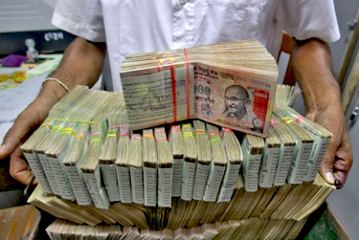
Black moneySources said that the SIT headed by retired Supreme Court Justice M B Shah has asked the 11 departments on its panel to furnish fine details of these cases and the status of their probes, including any problems being faced by investigators in taking the cases forward for prosecution or penalty.

The member departments/agencies of SIT are the Department of Revenue (under the Ministry of Finance), RBI, Intelligence Bureau, Enforcement Directorate, CBI, Income Tax department, Narcotics Control Bureau, Directorate of Revenue Intelligence, Financial Intelligence Unit, Research and Analysis Wing and the Foreign Tax and Tax Research wing under the Central Board of Direct Taxes (CBDT).

The sources said the SIT has asked for the data in order to understand the trends and magnitude of the menace of black money and generation of illegal funds in the country, which is done through a variety of ways like evasion of taxes and duties, flouting of foreign exchange laws, creation of disproportionate assets, creation of 'benami' properties within the country and outside and laundering of wealth obtained through illegal and corrupt means.

The departments, they said, are in the process of submitting these details in the stipulated format to SIT and these will be taken up during the next meeting of the panel, expected to take place some time next month.

RBI has recently directed all banks and financial institutions to provide the information and documents sought by the high-profile panel.

The SIT, formed upon the directions of Supreme Court, had its first meeting earlier this month here at the North Block office of the Finance Ministry.

The high-level team has also decided to look into the contentious issue of secrecy clauses in India's tax treaties with Switzerland and other countries.

Retired apex court judge Arijit Pasayat is the Vice Chairman of the SIT while top officials of the 11 high-profile agencies and departments are its members.

After the first meeting of the SIT, the government had said the detailed modalities of proceeding further with the Supreme Court mandate were discussed and the road map decided.

The SIT's mandate, as notified, requires it to go into "all issues relating to matters concerning and arising from unaccounted monies of Hasan Ali Khan and Kashinath Tapariah".

Pune-based Khan, a stud farm owner, was arrested by Enforcement Directorate in connection with money laundering and tax evasion cases. Tapariah is his aide.

The other tasks of SIT include all investigations already started and pending or awaiting to be initiated with respect to any other known instances of the stashing away of unaccounted cash in foreign bank accounts by Indians or other entities operating in India.

The panel has also been empowered "to further investigate even where charge-sheets have been previously filed and SIT may register further cases and conduct appropriate investigations and initiate proceedings for the purpose of bringing back unaccounted monies unlawfully kept in bank accounts abroad."

The SIT will also keep the apex court informed about all major developments by filing periodic status reports in this regard, the government notification had said.

Comments

Add new comment

  • Coastaldigest.com reserves the right to delete or block any comments.
  • Coastaldigset.com is not responsible for its readers’ comments.
  • Comments that are abusive, incendiary or irrelevant are strictly prohibited.
  • Please use a genuine email ID and provide your name to avoid reject.
News Network
March 13,2020

New Delhi, Mar 13: Delhi's Tis Hazari Court on Friday sentenced expelled Bharatiya Janata Party (BJP) MLA Kuldeep Singh Sengar and six others to 10 years imprisonment for the death of Unnao rape survivor's father. Sengar is already serving life imprisonment for raping the minor.

While sentencing them, District Judge Dharmesh Sharma said, "There can be no denying that rule of law was broken. Sengar was a public functionary and had to maintain the rule of law. The way the crime has been committed, it does not call for leniency."

Sengar and his brother Atul has been directed to give 10 lakh compensation to family of the victim for loss of their father. "There are four minor children involved, three girls and one boy. They have also been uprooted from native place," the judge said.

Seven people, including Sengar, his brother and two police personnel, were held guilty for culpable homicide and criminal conspiracy, earlier this month.

The case pertains to the death of rape survivor's father in custody on April 9, 2018. It was alleged that he was assaulted following a quarrel with some of the accused in the case.

He was taken to the police station and then framed for allegedly possessing an illegal firearm. Pursuant to this, he was sent to custodial remand, during which he died.

The case was transferred to Delhi from a trial court in Uttar Pradesh on the Supreme Court's directions in August last year. Both the death and illegal firearm case was later clubbed by the court.

During the arguments on sentencing on March 12, Sengar had told the court that he should be "hanged and acid poured into his eyes if he has done anything wrong".

The former MLA had also raped the daughter of the deceased in 2017 in Uttar Pradesh's Unnao district and was sent to jail for "remainder of his natural biological life", last year.

Comments

Add new comment

  • Coastaldigest.com reserves the right to delete or block any comments.
  • Coastaldigset.com is not responsible for its readers’ comments.
  • Comments that are abusive, incendiary or irrelevant are strictly prohibited.
  • Please use a genuine email ID and provide your name to avoid reject.
News Network
June 25,2020

India has jumped past 4.5 lakh coronavirus cases and 14,476 people have succumbed to the viral infection so far. In this backdrop, speaking to IANS in an exclusive interview, AIIMS Director Randeep Guleria said India is also vulnerable to second wave of coronavirus and people should continue to follow social distancing, wearing mask and other precautions, after cases begin to decline.

He added that in order to contain the outbreak of Covid-19, a limited lockdown in hotspots, where volume of cases is very high, may be considered along with a micro-plan to prevent leakage of cases from these areas to other non-containment areas. Excerpts of the interview are below:

Q: Reports say China and South Korea are witnessing a second wave of coronavirus infection, what is this second wave, is India also vulnerable to this?

A: When cases come down significantly, people tend to drop their guard against the viral infection, and this leads to the second wave (which means a sudden increase in the number of cases). After cases begin to decline, people should continue to follow the precautions -- continue to maintain social distancing and wear masks regularly. See what happened in Singapore, it was struck by a second wave of coronavirus. Look, what happened in the 1918 pandemic, people dropped their guard and the second wave of viral infection struck back. If people do not follow social distancing then the spike in cases is apparent. We need to take these precautions at least for one year. India is also vulnerable to this second wave.

Q: If Covid-19 cases continue to rise rapidly, do you think we need another lockdown in areas where volume of cases are very high?

A: A large volume of cases is concentrated in specific areas like hotspots, and in order to maintain things in order, we may need a limited lockdown in these areas. This should be followed by a micro-plan which entails extensive testing of people and also extensive contact tracing of people who have got in touch with positive people. Need to ensure there is no leakage of cases from these areas. People from these areas should not mix with others in non-containment areas. This will aid in containing the outbreak of the virus. People who have developed symptoms should get themselves tested, especially in the containment areas.

Q: With more than 4.5 lakh cases and close to 14,500 deaths, do you think India has reached its peak and a decline in cases is prominent?

A: The cases will continue to increase for some time. The doubling time of cases has also increased. But, the cases will also begin to flatten. Though, it is difficult to give an exact time period in this viral infection, it seems, the growth in cases will flatten in the end of July or beginning of August. A decline will come to this viral infection, but it does not mean that people should drop their guard. As a measure, we need to decrease community participation and citizens should continue to follow social distancing. People should get themselves tested. All these efforts will help in preventing people from contracting this virus. These precautions will also prevent us from the second wave, and we must continue to take precautions. The virus has not gone away, it is still lurking.

Q: India has crossed the 4.5 lakh coronavirus cases so far, although our recovery rate is good, but still 10,000 to 15,000 cases are reported daily. Why do cases continue to spiral, what is the reason?

A: We have to remember a few things -- the bulk of cases are in 10 cities, nearly 70 per cent, and if we take into account cases per million population, the number is not very high, as compared with countries including countries in Europe. Many European countries put together still do not add up to the Indian population. Do not compare India to countries like Italy, Spain etc. We need to focus on hotspots, which contribute to between 70 -80 per cent of cases, and we have to identify cases in these areas at an early stage. The population density is very high in these cities. People in lower socio-economic status are highly vulnerable to the viral infection, as many live together in small spaces and there is a lot of mixing of people happening there. Look at the market places, people are not following social distancing and not wearing masks. In fact, many are in close vicinity of each other.

Comments

Add new comment

  • Coastaldigest.com reserves the right to delete or block any comments.
  • Coastaldigset.com is not responsible for its readers’ comments.
  • Comments that are abusive, incendiary or irrelevant are strictly prohibited.
  • Please use a genuine email ID and provide your name to avoid reject.
Agencies
May 17,2020

New Delhi, May 17: The HRD Ministry on Saturday postponed announcement of the exam schedule for pending class 10 and 12 board exams, saying the CBSE is still considering certain technical aspects before finalising the datesheet.

The ministry had earlier announced that it would notify the schedule at 5 pm on Saturday.

"CBSE is taking into consideration some additional technical aspects before finalizing the datesheets of the board exams of classes 10th and 12th, due to which, the datesheets will now be released by Monday i.e. 18-05-2020. Inconvenience caused is sincerely regretted (sic)," Union HRD Minister Ramesh Pokhriyal 'Nishank' tweeted.

The ministry had last week announced that the pending class 10 and 12 CBSE exams, which were postponed due to the COVID-19-induced lockdown, would be conducted from July 1 to 15.

However, the schedule as well as the modalities and guidelines have not been announced yet.

While class 12 exams will be conducted across the country, the class 10 exams are only pending in North East Delhi where they were affected due to the law and order situation.

Universities and schools across the country have been closed and exams postponed since March 16 when the Centre announced a countrywide classroom shutdown as one of the measures to contain the COVID-19 outbreak.

Later, a nationwide lockdown was announced on March 24, which has now been extended till May 17.

The board was not able to conduct class 10 and 12 exams on eight examination days due to the coronavirus outbreak.

Further, due to the law and order situation in North East Delhi, the board was not able to conduct exams on four examination days, while a very small number of students from and around this district were not able to appear in exams on six days.

The board had last month announced that it will only conduct pending exams in 29 subjects which are crucial for promotion and admission to higher educational institutions.

The modalities of assessment for the subjects for which exams are not being conducted will be announced soon by the board.

The schedule has been decided in order to ensure that the board exams are completed before competitive examinations such as engineering entrance JEE-Mains, which is scheduled from July 18-23, and medical entrance exam NEET, which is scheduled on July 26.

The University Grants Commission (UGC) has issued guidelines to universities that the new academic session for freshers will begin from September while for the existing students from August.

Comments

Add new comment

  • Coastaldigest.com reserves the right to delete or block any comments.
  • Coastaldigset.com is not responsible for its readers’ comments.
  • Comments that are abusive, incendiary or irrelevant are strictly prohibited.
  • Please use a genuine email ID and provide your name to avoid reject.