


Black money: SIT asks agencies to share data on ongoing case

June 29, 2014

New Delhi, Jun 29: The Special Investigation Team (SIT) on black money has sought details of all major cases of tax evasion and criminal financial fraud being probed by various investigative agencies which are mandated to keep a check on such instances.
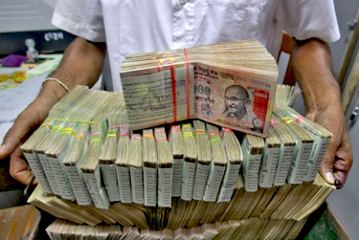
Black moneySources said that the SIT headed by retired Supreme Court Justice M B Shah has asked the 11 departments on its panel to furnish fine details of these cases and the status of their probes, including any problems being faced by investigators in taking the cases forward for prosecution or penalty.

The member departments/agencies of SIT are the Department of Revenue (under the Ministry of Finance), RBI, Intelligence Bureau, Enforcement Directorate, CBI, Income Tax department, Narcotics Control Bureau, Directorate of Revenue Intelligence, Financial Intelligence Unit, Research and Analysis Wing and the Foreign Tax and Tax Research wing under the Central Board of Direct Taxes (CBDT).

The sources said the SIT has asked for the data in order to understand the trends and magnitude of the menace of black money and generation of illegal funds in the country, which is done through a variety of ways like evasion of taxes and duties, flouting of foreign exchange laws, creation of disproportionate assets, creation of 'benami' properties within the country and outside and laundering of wealth obtained through illegal and corrupt means.

The departments, they said, are in the process of submitting these details in the stipulated format to SIT and these will be taken up during the next meeting of the panel, expected to take place some time next month.

RBI has recently directed all banks and financial institutions to provide the information and documents sought by the high-profile panel.

The SIT, formed upon the directions of Supreme Court, had its first meeting earlier this month here at the North Block office of the Finance Ministry.

The high-level team has also decided to look into the contentious issue of secrecy clauses in India's tax treaties with Switzerland and other countries.

Retired apex court judge Arijit Pasayat is the Vice Chairman of the SIT while top officials of the 11 high-profile agencies and departments are its members.

After the first meeting of the SIT, the government had said the detailed modalities of proceeding further with the Supreme Court mandate were discussed and the road map decided.

The SIT's mandate, as notified, requires it to go into "all issues relating to matters concerning and arising from unaccounted monies of Hasan Ali Khan and Kashinath Tapariah".

Pune-based Khan, a stud farm owner, was arrested by Enforcement Directorate in connection with money laundering and tax evasion cases. Tapariah is his aide.

The other tasks of SIT include all investigations already started and pending or awaiting to be initiated with respect to any other known instances of the stashing away of unaccounted cash in foreign bank accounts by Indians or other entities operating in India.

The panel has also been empowered "to further investigate even where charge-sheets have been previously filed and SIT may register further cases and conduct appropriate investigations and initiate proceedings for the purpose of bringing back unaccounted monies unlawfully kept in bank accounts abroad."

The SIT will also keep the apex court informed about all major developments by filing periodic status reports in this regard, the government notification had said.

Comments

Add new comment

  • Coastaldigest.com reserves the right to delete or block any comments.
  • Coastaldigset.com is not responsible for its readers’ comments.
  • Comments that are abusive, incendiary or irrelevant are strictly prohibited.
  • Please use a genuine email ID and provide your name to avoid reject.
News Network
April 24,2020

New Delhi, Apr 24: The trajectory of COVID-19 cases could have plateaued and might even fall for some weeks after the lockdown is lifted but India is likely to see a second wave in late July or August with a surge in the number of cases during the monsoon, say scientists.

The timing of the peak will depend on how India is able to control physical distancing and on the level of infection spreads after restrictions are relaxed, they said.

It looks apparent that the trajectory of daily new cases has reached a plateau and eventually it will take a downward fall, maybe for some weeks or even months, Samit Bhattacharya, associate professor at the Department of Mathematics, Shiv Nadar University, said.

Still, we may get a surge of new cases of the same coronavirus and this will be considered a second wave, Bhattacharya explained.

The second epidemic may come back in late July or August in the monsoon, although the peak timing will depend on how we control social distancing during that time, he said.

Rajesh Sundaresan, professor at Bengaluru's Indian Institute of Science (IISc), agreed.

“Once we return to normal activity levels, there is a chance that infection may begin to rise again. China is seeing this to some extent post easing of some restrictions on travel,” Sundaresan, corresponding author of a working paper by researchers at IISc and the Tata Institute of Fundamental Research (TIFR) in Mumbai, said.

On March 25, when the number of coronavirus cases was 618 with 13 deaths, the government announced a nationwide lockdown that was later extended to May 3.

On Friday, the death toll due to COVID-19 rose to 718 and the number of cases to 23,077, according to the Union Health Ministry.

In good news, officials said this week that the doubling rate of cases has slowed down in the period, going from 3.4 days before lockdown to 7.5 days, with 18 states doing better than the national average. The recovery rate has also almost doubled in the last 10 days.

"Looking at the new cases in the past few days, it seems the growth of new daily infection is much slower than earlier. This apparently indicates that we might have reached at the plateau of the growth curve, Bhattacharya said.

He noted that recent studies in China and Europe observed that the infection might relapse in those people who have already recovered from earlier phases.

So, there is no evidence that the earlier infection may help acquire immunity against the second infection. And in that way, the entire population may be vulnerable to the second wave to some extent, said the scientist.

In their study unveiled this week, IISc and TIFR researchers analysed the impact of strategies such as case isolation, home quarantine, social distancing and various post-lockdown restrictions on COVID-19 that might remain in force for some time.

The study modelled on Bengaluru and Mumbai suggests the infection is likely to have a second wave and the public health threat will remain, unless steps are taken to aggressively trace, localise, isolate the cases, and prevent influx of new infections.

The new levels and the peaking times for healthcare demand depend on the levels of infection spreads in each city at the time of relaxation of restrictions, they said.

The lockdown is currently upon us. It has given us valuable time. Let us test, trace, quarantine, isolate, practice better hygiene, search for a vaccine, etc. We should do these anyway, and these are being done. When and how to lift the lockdown is going to be a difficult decision to make, said Sundaresan.

It's clear that it's going to be phased. What our team is focusing on is to come up with tools to help the decision makers assess the public health impact of various choices, he said.

According to the experts, infectious diseases spread via contact between infectious and susceptible people. In the absence of any control measures, an outbreak will grow as long as the average number of people infected by each infectious person is more than one.

Once enough people are immune there will be fewer people susceptible to the infection and the outbreak will die.

However, when an outbreak is brought under control by social distancing and other interventions, it is possible only a small proportion of the population will have been infected and gained immunity, they said.

This means enough susceptible people may remain to fuel a second wave if controls are relaxed and infection is reintroduced.

Until the vaccine comes on the market, we have to remain alert Once sporadic cases occur here and there in the country, we immediately need to implement quarantine or social distancing locally for the people in that region, and also need to perform tests to identify positive cases irrespective of showing symptoms, Bhattacharya explained.

Note that these monsoon months are also flu season in many places of India. So, we should not ignore the early signs of the flu symptoms. Irrespective of symptoms, we need to increase tests in the hotspots to identify people and contain the surge, he said.

Sundaresan added that the timeline for a second wave will depend on a lot of circumstances which may change as the time passes.

Significant testing may have been underway, there may be behavioural changes with people becoming more careful about their hygiene, wearing masks may become more common, etc. All these responses may help restrict the second wave, he said.

A study published in The Lancet journal earlier this month modelled the potential adverse consequences of premature relaxation of interventions, and found it might lead to a second wave of infections.

The finding is critical to governments globally, because it warns against premature relaxation of strict interventions, the researchers said.

While interventions to control the spread of SARS-CoV-2 are in place, countries will need to work toward returning to normalcy; thus, knowledge of the effect of each intervention is urgently required, they said in the study.

According to a recent analysis by the Harvard Chan School of Public Health, the best strategy to ease the critical care burden and loss of life from COVID-19 might be on-again, off-again social distancing.

In the absence of such interventions, surveillance and intermittent distancing may need to be maintained into 2022, which would present a substantial social and economic burden, the researchers wrote.p

Comments

Add new comment

  • Coastaldigest.com reserves the right to delete or block any comments.
  • Coastaldigset.com is not responsible for its readers’ comments.
  • Comments that are abusive, incendiary or irrelevant are strictly prohibited.
  • Please use a genuine email ID and provide your name to avoid reject.
News Network
April 28,2020

New Delhi, Apr 28: Nafisa Ali took to Instagram to share the inspiring story of her niece, Diya Naidu, who donated her plasma to help patients suffering from Covid-19 after recovering from the disease. The veteran actress shared a photo of her niece from the hospital bed and asked fans to read Diya's post to get a detailed account of her experience.

Nafisa wrote, "Diya Naidu my niece - a COVID19 hero - is back home after donating her plasma - looks like liquid gold - it’s value is priceless as it will save lives. So please read her COVID19 story and share the information that is first hand. It is the need of the hour. Help save lives. #diyanise. #diyanaidu #covid_19 #india (sic)."

Diya Naidu, who is a dancer and choreographer based in Bengaluru, revealed in her Instagram post that she has donated her plasma for other Covid-19 patients. She said that the method has been super effective wherever it's been tried.

Earlier, Nafisa Ali gave a shout-out to her niece on Instagram and penned a heartfelt note for her. She wrote, "I am so grateful to you brave child - a COVID19 warrior (living in Bangalore) has agreed to donate her plasma to help cure other COVID19 serious patients (sic)."

Explaining the process of plasma therapy to treat Covid-19 patients, she wrote, "The process of donating plasma to treat COVID-19 is not very complex and can be done in just two hours. One of the most discussed methods of treatment of the disease caused by the novel coronavirus is plasma therapy, which involves the transfusion of plasma from a convalescent coronavirus patient to a critical patient. The blood of a recovering patient is rich in antibodies produced by the body to fight the virus, which are expected to help the critical patient recover (sic)."

Plasma therapy has been suggested to treat people suffering from Covid-19. People, who have recovered from the disease, are donating plasma as it contains antibodies to fight the disease. Earlier, Kanika Kapoor, who was the first Bollywood celebrity to be diagnosed with the disease, also offered to donate her plasma. She has recovered from Covid-19 and is currently living with her family in Lucknow.

Comments

Add new comment

  • Coastaldigest.com reserves the right to delete or block any comments.
  • Coastaldigset.com is not responsible for its readers’ comments.
  • Comments that are abusive, incendiary or irrelevant are strictly prohibited.
  • Please use a genuine email ID and provide your name to avoid reject.
News Network
April 12,2020

New Delhi, Apr 12: With 34 deaths and 909 new positive COVID-19 cases in the last 24 hours, the total number of coronavirus cases in India on Sunday climbed to 8356, including 716 cured and discharged and 273 deaths, said the Ministry of Health and Family Welfare.

At present, there are 7367 active COVID-19 cases in the country.

"A total number of COVID-19 positive cases rises to 8356 in India, including 716 cured/discharged, 273 deaths and 1 migrated," said the Health Department.

The highest number of positive cases of coronavirus was reported from Maharashtra at 1761, including 127 deaths, followed by Delhi (1069 and 19 deaths), Tamil Nadu (969 and 10 deaths) and Rajasthan (700 and 3 deaths).

There are 452 coronavirus positive cases in Uttar Pradesh, including 45 cured and discharged and 5 deaths.

The states which have crossed 200-mark for COVID-19 positive cases also include Madhya Pradesh (532), Telangana (504), Gujarat (432), Andhra Pradesh (381) and Kerala (364).

While 19 people were detected positive for coronavirus in Chandigarh, 207 cases were confirmed from Jammu and Kashmir and 15 from Ladakh.

In North-East, Assam has confirmed the highest number of corona positive cases at 29, followed by Manipur and Tripur at two each and Mizoram, Arunachal Pradesh at one each.

Comments

Add new comment

  • Coastaldigest.com reserves the right to delete or block any comments.
  • Coastaldigset.com is not responsible for its readers’ comments.
  • Comments that are abusive, incendiary or irrelevant are strictly prohibited.
  • Please use a genuine email ID and provide your name to avoid reject.