


Black money: SIT asks agencies to share data on ongoing case

June 29, 2014

New Delhi, Jun 29: The Special Investigation Team (SIT) on black money has sought details of all major cases of tax evasion and criminal financial fraud being probed by various investigative agencies which are mandated to keep a check on such instances.
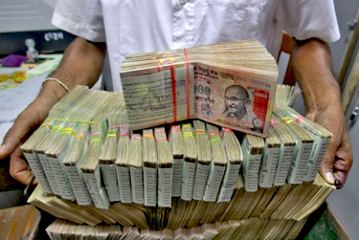
Black moneySources said that the SIT headed by retired Supreme Court Justice M B Shah has asked the 11 departments on its panel to furnish fine details of these cases and the status of their probes, including any problems being faced by investigators in taking the cases forward for prosecution or penalty.

The member departments/agencies of SIT are the Department of Revenue (under the Ministry of Finance), RBI, Intelligence Bureau, Enforcement Directorate, CBI, Income Tax department, Narcotics Control Bureau, Directorate of Revenue Intelligence, Financial Intelligence Unit, Research and Analysis Wing and the Foreign Tax and Tax Research wing under the Central Board of Direct Taxes (CBDT).

The sources said the SIT has asked for the data in order to understand the trends and magnitude of the menace of black money and generation of illegal funds in the country, which is done through a variety of ways like evasion of taxes and duties, flouting of foreign exchange laws, creation of disproportionate assets, creation of 'benami' properties within the country and outside and laundering of wealth obtained through illegal and corrupt means.

The departments, they said, are in the process of submitting these details in the stipulated format to SIT and these will be taken up during the next meeting of the panel, expected to take place some time next month.

RBI has recently directed all banks and financial institutions to provide the information and documents sought by the high-profile panel.

The SIT, formed upon the directions of Supreme Court, had its first meeting earlier this month here at the North Block office of the Finance Ministry.

The high-level team has also decided to look into the contentious issue of secrecy clauses in India's tax treaties with Switzerland and other countries.

Retired apex court judge Arijit Pasayat is the Vice Chairman of the SIT while top officials of the 11 high-profile agencies and departments are its members.

After the first meeting of the SIT, the government had said the detailed modalities of proceeding further with the Supreme Court mandate were discussed and the road map decided.

The SIT's mandate, as notified, requires it to go into "all issues relating to matters concerning and arising from unaccounted monies of Hasan Ali Khan and Kashinath Tapariah".

Pune-based Khan, a stud farm owner, was arrested by Enforcement Directorate in connection with money laundering and tax evasion cases. Tapariah is his aide.

The other tasks of SIT include all investigations already started and pending or awaiting to be initiated with respect to any other known instances of the stashing away of unaccounted cash in foreign bank accounts by Indians or other entities operating in India.

The panel has also been empowered "to further investigate even where charge-sheets have been previously filed and SIT may register further cases and conduct appropriate investigations and initiate proceedings for the purpose of bringing back unaccounted monies unlawfully kept in bank accounts abroad."

The SIT will also keep the apex court informed about all major developments by filing periodic status reports in this regard, the government notification had said.

Comments

Add new comment

  • Coastaldigest.com reserves the right to delete or block any comments.
  • Coastaldigset.com is not responsible for its readers’ comments.
  • Comments that are abusive, incendiary or irrelevant are strictly prohibited.
  • Please use a genuine email ID and provide your name to avoid reject.
News Network
January 3,2020

Dhaka, Jan 3: Bangladesh's paramilitary force chief said on Thursday that a total of 445 Bangladeshi nationals returned from India in last two months following the publication of the National Register of Citizens (NRC) by the Indian government.

Border Guard Bangladesh (BGB) Director General Maj Gen Md Shafeenul Islam disclosed the figure during a press briefing here.

"About 1,000 people were arrested in 2019 for illegal border crossings from India to Bangladesh, with 445 of them returning home in November and December," he said.

After verifying their identities through local representatives, BGB came to know that all the intruders are Bangladeshis, Islam said, adding that 253 cases were lodged against them for illegal trespass, while initial investigations found that at least three of them were human traffickers.

The BGB Director said the trespassing did not create any tension between the border forces of Bangladesh and India.

Last week, Islam visited India where he said that the creation of the NRC is completely an "internal affair" of India and the cooperation between the border guarding forces of the two countries is very good.

He said the BGB will continue to do its work of preventing illegal border crossings as per its mandate.

A BGB delegation, led by Islam, was on a bilateral visit to India to hold DG-level border talks with its counterparts, the Border Security Force (BSF).

The talks took place from December 26-29, during which a host of issues related to cross-border smuggling and activities of criminals and others along the 4,096-km-long front were discussed.

Responding to a question, Islam said, "No discussion was held at the conference over the (NRC) issue".

He said during the five-day talks held in New Delhi, the BGB demanded that the BSF should take effective steps to prevent killings of Bangladeshis on frontiers as casualty figures sharply rose in 2019.

"The number of border killings in 2019 was highest in the last four years. As per our calculation, the number of such unexpected deaths was 35," the BGB chief said.

However, the BSF estimate of the casualty figure is much lower than our calculation, he said.

Islam said the BSF is following the policy of maintaining maximum restraint and minimal use of force even after being attacked by "armed border offenders".

A statement issued by the BSF last month in New Delhi after the conclusion of the DG-level talks said, "On the concern of the BGB regarding the death of Bangladeshi nationals on borders, it was informed to them that a non-lethal weapon policy is strictly followed by BSF personnel on borders.

"Firing is resorted to only in self-defence, when BSF patrols are gheraoed and attacked by ‘dah’ (a sharp-edged weapon) etc. It was specified that the BSF does not discriminate between criminals based on nationality," it said.

Comments

Add new comment

  • Coastaldigest.com reserves the right to delete or block any comments.
  • Coastaldigset.com is not responsible for its readers’ comments.
  • Comments that are abusive, incendiary or irrelevant are strictly prohibited.
  • Please use a genuine email ID and provide your name to avoid reject.
Agencies
January 24,2020

New Delhi, Jan 24: The government's plan to sell national carrier Air India may face political and legal headwinds with senior BJP leader Subramanian Swamy raising the red flag against the decision.

Days before the launch of bidding process by inviting Expressions of Interest (EoI) from potential suitors, Swamy has warned against such move, saying the issue was currently being discussed by a Parliamentary panel.

"Right now, it (Air India disinvestment) is before the consultative committee and I am a member of that. I have been asked to give a note which will be discussed in the next meeting. They can't go ahead without that," Swamy told media.

"If they do, I will go to court. They know that too," he cautioned.

A vocal opponent of Air India privatisation, Swamy had earlier suggested to list 49 per cent of Air India shares on stock exchanges while government holds 51 per cent in the carrier, as an alternative to selling its entire stake to private companies.

It has been reliably learnt that the Rajya Sabha member had expressed reservations over privatisation of Air India at the meeting of a Parliamentary consultative committee earlier this month.

After its failed first attempt, the Modi government has shown great zeal this time to sell Air India. It is set to offer a sweetened deal to potential buyers this time around by removing a large chunk of the debt and liabilities from the airline’s books.

Aviation Minister Hardeep Singh Puri had earlier said that Air India will be shut down, in case the disinvestment exercise is not successful.

Sources told media that the preliminary information memorandum (PIM) inviting EoI has been tentatively scheduled to be unveiled on January 27.

Air India is proposed to be sold along with its subsidiary Air India Express and ground-handling joint venture company Air India Singapore Airport Terminal Services Ltd (AISATS) in which it has 50 per cent stake.

Air India on January 10 came out with a tender for engaging aircraft asset management companies for carrying out technical audit of its entire fleet.

A Ministerial panel on Air India chaired by Home Minister Amit Shah on January 7 approved the draft EoI and a share purchase agreement (SPA) for the airline's disinvestment.

Comments

Add new comment

  • Coastaldigest.com reserves the right to delete or block any comments.
  • Coastaldigset.com is not responsible for its readers’ comments.
  • Comments that are abusive, incendiary or irrelevant are strictly prohibited.
  • Please use a genuine email ID and provide your name to avoid reject.
Agencies
May 14,2020

New Delhi, May 14: India may witness the death of additional 1.2-6 lakh children over the next one year from preventable causes as a consequence to the disruption in regular health services due to the COVID-19 pandemic, UNICEF has warned.

The warning comes from a new study that brackets India with nine other nations from Asia and Africa that could potentially have the largest number of additional child deaths as a consequence to the pandemic.

These potential child deaths will be in addition to the 2.5 million children who already die before their fifth birthday every six months in the 118 countries included in the study.

The estimate is based on an analysis by researchers from the Johns Hopkins Bloomberg School of Public Health published in the Lancet.  

This means the global mortality rate of children dying before their fifth birthday, one of the key progress indicators in all of the global development, could potentially increase for the first time since 1960 when the data was first collected.

There were 1.04 million under-5 deaths in India in 2017, of which nearly 50% (0.57 million) were neonatal deaths. The highest number of under-5 deaths was in Uttar Pradesh (312,800 which included 165,800 neonatal deaths) and Bihar (141,500 which included 75,300 neonatal deaths).

The researchers looked at three scenarios, factoring in parameters like reduction in workforce, supplies and access to healthcare for services like family planning, antenatal care, childbirth care, postnatal care, vaccination and preventive care for early childhood. The effects are modelled for a period of three months, six months and 12 months.  

In scenario-1 marked by 10-18% reduction of coverage of all the services, the number of additional children deaths could be in the range of 30,000 plus over three months, more than 60,000 over six months and above 120,000 over the next 12 months.

Coronavirus India update: State-wise total number of confirmed cases, deaths on May 13

The numbers sharply rose to nearly 55,000; 109,000 and 219,000 respectively for scenario-2, which was associated with an 18-28% drop in all the regular services.

But in the worst-case scenario in which 40-50% of the services are not available, the number of additional deaths ballooned to 1.5 lakhs in the three months in the short-range to nearly six lakhs over a year.

The ten countries that could potentially have the largest number of additional child deaths are Bangladesh, Brazil, Congo, Ethiopia, India, Indonesia, Nigeria, Pakistan, Uganda and Tanzania.

In countries with already weak health systems, COVID-19 is causing disruptions in medical supply chains and straining financial and human resources.

Visits to health care centres are declining due to lockdowns, curfews and transport disruptions, and due to the fear of infection among the communities. Such disruptions could result in potentially devastating increases in maternal and child deaths, the UN agency warned.

Comments

Add new comment

  • Coastaldigest.com reserves the right to delete or block any comments.
  • Coastaldigset.com is not responsible for its readers’ comments.
  • Comments that are abusive, incendiary or irrelevant are strictly prohibited.
  • Please use a genuine email ID and provide your name to avoid reject.