


Black money: SIT asks agencies to share data on ongoing case

June 29, 2014

New Delhi, Jun 29: The Special Investigation Team (SIT) on black money has sought details of all major cases of tax evasion and criminal financial fraud being probed by various investigative agencies which are mandated to keep a check on such instances.
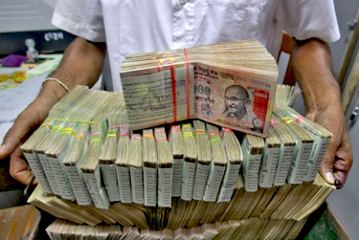
Black moneySources said that the SIT headed by retired Supreme Court Justice M B Shah has asked the 11 departments on its panel to furnish fine details of these cases and the status of their probes, including any problems being faced by investigators in taking the cases forward for prosecution or penalty.

The member departments/agencies of SIT are the Department of Revenue (under the Ministry of Finance), RBI, Intelligence Bureau, Enforcement Directorate, CBI, Income Tax department, Narcotics Control Bureau, Directorate of Revenue Intelligence, Financial Intelligence Unit, Research and Analysis Wing and the Foreign Tax and Tax Research wing under the Central Board of Direct Taxes (CBDT).

The sources said the SIT has asked for the data in order to understand the trends and magnitude of the menace of black money and generation of illegal funds in the country, which is done through a variety of ways like evasion of taxes and duties, flouting of foreign exchange laws, creation of disproportionate assets, creation of 'benami' properties within the country and outside and laundering of wealth obtained through illegal and corrupt means.

The departments, they said, are in the process of submitting these details in the stipulated format to SIT and these will be taken up during the next meeting of the panel, expected to take place some time next month.

RBI has recently directed all banks and financial institutions to provide the information and documents sought by the high-profile panel.

The SIT, formed upon the directions of Supreme Court, had its first meeting earlier this month here at the North Block office of the Finance Ministry.

The high-level team has also decided to look into the contentious issue of secrecy clauses in India's tax treaties with Switzerland and other countries.

Retired apex court judge Arijit Pasayat is the Vice Chairman of the SIT while top officials of the 11 high-profile agencies and departments are its members.

After the first meeting of the SIT, the government had said the detailed modalities of proceeding further with the Supreme Court mandate were discussed and the road map decided.

The SIT's mandate, as notified, requires it to go into "all issues relating to matters concerning and arising from unaccounted monies of Hasan Ali Khan and Kashinath Tapariah".

Pune-based Khan, a stud farm owner, was arrested by Enforcement Directorate in connection with money laundering and tax evasion cases. Tapariah is his aide.

The other tasks of SIT include all investigations already started and pending or awaiting to be initiated with respect to any other known instances of the stashing away of unaccounted cash in foreign bank accounts by Indians or other entities operating in India.

The panel has also been empowered "to further investigate even where charge-sheets have been previously filed and SIT may register further cases and conduct appropriate investigations and initiate proceedings for the purpose of bringing back unaccounted monies unlawfully kept in bank accounts abroad."

The SIT will also keep the apex court informed about all major developments by filing periodic status reports in this regard, the government notification had said.

Comments

Add new comment

  • Coastaldigest.com reserves the right to delete or block any comments.
  • Coastaldigset.com is not responsible for its readers’ comments.
  • Comments that are abusive, incendiary or irrelevant are strictly prohibited.
  • Please use a genuine email ID and provide your name to avoid reject.
Agencies
May 31,2020

New Delhi, May 31: Congress leader Kapil Sibal on Sunday questioned the Prime Minister on how much money has been given to labourers from the PM-CARES Fund.

"I would like to ask Prime Minister Modi, 'Can you tell us how much money did you give to labourers from your PM-CARES Fund?' I request him to answer this question. Many people died during this period, some died while walking, some died in the train, some died of hunger," Sibal said while addressing a virtual press conference.

The senior Congress leader further asked how much ex gratia did the Prime Minister give to the labourers who died in the corona crisis while negotiating the lockdown.

"I refer you to Section 12 of the Disaster Management Act. It says that ex gratia assistance on account of the loss of life and also assistance for the restoration of livelihood should be provided by the government. Did the government give ex gratia assistance to people who died in the crisis? The act also mentions special provisions for widows and orphans. The government should clarify how much assistance they gave to such people," he said.

Sibal said that the government should keep aside its agenda for the last six years and concentrate on making pro-poor policies.

"In the coming days, our economy is going to go into the negative territory as also confirmed by RBI. There are 45 crore labourers in our country. What will be their state? We have to look at our future. That is why we want to request the government that the agenda that they have run over the last six years should be kept aside and that government should care about the poor and draft policies for them," the Congress leader said.

Comments

Add new comment

  • Coastaldigest.com reserves the right to delete or block any comments.
  • Coastaldigset.com is not responsible for its readers’ comments.
  • Comments that are abusive, incendiary or irrelevant are strictly prohibited.
  • Please use a genuine email ID and provide your name to avoid reject.
News Network
April 25,2020

New Delhi, Apr 25: Neighbourhood and standalone shops, including those selling garments, mobile phones, hardware and stationery items have been allowed to open but those located in market places, malls and COVID-19 hotspots and containment zones, will continue to remain shut till May 3.

In rural areas, all shops, except those in single and multi-brand shopping malls, are allowed to open.

However, a Home Ministry official said the final decision of whether to allow the additional shops to open or not will be taken by the state governments and Union Territory administrations depending on their respective COVID-19 situation.
 
While allowing opening of more shops, a move seen as a relief to people who have been under lockdown since March 24, the government order issued on Friday night said the shops will be functioning with 50 per cent of workforce and after adhering strictly to precautions which include social distancing and wearing of masks.

The Union Home Ministry also said malls, liquor and cigarette shops, sale of non-essential items through e-commerce platforms continue to remain shut.

Restaurants, hair salons and barber shops will not be allowed to open as these render services and do not fall under the shop category.

Amending its April 15 order, Union Home Secretary Ajay Bhalla said in the Friday night order that "all shops, including neighbourhood shops and standalone shops, shops in residential complexes, within the limits of municipal corporations and municipalities, registered under the the Shops and Establishment Act of the respective State and UT" will be allowed to open during the lockdown.

The ministry also said shops located in registered markets located outside the municipal corporations and municipalities can open after following the drill of social distancing and wearing of masks but with 50 per cent of strength.

However, single and multi-brands shall continue to remain closed in these areas also.

"All shops registered under the the Shops and Establishment Act of the respective State/UT, including shops in residential complexes and market complexes, except shops in multi-brand and single brand malls, outside the limits of municipal corporations and municipalities, with 50 per cent strength of workers with wearing of masks and social distancing being mandatory" will be allowed to function, the order said.

In a statement on Saturday, the Home Ministry said the order implies that in rural areas, all shops, except those in shopping malls are allowed to open.

In urban areas, all standalone shops, neighbourhood shops and shops in residential complexes are allowed to open.

Shops in markets and market complexes and shopping malls are not allowed to open.

"It is clarified that sale by e-commerce companies will continue to be permitted for essential goods only," the order said and also added that sale of liquor and other items continues to be prohibited as specified in the national directives for COVID-19 management.

The ministry said that liquor shops were given licence under the Excise Act of the states and the establishments thrown open from Saturday were covered under the Shops and Establishment Act of the states.

Sale of cigarettes, gutka are continue to be prohibited during the lockdown.

"As specified in the consolidated revised guidelines, these shops will not be permitted to open in areas, whether rural or urban, which are declared as containment zones by respective States and Union Territories," the statement said.

The lockdown was first announced by Prime Minister Narendra Modi on March 24 in a bid to combat the coronavirus pandemic. It was further extended till May 3.

Comments

Add new comment

  • Coastaldigest.com reserves the right to delete or block any comments.
  • Coastaldigset.com is not responsible for its readers’ comments.
  • Comments that are abusive, incendiary or irrelevant are strictly prohibited.
  • Please use a genuine email ID and provide your name to avoid reject.
News Network
February 19,2020

New Delhi, Feb 19: India will switch to the world's cleanest petrol and diesel from April 1 as it leapfrogs straight to Euro-VI emission compliant fuels from Euro-IV grades now - a feat achieved in just three years and not seen in any of the large economies around the globe.

India will join the select league of nations using petrol and diesel containing just 10 parts per million of sulphur as it looks to cut vehicular emissions that are said to be one of the reasons for the choking pollution in major cities.

Sanjiv Singh, Chairman of Indian Oil Corp (IOC) - the firm that controls roughly half of the country's fuel market, said almost all refineries began producing ultra-low sulphur BS-VI (equivalent to Euro-VI grade) petrol and diesel by the end of 2019 and oil companies have now undertaken the tedious task of replacing every drop of fuel in the country with the new one.

"We are absolutely on track for supplying BS-VI fuel from April 1. Almost all refineries have begun supplying BS-VI fuel and the same has reached storage depots across the country," he said.

From storage depots, the fuel has started travelling to petrol pumps and in the next few weeks all of them will only have BS-VI grade petrol and diesel, he said. "We are 100 per cent confident that fuel that will flow from nozzles at all the petrol pumps in the country on April 1 will be BS-VI emission compliant fuel."

India adopted Euro-III equivalent (or Bharat Stage-III) fuel with a sulphur content of 350 ppm in 2010 and then took seven years to move to BS-IV that had a sulphur content of 50 ppm. From BS-IV to BS-VI it took just three years.

"It was a conscious decision to leapfrog to BS-VI as first upgrading to BS-V and then shifting to BS-VI would have prolonged the journey to 4 to 6 years. Besides, oil refineries, as well as automobile manufacturers, would have had to make investments twice - first to producing BS-V grade fuel and engines and then BS-VI ones," he said.

State-owned oil refineries spent about Rs 35,000 crore to upgrade plants that could produce ultra-low sulphur fuel. This investment is on top of Rs 60,000 crore they spent on refinery upgrades in the previous switchovers.

BS-VI has a sulphur content of just 10 ppm and emission standards are as good as CNG.

Originally, Delhi and its adjoining towns were to have BS-VI fuel supplies by April 2019 and the rest of the country was to get same supplies from April 2020.

But oil marketing companies switched over to supply of BS-VI grade fuels in the national capital territory of Delhi on April 1, 2018.

The supply of BS-VI fuels was further extended to four contiguous districts of Rajasthan and eight of Uttar Pradesh in the National Capital Region (NCR) on April 1, 2019, together with the city of Agra.

BS-VI grade fuels were made available in 7 districts of Haryana from October 1, 2019.

Singh said the new fuel will result in a reduction in NOx in BS-VI compliant vehicles by 25 per cent in petrol cars and by 70 per cent in diesel cars.

The switchover, he said, is a tedious task as every drop of old, higher-sulphur content fuel has to be flushed out in depots, pipelines and tanks before being replaced by BS-VI.

"We are confident of disruption-free switchover to BS-VI supplies across the country," he said. "What we will be supplying is the best quality available anywhere in the world. You don't have any better fuel that is supplied in any part of the world. Perhaps our BS-VI fuel will be better than equivalent fuel in some parts of the US and Europe."

India adopted a fuel upgradation programme in the early 1990s. Low lead gasoline (petrol) was introduced in 1994 in Delhi, Mumbai, Kolkata and Chennai. On February 1, 2000, unleaded gasoline was mandated nationwide.

Similarly, BS-2000 (Euro-I equivalent, BS-1) vehicle emission norms were introduced for new vehicles from April 2000. BS-II (Euro-II equivalent) emission norms for new cars were introduced in Delhi from 2000 and extended to the other metro cities in 2001.

Benzene limits have been reduced progressively from 5 per cent in 2000 to 1 per cent nationwide. Lead content in gasoline was removed in phases and only unleaded gasoline is being produced and sold from February 1, 2000.

The octane number of gasoline signifies the improved performance of the engine. Loss in octane number due to phasing out of lead was made up by installing new facilities in the refinery and changes in refinery operation. RON (Research Octane Number) of gasoline for BS-2000 spec was increased to 88. This has over time been increased to 91.

Singh said sulphur reduction will reduce Particulate Matter (PM) emissions even in the in-use older generation diesel vehicles.

Comments

Add new comment

  • Coastaldigest.com reserves the right to delete or block any comments.
  • Coastaldigset.com is not responsible for its readers’ comments.
  • Comments that are abusive, incendiary or irrelevant are strictly prohibited.
  • Please use a genuine email ID and provide your name to avoid reject.