


Blasts hit churches, hotels across Sri Lanka; Over 200 killed, 500 injured

Agencies
April 21, 2019

Colombo, Apr 21: At least nine foreigners were among over 200 people killed in six near simultaneous and coordinated explosions that rocked three churches and three luxury hotels frequented by tourists in Sri Lanka on Easter Sunday, in one of the deadliest blasts in the country's history, officials said.

The blasts targeted St Anthony's Church in Colombo, St Sebastian's Church in the western coastal town of Negombo and another church in the eastern town of Batticaloa around 8.45 a.m. (local time) as the Easter Sunday mass were in progress, police spokesman Ruwan Gunasekera said.

Three explosions were reported from the five-star hotels - the Shangri-La, the Cinnamon Grand and the Kingsbury in Colombo. Foreigners and locals who were injured in hotel blasts were admitted to the Colombo General Hospital.

Harsha de Silva, Sri Lanka's Minister of Economic Reforms and Public Distribution, said that there have been "many casualties including foreigners."

"45 people died in Colombo where three hotels and a church were hit, while more than 90 were killed in Negombo and 27 in Batticaloa," hospital sources said, adding that more than 450 people were injured in the blasts.

Among the 45 bodies at the Colombo National Hospital there are nine foreigners, they said, adding that Americans and British citizens were among the dead.

The Colombo National Hospital spokesperson, Dr Samindi Samarakoon, said more than 300 people have been admitted with injuries.

Dr Kalanidhi Ganeshalingam, the spokesperson for the Batticaloa hospital, said over 100 have been admitted with injuries from St Michael's Church explosion.

No group has claimed responsibility for Sunday's attacks.

However, most of the deadly attacks in the past in Sri Lanka were carried out by the Liberation Tigers of Tamil Eelam (LTTE) which ran a military campaign for a separate Tamil homeland in the northern and eastern provinces of the island nation for nearly 30 years before its collapse in 2009 after the Sri Lankan Army killed its supreme leader Velupillai Prabhakaran.

President Maithripala Sirisena has appealed for calm.

"I have been shocked by this totally unexpected incidents. The security forces haven been asked to take all action necessary," Sirisena said.

Prime Minister Ranil Wickremesinghe termed the blasts as "cowardly attacks" and said his government was working to "contain the situation."

"I call upon all Sri Lankans during this tragic time to remain united and strong... The government is taking immediate steps to contain this situation," he tweeted.

The Sri Lankan government has summoned an emergency meeting. All necessary emergency steps have been taken by the government, Harsha de Silva said.

"Horrible scenes. I saw many body parts strewn all over. Emergency crews are at all locations in full force. We, at 1990 also have close to 20 units at various locations. We took multiple casualties to hospital. Hopefully saved many lives," he said.

The Indian High Commission in Colombo said that it was closely monitoring the situation in Sri Lanka.

"We are closely monitoring the situation. Indian citizens in need of assistance or help and for seeking clarification may call the following numbers: +94777903082 +94112422788 +94112422789," the High Commission tweeted.

"In addition to the numbers given, Indian citizens in need of assistance or help and for seeking clarification may also call the following numbers +94777902082 +94772234176," it said.

The first blasts were reported at St Anthony's church in Colombo and St Sebastian's Church in Negombo just outside the capital.

"A bomb attack to our church, please come and help if your family members are there," read a post in English on the Facebook page of the St Sebastian's Church.

The blasts were followed by explosions at three hotels in Colombo and the church in Batticaloa.

Images circulated on social media and TV channels showed severely damaged St Sebastian's church building, with a shattered ceiling and blood on the pews.

Heavy security has been deployed at the Bandaranaike International Airport after the multiple explosions in the country. The riot police and the Special Task Force, extra police security has been deployed around the airport, state-run Daily Times reported.

Leave of all police personnel has been cancelled in the wake of blasts.

Doctors, nurses and health officials who were on leave have been asked to report to work, Health Ministry sources said.

The government schools have been closed for Monday and Tuesday.

Former President Mahinda Rajapaksa, under whose leadership the Lankan Army crushed the LTTE, termed the attack as "absolutely barbaric".

"It is absolutely barbaric to see such violent attacks on such a holy day. Whoever is behind these attacks must be dealt with immediately. My thoughts and prayers are with the families that lost loved ones and all of Sri Lanka," he said.

"We will not tolerate such violence, such acts of terrorism, of cowardice within our borders once again. We will stand together and rise up against it as one voice. We will stand united as a nation," he said.

Comments

Althaf
 - 
Sunday, 21 Apr 2019

In india Hindutva Terrorists blast bombs and try to put blame on musims head. Same way In sri lanka Buddists do all these terror work to blame muslims.

Add new comment

  • Coastaldigest.com reserves the right to delete or block any comments.
  • Coastaldigset.com is not responsible for its readers’ comments.
  • Comments that are abusive, incendiary or irrelevant are strictly prohibited.
  • Please use a genuine email ID and provide your name to avoid reject.
coastaldigest.com news network
August 8,2020

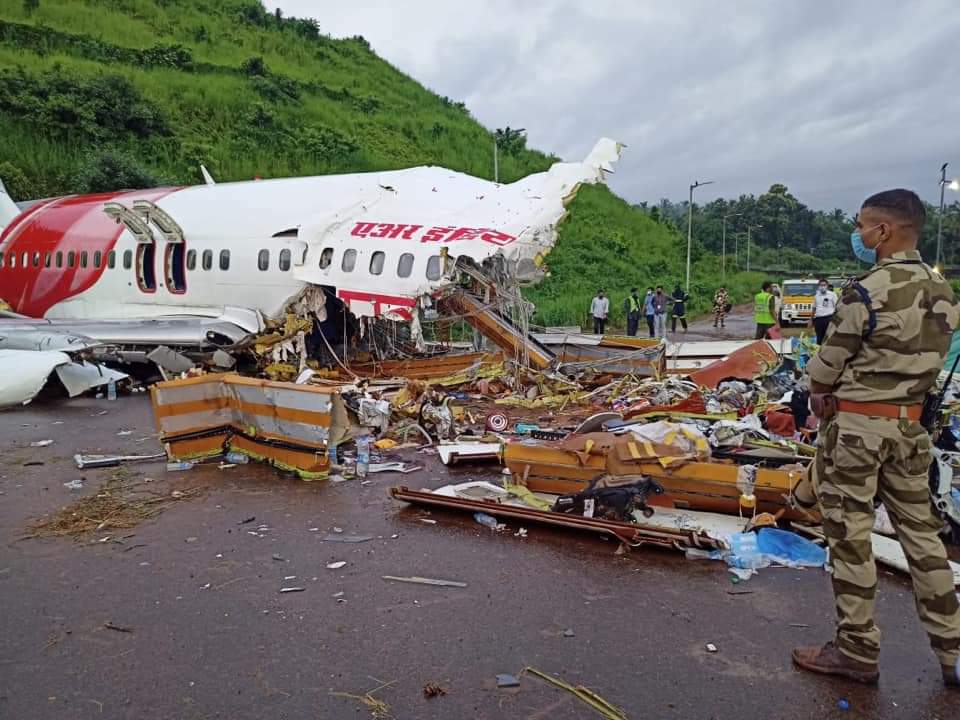
Kozhikode, Aug 8: A tailwind or crosswind could be the reason for the Air India Express flight mishap at Kozhikode international airport in Kerala, according to some aviation experts. 

Team of DGCA and AIE already reached the spot. With the death of the captain and co-pilot in the mishap, the investigation would be focusing mainly on the voice recorders and other technical aspects.

It is learnt that the ill-fated aircraft, IX 1344 with 190 onboard including crew, was initially planning to land on runway-28 of the airport. But later the pilot opted runway-10 which is toward the other direction. Pilots would be taking the decisions on the basis of inputs from ATC.

The questions now doing the rounds are what made the pilot opt runway-10 and whether the tabletop runway lacked adequate safety parameters.

An aviation expert, who didn't want to be quoted, said that Capt Deepak Sathe, who was commandeering the aircraft, was a well-experienced pilot and was also familiar with the terrains. Hence the chances of any error from his part was very unlikely. Hence a fair in-depth probe was required to find the exact cause.

Though the Kozhikode airport has an Instrument Landing System, it was of category-I for which pilot's visibility is very crucial toward a touchdown. Since it is a tabletop airport and rough weather prevailing in the region, the chances of tailwind was also high, said sources.

There had been safety concerns about the airport over quite some time. In 2011 aviation safety consultant captain Mohan Ranganathan reportedly gave a report citing the safety issues, especially the buffer zones at the end of the runway.

However, an AAI officer said that rectification steps were already done by last year by widening the Runway End Safety Area (RESA) from 90 metre to 240 metre. However, the length of the runway had to be reduced to 2,700 metre from 2,850. The AAI was also constantly pressing for increasing the runway length to 3,150 metres. But that was getting delayed due to land acquisition issues pending with the state government.

stm88 info live rtp slot

slot auto scatter hitam

Comments

Add new comment

  • Coastaldigest.com reserves the right to delete or block any comments.
  • Coastaldigset.com is not responsible for its readers’ comments.
  • Comments that are abusive, incendiary or irrelevant are strictly prohibited.
  • Please use a genuine email ID and provide your name to avoid reject.
News Network
April 6,2020

Tokyo, April 6: Japan Prime Minister Shinzo Abe is planning to declare a state of emergency in view of the surging cases of coronavirus in the country, especially in Tokyo and other large cities, government sources said on Monday.

Pressure had been mounting on Abe to make the declaration amid a spurt in COVID-19 cases recently, with calls for the move from Tokyo Governor Yuriko Koike and the Japan Medical Association intensifying, Xinhua news agency reported.

The Tokyo metropolitan government, along with healthcare specialists, said that the number of hospital beds available for coronavirus patients will soon reach capacity, with the health ministry rapidly trying to secure more beds.

Adding to pressure on the government to demonstrably bolster its preventive and countermeasures to the spread of the virus, a panel of government experts warned recently that the country's healthcare system could collapse if coronavirus cases continue to spike.

The healthcare system in Tokyo and four other prefectures are under increased strain and "drastic countermeasures need to be taken as quickly as possible," the experts said.

As of Sunday, 143 new cases of COVID-19 were recorded in Tokyo, a record daily high for the capital, bringing the total to 1,034, with Japan's health ministry and local governments adding that nationwide cases rose to 3,531 as of Sunday afternoon.

Comments

Add new comment

  • Coastaldigest.com reserves the right to delete or block any comments.
  • Coastaldigset.com is not responsible for its readers’ comments.
  • Comments that are abusive, incendiary or irrelevant are strictly prohibited.
  • Please use a genuine email ID and provide your name to avoid reject.
News Network
May 5,2020

May 5: Global coronavirus deaths reached 250,000 on Monday after recorded infections topped 3.5 million, a news agency tally of official government data showed, although the rate of fatalities has slowed.

North America and European countries accounted for most of the new deaths and cases reported in recent days, but numbers were rising from smaller bases in Latin America, Africa and Russia.

Globally, there were 3,062 new deaths and 61,923 new cases over the past 24 hours, taking total cases to 3.58 million.

That easily exceeds the estimated 140,000 deaths worldwide in 2018 caused by measles, and compares with around 3 million to 5 million cases of severe illness caused annually by seasonal influenza, according to the World Health Organization (WHO).

While the current trajectory of COVID-19 falls far short of the 1918 Spanish flu, which infected an estimated 500 million people, killing at least 10% of patients, experts worry the available data is underplaying the true impact of the pandemic.

The concerns come as several countries begin to ease strict lockdowns that have been credited with helping contain the spread of the virus.

"We could easily have a second or a third wave because a lot of places aren't immune," Peter Collignon, an infectious diseases physician and microbiologist at Canberra Hospital, told Reuters. He noted the world was well short of herd immunity, which requires around 60% of the population to have recovered from the disease.

The first death linked to COVID-19 was reported on Jan. 10 in Wuhan, China after the coronavirus first emerged there in December. Global fatalities grew at a rate of 1-2% in recent days, down from 14% on March 21, according to the Reuters data.

DEATH RATE ANOMALIES

Mortality rates from recorded infections vary greatly from country to country.

Collignon said any country with a mortality rate of more than 2% almost certainly had underreported case numbers. Health experts fear those ratios could worsen in regions and countries less prepared to deal with the health crisis.

"If your mortality rate is higher than 2%, you've missed a lot of cases," he said, noting that countries overwhelmed by the outbreak were less likely to conduct testing in the community and record deaths outside of hospitals.

In the United States, around half the country's state governors partially reopened their economies over the weekend, while others, including New York Governor Andrew Cuomo, declared the move was premature.

In Britain, Prime Minister Boris Johnson, who battled COVID-19 last month, has said the country was over the peak but it was still too early to relax lockdown measures.

Even in countries where the suppression of the disease has been considered successful, such as Australia and New Zealand which have recorded low daily rates of new infections for weeks, officials have been cautious.

Australian Prime Minister Scott Morrison has predicated a full lifting of curbs on widespread public adoption of a mobile phone tracking app and increased testing levels.

Comments

Add new comment

  • Coastaldigest.com reserves the right to delete or block any comments.
  • Coastaldigset.com is not responsible for its readers’ comments.
  • Comments that are abusive, incendiary or irrelevant are strictly prohibited.
  • Please use a genuine email ID and provide your name to avoid reject.