Budget shocker: Modi govt proposes tax on non-taxpaying NRIs

News Network
February 1, 2020

New Delhi, Feb 1: The budget is a little more demanding of the non-resident Indian. Firstly, to be categorized a non-resident, an Indian now has to stay abroad for 240 days, against 182 previously. In other words, an Indian national, to claim the non-resident status, can’t stay in India for 120 days or more in a year.

“We've made changes in Income Tax Act where if an Indian citizen stays out of the country for more than 182 days, he becomes non-resident,” said Revenue Secy Ajay Bhushan Pandey. “Now in order to become non-resident, he has to stay out of the country for 240 days.”

The second rule is more deadly: a non-resident Indian, who is not taxed in the foreign country, will become taxable in India.

“If any Indian citizen is not a resident of any country in the world, he'll be deemed to be a resident of India and his worldwide income will be taxed,” said Pandey.

"It's a very big disadvantage for Indians residing overseas only to save on tax,"  said Dinesh Kanabar of Dhruva Advisors. He expects that many Indians stay abroad in countries, where the income tax is low or nil such as Dubai. Now they will be taxed in India if they are in the income tax bracket.

For Indians, finance minister Nirmala Sitharaman revised income tax rats and proposed new tax slabs.

The new income tax rates will, however, not allow exemptions under Section 80C. Home loan exemption, insurance exemptions, the standard deduction will also not stay under the regime.

"The new tax regime will be optional and the taxpayers will be given the choice to either remain in the old regime with exemptions and deductions or opt for the new reduced tax rate without those exemptions," Sitharaman said while unveiling Budget.

Comments

Kannadiga
 - 
Saturday, 1 Feb 2020

Good news NRIs vote for modi . 

Add new comment

  • Coastaldigest.com reserves the right to delete or block any comments.
  • Coastaldigset.com is not responsible for its readers’ comments.
  • Comments that are abusive, incendiary or irrelevant are strictly prohibited.
  • Please use a genuine email ID and provide your name to avoid reject.
News Network
February 26,2020

Feb 26: The Tamil Nadu government on Tuesday claimed that it prevented Karnataka from discussing the contentious Mekedatu reservoir issue at the Cauvery Water Management Authority (CWMA) meeting held in New Delhi.

Besides the representatives of Tamil Nadu and Karnataka at the fifth meeting of CWMA, presided over by Central Water Commission Chairman R K Jain, officials of Kerala and Puducherry also participated.

CWMA member and TN PWD Secretary K Manivasan told reporters after the meeting that the state government prevented Karnataka from discussing the dam issue by pointing out the pending petitions in the Supreme Court against the project filed by the E Palaniswami government.

"We have told participants of the meeting that Mekedatu reservoir will be against the interests of Tamil Nadu and its farmers. Our consistent stand is that it should not be built at any cost. Finally the issue was not discussed in the meeting," Manivasan said.

The Mekedatu reservoir is proposed to be constructed by Karnataka across Cauvery river near Mekedatu, about 110 km from Bengaluru, in Kanakapura taluk.

It was first proposed along with Shivanasamudra hydro power project at Shimsa in 2003 with an intention to use the water for a hydro power station and supply drinking water to Bengaluru city. It was designed to store 67 tmc feet of water.

While Tamil Nadu is claiming that the construction of a balancing reservoir will disturb Cauvery water flow to the state affecting irrigation, Karnataka says the project is basically designed to take care of the drinking water needs of Bengaluru after releasing water to Tamil Nadu as per the quantum specified by the Cauvery water disputes tribunal.

Comments

Add new comment

  • Coastaldigest.com reserves the right to delete or block any comments.
  • Coastaldigset.com is not responsible for its readers’ comments.
  • Comments that are abusive, incendiary or irrelevant are strictly prohibited.
  • Please use a genuine email ID and provide your name to avoid reject.
News Network
July 29,2020

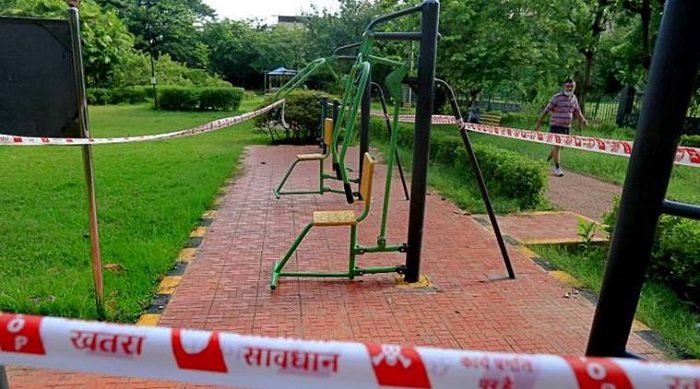
New Delhi, July 29: The government of India today announced Unlock 3.0, lifting of night curfew from August 1 and opening of yoga institutes and gymnasiums from August 5 while educational institutes will remain closed throughout August.

According to the Unlock 3.0 guidelines issued by the Ministry of Home Affairs (MHA), the lockdown in containment zones will be extended until August 30. The new guidelines will be in effect from August 1.

The operation of Metro rail and international flights will remain suspended. Cinema halls, swimming pools, entertainment parks, theatres, bars, auditoriums, assembly halls and similar places will remain shut. Large gatherings are also prohibited.

Yoga institutes and gymnasiums will start operating from August 5 for which the Ministry of Health and Family Welfare will be issuing Standard Operating Procedures. 

Independence Day celebrations will be held with social distancing norms in place.

Restrictions on the movement of individuals during the night (Night curfew between 10 PM and 5 AM) have been removed.

According to the order, states have been given powers to prohibit certain activities outside containment zones or impose such restrictions as deemed necessary based on their assessment of the situation.

"However, there shall be no restriction on inter-state and intra-state movement of persons and goods. No separate permission/approval/e-permit will be required for such movements," the order said. 

In the previous two Unlock guidelines, the government had substantially opened various activities.

Comments

Add new comment

  • Coastaldigest.com reserves the right to delete or block any comments.
  • Coastaldigset.com is not responsible for its readers’ comments.
  • Comments that are abusive, incendiary or irrelevant are strictly prohibited.
  • Please use a genuine email ID and provide your name to avoid reject.
News Network
January 13,2020

Bengaluru, Jan 13: Though he submitted his resignation as leader of the opposition over a month ago, former chief minister Siddaramaiah continues as the face of the Congress in Karnataka.

However, this may change as All India Congress Committee (AICC) interim president Sonia Gandhi has summoned Siddaramaiah to Delhi for a final consultation over change of guard. Over the past month, there has been speculation over the possibility of Congress persisting with Siddaramaiah as opposition leader and either party troubleshooter DK Shivakumar or former ministers MB Patil, HK Patil or Eshwar Khandre replacing incumbent president Dinesh Gundu Rao. Both tendered resignations owing moral responsibility for the party's dismal performance in the 15 bypolls held last month.

In the past 24 hours, there has been talk of Siddaramaiah being asked to be the state unit president and vacating the other post for a young turk or experience legislator including the likes of Shivakumar who could be the face of KPCC by 2023 if he gets a clean chit from the ED in cases of money-laundering, etc. Seniors, including former KPCC president and DyCM G Parameswara and former minister HK Patil, are strong contenders to be leader of the opposition if Siddaramaiah is asked to vacate the post.

However, sources in the Siddaramaiah camp dismissed the possibility of him becoming KPCC president. "He has never aspired for the post and the high command is not inclined to do it," said a member in his camp.

Siddaramaiah may meet Sonia on Tuesday morning. It's still unclear if any other KPCC functionaries have been summoned. Sources said Sonia is scheduled to leave India for medical treatment on January 15 and wanted to complete the consultations about Karnataka. The high command has reportedly gone through reports submitted by party observers Madhusudan Mistry and Parameswara.

Comments

Add new comment

  • Coastaldigest.com reserves the right to delete or block any comments.
  • Coastaldigset.com is not responsible for its readers’ comments.
  • Comments that are abusive, incendiary or irrelevant are strictly prohibited.
  • Please use a genuine email ID and provide your name to avoid reject.