


Build a university at Babri mosque site, says AAP leader

Agencies
December 5, 2018

New Delhi, Dec 5: Delhi Deputy Chief Minister Manish Sisodia has said a university should come up at the site of the disputed Babri Masjid-Ram Janmabhoomi site in Ayodhya in Uttar Pradesh. He emphasised that ‘Ram Rajya’ can be ushered through education and not by constructing a grand temple.

“My stand is that with a consensus from both sides (Hindus and Muslims), let’s build a good university at that place,” Sisodia said in an interview with NDTV that was aired on Sunday. “Hindu, Muslim, Christian, Indian, foreigner — students from all communities may attend that university and from there should spring Lord Ram’s ideals. Ram Rajya would come if we teach our children and not by building a mandir,” Sisodia said when asked what was the Aam Aadmi Party’s (AAP) stand on Ram Mandir debate.

Asked about the current wave of caste politics in Indian politics, Sisodia, who is also Delhi’s Education Minister, said that the only way to end it was through education. “When I was at Japan University, the people there were talking about a new concept of running cars with hydrogen and on the same day on Twitter we were debating about Lord Hanuman’s caste. It is really unfortunate but the only way to move forward is by education,” he said.

Without taking any particular name, Sisodia slammed the political parties of spreading casteism at university levels “by appointing Vice Chancellors subscribing to Hindutva who try to impose it on the students”. “On one hand, you talk about ‘Digital India’ but your actions resemble that of Vijay Mallya,” Sisodia said.

Talking about the Lok Sabha elections due next year, Sisodia said the AAP government would be focusing on all the seven Lok Sabha seats in Delhi. “We will also keep our focus on Punjab and Haryana for the 2019 elections,” he said.

When asked whether Delhi Police should be with the state government, Sisodia remarked that even if his government plans to take an action, it never gets implemented on the ground level because of different governments controlling different authorities in Delhi. “Delhi Police need to be under the Delhi government,” he said. He also said the previous Sheila Dikshit-led government “didn’t do any work” in Delhi. “If her government had done anything, we wouldn’t have to struggle like this to get work done,” he said.

Comments

Mute spectator
 - 
Thursday, 6 Dec 2018

Dear Fairman,


Please don't convert an unfair activity of demolishing Babri Masjid as fair.  It is a cowardly act of safeguarding democracy.  Tomorrow another praying place will be demolished in the guise of similar reason and you keep on constructing hospitals?


FAIRMAN
 - 
Wednesday, 5 Dec 2018

Well said,

Very Very Well said, as the same was suggested by many in the past.


Such a contraversials  definitely devide the nation. Animity can spike without bounds and borders.


-  Yesterday there was Masjid.

- Today someone destroying it telling Baber had destroyed the Masjid and built temple.

- Tomorrow when Muslims become stronger, they might distroy the Mandir and build Masjid.


Our future children will die, suffer. We dont want to repeat again as what haened;

The God does not want to spill the blood for Masjid or Mandir.


Let us make our future generation live in peace than today we do.


God bless India.


Add new comment

  • Coastaldigest.com reserves the right to delete or block any comments.
  • Coastaldigset.com is not responsible for its readers’ comments.
  • Comments that are abusive, incendiary or irrelevant are strictly prohibited.
  • Please use a genuine email ID and provide your name to avoid reject.
News Network
May 14,2020

May 14: The UN’s children agency has warned that an additional 6,000 children could die daily from preventable causes over the next six months as the COVID-19 pandemic weakens the health systems and disrupts routine services, the first time that the number of children dying before their fifth birthday could increase worldwide in decades.

As the coronavirus outbreak enters its fifth month, the UN Children’s Fund (UNICEF) requested USD 1.6 billion to support its humanitarian response for children impacted by the pandemic.

The health crisis is “quickly becoming a child rights crisis. And without urgent action, a further 6,000 under-fives could die each day,” it said.

With a dramatic increase in the costs of supplies, shipment and care, the agency appeal is up from a USD 651.6 million request made in late March – reflecting the devastating socioeconomic consequences of the disease and families’ rising needs.

"Schools are closed, parents are out of work and families are under strain," UNICEF Executive Director Henrietta Fore said on Tuesday.

 “As we reimagine what a post-COVID world would look like, these funds will help us respond to the crisis, recover from its aftermath, and protect children from its knock-on effects.”

The estimate of the 6,000 additional deaths from preventable causes over the next six months is based on an analysis by researchers from the Johns Hopkins Bloomberg School of Public Health, published on Wednesday in the Lancet Global Health Journal.

UNICEF said it was based on the worst of three scenarios analysing 118 low and middle-income countries, estimating that an additional 1.2 million deaths could occur in just the next six months, due to reductions in routine health coverage, and an increase in so-called child wasting.

Around 56,700 more maternal deaths could also occur in just six months, in addition to the 144,000 likely deaths across the same group of countries. The worst case scenario, of children dying before their fifth birthdays, would represent an increase "for the first time in decades,” Fore said.

"We must not let mothers and children become collateral damage in the fight against the virus. And we must not let decades of progress on reducing preventable child and maternal deaths, be lost,” she said.

Access to essential services, like routine immunisation, has already been compromised for hundreds of millions of children and threatens a significant increase in child mortality.

According to a UNICEF analysis, some 77 per cent of children under the age of 18 worldwide are living in one of 132 countries with COVID-19 movement restrictions.

The UN agency also spotlighted that the mental health and psychosocial impact of restricted movement, school closures and subsequent isolation are likely to intensify already high levels of stress, especially for vulnerable youth.

At the same time, they maintained that children living under restricted movement and socio-economic decline are in greater jeopardy of violence and neglect. Girls and women are at increased risk of sexual and gender-based violence.

The UNICEF pointed out that in many cases, refugee, migrant and internally displaced children are experiencing reduced access to protection and services while being increasingly exposed to xenophobia and discrimination.

“We have seen what the pandemic is doing to countries with developed health systems and we are concerned about what it would do to countries with weaker systems and fewer available resources,” Fore said.

In countries suffering from humanitarian crises, UNICEF is working to prevent transmission and mitigate the collateral impacts on children, women and vulnerable populations – with a special focus on access to health, nutrition, water and sanitation, education and protection.

To date, the UN agency said it has received USD 215 million to support its pandemic response, and additional funding will help build upon already-achieved results.

Within its response, UNICEF has reached more than 1.67 billion people with COVID-19 prevention messaging around hand washing and cough and sneeze hygiene; over 12 million with critical water, sanitation and hygiene supplies; and nearly 80 million children with distance or home-based learning.

The UN agency has also shipped to 52 countries, more than 6.6 million gloves, 1.3 million surgical masks, 428,000 N95 respirators and 34,500 COVID-19 diagnostic tests, among other items.

Comments

Add new comment

  • Coastaldigest.com reserves the right to delete or block any comments.
  • Coastaldigset.com is not responsible for its readers’ comments.
  • Comments that are abusive, incendiary or irrelevant are strictly prohibited.
  • Please use a genuine email ID and provide your name to avoid reject.
Agencies
August 4,2020

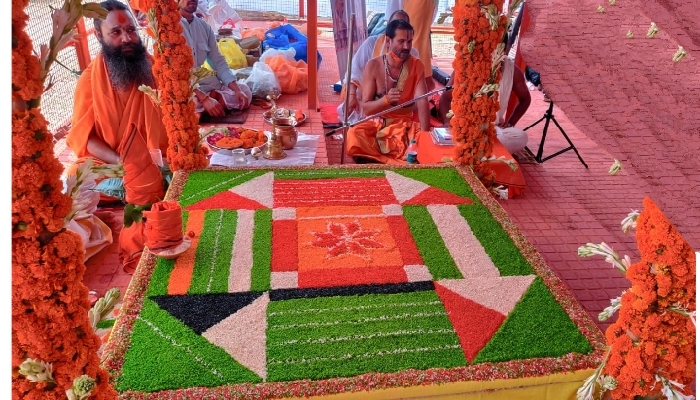
Ayodhya, Aug 4: Ramarchan puja begins at Ram Janmabhoomi site ahead of the foundation laying ceremony of Ram Temple in Ayodhya.
Ramarchan Puja is a prayer to invite all major gods and goddesses ahead of Lord Ram's arrival.

Mahesh Bhagchandka, one of the trustees of Ashok Singhal foundation as Yajman in the puja said, "This is being conducted at the temporary seat of Ramlalla. The pooja will be conducted in four phases."

Speaking about the third and fourth phases, he said: "In the third phase, Dashrath, father of Lord Ram with his wives will be worshipped and then all three brothers of Lord Ram - Laxman, Bharat and Shatrughan with their wives. Lord Hanuman ji will too be worshipped. Whereas in the fourth phase, Lord Ram will be worshipped."
Meanwhile, security has been heightened in Ayodhya ahead of the foundation laying ceremony.

Temples across the city is decorated with lights, diyas and flowers ahead of the grand event. Patna's Mahavir Mandir Trust is preparing over 1.25 lakh 'Raghupati Laddoos' for the occasion. Thes laddoos will be distributed as 'prasad' to devotees.

Uttar Pradesh Chief Minister Yogi Adityanath on Monday offered prayers at the Hanuman Garhi temple during his visit to Ayodhya to take stock of the preparations for the 'bhoomi pujan'.
He along with officials also visited 'Ram ki Paudi' to inspect the arrangements ahead of the foundation stone laying ceremony.

Prime Minister Narendra Modi is scheduled to lay the foundation stone of the Ram Temple in Ayodhya on August 5. 

Comments

Add new comment

  • Coastaldigest.com reserves the right to delete or block any comments.
  • Coastaldigset.com is not responsible for its readers’ comments.
  • Comments that are abusive, incendiary or irrelevant are strictly prohibited.
  • Please use a genuine email ID and provide your name to avoid reject.
Agencies
January 9,2020

The World Bank says that a lack of credit and drop in private consumption have led to a gloomy growth outlook for India with a steep cut in growth rate for the current fiscal year and only a modest gain projected for the next year.

India's growth rate is forecast to be only 5 per cent for the current fiscal year, weighed down by a growth of only 4.5 per cent in the July-September quarter, according to the 2020 Global Economic Prospects report released on Wednesday.

"In India, [economic] activity was constrained by insufficient credit availability, as well as by subdued private consumption," the Bank said.

The growth rate is forecast by the Bank to pick up to 5.8 per cent in the next fiscal year and to 6.1 per cent in 2021-22.

India's growth rate was 6.8 per cent in 2018-19.

The 5 per cent growth rate projection for the current financial year is a sharp cut of 2.5 per cent from the 7.5 per cent forecast made by the Bank in January last year, toppling it from the rank of the world's fastest growing economy.

India's performance follows a global trend of lowered growth weighed down by developed economies.

The report estimated world economic growth rate to be only 2.4 per cent last year and forecast it to edge up 0.1 per cent to 2.5 per cent in the current year.

Even with the lower growth rate of 5 per cent in the current fiscal year and 5.8 per cent forecast for the next, India holds the second rank among large economies, behind only China with an estimated growth rate of 6.1 per cent for 2019 and 5.9 per cent this year.

The report blamed "weak confidence, liquidity issues in the financial sector" and "weakness in credit from non-bank financial companies" for India's slowdown.

The Bank predicated India's recovery to 5.8 per cent in the coming financial year for India but "on the monetary policy stance remaining accommodative" and the assumption that "the stimulative fiscal and structural measures already taken will begin to pay off."

It also warned that sharper-than-expected slowdown in major external markets such as United States and Europe, would affect South Asia through trade, financial, and confidence channels, especially for countries with strong trade links to these economies."

The Bank said that the growth of advanced economies was 1.6 per cent last year and "is anticipated to slip to 1.4 per cent in 2020 in part due to continued softness in manufacturing."

In contrast the growth of emerging market and developing countries is expected to accelerate from 3.5 per cent last year to 4.1 per cent this year, the report said.

In South Asia, Bangladesh is estimated to have the highest growth rate of 7.2 per cent in the current fiscal year, although down from 8.1 per cent last fiscal year.

But its higher regional growth rates are coming off a lower base with a per capital gross domestic product of $1,698 compared to $2,010 for India.

Bangladesh is expected to grow by 7.3 per cent in the next financial year.

Pakistan's growth rate is estimated at only 2.4 per cent in the current fiscal year and is projected to rise to 3 per cent in the next, according to the Bank.

The Bank blamed monetary tightening in Pakistan for a sharp deceleration in fixed investment and a considerable softening in private consumption for the fall in growth rate from 3.3 per cent in the 2018-19 fiscal year.

Sri Lanka's growth rate was estimated to be 2.7 per cent last year and forecast to grow to 3.3 per cent this year.

Nepal grew by an estimated 6.4 per cent in the current fiscal year and will rise to 6.5 per cent in the next.

Comments

Add new comment

  • Coastaldigest.com reserves the right to delete or block any comments.
  • Coastaldigset.com is not responsible for its readers’ comments.
  • Comments that are abusive, incendiary or irrelevant are strictly prohibited.
  • Please use a genuine email ID and provide your name to avoid reject.