Build a university at Babri mosque site, says AAP leader

Agencies
December 5, 2018

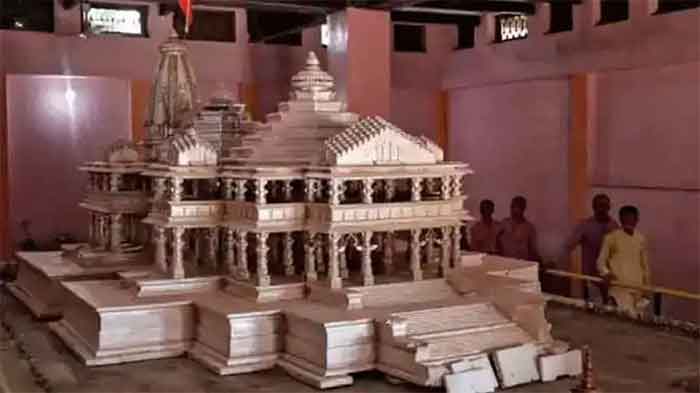
New Delhi, Dec 5: Delhi Deputy Chief Minister Manish Sisodia has said a university should come up at the site of the disputed Babri Masjid-Ram Janmabhoomi site in Ayodhya in Uttar Pradesh. He emphasised that ‘Ram Rajya’ can be ushered through education and not by constructing a grand temple.

“My stand is that with a consensus from both sides (Hindus and Muslims), let’s build a good university at that place,” Sisodia said in an interview with NDTV that was aired on Sunday. “Hindu, Muslim, Christian, Indian, foreigner — students from all communities may attend that university and from there should spring Lord Ram’s ideals. Ram Rajya would come if we teach our children and not by building a mandir,” Sisodia said when asked what was the Aam Aadmi Party’s (AAP) stand on Ram Mandir debate.

Asked about the current wave of caste politics in Indian politics, Sisodia, who is also Delhi’s Education Minister, said that the only way to end it was through education. “When I was at Japan University, the people there were talking about a new concept of running cars with hydrogen and on the same day on Twitter we were debating about Lord Hanuman’s caste. It is really unfortunate but the only way to move forward is by education,” he said.

Without taking any particular name, Sisodia slammed the political parties of spreading casteism at university levels “by appointing Vice Chancellors subscribing to Hindutva who try to impose it on the students”. “On one hand, you talk about ‘Digital India’ but your actions resemble that of Vijay Mallya,” Sisodia said.

Talking about the Lok Sabha elections due next year, Sisodia said the AAP government would be focusing on all the seven Lok Sabha seats in Delhi. “We will also keep our focus on Punjab and Haryana for the 2019 elections,” he said.

When asked whether Delhi Police should be with the state government, Sisodia remarked that even if his government plans to take an action, it never gets implemented on the ground level because of different governments controlling different authorities in Delhi. “Delhi Police need to be under the Delhi government,” he said. He also said the previous Sheila Dikshit-led government “didn’t do any work” in Delhi. “If her government had done anything, we wouldn’t have to struggle like this to get work done,” he said.

Comments

Mute spectator
 - 
Thursday, 6 Dec 2018

Dear Fairman,


Please don't convert an unfair activity of demolishing Babri Masjid as fair.  It is a cowardly act of safeguarding democracy.  Tomorrow another praying place will be demolished in the guise of similar reason and you keep on constructing hospitals?


FAIRMAN
 - 
Wednesday, 5 Dec 2018

Well said,

Very Very Well said, as the same was suggested by many in the past.


Such a contraversials  definitely devide the nation. Animity can spike without bounds and borders.


-  Yesterday there was Masjid.

- Today someone destroying it telling Baber had destroyed the Masjid and built temple.

- Tomorrow when Muslims become stronger, they might distroy the Mandir and build Masjid.


Our future children will die, suffer. We dont want to repeat again as what haened;

The God does not want to spill the blood for Masjid or Mandir.


Let us make our future generation live in peace than today we do.


God bless India.


Add new comment

  • Coastaldigest.com reserves the right to delete or block any comments.
  • Coastaldigset.com is not responsible for its readers’ comments.
  • Comments that are abusive, incendiary or irrelevant are strictly prohibited.
  • Please use a genuine email ID and provide your name to avoid reject.
coastaldigest.com news network
July 27,2020

Ayodhya, Jul 27: With days to go for the August 5 "bhoomi pujan" ceremony of the Ram temple in Ayodhya, the mosques adjacent to the demolished Babri Masjid premises are spreading the message of a peaceful coexistence of Hindus and Muslims.

There are eight mosques and two mausoleums located close to the 70-acre Babri Masjid premises mandated by the Supreme Court for a temple of Sri Ram.

Azaan and namaaz are offered in the mosques and the annual "Urs" is held at the mausoleums without any objection from the local Hindus.

The eight mosques located near the upcoming Ram temple premises are Masjid Dorahikuan, Masjid Mali Mandir ke Bagal, Masjid Kaziyana Achchan ke Bagal, Masjid Imambara, Masjid Riyaz ke Bagal, Masjid Badar Paanjitola, Masjid Madaar Shah and Masjid Tehribazar Jogiyon ki.

The two mausoleums are Khanqaahe Muzaffariya and Imambara.

"It is the greatness of Ayodhya that the mosques surrounding the Ram temple are giving a strong message of communal harmony to the rest of the world," Haji Asad Ahmad, the corporator of the Ram Kot ward, said. The Ram temple area is situated in Ahmad's ward.

"Muslims take out the 'juloos' of Barawafaat that goes through the periphery of Ram Janmabhoomi. All religious functions and rituals of Muslims are respected by their fellow citizens," the corporator said.

Asked for a comment on the presence of mosques near the upcoming Ram temple premises, the chief priest of the temple, Acharya Satyendra Das, said, "We had a dispute only with the structure that was connected to the name of (Mughal emperor) Babur. We have never had any issue with the other mosques and mausoleums in Ayodhya. This is a town where Hindus and Muslims live in peace."

"Muslims offer namaaz, we perform our puja. The mosques around us will strengthen Ayodhya's communal harmony and peace will prevail," he added.

Both Hindus and Muslims have accepted the Supreme Court verdict over Ram Janmabhoomi, Das said, adding, "We have no dispute with each other."

Sayyad Akhlaq Ahmad Latifi, the "sajjada nasheen" and "pir" of the 500-year-old Khanqaahe Muzaffariya mausoleum, said Muslims in Ayodhya are performing all religious practices freely.

"We offer prayers five times a day in the mosque at Khanqaah and hold the yearly 'Urs'," he added.

"What a scene would it be -- a grand Ram temple surrounded by small mosques and mausoleums and everyone offering prayers according to their beliefs. That will be representative of the true culture of India," Mahant Yugal Kishore Sharan Shastri, the chief priest of the Sarayu Kunj temple adjacent to the Ram Janmabhoomi premises, said.

Reacting to the presence of mosques and mausoleums near the Ram Janmabhoomi premises, Triloki Nath Pandey, the decree holder of the land as the "first friend of Ram Lalla" as mandated by the Supreme Court, said, "We do not have any objection to either those mosques or any other mosques. We will not trigger a dispute regarding any structure, Ayodhya must live in peace and communal harmony."

Mahant Raju Das, the priest of the Hanumangarhi temple, said, "The presence of the mosques tells the story of Ayodhya's communal harmony. A Ram mandir will be built and there will be no objection to the mosques or religious practices of Muslims."

Comments

Add new comment

  • Coastaldigest.com reserves the right to delete or block any comments.
  • Coastaldigset.com is not responsible for its readers’ comments.
  • Comments that are abusive, incendiary or irrelevant are strictly prohibited.
  • Please use a genuine email ID and provide your name to avoid reject.
coastaldigest.com news network
May 4,2020

Mangaluru, May 4: No major crowds were seen in the coastal city of Mangaluru today except in front of the liquor shops after the district administration relaxed the lockdown norms for 12 hours a day (between 7am and 7pm).

There was no mad rush of vehicles either on city roads when the relaxed lockdown began. There were fewer people to buy essentials in front of grocery and vegetable shops as they had time till late evening.

There was no let down in the number of police pickets as well as curbs on vehicular movement across the city either. 

The government has allowed sale of liquor in CL2 (standalone wine shops) and CL 11 (MSIL outlets) to mop up revenues when Lockdown-3 commenced from Monday. Compared the other parts of Karnataka, the size of queues in front of liquor shops in Mangaluru were smaller. 

Like other parts of the country, the lockdown was imposed in the coastal district on March 24 to prevent the spread of Covid-19. Prior to that, a curfew was imposed in the district from March 22 midnight. The lockdown did not apply to essential services such as sale of food, groceries, milk, vegetables, fruits, and meat and fish. Gradually the district administration had to intensify the lockdown and allow those shops to remain open only between 7 a.m. and 12 noon. 

With the lockdown relaxation extending till 7 p.m., Mangaluru today witnessed people and private vehicles moving freely in the afternoon for the first time in more than a month. However, only those who had to go for work and do other essential activities were seen on roads. After 7 p.m. movements of all kinds of vehicles will be prohibited. 

The relaxation was to facilitate economic activities that had come to a standstill during the first two phases of lockdown. Mangaluru City Police Commissioner Dr P S Harsha, meanwhile, warned the people against misusing lockdown relaxation and venturing out without any genuine reason.

Comments

Add new comment

  • Coastaldigest.com reserves the right to delete or block any comments.
  • Coastaldigset.com is not responsible for its readers’ comments.
  • Comments that are abusive, incendiary or irrelevant are strictly prohibited.
  • Please use a genuine email ID and provide your name to avoid reject.
Agencies
July 29,2020

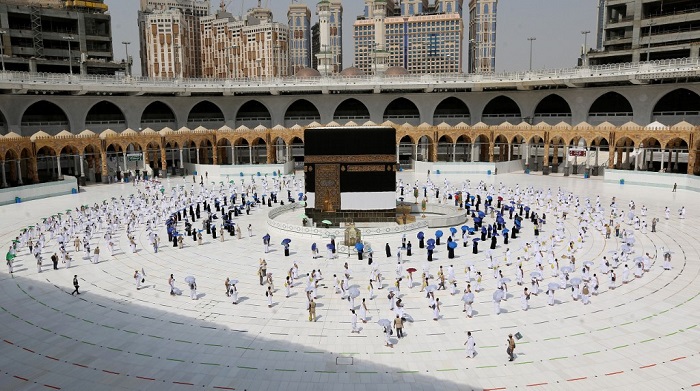
Dubai, Jul 29: Muslim pilgrims on Wednesday begin the annual Haj, downsized this year as the Saudi hosts strive to prevent a coronavirus outbreak during the five-day pilgrimage.

The Haj, one of the five pillars of Islam and a must for able-bodied Muslims at least once in their lifetime, is usually one of the world's largest religious gatherings.

But this year only up to 10,000 people already residing in the Kingdom will participate in the ritual, a tiny fraction of the 2.5 million pilgrims from around the world that attended last year.

"There are no security-related concerns in this pilgrimage, but (downsizing) is to protect pilgrims from the danger of the pandemic," said Khalid bin Qarar Al Harbi, Saudi Arabia's director of public security.

Pilgrims will be required to wear masks and observe social distancing during a series of religious rites that are completed over five days in the holy city of Makkah and its surroundings in western Saudi Arabia.

Those selected to take part in the Haj were subject to temperature checks and placed in quarantine as they began trickling into Makkah at the weekend.

State media showed health workers sanitising their luggage, and some pilgrims reported being given electronic wristbands to allow authorities to monitor their whereabouts.

Workers, clutching brooms and disinfectant, were seen cleaning the area around the Kaaba, the structure at the centre of the Grand Mosque draped in gold-embroidered cloth towards which Muslims around the world pray.

Haj authorities have cordoned off the Holy Kaaba this year, saying pilgrims will not be allowed to touch it, to limit the chances of infection.

They also reported setting up multiple health facilities, mobile clinics and ambulances to cater to the pilgrims.

Saudi authorities said only around 1,000 pilgrims residing in the Kingdom would be permitted for the Haj. Some 70 per cent of the pilgrims are foreigners residing in the Kingdom, while the rest will be Saudi citizens, authorities said.

All worshippers were required to be tested for coronavirus before arriving in the holy city of Makkah and will also have to quarantine after the pilgrimage as the number of cases in the Kingdom nears 270,000.

They were given elaborate amenity kits that include sterilised pebbles for a stoning ritual, disinfectants, masks, a prayer rug and the Ihram, a seamless white garment worn by pilgrims, according to a Haj ministry programme document.

"I did not expect, among millions of Muslims, to be blessed with approval," Emirati pilgrim Abdullah Al Kathiri said in a video released by the Saudi media ministry.

"It is an indescribable feeling... especially since it is my first pilgrimage."

The Haj ministry said non-Saudi residents of the Kingdom from around 160 countries competed in the online selection process but it did not say how many people applied.

Despite the pandemic, many pilgrims consider it safer to participate in this year's ritual without the usual colossal crowds cramming into tiny religious sites, which make it a logistical nightmare and a health hazard.

Comments

Add new comment

  • Coastaldigest.com reserves the right to delete or block any comments.
  • Coastaldigset.com is not responsible for its readers’ comments.
  • Comments that are abusive, incendiary or irrelevant are strictly prohibited.
  • Please use a genuine email ID and provide your name to avoid reject.