


Cabinet clears pay hike for 1 cr govt employees, pensioners

June 29, 2016

New Delhi, Jun 29: In a bonanza for over 1 crore government employees and pensioners, the Cabinet today approved implementation of the 7th Pay Commission, which had recommended an overall hike of 23.5 per cent.
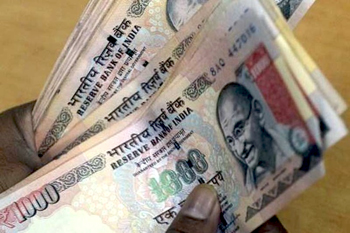
Cabinet"Congratulations to central government officers, employees & pensioners on a historic rise in their salary & allowances through the 7th CPC (Central Pay Commission)," Finance Minister Arun Jaitley tweeted shortly after the meeting of the Cabinet headed by Prime Minister Narendra Modi.

It wasn't however know immediately if the Cabinet had bettered the hike recommended in salary and allowances of nearly 50 lakh government employees and 58 lakh pensioners.

An official said the Cabinet has approved implementation of the recommendations from January 1, 2016.

The pay panel had in November last year recommended 14.27 per cent hike in basic pay at junior levels, the lowest in 70 years. The previous 6th Pay Commission had recommended a 20 per cent hike which the government doubled while implementing it in 2008.

After considering the increase proposed in allowances, the hike in remunerations comes to 23.55 per cent. The 23.55 per cent overall hike in salaries, allowances and pension would entail an additional burden of Rs 1.02 lakh crore or nearly 0.7 per cent of the GDP, to the exchequer.

The entry level pay has been recommended to be raised to Rs 18,000 per month from current Rs 7,000 while the maximum pay, drawn by the Cabinet Secretary, has been fixed at Rs 2.5 lakh per month from current Rs 90,000.

The secretaries' panel may have recommended raising minimum entry level pay at Rs 23,500 a month and maximum salary of Rs 3.25 lakh. While the Budget for 2016-17 fiscal did not provide an explicit provision for implementation of the 7th Pay Commission, the government had said the once-in-a-decade pay hike for government employees has been built in as interim allocation for different ministries. Around Rs 70,000 crore has been provisioned for it, the official said.

Comments

suleman beary
 - 
Wednesday, 29 Jun 2016

No Acche din for jobless.

Add new comment

  • Coastaldigest.com reserves the right to delete or block any comments.
  • Coastaldigset.com is not responsible for its readers’ comments.
  • Comments that are abusive, incendiary or irrelevant are strictly prohibited.
  • Please use a genuine email ID and provide your name to avoid reject.
News Network
January 23,2020

Bengaluru, Jan 23: City civic body Bruhat Bengaluru Mahanagara Palike (BBMP) levied a penalty of Rs 50,000 on the Karnataka State Cricket Association (KSCA) for using single-use plastic cups during the recent India-Australia one-day international match at the M Chinnaswamy Stadium in Bengaluru.

"Despite many awareness meetings, BBMP has found that single-use plastic cups were used during yesterday's cricket match and has fined KSCA Rs 50,000 as penalty," tweeted the civic body commissioner BH Anil Kumar.

The state cricket association treasurer Vinaya Mruthyunjaya said the civic body gave a general notice without detailed information on plastic use.

"We have been environmentally friendly for the last many years and at all gates, security has made sure no plastic or flex was allowed inside the stadium," Mruthyunjaya told media.

Mruthyunjaya said KSCA sought information from the civic body as to where the single-use plastic cups were found in the stadium during the India-Australia match.

On January 16, KSCA president Roger Binny inaugurated a plastic bottle shredder at the Chinnaswamy Stadium, in addition to other green initiatives at the cricket ground such as solar panels, sub-air system, biogas unit, rainwater harvesting and others. 

Similarly, in December 2019, BBMP cracked down on popular fast food eatery – Adyar Anand Bhavan in HSR Layout and fined the establishment Rs 1 lakh for plastic use.

In October, the BBMP fined eateries including McDonald's in central Bengaluru for using plastic.

Comments

Add new comment

  • Coastaldigest.com reserves the right to delete or block any comments.
  • Coastaldigset.com is not responsible for its readers’ comments.
  • Comments that are abusive, incendiary or irrelevant are strictly prohibited.
  • Please use a genuine email ID and provide your name to avoid reject.
News Network
March 1,2020

Udupi/Mangaluru, Mar 1: A total of twenty leaplings were born in the hospitals of the Udupi and Dakshina Kannada (DK) districts on Saturday, February 29, district health department said on Sunday.

According to the district health department, sixteen babies were born in DK district while Udupi district saw four births. More boys than girls were born in DK (12–4) and it was the inverse in Udupi district (3–1).

Comments

Add new comment

  • Coastaldigest.com reserves the right to delete or block any comments.
  • Coastaldigset.com is not responsible for its readers’ comments.
  • Comments that are abusive, incendiary or irrelevant are strictly prohibited.
  • Please use a genuine email ID and provide your name to avoid reject.
News Network
February 28,2020

Bengaluru, Feb 28: Historian S. Shettar, 85, breathed his last early on February 28 in Bengaluru. He was suffering from respiratory problems and was hospitalised for over a week.

Shettar was known for his multi-disciplinary work, encompassing linguistics, epigraphy, anthropology, the study of religions and art history. He had extensively worked on the Jain practice of ritual death in Karnataka and Asoka edicts. He had studied and compiled early edicts in Kannada and worked extensively on the growth of Kannada language down the ages.

Born in 1935 at Hampasagara, Ballari district, he went on to study at Cambridge University and started his career as a Professor of History at Karnatak University, Dharwad, his alma mater. He later headed the National Museum Institute of the History of Art, Conservation and Museology in 1978 and Indian Council for Historical Research in 1996. He was also a visiting professor at the National Institute of Advanced Studies, Bengaluru.

He was a bilingual historian who wrote in English for most of his career, but started writing in Kannada in later years. In the last two decades, he developed a keen interest in linguistics and wrote multiple books on classical Kannada and Prakrit. His 2007 book “Shangam Tamilagam” is considered a seminal work in the study of the early period of Dravidian languages. It won him Bhasha Samman from Central Sahitya Akademi. He later wrote two works on Halegannada, classical Kannada. His most recent work was “Prakrita Jagadvalaya” in 2018.

Comments

Add new comment

  • Coastaldigest.com reserves the right to delete or block any comments.
  • Coastaldigset.com is not responsible for its readers’ comments.
  • Comments that are abusive, incendiary or irrelevant are strictly prohibited.
  • Please use a genuine email ID and provide your name to avoid reject.