


Cabinet clears pay hike for 1 cr govt employees, pensioners

June 29, 2016

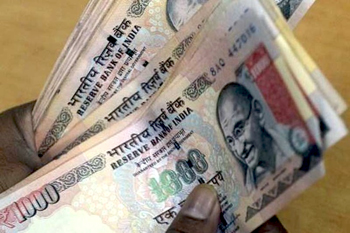
New Delhi, Jun 29: In a bonanza for over 1 crore government employees and pensioners, the Cabinet today approved implementation of the 7th Pay Commission, which had recommended an overall hike of 23.5 per cent.
Cabinet"Congratulations to central government officers, employees & pensioners on a historic rise in their salary & allowances through the 7th CPC (Central Pay Commission)," Finance Minister Arun Jaitley tweeted shortly after the meeting of the Cabinet headed by Prime Minister Narendra Modi.

It wasn't however know immediately if the Cabinet had bettered the hike recommended in salary and allowances of nearly 50 lakh government employees and 58 lakh pensioners.

An official said the Cabinet has approved implementation of the recommendations from January 1, 2016.

The pay panel had in November last year recommended 14.27 per cent hike in basic pay at junior levels, the lowest in 70 years. The previous 6th Pay Commission had recommended a 20 per cent hike which the government doubled while implementing it in 2008.

After considering the increase proposed in allowances, the hike in remunerations comes to 23.55 per cent. The 23.55 per cent overall hike in salaries, allowances and pension would entail an additional burden of Rs 1.02 lakh crore or nearly 0.7 per cent of the GDP, to the exchequer.

The entry level pay has been recommended to be raised to Rs 18,000 per month from current Rs 7,000 while the maximum pay, drawn by the Cabinet Secretary, has been fixed at Rs 2.5 lakh per month from current Rs 90,000.

The secretaries' panel may have recommended raising minimum entry level pay at Rs 23,500 a month and maximum salary of Rs 3.25 lakh. While the Budget for 2016-17 fiscal did not provide an explicit provision for implementation of the 7th Pay Commission, the government had said the once-in-a-decade pay hike for government employees has been built in as interim allocation for different ministries. Around Rs 70,000 crore has been provisioned for it, the official said.

Comments

suleman beary
 - 
Wednesday, 29 Jun 2016

No Acche din for jobless.

Add new comment

  • Coastaldigest.com reserves the right to delete or block any comments.
  • Coastaldigset.com is not responsible for its readers’ comments.
  • Comments that are abusive, incendiary or irrelevant are strictly prohibited.
  • Please use a genuine email ID and provide your name to avoid reject.
News Network
April 30,2020

Bengaluru, Apr 30: Karnataka has decided to allow all industries located outside COVID-19 containment zones to operate from May 4, Chief Minister BS Yediyurappa said Thursday, even as he cautioned that the coronavirus crisis may last another couple of months.

“We feel that the COVID-19 menace is reducing and coming under control in the state. In Bengaluru, not many cases have been reported in the last 3-4 days. If this continues, it’ll help us open up industries in and around Bengaluru also. We’ll wait for another 2-3 days,” Yediyurappa told reporters after chairing a meeting of the Cabinet.

Yediyurappa and Industries Minister Jagadish Shettar are scheduled to meet industry captains on Thursday evening to discuss resuming operations from May 4.

"It won't be a surprise if the corona continues for another 2-3 months. However, based on Prime Minister Narendra Modi's directions, stringent lockdown measures (at red zones) and reviving economic activity will go hand in hand," Yediyurappa said.

The Cabinet decided to allow one-time inter-state or inter-district movement of people and labourers stranded due to the Covid-19 lockdown. The move will also benefit students and others who want to return to their native states or districts.

The government will also allow people from Karnataka residing in other states to return only if they are tested negative for Covid-19, Law Minister JC Madhuswamy said. An official order for this will be issued by evening today.

"Expenses should be covered by those wishing to travel. The government is willing to arrange buses for their benefit," Madhuswamy said. The government will provide a license to anyone who wishes to go, he said.

Having relaxed norms for industries outside red zones to resume operations, Madhuswamy said that inter-district passes will be issued to the top management of these units to travel from their homes to workplaces.

Liquor outlets, saloons and restaurants will remain closed till May 3, after which the government will take a call based on directions issued by the Centre.

“Opening of malls and hotels is not an option before us right now. But all hotels can give parcels,” Yediyurappa said. “I’m confident that the PM will allow the resumption of all activities.

He has already said that corona (containment) and economic activities will have to go hand in hand. So, I’m expecting the Centre to make some favourable decisions,” he added.

Comments

Add new comment

  • Coastaldigest.com reserves the right to delete or block any comments.
  • Coastaldigset.com is not responsible for its readers’ comments.
  • Comments that are abusive, incendiary or irrelevant are strictly prohibited.
  • Please use a genuine email ID and provide your name to avoid reject.
Abu Muhammad | coastaldigest.com
January 16,2020

Even as the Muslims of undivided Dakshina Kannada district broke out of the “spiral of silence” and made history by leading an unprecedented protest against CAA, NPR and NRC as well as the categorial mistreatment of non-saffronites at the hands of the police across the country, mainstream media turned a blind eye to the spectacle at the Shah Garden Maidan in Mangaluru’s Adyar where about two lakh patriots with tricolor in their hands converged to assert themselves on January 15th, 2020, a date which will be remembered by the people of coastal Karnataka forever.

The largest gathering in the history of Mangaluru was absolutely peaceful, law-abiding and respectful. While the slogans of ‘Azaadi’ were reverberating in the atmosphere, the protesters were seen making way for vehicles and passersby, taking care of women and helping elderly citizens on the highway adjacent to the ground. Though the organisers and most of the participants were Muslims, they collectively identified themselves as “We, the people of India”.

The district administration and the police department hadn’t imagined or even dreamt of such a mammoth gathering after blocking the highway and banning public transport from 9 am to 9 pm. Many opine that this action was taken only to discourage the concerned from participating in the protest and to create fear in the hearts of the people who are yet to process the unjustifiable deaths of two innocent citizens in an unwarranted police firing a few weeks ago.

What has since surprised the protesters most is the mainstream media’s blatant attempt to downplay the significance of this largest ever gathering. Shockingly, it could not make it to the front pages of any of the state-level Kannada daily newspapers except city-based Vaartha Bharathi. In the absence of The Hindu, which had announced a holiday on account of Makar Sankranti, most of the English newspapers too pitilessly buried the historic event in their inner pagers. National TV channels too were evidently reluctant to cover the event until NDTV started telecasting the news of the protest.

This uneasy relationship between the media and minorities in coastal Karnataka has long existed, but the non-coverage of the huge protest of Jan 15 marks a quantum leap beyond the media’s traditional pro-Sangh Parivar stance and biases –– which in the past had often demonised non-saffronites –– to now completely ignore and suppress the people’s voice. This media bias has naturally evoked a sharp response from netizens, who took to social media to issue clarion calls to boycott the mainstream media forever.

Cleanliness Drive

Most major protest meets and rallies –– both religious and political –– leave behind tonnes of garbage, especially water bottles, placards and buntings. However, the organisers of the Jan 15 protest meet led by example by launching a cleanliness drive in the area soon after the protesters left the venue peacefully. The drive continued on Jan 16 too. (Ironically, amidst this ongoing cleanliness drive, a local news portal captured photos of a few plastic bottles scattered along the road at Adyar and published a report accusing the event organisers and participants of polluting the area!)

Comments

Add new comment

  • Coastaldigest.com reserves the right to delete or block any comments.
  • Coastaldigset.com is not responsible for its readers’ comments.
  • Comments that are abusive, incendiary or irrelevant are strictly prohibited.
  • Please use a genuine email ID and provide your name to avoid reject.
News Network
March 6,2020

Bengaluru, Mar 6: In the face of unprecedented economic difficulties, Chief Minister B S Yediyurappa has chosen to hike the prices of fuel and liquor to fund development in his 2020-21 Budget, which tries to offer something for everybody with the available resources.

Yediyurappa announced a 3% hike in the rate of tax on petrol and diesel. This will result in the prices of petrol going up by Rs 1.60 per litre and diesel by Rs 1.59 per litre. This is expected to fetch the government Rs 1,500 crore.

By hiking additional excise duty on Indian Made Liquor (IML) by 6%, the government hopes to mop up Rs 1,200 crore.

In essence, Yediyurappa, the finance minister, pointed fingers at the Centre for the state’s fiscal woes. He said Karnataka’s share in Central taxes has come down this fiscal by Rs 8,887 crore. Plus, Rs 3,000 crore GST compensation will also be reduced as collections from the GST cess are not on expected lines, he said in his Budget speech. 

“It has become difficult to reach the 2019-20 Budget targets due to these reasons. To manage this situation within the bounds of the Karnataka Fiscal Responsibility Act, it has become inevitable this year to cut down the expenditure of many departments,” he said.

Under the 15th Finance Commission, Karnataka will see a reduction of Rs 11,215 crore in the state’s share of central taxes in 2020-21, Yediyurappa said. He also pointed out that expenditure on salaries, pensions and loan interest payments had risen by Rs 10,000 crore. “Serious difficulties are being faced in resource mobilisation efforts of the state. The state never faced economic difficulties of this magnitude in the previous years,” he said.

But in an attempt to please all, Yediyurappa made announcements across sectors and communities. Instead of the usual department-wise announcements, the CM chose to divide the Budget into six sectors: agriculture & allied activities; welfare & inclusive growth; stimulating economic growth; Bengaluru development; culture, heritage & natural resources and administrative reforms & public service delivery.

Farmers will get additional incentives under PM-KISAN costing Rs 2,600 crore and a waiver of interest on loans they have borrowed from cooperative banks worth Rs 466 crore.

The CM has earmarked Rs 500 crore to start work on the Kalasa-Banduri canals under the Mahadayi project. Also, Yediyurappa has given Rs 1,500 crore to commission the Yettinahole drinking water project.

This project will cater to the districts of Hassan, Chikkamagaluru, Tumakuru, Bengaluru Rural, Ramanagara, Chikkaballapur and Kolar.

For Bengaluru, the CM has made an allocation of Rs 8,772 crore. This includes Rs 500 crore for the suburban rail project, an electric bike taxi project and bus priority lanes.

Significantly, Yediyurappa has not made any allocation to mutts. However, the government will spend Rs 100 crore on the Anubhava Mantapa at Basavakalyan, Rs 66 crore for a 100 ft Kempegowda statue in Bengaluru and Rs 20 crore on a 325 ft statue of Basavanna at the Murugha Mutt in Chitradurga.

The CM has given Rs 305 crore for the development of various communities — Christians (Rs 200 crore), Upparas (Rs 10 crore), Vishwakarma (Rs 25 crore), Ambigara Chaudaiah (Rs 50 crore), Arya Vysya (Rs 10 crore) and Kumbara (Rs 10 crore).

Also, nearly 22.5 lakh government employees and their dependents will get cashless treatment facility for surgical treatment procedures at an estimated annual cost of Rs 50 crore under the Jyothi Sanjini scheme, the CM said.

Comments

Add new comment

  • Coastaldigest.com reserves the right to delete or block any comments.
  • Coastaldigset.com is not responsible for its readers’ comments.
  • Comments that are abusive, incendiary or irrelevant are strictly prohibited.
  • Please use a genuine email ID and provide your name to avoid reject.