Cancer prevention: Khader announces ban on e-cigarettes in Karnataka

June 15, 2016

Bengaluru, Jun 15: Karnataka government has banned electronic cigarettes in the state with effect from today.

"We have banned e-cigarettes today. The decision has been taken on the recommendation of the committee on cancer prevention," Minister for Health and Family Welfare U T Khader said.
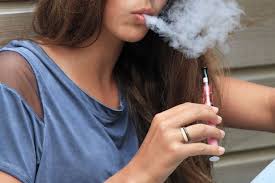
ecigHe said a study was conducted by the committee with an NGO on e-cigarettes, which said large number of youngsters was getting addicted to it.

"2mg and 4 mg nicotine is allowed in chewables like nicotine gum for de-addiction purpose, but these e-cigarettes usage is leading to addiction towards it," he said.

E-cigarettes mimic the size and shape of cigarettes and contain a cartridge containing liquid, which includes nicotine (up to 36 mg/ML) among other chemicals (usually propylene glycol or glycerol).

The government, in a circular, said the state has knowledge that Electronic Nicotine Delivery Systems or e-cigarette and other similar products have been sold illegally (including online sale), without a obtaining valid license from appropriate authority specified by law.

It also pointed out that the use of nicotine in food products and consumption by public is banned under Food Safety and Standard Act 2006 and Food Safety and Standards (Prohibition and Restriction on Sales) Regulation 2011.

"Nicotine is allowed as an aid for de-addiction in nicotine replacement therapy under Drugs and Cosmetics Act 1940, it is not allowed for any other purpose under law.

"Therefore, the state government hereby prohibits the sale (including online sale), manufacture, distribution, trade, import and advertisement of Electronic Nicotine Delivery Systems, its parts and components in any shape or size of cartridges containing nicotine in the interest of public," the circular said.

The Indian Medical Association had in January discouraged the use of electronic cigarettes to cut down on smoking as these disguised forms of tobacco can have "serious" long-term effects on health.

"IMA believes that e-cigarettes, though not as harmful as normal cigarettes, are not healthy and their use should not be encouraged. Like hookahs, they are disguised forms of tobacco addiction and can have serious long-term effects on one's health," it had said.

Comments

Bolar
 - 
Thursday, 16 Jun 2016

Khader bhai... Ban on all form Of smoking should be imposed ... E cigarettes are just smoked by few

Add new comment

  • Coastaldigest.com reserves the right to delete or block any comments.
  • Coastaldigset.com is not responsible for its readers’ comments.
  • Comments that are abusive, incendiary or irrelevant are strictly prohibited.
  • Please use a genuine email ID and provide your name to avoid reject.
News Network
June 2,2020

Udupi, June 2: The number of positive cases may continue to be more in Udupi district since the results of more than 3,000 samples are pending with Labs.

The district total cases to 260. The figure had seemed far-fetched on May 15, when the number of cases stood at just three. The latest spike has been attributed to the return of migrants from other States as well as from abroad. These samples are from people who returned to the district in the last two weeks.

This delay is because the laboratories testing samples from Udupi are burdened with a high case-load after more than 8,500 people returned to the district, particularly from the neighbouring state of Maharashtra.

"Samples have piled up after the influx of people returning from other states and from abroad," says Dr Prashant Bhat, nodal officer for COVID-19 in Udupi. This delay has caused returnees in institutional quarantine to stay on for as long as 18 days.

The designated laboratory for coronavirus testing in Udupi is Wenlock District Hospital in Mangaluru. The district administration also sends samples to laboratories at the Kasturba Hospital in Manipal, Yenepoya Medical College, Mangaluru, KS Hegde Medical Academy, Mangaluru, and Viral Diagnostic Laboratory in Shivamogga. Apart from Udupi, the laboratory in Manipal is also testing samples from Uttara Kannada district. The laboratory in Shivamogga is also testing samples from Shivamogga and Bijapur districts. The laboratories in Mangaluru, similarly, have samples from Dakshina Kannada district.

Dr Avinash Shetty, Medical Superintendent of Kasturba Hospital in Manipal, one of the private laboratories being used by the Udupi district administration, said that they are testing samples in batches. "We received around 600 samples today and we will be testing them now. The backlog of samples should be cleared in the next few days," Dr Avinash said.

All 73 cases reported in Udupi on Monday were patients with travel history of returning from Maharashtra or patients with travel history of returning from abroad.

In cases of some patients who tested coronavirus positive in the past week, people were released from institutional quarantine after a stipulated period only to be tracked down again and admitted in hospitals after their results returned positive.

While two such cases emerged in Belapu and Belman in the district, the administration is now following up with others who were released from institutional quarantine to ensure they remain in home quarantine till their test results are confirmed.

The spike in cases among returning migrants in Udupi also comes at a time the Karnataka government reduced restrictions on interstate travel.

Comments

Add new comment

  • Coastaldigest.com reserves the right to delete or block any comments.
  • Coastaldigset.com is not responsible for its readers’ comments.
  • Comments that are abusive, incendiary or irrelevant are strictly prohibited.
  • Please use a genuine email ID and provide your name to avoid reject.
News Network
July 28,2020

Bengaluru, Jul 28: After the Central Board of Secondary Education (CBSE) reduced the syllabi for Classes 9 to 12 due to COVID-19 pandemic, the Karnataka government has followed the suit. The Department of Public Instruction has omitted the chapters on legendary south Indian rulers Hyder Ali and Tipu Sultan from the textbooks of Class 7 in their attempt to reduce syllabus for state board schools by 30 per cent. 

The department, however, has decided to retain similar chapters on Tipu Sultan in 6th and 10th Classes, though the syllabus in text books for all classes from 1 to 10th has been trimmed. 

The trimmed textbooks uploaded on the website of the Department of State Education Research and Training (DSERT) by Karnataka state Textbook Society revealed removal of chapters on Tipu Sultan for the seventh grade.

Justifying the decision, officials said, "students study similar chapters in Class 6 and more in the 10th grade." Yet another senior official from the Text Book Society said, "Trimming does not mean we have removed half of the syllabus from textbooks. It is only keeping in mind the repetition we have condensed the chapters. In case students study about a particular dynasty in higher grades, then the same had been removed from lower grades."

A few months ago, there was an uproar over dropping of content on Tipu Sultan and MLAs from the ruling BJP also demanded the same and petitioned to the Chief Minister. Even an expert committee led by Prof Baraguru Ramachandrappa suggested to not drop any content on the historic figure. However, the department still decided to drop lessons from one of the classes while keeping the syllabus short for the next 120 active academic days.

Earlier this month, a controversy had erupted over the CBSE's decision to omit topics like federalism, secularism, citizenship, etc while reducing the syllabus for Classes 9 to 12. The education board had issued a detailed clarification later, stating that topics claimed to be dropped "are either being covered by the rationalised syllabus or in the Alternative Academic Calendar of NCERT".

"The rationalisation of syllabus up to 30 per cent has been undertaken by the Board for nearly 190 subjects of class 9 to 12 for the academic session 2020-21 as a one-time measure only. The objective is to reduce the exam stress of students due to the prevailing health emergency situation and prevent learning gaps," it said.

Last week, the Congress in Uttar Pradesh expressed its concern over 'deliberate and systematic' deletions of chapters related to the freedom struggle and the party's role in it from the Class 10-12 syllabi of the Secondary Education Board.

Comments

Add new comment

  • Coastaldigest.com reserves the right to delete or block any comments.
  • Coastaldigset.com is not responsible for its readers’ comments.
  • Comments that are abusive, incendiary or irrelevant are strictly prohibited.
  • Please use a genuine email ID and provide your name to avoid reject.
News Network
May 27,2020

In a development which highlights the diversity in the United Kingdom’s legal system, a 40-year-old Muslim woman has become the first hijab-wearing judge in the country.

Raffia Arshad, a barrister, was appointed a deputy district judge on the Midlands circuit last week after 17-year career in law.  

She said her promotion was great news for diversity in the world’s most respected legal system. She hopes to be an inspiration to young Muslims.

Ms Arshad, who grew up in Yorkshire, north England, has wanted to work in law since she was 11.

Ms Arshad said the judicial office was looking to promote diversity, but when they appointed her they did not know that she wore the hijab.

‘It’s definitely bigger than me,” she told Metro newspaper. "I know this is not about me.

"It’s important for all women, not just Muslim women, but it is particularly important for Muslim women."

Ms Arshad, a mother of three, has been practising private law dealing with children, forced marriage, female genital mutilation and other cases involving Islamic law for the past 17 years.

She was the first in her family to go to university and has also written a leading text on Islamic family law.

Although the promotion by the Lord Chief Justice was welcome news for her, Ms Arshad said the happiness from other people sharing the news was “far greater”.

“I’ve had so many emails from people, men and women," she said.

"It’s the ones from women that stand out, saying that they wear a hijab and thought they wouldn’t even be able to become a barrister, let alone a judge."

Ms Arshad is regularly the subject of discrimination in the courtroom because of her choice to wear the hijab.

She is sometimes mistaken for a court worker or a client.

Ms Arshad said that recently she was asked by an usher whether she was a client, an interpreter, and even if she were on work experience.

“I have nothing against the usher who said that but it reflects that as a society, even for somebody who works in the courts, there is still this prejudicial view that professionals at the top end don’t look like me,” she said.

A family member once advised her to not wear a hijab at an interview for a scholarship at the Inns of Court School of Law in 2001, warning that it would affect her chances of landing the role.

“I decided that I was going to wear my headscarf because for me it’s so important to accept the person for who they are," Ms Arshad said.

"And if I had to become a different person to pursue my profession, it’s not something I wanted.”

The joint heads of St Mary’s Family Law Chambers said they were “delighted” to hear the news of her appointment.

“Raffia has led the way for Muslim women to succeed in the law and at the bar, and has worked tirelessly to promote equality and diversity in the profession,” Vickie Hodges and Judy Claxton said.

“It is an appointment richly deserved and entirely on merit, and all at St Mary’s are proud of her and wish her every success.”

Comments

Add new comment

  • Coastaldigest.com reserves the right to delete or block any comments.
  • Coastaldigset.com is not responsible for its readers’ comments.
  • Comments that are abusive, incendiary or irrelevant are strictly prohibited.
  • Please use a genuine email ID and provide your name to avoid reject.