



Is cattle slaughter ban 'food fascism'?

[email protected] (Soutik Biswas, International New York Times)
June 14, 2017

A lawmaker from Kerala has announced that he is returning to eating meat, fish and eggs after practising vegetarianism for nearly two decades.
dhns

There's nothing unusual about a lapsed vegetarian but V T Balram said his decision was prompted by the Central 'Hindu nationalist' BJP government's attempt to seize the people's right to eat what they wanted.

“I have been living without eating meat, fish or eggs since 1998. But now the time has come to break it and uphold the right politics of food assertively,” Balram said, while posting a video of him eating beef with friends and fellow party workers.

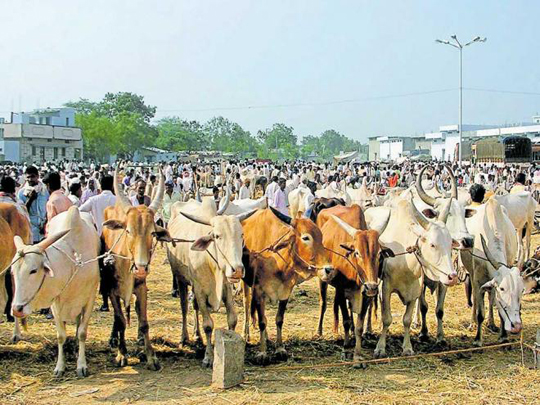
The BJP believes that cows should be protected, because they are considered holy by India's majority Hindu population. Some 18 states have already banned slaughter of cattle.

But millions of Indians, including Dalits, Muslims and Christians, consume beef. And it's another matter, say many, that there's no outrage against the routine selling of male calves by Hindu farmers and pastoralists to middlemen for slaughter as the animals are of little use — bullocks have been phased out by tractors in much of rural India, and villagers need to rear only the occasional bull.

Ironically, the cow has become a polarising animal. Two years ago, a mob attacked a man and killed him over “rumours” that his family ate beef. Vigilante cow protection groups, operating with impunity, have killed people for transporting cattle.

More recently, the chief of BJP's powerful ideological fountainhead Rashtriya Swayamsevak Sangh has called for a countrywide ban on the slaughter of cows. And this week, a senior judge said the cow should be declared a national animal and people who slaughter cows should be sentenced to life in prison.

Many say this is all contributing to effectively killing India's thriving buffalo meat trade. Earlier this week, several states opposed the central government's decision to ban the sale of cattle for slaughter at livestock markets. The government said the order was aimed at preventing uncontrolled and unregulated animal trade.

But the ban, say many, could end up hurting some Rs 25,000 crore in annual beef exports and lakhs of jobs. There are about 19 crore cattle in India, and tens of crores “go out of the system” — die or need to be slaughtered — every year. How will poor farmers sell their animals?

So, as lawyer Gautam Bhatia says, the new rules are “perceived as imposing an indirect beef ban”. He believes the government will find it difficult to defend them if they are challenged in the court — one state court, responding to a petition that they violate the right of a person to chose what he eats, has already put the ban on hold.

The badly-drafted rules, Bhatia says, are “an opportunity for citizens and courts to think once again whether the prescription of food choices is consistent with a Constitution that promises economic and social liberty to all”.

'Dietary profiling'

Critics have been calling the beef ban an example of “dietary profiling” and “food fascism.” Others say it smacks of cultural imperialism, and is a brazen attack on India's secularism and constitutional values. Don't laugh, but there could be a conspiracy to turn India vegetarian, screamed a recent headline.

Many believe that the BJP, under Narendra Modi, appears to be completely out of depth with India's widely diverse food practices which have always been distinguished by religion, region, caste, class, age and gender.

Indians now eat more meat, including beef — cow and buffalo meat — than ever. Consumption of beef grew up 14% in cities, and 35% in villages, according to government data analysed by IndiaSpend, a non-profit data journalism initiative.

Beef is the preferred meat in north-eastern states like Nagaland and Meghalaya. According to National Sample Survey data, 42% Indians describe themselves as vegetarians who don't eat eggs, fish or meat; another baseline government survey showed 71% of Indians over the age of 15 are non-vegetarian.

Governments have tried to impose food bans and choices around the world, mostly using health and environment concerns and hygiene concerns.

Imposing food choices

In the US, for example, groups have rallied against subsidised vegetables, outlawing large sodas, promotion of organic food and taxing fat. Bangkok is banning street food to clean up streets and enforce hygiene standards.

India has done the same in the past. Crops like BT brinjal have been stalled by the government and industrially manufactured food like Maggi noodles banned temporarily amid claims they contained dangerously high levels of lead. Scarcity has also led to bans — a ban of milk sweets in the 1970s in Delhi was justified because milk used to be in short supply.

“To the extent that this ban on cattle slaughter justifies itself by speaking of 'unfit and infected cattle', it seems to invoke public health, but then stops short by not banning the sale of goats, sheep and chicken as well,” sociologist Amita Baviskar told me.

“In fact, the public health argument leads logically to a move towards better regulation like stricter checking of animals for disease, more hygienic slaughter and storage of meat rather than a flat-out ban.”

Clearly, the ban appears to be working already. “Selling red meat, even goat meat, in a BJP-ruled state is now injurious to one's health. Who would want to risk the wrath of the vigilantes?” says Dr Baviskar.

As it is, she says, meat-eating habits of Indians have been changing rapidly in the last couple of decades and the chicken, once regarded as a “dirty bird,” is now the most popular meat.

“I see a greater polarisation taking place between red states (meat-eating) and white states (chicken eating). Within the white states, meat-eaters will have to skulk about, looking over their shoulder as they bite into a beef kebab.”

Comments

Add new comment

  • Coastaldigest.com reserves the right to delete or block any comments.
  • Coastaldigset.com is not responsible for its readers’ comments.
  • Comments that are abusive, incendiary or irrelevant are strictly prohibited.
  • Please use a genuine email ID and provide your name to avoid reject.
Agencies
May 20,2020

In a bid to help struggling small businesses in Covid-19 times, Facebook has introduced Shops to help set up a single online store for customers to access on both Facebook and Instagram.

While Facebook Shops is being rolled out from Wednesday, the company will introduce Instagram Shop, a new way to discover and buy products in Instagram Explore, this summer, starting in the US.

The social networking giant also announced that it will invest in features across its family of apps to inspire people to shop and make buying and selling online easier.

"Creating a Facebook Shop is free and simple. Businesses can choose the products they want to feature from their catalogue and then customise the look and feel of their shop with a cover image and accent colours that showcase their brand," Facebook said in a statement late Tuesday.

Any seller, no matter their size or budget, can bring their business online and connect with customers wherever and whenever it's convenient for them.

People can find Facebook Shops on a business' Facebook Page or Instagram profile, or discover them through stories or ads.

"From there, you can browse the full collection, save products you're interested in and place an order — either on the business' website or without leaving the app if the business has enabled checkout in the US," informed the company.

Last month, Facebook announced $40 million in grants for 10,000 small businesses in the US to help them get through these challenging time.

The grants will go to small businesses in 34 locations where Facebook employees live and work.

The company said that in Facebook Shops, users will be able to message a business through WhatsApp, Messenger or Instagram Direct to ask questions, get support, track deliveries and more.

In the future, they will be able to view a business' shop and make purchases right within a chat in WhatsApp, Messenger or Instagram Direct.

Later this year, Facebook will add a new shop tab in the navigation bar, so people can get to Instagram Shop in just one tap.

Facebook said it is making it easier to shop for products in real time.

Soon, sellers, brands and creators will be able to tag products from their Facebook Shop or catalogue before going live and those products will be shown at the bottom of the video so people can easily tap to learn more and purchase.

"We're starting to test this with businesses on Facebook and Instagram, and we'll roll it out more broadly in the coming months," said the company.

Facebook is also working with partners like Shopify, BigCommerce, WooCommerce, ChannelAdvisor, CedCommerce, Cafe24, Tienda Nube and Feedonomics to support small businesses.

Comments

Add new comment

  • Coastaldigest.com reserves the right to delete or block any comments.
  • Coastaldigset.com is not responsible for its readers’ comments.
  • Comments that are abusive, incendiary or irrelevant are strictly prohibited.
  • Please use a genuine email ID and provide your name to avoid reject.
Agencies
July 19,2020

New Delhi, Jul 19: Indian equities will be driven by a host of factors like corporate earnings, coronavirus cases trend and geo-political developments this week, according to analysts.

Market participants will also keenly watch the progress of monsoon, with experts saying that the farm sector revival will play a key role in lifting the coronavirus-hit economy.

"With no major event, the ongoing earnings season and global cues will continue to dictate the market trend. Besides, the progress of monsoon will also be closely watched," Ajit Mishra, VP - Research, Religare Broking, said.

Globally, the rising coronavirus infections and geo-political tensions have created uncertainty on the economic recovery front.

With India's COVID-19 cases fast approaching the 11 lakh mark, the third-highest behind the US and Brazil, and the death toll nearing 27,000, participants are expected to tread cautiously going forward.

At global level, confirmed COVID-19 cases have crossed 1.4 crore and deaths totalled about 6 lakh.

Markets globally will closely follow developments on the trade and political level between the US and China, according to analysts.

"We would continue witnessing stock-specific action as the earnings season unfold. Though the near-term momentum looks positive, we would advise traders to be cautious, given flaring US-China trade relations, persistent rise in virus cases and implementation of fresh lockdowns in parts of the country," said Siddhartha Khemka, Head - Retail Research, Motilal Oswal Financial Services Ltd.

HDFC Bank will remain in focus on Monday after having announced its June quarter earnings on Saturday.

The lender reported 19.6 per cent rise in its standalone net profit at Rs 6,658.62 crore for April-June 2020; while its income rose to Rs 34,453.28 crore during the quarter.

Other major companies to announce their quarterly results this week are Axis Bank, Bajaj Finance, Hindustan Unilever Limited, Bajaj Auto and ITC.

"Going ahead market participants will closely track the development related to covid vaccine, the rising infection of coronavirus, development on economic activities, corporate earnings and US-China relationship," said Sumeet Bagadia, Executive Director, Choice Broking.

On weekly basis, the Sensex gathered 425.81 points or 1.16 per cent, and the Nifty gained 133.65 points or 1.24 per cent.

Comments

Add new comment

  • Coastaldigest.com reserves the right to delete or block any comments.
  • Coastaldigset.com is not responsible for its readers’ comments.
  • Comments that are abusive, incendiary or irrelevant are strictly prohibited.
  • Please use a genuine email ID and provide your name to avoid reject.
Agencies
July 18,2020

New Delhi, Jul 18: India's national cybersecurity agency CERT-in, has warned people of credit card skimming spreading across the world through e-commerce platforms.

Attackers are typically targeting e-commerce sites because of their wide presence, popularity and the environment LAMP (Linux, Apache, MySQL, and PHP), the Computer Emergency Response Team (CERT-In) said in a notice on Thursday.

Recently, attackers targeted sites which were hosted on Microsoft's IIS server running with the ASP.NET web application framework, it said.

Some of the sites affected by the attack were found to be running ASP.NET version 4.0.30319, which is no longer officially supported by Microsoft and may contain multiple vulnerabilities, CERT-In said.

The notice also included a list of best practices for website developers including the use of the latest version of ASP.NET web framework, IIS web server and database server.

The advisory is based on research by Malwarebytes which found that this skimming campaign likely began sometime in April this year.

Credit card skimming has become a popular activity for cybercriminals over the past few years, and the increase in online shopping during the pandemic means additional business for them, too, Malwarebytes said in a blog post, adding that attackers do not need to limit themselves to the most popular e-commerce platforms.

Researchers from global cybersecurity and anti-virus brand Kaspersky had warned in December last year that more cybercriminal groups will target online payment processing systems in 2020. 

It said that over the past couple of years, so-called JS-skimming (the method of stealing of payment card data from online stores), has gained immense popularity among attackers. 

Kaspersky researchers in their report said they are currently aware of at least 10 different actors involved in these type of attacks.

Their number will continue to grow during the next year, the report said, adding that the most dangerous attacks will be on companies that provide services such as e-commerce as-a-service, which will lead to the compromise of thousands of companies.

Comments

Add new comment

  • Coastaldigest.com reserves the right to delete or block any comments.
  • Coastaldigset.com is not responsible for its readers’ comments.
  • Comments that are abusive, incendiary or irrelevant are strictly prohibited.
  • Please use a genuine email ID and provide your name to avoid reject.