


CBI team visits JNU to probe Najeeb's disappearance

Agencies
June 19, 2017

New Delhi, Jun 19: A CBI team today visited Jawaharlal Nehru University (JNU) to probe the disappearance of Najeeb Ahmed, a student who had gone missing from his hostel on October 16, 2016.
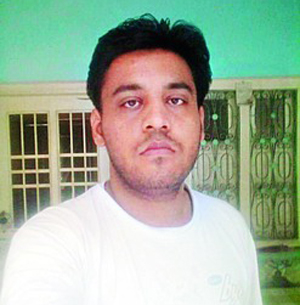
najeebThe team is looking into allegations of a scuffle between Ahmed and ABVP students in JNU's Mahi-Mandvi hostel and the circumstances that may have led to it as well as other events that preceded his disappearance.

It is likely to meet the suspects and people whose names have cropped up in the matter, sources said.

Najeeb's mother Fatima Nafees recently met CBI officers investigating the case. She gave details of the events before her son disappeared from his hostel.

Najeeb had returned to the university on October 13, 2016 after a holiday. On the intervening night of October 15-16, he called his mother to tell her that something was wrong. His roommate later told Fatima he had been injured in a fight, she had said.

Following the conversation, Fatima took a bus from Bulandshahr in Uttar Pradesh to reach Delhi in the afternoon. After reaching Anand Vihar, she spoke to him over the phone and asked him to meet her at the hotel.

She said in her complaint that there was no trace of Najeeb when she reached his room in Mahi Hostel room 106.

With Delhi Police failing to find her son, Fatima approached the Delhi High Court demanding a CBI probe.

On May 16, a bench of Justices G S Sistani and Rekha Palli handed over the investigation to the CBI with the direction that it has to be monitored by an officer not less than the rank of DIG. The matter has been posted for hearing on July 17.

The high court had time and again come down heavily on the police for failing to trace the student after several months of investigation and even remarked that it was looking for an "escape route" and was "beating around the bush".

The court had also questioned the conduct of the police saying that it was trying to sensationalise the matter as it was filing reports in sealed covers when "there was nothing confidential, damaging or crucial" in them.

Comments

Add new comment

  • Coastaldigest.com reserves the right to delete or block any comments.
  • Coastaldigset.com is not responsible for its readers’ comments.
  • Comments that are abusive, incendiary or irrelevant are strictly prohibited.
  • Please use a genuine email ID and provide your name to avoid reject.
News Network
April 23,2020

Washington, Apr 23: Air pollution over northern India has plummeted to a 20-year-low for this time of the year, according to satellite data published by US space agency National Aeronautics and Space Administration (NASA).
The US space agency's satellite sensors observed aerosol levels at a 20-year low post the countrywide lockdown, implemented to slow the spread of the novel coronavirus.

"We knew we would see changes in atmospheric composition in many places during the lockdown," said Pawan Gupta, a Universities Space Research Association (USRA) scientist at NASA''s Marshall Space Flight Center. "But I have never seen aerosol values so low in the Indo-Gangetic Plain at this time of year," added Mr Gupta.

Acting Assistant Secretary of State for South and Central Asia Alice G Wells tweeted, "These images from NASA were taken each spring starting in 2016 and show a 20-year low in airborne particle levels over India. When India and the world are ready to work and travel again, let's not forget that collaborative action can result in cleaner air."

The data published with maps show aerosol optical depth (AOD) in 2020 compared to the average for 2016-2019. Aerosol optical depth is a measure of how light is absorbed or reflected by airborne particles as it travels through the atmosphere.

If aerosols are concentrated near the surface, an optical depth of 1 or above indicates very hazy conditions. An optical depth, or thickness, of less than 0.1 over the entire atmospheric vertical column is considered "clean." The data were retrieved by the Moderate Resolution Imaging Spectroradiometer (MODIS) on NASA's Terra satellite.

In the first few days of the lockdown, it was difficult to observe a change in the pollution signature. "We saw an aerosol decrease in the first week of the shutdown, but that was due to a combination of rain and the lockdown," said Mr Gupta.

Around March 27, heavy rain poured over vast areas of northern India and helped clear the air of aerosols. Aerosol concentrations usually increase again after such heavy precipitation.

"After the rainfall, I was really impressed that aerosol levels did not go up and return to normal. We saw a gradual decrease and things have been staying at the level we might expect without anthropogenic emissions," Mr Gupta said.

On March 25, the Indian government placed its 1.3 billion citizens under a strict lockdown to reduce the spread of COVID-19. The countrywide mandate decreased activity at factories and severely reduced car, bus, truck and airplane traffic. Every year, aerosols from anthropogenic (human-made) sources contribute to unhealthy levels of air pollution in many Indian cities.

Aerosols are tiny solid and liquid particles suspended in the air that reduce visibility and can damage the human lungs and heart.

In southern India though, the story is a little hazier. Satellite data show aerosol levels have not yet decreased to the same extent. In fact, levels seem to be slightly higher than in the past four years. The reasons are unclear but could be related to recent weather patterns, agricultural fires, winds or other factors.

"This a model scientific experiment," Robert Levy, program leader for NASA's MODIS aerosol products, said about the lockdown and its effects on pollution.

"We have a unique opportunity to learn how the atmosphere reacts to sharp and sudden reductions in emissions from certain sectors. This can help us separate how natural and human sources of aerosols affect the atmosphere," Mr Levy added.

Comments

Add new comment

  • Coastaldigest.com reserves the right to delete or block any comments.
  • Coastaldigset.com is not responsible for its readers’ comments.
  • Comments that are abusive, incendiary or irrelevant are strictly prohibited.
  • Please use a genuine email ID and provide your name to avoid reject.
News Network
May 30,2020

New Delhi, May 30: An Air India flight from Delhi to Moscow on Saturday had to return midway after the airline's ground team found out that one of the pilots had tested positive for novel coronavirus, officials said.

"When the A320 plane, which did not have any passengers as it was heading to Moscow to bring back stranded Indians under Vande Bharat Mission, had reached Uzbekistan's airspace, our team on ground realised that one of the pilots had tested COVID-positive," senior Air India officials said.

"The flight was immediately asked to return. It came back to Delhi at around 12.30 pm on Saturday," the officials said. The crew has been quarantined. Another plane would be sent to Moscow to bring back the stranded Indians, according to the officials.

Comments

Add new comment

  • Coastaldigest.com reserves the right to delete or block any comments.
  • Coastaldigset.com is not responsible for its readers’ comments.
  • Comments that are abusive, incendiary or irrelevant are strictly prohibited.
  • Please use a genuine email ID and provide your name to avoid reject.
Agencies
July 13,2020

Hyderabad, Jul 13: Family members of Telugu poet and writer Varavara Rao, who is currently lodged in Navi Mumbai's Taloja jail in the Bhima Koregaon case, on Sunday appealed to the government for his immediate release in view of his deteriorating health.

Rao's wife P. Hemalatha and their three daughters urged the government to save his life by shifting him to a hospital or allow them to provide him with immediate medical care.

We want to remind the government that it has no right to deny the right to life of any person, much less an undertrial prisoner," they said.

His family members said they were very much worried about his deteriorating health. They said his health condition had been scary for over six weeks, ever since he was shifted in an unconscious state to JJ Hospital on May 28.

"Even as he was discharged from the hospital and sent back to jail three days later, there has been no improvement in his health and he is still in need of emergency healthcare," Hemalatha said.

"The immediate cause of concern now is that we are very much perturbed at the routine phone call we received from him on Saturday evening. Though the earlier two calls on June 24 and July 2 were also worrying with his weak and muffled voice, incoherent speech and abruptly jumping into Hindi. But the latest call, on July 11 is much more worrisome as he did not answer straight questions on his health and went into a kind of delirious and hallucinated talk about the funeral of his father and mother, the events that happened seven decades and four decades ago respectively," Rao's wife said.

She said her husband's co-accused companion took the phone from him and informed her that he is not able to walk, go to the toilet and brush his teeth on his own.

"We were also told that he is always hallucinating that we, family members, were waiting at the jail gate to receive him as he was getting released. His co-prisoner also said he needs immediate medical care for not only physical but also neurological issues. The confusion, loss of memory and incoherence are the results of electrolyte imbalance and fall of Sodium and Potassium levels leading to brain damage. This electrolyte imbalance may be fatal also."

Stating that Taloja Jail Hospital is not well equipped to handle this kind of serious ailment, they demanded that he be shifted to a fully equipped super specialty hospital to save his life and prevent possible brain damage and risk to life due to electrolyte imbalance.

"At the present juncture we are leaving aside all the pertinent facts like, that the case against him is fabricated; he had to spend 22 months in jail as an undertrial with the process turned into punishment; his bail petitions got rejected at least five times now and even the bail petitions with his age, ill-health and COVID vulnerability as grounds were ignored. His life is the top most concern for us right now. Our present demand is to save his life," the family said.

Comments

Add new comment

  • Coastaldigest.com reserves the right to delete or block any comments.
  • Coastaldigset.com is not responsible for its readers’ comments.
  • Comments that are abusive, incendiary or irrelevant are strictly prohibited.
  • Please use a genuine email ID and provide your name to avoid reject.