


CCTVs mandatory for commercial and religious places in Karnataka

TNN
June 22, 2017

Bengaluru, Jun 22: Installation of closed circuit television cameras (CCTVs) will soon be made mandatory in all commercial establishments and religious places that have a footfall of 500 persons per day.cctv
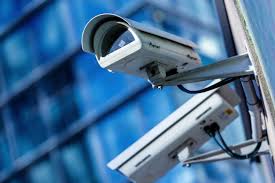
This rule will be applicable in Bengaluru and other municipal corporations across the state.

A bill to this effect, titled "The Karnataka Public Safety (Measures) Enforcement Bill-2017", was passed in the legislative assembly on Wednesday.

Outlining the government's intention, law minister T B Jayachandra said the bill has been mooted to augment public surveillance and to aid the police in curbing crimes, preventing acts of terrorism and other illegal activities.

The bill makes it mandatory for all establishments -- which also includes educational institutes, hospitals, sports complexes, industries, railway stations, bus stations and places of organized congregations -- to install CCTVs at their own cost and to make available video recordings of up to 30 days to the designated police authorities as when required during investigation of specific crimes.

According to the bill, establishments are required to file periodical returns every three months to the jurisdictional police inspector stating that public safety measures, including CCTVs, have been provided and properly maintained.

Those failing to file periodical returns are liable to pay a fine of Rs 2,000 for the first time and Rs 4,000 the second time. The jurisdictional police inspector has been empowered to inspect the establishments to ascertain compliance. Those who refuse to share the CCTV footage will be penalized Rs 5,000.

Comments

Ahmed K.C.
 - 
Thursday, 22 Jun 2017

Very good move by the state government. At least some truth will prevail.

Add new comment

  • Coastaldigest.com reserves the right to delete or block any comments.
  • Coastaldigset.com is not responsible for its readers’ comments.
  • Comments that are abusive, incendiary or irrelevant are strictly prohibited.
  • Please use a genuine email ID and provide your name to avoid reject.
News Network
June 1,2020

New Delhi, Jun 1: Prime Minister Narendra Modi on Monday sought a discussion on advances in telemedicine, the use of "Make in India" products in the healthcare, and the use of IT tools in the medical sector for a healthier society.

Addressing an event at the Rajiv Gandhi Health University in Bengaluru via video conference, he sought a discussion on whether new models can be conceived that make telemedicine popular on a larger scale.

Referring to the "Make in India" program, he said the initial gains made in this field make him optimistic. "Our domestic manufacturers have started production of personal protective equipment and have supplied about one crore PPEs to those in the frontline of fighting COVID-19.

Modi said IT-related tools for healthier societies can be of great help.

"I am sure you have heard of Arogya Setu. Twelve crore health-conscious people have downloaded it. This has been very helpful in the fight against coronavirus," he said.

Comments

Add new comment

  • Coastaldigest.com reserves the right to delete or block any comments.
  • Coastaldigset.com is not responsible for its readers’ comments.
  • Comments that are abusive, incendiary or irrelevant are strictly prohibited.
  • Please use a genuine email ID and provide your name to avoid reject.
coastaldigest.com news network
July 24,2020

Bengaluru, Jul 24: A government doctor who was turned away by three private hospitals because he could not produce a coronavirus test result passed away today in Bengaluru. Dr Manjunath, who was a frontline COVID-19 doctor, was allegedly turned away by hospitals when he was extremely ill and struggling to breathe.

Dr Manjunath worked in the state Health and Family Welfare department and was based in Ramanagara district, around 50 km from Bengaluru.

D Randeep, a Special Officer with the Bengaluru municipal body BBMP, said that the hospitals that had refused to admit Dr Manjunath would be reported to the health department.

In June-end, Dr Manjunath went to Rajashekhar Hospital in JP Nagar, BGS Global Hospital in Kengeri and Sagar hospital in Kumaraswamy Layout. All three demanded to see his COVID-19 test result but those were still not in at the time, according to his family. His brother-in-law Nagendra is also a doctor with BBMP and in charge of allotting hospital beds, yet he was completely helpless when it came to his own relative.

He was finally admitted to Sagar hospital on June 25 when his family sat in protest on the footpath outside the Dayananda Sagar campus. He was placed on ventilator and later shifted to the Bangalore Medical College and Research Institute, where he died earlier today. The hospital says Dr Manjunath was discharged on July 9 because he wanted plasma therapy.

Six members of his family, including a 14-year-old, tested COVID-19 positive. Most of them have recovered.

Bengaluru has seen several cases of patients being turned away from hospitals in the city. Hospitals say they need Covid test results to know whether to admit patients in the coronavirus ICU or in the general section and to understand treatment protocol.

Mr Randeep said hospitals have been instructed to admit patients even without such a certificate. Notices have been sent to hospitals that fail to comply. The OPD of two private hospitals was sealed for 48 hours when they refused to admit a patient.

Comments

Add new comment

  • Coastaldigest.com reserves the right to delete or block any comments.
  • Coastaldigset.com is not responsible for its readers’ comments.
  • Comments that are abusive, incendiary or irrelevant are strictly prohibited.
  • Please use a genuine email ID and provide your name to avoid reject.
Agencies
April 15,2020

San Diego, Apr 15: Several people lost their sense of smell or taste weeks ago globally and are still waiting for it to come back and now, researchers have identified an association between sensory loss and novel coronavirus 2019 (COVID-19) infection, indicating that loss of smell and taste may be considered as early symptoms of the deadly disease.

Interestingly, the study also found that persons who reported experiencing a sore throat more often tested negative for COVID-19.

The team from University of California-San Diego found high prevalence and unique presentation of certain sensory impairments in patients positive with COVID-19.

Of those who reported a loss of smell and taste, the loss was typically profound, not mild.

"Based on our study, if you have smell and taste loss, you are more than 10 times more likely to have COVID-19 infection than other causes of infection. The most common first sign of a COVID-19 infection remains fever, but fatigue and loss of smell and taste follow as other very common initial symptoms," explained study researcher Carol Yan from UC San Diego.

"We know COVID-19 is an extremely contagious virus. This study supports the need to be aware of smell and taste loss as early signs of COVID-19," Yan added.

For the findings, published in the journal International Forum of Allergy and Rhinology, the research team surveyed 1,480 patients with flu-like symptoms and concerns regarding potential COVID-19 infection who underwent testing at UC San Diego Health from March 3 through March 29, 2020.

Within that total, 102 patients tested positive for the virus and 1,378 tested negatives. The study included responses from 59 COVID-19-positive patients and 203 COVID-19-negative patients.

Encouragingly, the rate of recovery of smell and taste was high and occurred usually within two to four weeks of infection.

"Our study not only showed that the high incidence of smell and taste is specific to COVID-19 infection but we fortunately also found that for the majority of people sensory recovery was generally rapid," said Yan.

"Among the COVID-19 patients with smell loss, more than 70 per cent had reported improvement of smell at the time of the survey and of those who hadn't reported improvement, many had only been diagnosed recently," she added.

Sensory return typically matched the timing of disease recovery.

In an effort to decrease the risk of virus transmission, UC San Diego Health now includes loss of smell and taste as a screening requirement for visitors and staff, as well as a marker for testing patients who may be positive for the virus.

"It is our hope that with these findings other institutions will follow suit and not only list smell and taste loss as a symptom of COVID-19, but use it as a screening measure for the virus across the world," Yan said.

Comments

Add new comment

  • Coastaldigest.com reserves the right to delete or block any comments.
  • Coastaldigset.com is not responsible for its readers’ comments.
  • Comments that are abusive, incendiary or irrelevant are strictly prohibited.
  • Please use a genuine email ID and provide your name to avoid reject.