


CCTVs mandatory for commercial and religious places in Karnataka

TNN
June 22, 2017

Bengaluru, Jun 22: Installation of closed circuit television cameras (CCTVs) will soon be made mandatory in all commercial establishments and religious places that have a footfall of 500 persons per day.cctv
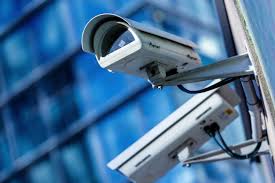
This rule will be applicable in Bengaluru and other municipal corporations across the state.

A bill to this effect, titled "The Karnataka Public Safety (Measures) Enforcement Bill-2017", was passed in the legislative assembly on Wednesday.

Outlining the government's intention, law minister T B Jayachandra said the bill has been mooted to augment public surveillance and to aid the police in curbing crimes, preventing acts of terrorism and other illegal activities.

The bill makes it mandatory for all establishments -- which also includes educational institutes, hospitals, sports complexes, industries, railway stations, bus stations and places of organized congregations -- to install CCTVs at their own cost and to make available video recordings of up to 30 days to the designated police authorities as when required during investigation of specific crimes.

According to the bill, establishments are required to file periodical returns every three months to the jurisdictional police inspector stating that public safety measures, including CCTVs, have been provided and properly maintained.

Those failing to file periodical returns are liable to pay a fine of Rs 2,000 for the first time and Rs 4,000 the second time. The jurisdictional police inspector has been empowered to inspect the establishments to ascertain compliance. Those who refuse to share the CCTV footage will be penalized Rs 5,000.

Comments

Ahmed K.C.
 - 
Thursday, 22 Jun 2017

Very good move by the state government. At least some truth will prevail.

Add new comment

  • Coastaldigest.com reserves the right to delete or block any comments.
  • Coastaldigset.com is not responsible for its readers’ comments.
  • Comments that are abusive, incendiary or irrelevant are strictly prohibited.
  • Please use a genuine email ID and provide your name to avoid reject.
News Network
May 27,2020

In a development which highlights the diversity in the United Kingdom’s legal system, a 40-year-old Muslim woman has become the first hijab-wearing judge in the country.

Raffia Arshad, a barrister, was appointed a deputy district judge on the Midlands circuit last week after 17-year career in law.  

She said her promotion was great news for diversity in the world’s most respected legal system. She hopes to be an inspiration to young Muslims.

Ms Arshad, who grew up in Yorkshire, north England, has wanted to work in law since she was 11.

Ms Arshad said the judicial office was looking to promote diversity, but when they appointed her they did not know that she wore the hijab.

‘It’s definitely bigger than me,” she told Metro newspaper. "I know this is not about me.

"It’s important for all women, not just Muslim women, but it is particularly important for Muslim women."

Ms Arshad, a mother of three, has been practising private law dealing with children, forced marriage, female genital mutilation and other cases involving Islamic law for the past 17 years.

She was the first in her family to go to university and has also written a leading text on Islamic family law.

Although the promotion by the Lord Chief Justice was welcome news for her, Ms Arshad said the happiness from other people sharing the news was “far greater”.

“I’ve had so many emails from people, men and women," she said.

"It’s the ones from women that stand out, saying that they wear a hijab and thought they wouldn’t even be able to become a barrister, let alone a judge."

Ms Arshad is regularly the subject of discrimination in the courtroom because of her choice to wear the hijab.

She is sometimes mistaken for a court worker or a client.

Ms Arshad said that recently she was asked by an usher whether she was a client, an interpreter, and even if she were on work experience.

“I have nothing against the usher who said that but it reflects that as a society, even for somebody who works in the courts, there is still this prejudicial view that professionals at the top end don’t look like me,” she said.

A family member once advised her to not wear a hijab at an interview for a scholarship at the Inns of Court School of Law in 2001, warning that it would affect her chances of landing the role.

“I decided that I was going to wear my headscarf because for me it’s so important to accept the person for who they are," Ms Arshad said.

"And if I had to become a different person to pursue my profession, it’s not something I wanted.”

The joint heads of St Mary’s Family Law Chambers said they were “delighted” to hear the news of her appointment.

“Raffia has led the way for Muslim women to succeed in the law and at the bar, and has worked tirelessly to promote equality and diversity in the profession,” Vickie Hodges and Judy Claxton said.

“It is an appointment richly deserved and entirely on merit, and all at St Mary’s are proud of her and wish her every success.”

Comments

Add new comment

  • Coastaldigest.com reserves the right to delete or block any comments.
  • Coastaldigset.com is not responsible for its readers’ comments.
  • Comments that are abusive, incendiary or irrelevant are strictly prohibited.
  • Please use a genuine email ID and provide your name to avoid reject.
News Network
January 14,2020

Bengaluru, Jan 14: A woman has sustained burns on the left hand and the left chest in a vicious acid attack that occurred as she walked home in Mallappa Layout, Seegehalli, near KR Puram in Bengaluru.

Prabhavathi, the victim, and her husband, Radhakrishna Reddy, own an acre and six guntas of land in Seegehalli. They had constructed 20 houses on the parcel and rented them while keeping the rest of the land empty and building a boundary wall around it, according to a senior police officer. 

Four men named Ravi, Kumar, Ashirvadam and Shekar laid claim to the land and demolished the boundary wall two years ago. When the couple approached the cops, Manjunath, a sub-inspector from KR Puram police station, visited the spot along with other officers and allegedly abused Reddy and his family. 

Reddy then approached a senior police officer who suggested that he file a complaint against the sub-inspector as well as his rivals for threatening the family. The case is pending in a case. 

On January 7, Ravi, along with four others — Raghu, Kabalan, Ashrivadam and Munireddy — mocked Prabhavathi as she walked home. They asked her to withdraw the complaint. When she ignored them, one of the men motioned to another person. In a flash, a man in the group threw acid on Prabhavathi. The liquid fell on her left hand and left chest, gashing them. Her screams drew her family who rushed her to a hospital. 

Reddy said the suspects had been intimidating them to sell the remaining land. He accused the KR Puram sub-inspector of “threatening” the family.

According to Reddy, following their complaint, a departmental enquiry was launched against the sub-inspector and his promotion was stalled. He suggested that the suspects had used the acid attack as a weapon to “silence” and force them into withdrawing the complaints. 

Following the acid attack, KR Puram police booked eight people — Ravi, Raghu, Kabalan, Ashirvadam, Munireddy, Sachin, Rahul, and Kumareshan — under IPC sections 326 (a) (acid attack) and 506 (criminal intimidation). Efforts are on to track them down. 

Comments

Add new comment

  • Coastaldigest.com reserves the right to delete or block any comments.
  • Coastaldigset.com is not responsible for its readers’ comments.
  • Comments that are abusive, incendiary or irrelevant are strictly prohibited.
  • Please use a genuine email ID and provide your name to avoid reject.
News Network
March 29,2020

Karnataka on Saturday reported 12 new cases, the highest in a single day so far, taking the tally in the state to 76.

Late at night, the Mysuru district commissioner said five more people had tested positive in the district. But it was yet to be confirmed by the state health department.

Of the cases, 41 are from Bengaluru, eight from Chikkaballapur, while Uttara Kannada and Dakshina Kannada districts have seven each.

Interestingly, the highest number of patients are those from Dubai or those who had transit travel via Dubai. Out of 76 cases, 17 cases (22%) have travel history to Dubai, the capital of Emirate of Dubai and the most populous city in the United Arab Emirates (UAE).

Medical Education Minister Dr K Sudhakar, who is also in-charge of COVID-19 operations, said that Dubai has been a major concern as far as Karnataka COVID-19 patients are concerned. “Most of the positive cases have come through Dubai suggesting something amiss there,” he said. 

Echoing the same, Dr Prakash Kumar, Joint Director, Communicable Diseases, Department of Health and Family Welfare, said, “The layover in Dubai is around six to seven hours. We are seeing Dubai to be the new epicentre of the virus as far as India is concerned.”

UAE was initially not on the list of countries from where passengers were screened. It was added much later when clusters of patients with travel history to Dubai began popping up all over the country.

Patient-19 has infected the maximum so far.

Out of the 12 cases that tested positive on Saturday, five are contacts of Patient 19. All of them are being treated at a Chikkaballapur hospital. Two of them are from Hindupur, Andhra Pradesh, and three are residents of Gauribidanur taluk in Chikkabalapur district.

P19, a 31-year-old man from Chikkaballapur, had travelled to Mecca, Saudi Arabia, and returned to India on March 14. Existing patient clusters suggest that P19 had infected the maximum number of people. Officials did not reveal how many people he originally travelled with to Mecca.

Amid the rise in cases, Jawaid Akhtar, Additional Chief Secretary (Health), maintained that the state had not reached stage 3. But he had no definitive answer as to how the Mysuru patient contracted the virus despite health officials he was in touch with not testing positive.

Health Commissioner Pankaj Kumar Pandey said around 1,000 primary contacts of all positive cases have been classified as high-risk and low-risk. The high-risk patients are in government hospitals while the low-risk ones in quarantine facilities.

Comments

Add new comment

  • Coastaldigest.com reserves the right to delete or block any comments.
  • Coastaldigset.com is not responsible for its readers’ comments.
  • Comments that are abusive, incendiary or irrelevant are strictly prohibited.
  • Please use a genuine email ID and provide your name to avoid reject.