



Celebration, sorrow and slights greet news of Fidel Castro's death

November 27, 2016

Nov 27: While the death of Cuban leader Fidel Castro prompted cheers from the country's exiles in Miami, the 90-year-old revolutionary leader's passing produced expressions of respect in other parts of the world and measured responses from governments that saw the devoted socialist as a threat. US President Barack Obamanoted that while “discord and profound political disagreements” marked the relationship between the United States and Cuba for nearly six decades, Americans were extending “a hand of friendship to the Cuban people” during their time of grief.

“History will record and judge the enormous impact of this singular figure on the people and world around him,” Obama said.
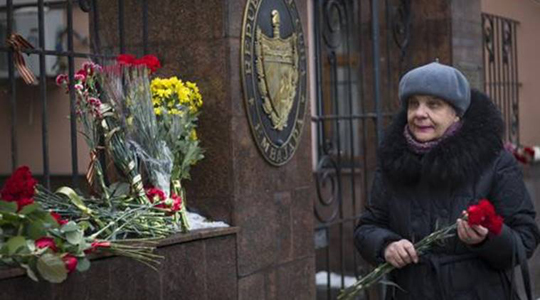
castro

While spending the Thanksgiving weekend in Florida, where the announcement of Castro's death early Saturday brought Cuban exiles into the streets to celebrate, US President-elect Donald Trump took to Twitter to share a thought that proved pithy even for the medium: “Fidel Castro is dead!”

Elsewhere in world, Castro was honored and mourned by many present and former national leaders.

In a telegram to Cuban President Raul Castro, Fidel's 85-year-old brother, Pope Francis offered “my sense of grief to your excellency and family.”

Francis broke from the Vatican's usual practice of having the secretary of state send official condolences. In a mark of the esteem the pope held for Castro, whom he met during a visit to Cuba last year, Francis signed the telegram himself.

Russian President Vladimir Putin, whose country was Cuba's main ally and supporter during the Soviet era, called Castro “a sincere and reliable friend of Russia” who had built “an inspiring example for many countries and nations.”

Chinese President Xi Jinping said Castro “made immortal historical contributions to the development of socialism around the world.”

“With his death, the Chinese people have lost a close comrade and a sincere friend,” Xi said in a telegram to Raul Castro, state broadcaster CCTV reported. “His glorious image and great achievements will be recorded in history forever.”

United Nations Secretary General Ban Ki-moon said he had vivid memories of meeting Castro in January 2014 and having “a lively discussion that covered developments around the world as well as sustainable development and climate change.”

“Under former President Castro, Cuba made advances in the fields of education, literacy and health,” Ban said. “I hope Cuba will continue to advance on a path of reform and greater prosperity.

Castro's death was felt especially keenly in Latin America, where his success in overthrowing a military regime inspired leftist activists in other countries.

Salvador Sanchez Ceren, the president of El Salvador, said he felt “deep sorrow … of my friend and eternal companion, Commander Fidel Castro Ruz.”

Mexican president Enrique Pena Nieto tweeted that “Fidel Castro was a friend of Mexico, promoting bilateral relations based on respect, dialogue and solidarity.”

Venezuelan President Nicolas Maduro recalled Castro's departure from Mexico on the yacht Granma with his brother Raul and several dozen supporters to start their revolution.

“Sixty years after the Granma sailed from Mexico, Fidel sails toward the immortality of all those who fight their whole lives,” Maduro tweeted. “Onward to victory, always!”

Rubén Berríos Martínez, longtime leader of the Puerto Rican Independence Party, called Castro the “largest and most influential Latin American of the 20th century, whose verticality, vision and passion has always served as an inspiration for those who aspired to a more just, free and dignified Latin America.”

Brazil's former President Luiz Inacio Lula da Silva said on his Facebook page that Castro was his “friend and companion” and the “greatest of all Latin Americans.”

Silva said Castro was like an “older brother-an irreplaceable companion. He encouraged dreams of freedom. sovereignty and equality.”

A statement from the Spanish government hailed Castro as “a figure of enormous historical importance.”

“As a son of Spaniards, former president Castro always maintained close relations with Spain and showed great affection for his family and cultural ties,” the government statement said.

However, there were shouts and insults in Madrid as a small crowd composed of both pro- and anti-Castro supporters met in front of the Cuban embassy.

Turkey's foreign ministry commended the “legendary leader of the Cuban Revolution” for “instituting many deep reforms in his country from health care to education, art to science.”

“The struggle to which he dedicated his life echoed not just in Cuba but across the world, and has awakened respect even in other political camps,” the ministry said. “His words `another world is possible' reflect the shared longing of billions of people from Latin America to Asia, from the Middle East to Africa.”

“India mourns the loss of a great friend,” Indian Prime Minister Nerendra Modi said on Twitter.

Greek Prime Minister Alexis Tsipras tweeted: “Goodbye, commandante. Until the peoples' eternal victory.”

“Fidel Castro in the 20th century did everything possible to destroy the colonial system, to establish cooperative relations,” former Soviet President Mikhail Gorbachev was quoted as telling the Interfax news agency.

Ammar al-Moussawi, who is in charge of international relations for Lebanon's militant Hezbollah group, lauded Castro as “a historic symbol whose life was a lighthouse to all revolutionaries around the world.”

Guyanese Prime Minister Moses Nagamootoo said Castro shared his island's resources with any nation that dared ask for help.

The Castro government sent thousands of doctors and nurses to work in remote Caribbean areas where local and other foreign medical personnel had refused to go, Nagamootoo said.

“His and Cuba's contribution to humanity and the Caribbean is unmatched by any other nation in terms of brotherly and sisterly relations. He was an international gift to humanity,” he said.

The Nelson Mandela Foundation, established to carry on the work of the late anti-apartheid leader who would go on to become South Africa's president, recounted the close relationship Mandela forged with the Cuban leader.

When Mandela became president in 1994 he was criticized by some in the West for his ties to Castro. Mandela replied that anyone who objected could “jump in the pool.”

“The first country we approached (for assistance in battling apartheid) was the United States of America. We could not even succeed to come close to the government, and they refused to assist us,” Mandela said in a 1990 documentary to explain his loyalty to Castro. “But Cuba, the moment we appealed for assistance they were ready to do so and they did so.”

Canadian Prime Minister Justin Trudeau joined the chorus of admirers, calling Castro “a legendary revolutionary and orator” and a “remarkable leader.”

“While a controversial figure, both Mr. Castro's supporters and detractors recognized his tremendous dedication and love for the Cuban people who had a deep and lasting affection for `el Comandante,”'said Trudeau, whose late father, former Prime Minister Pierre Trudeau, had a warm friendship with Castro.

Trudeau's reaction prompted strong criticism on Twitter from two Republican US senators, Marco Rubio of Florida and Ted Cruz of Texas, both Cuban-Americans.

“Is this a real statement or a parody? Because if this is a real statement from the PM of Canada it is shameful (and) embarrassing,” Rubio tweeted. Cruz wrote: “Disgraceful. Why do young socialists idolize totalitarian tyrants? Castro, Stalin, Mao, Pol Pot — all evil, torturing murderers.”

Former US President Jimmy Carter said he and his wife Rosalynn “remember fondly our visits with him in Cuba and his love of his country.” The couple visited Cuba in 2002, long after Carter left office.

While most of the official remembrances were complimentary, a few emphasized less-flattering views of the late leader.

Trump elaborated on his initial tweet later Saturday, calling Castro va brutal dictator who oppressed his own people for nearly six decades.”

Trump says Castro left a legacy of “firing squads, theft, unimaginable suffering, poverty and the denial of fundamental human rights.”

House Speaker Paul Ryan, the top Republican in the United States Congress, said any remembrances should be reserved vfor the memory and sacrifices of all those who have suffered under the Castros.”

“Now that Fidel Castro is dead, the cruelty and oppression of his regime should die with him,” Ryan said in a statement.

Ed Royce, chairman of the US House of Representatives Foreign Affairs Committee, offered a similar assessment, saying “no one should rule anywhere near as long as Fidel Castro did.”

“His legacy is one of repression at home, and support for terrorism abroad. Sadly, Raul Castro is no better for Cubans who yearn for freedom,” Royce said.

Republican officials in the US were not the only ones with harsh words for the dead revolutionary.

“After decades under Fidel's doctrine of oppression and antagonism, there is hope that a new path for Cuba is opening,” Nancy Pelosi, who leads the Democrats in the House of Representatives, said.

“I hope his death can start a freedom revolution in Cuba,” Denmark's Foreign Minister Kristian Jensen said. “Any demise is sad. In this case I believe that it can bring something good.”

Peter Hain, a former member of the British Cabinet and anti-apartheid campaigner, tempered praise for Castro with criticism of some aspects of his long rule.

“Although responsible for indefensible human rights and free-speech abuses, Castro created a society of unparalleled access to free health, education and equal opportunity despite an economically throttling USA siege,” Hain said. “His troops inflicted the first defeat on South Africa's troops in Angola in 1988, a vital turning point in the struggle against apartheid.”

Comments

Add new comment

  • Coastaldigest.com reserves the right to delete or block any comments.
  • Coastaldigset.com is not responsible for its readers’ comments.
  • Comments that are abusive, incendiary or irrelevant are strictly prohibited.
  • Please use a genuine email ID and provide your name to avoid reject.
News Network
June 9,2020

Washington, Jun 9: The defacement of Mahatma Gandhi's statue by unknown miscreants was a "disgrace", US President Donald Trump has said, days after it was vandalised with graffiti and spray painting during the nationwide protests against the custodial killing of African-American George Floyd.

The statue, which is across the road from the Indian Embassy, was vandalised on the intervening night of June 2 and 3, prompting the Indian embassy to register a complaint with the local law enforcement agencies.

The incident happened during the week of nationwide protests against the custodial killing of Floyd in Minneapolis on May 25.

"It was a disgrace," Trump made the brief comment at the White House on Monday when asked about the incident.

The Indian Embassy here has taken up the matter with the US Department of State for early investigation into the matter, as also with the Metropolitan Police and National Park Service.

It is working with the US Department of State, Metropolitan Police and National Park Service for expeditious restoration of the statue at the park.

The US president and First Lady Melania Trump, during their visit to India in February, had spent considerable time at the Gandhi Ashram in Ahmedabad. Prime Minister Narendra Modi had personally given them a tour of the historic place.

"The First Lady and I have just had a pleasure of visiting Mahatma Gandhi's Ashram, a few miles from here, where he launched the famous Salt March," Trump had said during his address at the Namaste Trump rally at the Motera Stadium in Ahmedabad on February 24. A day later, Trump and the first lady also laid a wreath at Raj Ghat in New Delhi.

Pictures of Trump and the first lady with Gandhi's spinning wheel during their visit to the Sabarmati Ashram in Ahmedabad are seen hanging on the walls of the White House.

Last week, top US lawmakers and the Trump Campaign condemned the vandalisation of the statue.

"Very disappointing," tweeted Kimberly Guilfoyle, advisor to Donald J Trump for President Inc. and National Chair of the Trump Victory Finance Committees.

North Carolina Senator Tom Tillis said, "It's disgraceful to see the defacing of the Gandhi statue" in Washington DC.

"Gandhi was a pioneer of peaceful protesting, demonstrating the great change it can bring. Rioting, looting and vandalising do not bring us together, he said.

Senator Marco Rubio said, "more evidence that violent radicals and run of the mill crazies have hijacked legitimate protests to create anarchy or for their own purposes."

Protests against the custodial killing of Floyd turned violent in the US and prestigious monuments were damaged. In Washington DC, protestors burnt a historic church and damaged monuments like the Lincoln Memorial.

US Ambassador to India Ken Juster apologised for the incident.

"So sorry to see the desecration of the Gandhi statue in Wash, DC. Please accept our sincere apologies," he said.

"Appalled as well by the horrific death of George Floyd and the awful violence and vandalism. We stand against prejudice & discrimination of any type. We will recover and be better," he said in a tweet last week.

One of the few statues of a foreign leader on a federal land in Washington DC, the statue of Gandhi was dedicated by former prime minister Atal Bihari Vajpayee in the presence of the then US president Bill Clinton on September 16, 2000, during his state visit to the US.

Comments

Add new comment

  • Coastaldigest.com reserves the right to delete or block any comments.
  • Coastaldigset.com is not responsible for its readers’ comments.
  • Comments that are abusive, incendiary or irrelevant are strictly prohibited.
  • Please use a genuine email ID and provide your name to avoid reject.
News Network
June 4,2020

Jun 4: A malaria drug President Donald Trump took to try to prevent COVID-19 proved ineffective for that in the first large, high-quality study to test it in people in close contact with someone with the disease.

Results published Wednesday by the New England Journal of Medicine show that hydroxychloroquine was no better than placebo pills at preventing illness from the coronavirus.

The drug did not seem to cause serious harm, though -- about 40% on it had side effects, mostly mild stomach problems.

 “We were disappointed. We would have liked for this to work,” said the study leader, Dr. David Boulware, an infectious disease specialist at the University of Minnesota.

“But our objective was to answer the question and to conduct a high-quality study,” because the evidence on the drug so far has been inconclusive, he said.

Hydroxychloroquine and a similar drug, chloroquine, have been the subject of much debate since Trump started promoting them in March.

Hydroxychloroquine has long been used for malaria, lupus, and rheumatoid arthritis, but no large studies have shown it or chloroquine to be safe or effective for much sicker patients with coronavirus, and some studies have suggested the drugs may do harm.

Trump took a two-week course of hydroxychloroquine, along with zinc and Vitamin D, after two staffers tested positive for COVID-19, and had no ill effects, according to results of his latest physical released by his doctor Wednesday.

Federal regulators have warned against hydroxychloroquine's use except in hospitals and formal studies because of the risk of side effects, especially heart rhythm problems.

Boulware's study involved 821 people in the United States and Canada living with someone diagnosed with COVID-19 or at high risk of getting it because of their job -- doctors, nurses, ambulance workers who had significant exposure to a sick patient while not wearing full protective gear.

They were randomly assigned to get either the nutrient folate as a placebo or hydroxychloroquine for five days, starting within four days of their exposure. Neither they nor others involved in the research knew who was getting which pills.

After 14 days in the study, 12 per cent on the drug developed COVID-19 symptoms versus 14 per cent in the placebo group, but the difference is so small it could have occurred by chance, Boulware said.

“There's basically no effect. It does not prevent infection,” he said of the drug. Even if it were to give some slim advantage, “we'd want a much larger effect” to justify its use and risk of side effects for preventing illness, he said.

Results were no different among a subgroup of participants who were taking zinc or vitamin C, which some people believe might help make hydroxychloroquine more effective or fight the coronavirus.

There are some big caveats: The study enrolled people through the Internet and social media, relying on them to report their own symptoms rather than having them tracked in a formal way by doctors.

Participants were not all tested for the coronavirus but were diagnosed as COVID-19 cases based on symptoms in many cases. And not all took their medicines as directed.

The results “are more provocative than definitive,” and the drug may yet have prevention benefits if tried sooner or in a different way, Dr. Myron Cohen of the University of North Carolina at Chapel Hill wrote in a commentary in the journal.

Others were glad to see a study that had a comparison group and good scientific methods after so many weaker reports on hydroxychloroquine.

“This fits with everything else we've seen so far which suggests that it's not beneficial," said Dr. Peter Bach, director of a health policy center at Memorial Sloan Kettering Cancer Center in New York.

This study was in younger relatively healthy people, but the results “would make me very discouraged about trying to use this in older people” who are most vulnerable to serious illness from the coronavirus, Bach said.

“If it does work, it doesn't work very well.” Dr. Dan Culver, a lung specialist at the Cleveland Clinic, said there's still a chance that giving the drug sooner than four days after someone's exposure to the virus may help prevent illness.

But the study “takes 'home run' off the table” as far as hopes for the drug, he said.

The study was mostly funded by David Baszucki, founder of Roblox, a California-based game software company, and other private donors and the Minnesota university.

Boulware also is leading a study testing hydroxychloroquine for treating COVID-19. The study is finished and results are being analyzed now.

On Tuesday, the journal Lancet posted an “expression of concern” about a study it published earlier this month of nearly 15,000 COVID-19 patients on the malaria drugs that tied their use to a higher risk of dying in the hospital or developing a heartbeat problem.

Scientists have raised serious questions about the database used for that study, and its authors have launched an independent audit.

That work had a big impact: the World Health Organization suspended use of hydroxychloroquine in a study it is leading, and French officials stopped the drug's use in hospitals. On Wednesday, the WHO said experts who reviewed safety information decided that its study could resume.

Comments

Add new comment

  • Coastaldigest.com reserves the right to delete or block any comments.
  • Coastaldigset.com is not responsible for its readers’ comments.
  • Comments that are abusive, incendiary or irrelevant are strictly prohibited.
  • Please use a genuine email ID and provide your name to avoid reject.
News Network
April 6,2020

Tokyo, April 6: Japan Prime Minister Shinzo Abe is planning to declare a state of emergency in view of the surging cases of coronavirus in the country, especially in Tokyo and other large cities, government sources said on Monday.

Pressure had been mounting on Abe to make the declaration amid a spurt in COVID-19 cases recently, with calls for the move from Tokyo Governor Yuriko Koike and the Japan Medical Association intensifying, Xinhua news agency reported.

The Tokyo metropolitan government, along with healthcare specialists, said that the number of hospital beds available for coronavirus patients will soon reach capacity, with the health ministry rapidly trying to secure more beds.

Adding to pressure on the government to demonstrably bolster its preventive and countermeasures to the spread of the virus, a panel of government experts warned recently that the country's healthcare system could collapse if coronavirus cases continue to spike.

The healthcare system in Tokyo and four other prefectures are under increased strain and "drastic countermeasures need to be taken as quickly as possible," the experts said.

As of Sunday, 143 new cases of COVID-19 were recorded in Tokyo, a record daily high for the capital, bringing the total to 1,034, with Japan's health ministry and local governments adding that nationwide cases rose to 3,531 as of Sunday afternoon.

Comments

Add new comment

  • Coastaldigest.com reserves the right to delete or block any comments.
  • Coastaldigset.com is not responsible for its readers’ comments.
  • Comments that are abusive, incendiary or irrelevant are strictly prohibited.
  • Please use a genuine email ID and provide your name to avoid reject.