



Centre orders release of Bajrang Dal leader who beat up and paraded Muslim

January 7, 2016

Lucknow, Jan 7: Prime Minister Narendra Modi led government at the Centre has decided to revoke the National Security Act (NSA) against Bajrang Dal leader Vivek Premi, along with the help of his associates had paraded a Muslim man through a market in Shamli after blackening his face and brutally beating him.
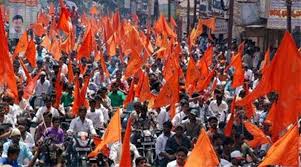
premiThe decision by the government paves the way for Premi’s release once he applies for bail in other cases lodged against him. He is lodged in jail since June, 2015.

The order revoking the NSA was conveyed by the Ministry of Home Affairs to the Uttar Pradesh Secretary (Home) on December 31 via radiogram. Copies of the order were sent to the Shamli district magistrate, Premi, and the superintendent of Muzaffarnagar District Jail, where he is lodged.

The district administration had invoked NSA against Premi, a Bajrang Dal district convener, alleging that his actions led to communal tension in the city. A video purportedly showing Premi beating up the man had gone viral on social media.

Premi and his associates had caught Mohammad Riyaz, 42, while he was carrying a calf on June 25 last year. They alleged Riyaz was taking the calf to slaughter.

Riyaz was later handed over to police and sent to jail by the court on charges of theft and under the Prevention of Cruelty to Animals Act. An FIR was lodged against Premi and five other Bajrang Dal activists, four days after Riyaz was sent to jail.

On June 30, Premi was arrested on charges of rioting, voluntarily causing hurt, intentional insult with intent to provoke breach of peace and promoting enmity between different groups on grounds of religion. The other accused were also arrested.

On July 10, the Shamli district administration invoked NSA against Premi, which was approved by the state government on July 16. The UP Advisory Board, which takes the final call on confirmation or removal of NSA, gave its approval on August 21.

Premi then sent a representation to the MHA, requesting that his detention under NSA be revoked. Premi’s father Manoj confirmed they had written to the Centre against the state government’s decision.

“Since NSA has been revoked, we are moving court to seek bail,” said Manoj. Shamli District Magistrate O P Verma said, “The MHA sent a radiogram revoking the NSA against Premi. I issued direction to jail authorities two days ago for his release.”

In its order, the MHA states: “After careful consideration of the representation, the Central government is pleased to revoke under section 14 (1) of the National Security Act, 1980. The detenu may be released forthwith from the jail unless he is required to be kept in jail for any other case. He may be tried in the cases registered under the normal law of the land and a watch may be kept on his activities.” The order, marked “urgent”, also said the Centre has to be informed about the follow-up action taken by the district administration.

Comments

Muhammed Rafique
 - 
Friday, 8 Jan 2016

Naren.....people like you think only of boos

And let me tell you, feku nationalist that we fear only the Almighty and if you get pleasure in making such faalthu comments you can do so....because you have to live the life to fullest in this temporary world

Fairman
 - 
Thursday, 7 Jan 2016

Good News,
Naren is still alive..............
Needs urgent good treatment (any where )

Mohammed Shami
 - 
Thursday, 7 Jan 2016

Naren, true believer gets puku puku only for God, keep in your mind!!

ayes p
 - 
Thursday, 7 Jan 2016

Shame on such people; what we can expect from such a communal government, it is common all communal murders and criminals are getting clean chit either from government or from the head of law dept and releasing them to roam freely and indulge in criminal and instigate more communal riots.

Rikaz
 - 
Thursday, 7 Jan 2016

Naren, exactly it boos but it does not boosts....

peace lover
 - 
Thursday, 7 Jan 2016

Welcome back Naren Kotian... its been long time .... really we miss your funny jokes .... please be here in CD....

Naren Kotian
 - 
Thursday, 7 Jan 2016

Well done. Jai Bajrang Dal. This boos confidence among nationalists and creates puku puku in the hearts of anti nationals.

Rikaz
 - 
Thursday, 7 Jan 2016

BJP itself is a criminal party...releasing criminals is their party policy...does not make any difference.....

Add new comment

  • Coastaldigest.com reserves the right to delete or block any comments.
  • Coastaldigset.com is not responsible for its readers’ comments.
  • Comments that are abusive, incendiary or irrelevant are strictly prohibited.
  • Please use a genuine email ID and provide your name to avoid reject.
News Network
May 12,2020

Mangaluru, May 12: Two people hailing from Udupi district tested positive for covid-19 today. The sources of this infection is said to be Mangaluru's First Neuro Hospital.

Fresh bulletin from health and family welfare department revealed that a 52-year-old woman and a 26-year-old man from Karkala in Udupi were tested positive for the deadly coronavirus.

Among them, the woman had undergone treatment at the First Neuro Hospital. She is said to have contracted the infection from P-507 who was also was tested positive  April 27. And the youth was in touch with the woman.

The duo have not visited their home in Karkala for past few days. They were in quarantine and tested positive while being admitted at the same hospital.

With this the total number of COVID-19 cases found in Dakshina Kannada district are 33 now. Three among them have died and 14 have been discharged. Now, the district has 16 active coronavirus cases.

Comments

Add new comment

  • Coastaldigest.com reserves the right to delete or block any comments.
  • Coastaldigset.com is not responsible for its readers’ comments.
  • Comments that are abusive, incendiary or irrelevant are strictly prohibited.
  • Please use a genuine email ID and provide your name to avoid reject.
News Network
June 27,2020

Bengaluru, Jun 27: Announcing Karnataka’s ambitious plan to install a 108-ft-tall statue of Nadaprabhu Kempegowda outside the airport, deputy chief minister Ashwath Narayan said the government will bear the project cost — approximately Rs 78 crore.

Work on the project will formally commence with the chief minister laying foundation stone for installation of the statue and development of a 23-acre park where it will come up, on Saturday.

How soon we get a coronavirus vaccine depends on not only the pace of work in research labs, but also the preparedness of factories supplying glass vials, stoppers and syringes

A look at the factors that may determine the severity of infection

An artist’s impression of the 108-ft-tall statue, which is proposed to come up in a 23-acre park outside KIA. The chief minister will perform bhoomi puja on Saturday.

KPCC president DK Shivakumar on Thursday suggested the cost be borne by Kempegowda International Airport and not the government. He wrote to the CM welcoming the decision to erect a statue of the chieftain at KIA, but asked why should the govenment spend on it. “When huge concessions have been provided to KIA, why not use its services to construct the statue,” he asked. Narayan, who is chairman of Kempegowda Development Authority, said it is the government’s duty to bear the cost.

The government has released sketches of the statue and a blueprint of the park. Noted sculptor Ram Sutar, who designed the Gandhi statue located between Vidhana Soudha and Vikasa Soudha and the Statue of Unity in Gujarat, will be part of this project as well.

Narayan said the government was not competing with any other state on having a tallest/largest statue while emphasising that Kempegowda ensured the city had tanks, markets and drainage system when it was founded. He added the government won’t invite many guests to Saturday’s ceremony. “Most legislators will be given a virtual link to view the event,” he said.

Comments

Arif, Mangaluru
 - 
Saturday, 27 Jun 2020

When the economic situation is very bad they are wasting people's money on these things now! These statues can be built when the peoples' basic things are first fulfilled. The title of this topic should be "People to bear the burden of Rs.78 crore", there is nothing like governments money, it's all belong to people.

Mohammad Mubarak
 - 
Saturday, 27 Jun 2020

What is the neccessity of spending tax payers money in building Statue when there is great need of these amount in improving the quality of Health sector during COVID-19 Pandemic. Government must be smart enough to prioritise the need of the people.

Add new comment

  • Coastaldigest.com reserves the right to delete or block any comments.
  • Coastaldigset.com is not responsible for its readers’ comments.
  • Comments that are abusive, incendiary or irrelevant are strictly prohibited.
  • Please use a genuine email ID and provide your name to avoid reject.
News Network
July 28,2020

Hounde, Jul 28: Coronavirus and its restrictions are pushing already hungry communities over the edge, killing an estimated 10,000 more young children a month as meager farms are cut off from markets and villages are isolated from food and medical aid, the United Nations warned Monday.

In the call to action shared with The Associated Press ahead of publication, four UN agencies warned that growing malnutrition would have long-term consequences, transforming individual tragedies into a generational catastrophe.

Hunger is already stalking Haboue Solange Boue, an infant from Burkina Faso who lost half her former body weight of 5.5 pounds (2.5 kilograms) in just a month. Coronavirus restrictions closed the markets, and her family sold fewer vegetables. Her mother was too malnourished to nurse.

“My child,” Danssanin Lanizou whispered, choking back tears as she unwrapped a blanket to reveal her baby's protruding ribs.

More than 550,000 additional children each month are being struck by what is called wasting, according to the UN — malnutrition that manifests in spindly limbs and distended bellies. Over a year, that's up 6.7 million from last year's total of 47 million. Wasting and stunting can permanently damage children physically and mentally.

“The food security effects of the COVID crisis are going to reflect many years from now,” said Dr. Francesco Branca, the WHO head of nutrition. “There is going to be a societal effect.”

From Latin America to South Asia to sub-Saharan Africa, more poor families than ever are staring down a future without enough food.

In April, World Food Program head David Beasley warned that the coronavirus economy would cause global famines “of biblical proportions” this year. There are different stages of what is known as food insecurity; famine is officially declared when, along with other measures, 30% of the population suffers from wasting.

The World Food Program estimated in February that one Venezuelan in three was already going hungry, as inflation rendered salaries nearly worthless and forced millions to flee abroad. Then the virus arrived.

“Every day we receive a malnourished child,” said Dr. Francisco Nieto, who works in a hospital in the border state of Tachira.

In May, Nieto recalled, after two months of quarantine, 18-month-old twins arrived with bodies bloated from malnutrition. The children's mother was jobless and living with her own mother. She told the doctor she fed them only a simple drink made with boiled bananas.

“Not even a cracker? Some chicken?” he asked.

“Nothing,” the children's grandmother responded. By the time the doctor saw them, it was too late: One boy died eight days later.

The leaders of four international agencies — the World Health Organization, UNICEF, the World Food Program and the Food and Agriculture Organization — have called for at least dollar 2.4 billion immediately to address global hunger.

But even more than lack of money, restrictions on movement have prevented families from seeking treatment, said Victor Aguayo, the head of UNICEF's nutrition program.

“By having schools closed, by having primary health care services disrupted, by having nutritional programs dysfunctional, we are also creating harm,” Aguayo said. He cited as an example the near-global suspension of Vitamin A supplements, which are a crucial way to bolster developing immune systems.

In Afghanistan, movement restrictions prevent families from bringing their malnourished children to hospitals for food and aid just when they need it most. The Indira Gandhi hospital in the capital, Kabul, has seen only three or four malnourished children, said specialist Nematullah Amiri. Last year, there were 10 times as many.

Because the children don't come in, there's no way to know for certain the scale of the problem, but a recent study by Johns Hopkins University indicated an additional 13,000 Afghans younger than 5 could die.

Afghanistan is now in a red zone of hunger, with severe childhood malnutrition spiking from 690,000 in January to 780,000 — a 13% increase, according to UNICEF.

In Yemen, restrictions on movement have blocked aid distribution, along with the stalling of salaries and price hikes. The Arab world's poorest country is suffering further from a fall in remittances and a drop in funding from humanitarian agencies.

Yemen is now on the brink of famine, according to the Famine Early Warning Systems Network, which uses surveys, satellite data and weather mapping to pinpoint places most in need.

Some of the worst hunger still occurs in sub-Saharan Africa. In Sudan, 9.6 million people live from one meal to the next — a 65% increase from the same time last year.

Lockdowns across Sudanese provinces, as around the world, have dried up work and incomes for millions. With inflation hitting 136%, prices for basic goods have more than tripled.

“It has never been easy but now we are starving, eating grass, weeds, just plants from the earth,” said Ibrahim Youssef, director of the Kalma camp for internally displaced people in war-ravaged south Darfur.

Adam Haroun, an official in the Krinding camp in west Darfur, recorded nine deaths linked with malnutrition, otherwise a rare occurrence, over the past two months — five newborns and four older adults, he said.

Before the pandemic and lockdown, the Abdullah family ate three meals a day, sometimes with bread, or they'd add butter to porridge. Now they are down to just one meal of “millet porridge” — water mixed with grain. Zakaria Yehia Abdullah, a farmer now at Krinding, said the hunger is showing “in my children's faces.”

“I don't have the basics I need to survive,” said the 67-year-old, who who hasn't worked the fields since April. “That means the 10 people counting on me can't survive either.”

Comments

Add new comment

  • Coastaldigest.com reserves the right to delete or block any comments.
  • Coastaldigset.com is not responsible for its readers’ comments.
  • Comments that are abusive, incendiary or irrelevant are strictly prohibited.
  • Please use a genuine email ID and provide your name to avoid reject.