



China moving ahead, talking about temples and mosques will waste our time: Ex-Navy chief

Agencies
August 12, 2019

New Delhi, Aug 12: China is moving ahead in areas like artificial intelligence (AI) and robotics and it would be a waste of time if India distracts itself by talking about temples and mosques, former Navy chief Arun Prakash said on Sunday.

However, Arun Prakash expressed hope that the abrogation provision of Article 370 and the change in the status of Jammu and Kashmir will bring peace and help foster integration and economic development in the region.

"For our whole existence as an independent nation, we have seen and suffered from these fissures - linguistic, religious, caste, etc. These conflicts have continued throughout our independent existence," Admiral Arun Prakash (Retd), while delivering Prem Bhatia Memorial Lecture in New Delhi, said.

"What we need to do is to try and tamp them rather than to exploit them. China is talking about artificial intelligence, robotics and machine learning and all that. And if we are going to talk about temples and mosques and so on, then obviously we are going to waste time," Arun Prakash added.

Curious to know whether anyone from the 'Raghuvansha' (descendants of Lord Ram) was still residing in Ayodhya, the Supreme Court on Friday had put this query to 'Ram Lalla Virajman', the deity and one of the parties in the politically sensitive Ram Janmabhoomi-Babri Masjid land dispute case.

Fourteen appeals have been filed in the apex court against the 2010 Allahabad High Court judgment, delivered in four civil suits, that the 2.77-acre land in Ayodhya be partitioned equally among the three parties -- the Sunni Waqf Board, the Nirmohi Akhara and Ram Lalla.

Arun Prakash, who served as the chief of Naval staff from July 2004 to October 2006, said on Sunday, "It is in key interest of national security to ensure peace and tranquillity domestically before even looking outside."

"So to take away the half front, which the Army Chief [Bipin Rawat] mentions, we need to ensure domestic peace, harmony, etc. Therefore, the issues that are of a divisive nature need to be minimised rather than exploited," Arun Prakash added.

In June this year, Army Chief Bipin Rawat said that Indian armed forces are ready for a "two-and-a-half-front war". Bipin Rawat was referring to Pakistan and China as two fronts and internal security threats as the half front.

Arun Prakash said Sunday, "Our actual preparation should have been to ward off Chinese pressure. They don't have to fire a bullet. There are many other ways of pushing India. And if we prepare to counter China, then Pakistan would automatically be taken care of."

Talking about recent situation in Jammu and Kashmir, Arun Prakash said, "One hopes that the recent abrogation of Article 370 and the changes in the status of erstwhile J&K [Jammu and Kashmir] will bring peace and help foster integration and economic development."

Earlier this week, the government revoked provisions of Article 370 of the Constitution, withdrawing special status to Jammu and Kashmir, and split the state into two Union Territories -- Jammu and Kashmir, and Ladakh.

"If we are to debunk Jinnah's two-nation theory and convince the Muslim majority Union Territory (UT) of J&K that they made the right choice in 1947, then we need to reflect seriously on some larger issues," Arun Prakash said.

"One, whether the pursuit of majoritarianism of any kind is a good idea for a multi-religious, multi-ethnic and multi-lingual country like India. Two, whether in generating insecurity amongst any section of our people will enhance India's security or undermine it," Arun Prakash added.

Comments

Mr Frank
 - 
Tuesday, 13 Aug 2019

When china products in every field available globally India is lagging far behind filled with hate crime and polarisation and rapings..development remains only a slogan.

Add new comment

  • Coastaldigest.com reserves the right to delete or block any comments.
  • Coastaldigset.com is not responsible for its readers’ comments.
  • Comments that are abusive, incendiary or irrelevant are strictly prohibited.
  • Please use a genuine email ID and provide your name to avoid reject.
Agencies
August 3,2020

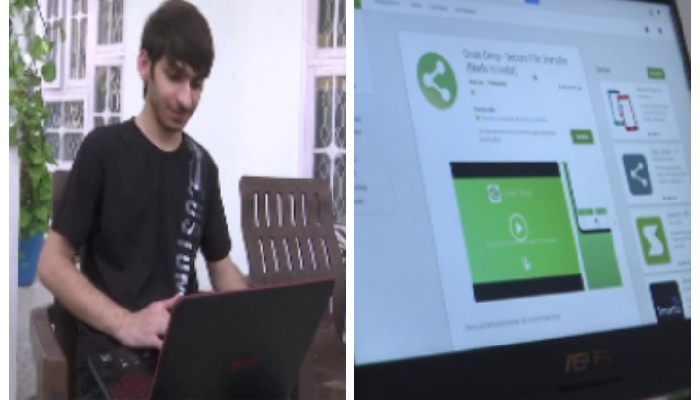
Rajouri, Aug 3: Ashfaq Mehmood Choudhary, a 17-year-old boy from Chattyear of Jammu and Kashmir's Rajouri district, has developed a file-sharing app 'Dodo Drop' which would enable users to share audios, videos, images, and texts between two devices without Internet access.

While speaking to media persons, Ashfaq Mehmood said that the 'Dodo Drop' application is an alternative to the Chinese 'SHAREit' app. "The Indian government has banned several Chinese apps due to data breaching, and among those apps was SHAREit which was used for sharing files.

Users faced a lot of problems due to the ban, and so I decided to make this file-sharing app. With 'Dodo Drop', users can share audios, videos, images, and even texts," he said.

Ashfaq said that it took him four weeks to develop the application, and it was launched on August 1 this year. The 'Dodo Drop' application has a transfer rate of up to 480 mbps, which is faster than the SHAREit app and is "quite easy" to use.

"Users can transfer data comprising photos, videos, audios, apps, texts, etc. between two devices with no Internet access. The transfers are fully encrypted and secure," he added.

"Our Prime Minister has always asserted the need for decreasing the dependency on foreign products and apps and to focus on the development of India-based apps. I tried to be part of the initiative of 'Aatmanirbhar Bharat' by developing an India-based file-sharing app. I want to develop global-standard apps for India," he added.

"We support and cooperate with him. He generates his own income by working on some projects and utilises it. We will continue to support him," said Parvez Ahmed Choudhary, Ashfaq's father.

In July, the Ministry of Electronics and Information Technology (MEITY) banned 47 apps, which were variants and cloned copies of the 59 apps banned earlier in June. These banned clones included SHAREit Lite, Tiktok Lite, Helo Lite, BIGO LIVE Lite, and VFY Lite.

The 59 apps had been banned by the Centre in June in view of the information available that they were engaged in activities which were "prejudicial to sovereignty and integrity and defence" of the country.

Almost all the apps banned had some preferential Chinese interest and the majority had parent Chinese companies.

The ban came amid border tensions with China in the Eastern Ladakh region.

Comments

Add new comment

  • Coastaldigest.com reserves the right to delete or block any comments.
  • Coastaldigset.com is not responsible for its readers’ comments.
  • Comments that are abusive, incendiary or irrelevant are strictly prohibited.
  • Please use a genuine email ID and provide your name to avoid reject.
Agencies
June 16,2020

As the Indian workforce navigates a shrinking job market in lockdown times, two in five professionals believe that the number of jobs and scheduled interviews will decrease in the next two weeks, a new LinkedIn survey said on Tuesday.

The news comes as bittersweet for Indian professionals as more than one in three stated they will now spend more time working on their resumes and preparing for interviews.

Professionals from healthcare, manufacturing and corporate service industries anticipate a decrease in personal spending and personal investments in the next six months, according to the findings of the fortnightly LinkedIn Workforce Confidence Index based on responses from 2,903 professionals in the country.

This findings showed that while India's overall confidence remains steady, the country's confidence in jobs is beginning to trend downward.

However, employees at large enterprises (firms with over 10,000 workers) are more confident about the future of their employers when compared to their peers from mid-market and SMB companies.

The findings showed that 41 % of enterprise professionals think their companies will do better in the next six months, while 63 % think their companies will be better off one year from now.

However, "the enterprise professionals are least confident about the future of their jobs, finances and careers, when compared to their SMB and mid-market peers".

The findings showed that 52 % of healthcare, 48% of corporate services, and 41 % of manufacturing professionals anticipate a decrease in investments in the next 6 months.

Over the past three months, many organizations have shifted to a remote working model to circumvent the pandemic and ensure business continuity.

Three in five marketing professionals feel confident about being effective when working remotely, joined by more than half of project management and engineering professionals, who are also confident about the effectiveness of remote working.

In contrast to this optimism, only 39 % of HR, 36% of finance, and 31 % of education professionals think they would be effective when working remotely, said the survey.

Comments

Add new comment

  • Coastaldigest.com reserves the right to delete or block any comments.
  • Coastaldigset.com is not responsible for its readers’ comments.
  • Comments that are abusive, incendiary or irrelevant are strictly prohibited.
  • Please use a genuine email ID and provide your name to avoid reject.
News Network
January 22,2020

Jan 22: India's ranking in the latest global Democracy Index has dropped 10 places to the 51st spot out of 167 owing to violent protests and threats to civil liberties challenging freedoms across the country.

Prime Minister Narendra Modi's government has been criticized by rights groups and western governments after shutting off the internet and mobile phone networks and detaining opposition politicians in Kashmir.

Modi’s government has also responded harshly to ongoing protests against a controversial, religion-based citizenship law. Muslims have said their neighborhoods have been targeted, while the central government has attempted to ban protests and urged TV news channels not to broadcast “anti-national” content. Some leaders in Modi’s ruling party called for “revenge” against protesters. India’s score in 2019 was its worst ranking since the EIU’s records began in 2006, and has fallen gradually since Modi was elected in 2014.

The Economist Intelligence Unit’s 2019 Democracy Index, which provides an annual comparative analysis of political systems across 165 countries and two territories, said the past year was the bleakest for democracies since the research firm began compiling the list in 2006.

“The 2019 result is even worse than that recorded in 2010, in the wake of the global economic and financial crisis,” the research group said in releasing the report on Wednesday.

The average global score slipped to 5.44 out of a possible 10 -- from 5.48 in 2018 -- driven mainly by “sharp regressions” in Latin America, Sub-Saharan Africa, the Middle East and North Africa. Apart from coup-prone Thailand, which improved its score after holding an election last year, there were also notable declines in Asia after a tumultuous period of protests and new measures restricting freedom across the region’s democracies.

Asia Declines

Hong Kong, meanwhile, fell three places to rank 75th out of 167 as more than seven months of violent and disruptive protests rocked the Asian financial hub. An aggressive police response early in the unrest, when protests were mostly peaceful, led to a “marked decline in confidence in government -- the main factor behind the decline in the territory’s score in our 2019 index,” the group said.

In Singapore, which ranked alongside Hong Kong at 75th, a new “fake news” law led to a deteriorating score on civil liberties.

“The government claims that the law was enacted simply to prevent the dissemination of false news, but it threatens freedom of expression in Singapore, as it can be used to curtail political debate and silence critics of the government,” EIU analysts said.

China’s score fell to just 2.26 in the EIU’s ranking, placing it near the bottom of the list at 153, as discrimination against minorities, repression and surveillance of the population intensified. Still, in China “the majority of the population is unconvinced that democracy would benefit the economy, and support for democratic ideals is absent,” the EIU said.

Comments

Add new comment

  • Coastaldigest.com reserves the right to delete or block any comments.
  • Coastaldigset.com is not responsible for its readers’ comments.
  • Comments that are abusive, incendiary or irrelevant are strictly prohibited.
  • Please use a genuine email ID and provide your name to avoid reject.