



China's Nobel laureate Liu Xiaobo dies aged 61

Agencies
July 13, 2017

Shenyang (China), Jul 13: China's Nobel laureate Liu Xiaobo died today while still in custody following a battle with cancer, authorities said, after officials ignored international pleas to let him spend his final days free and abroad.nobel
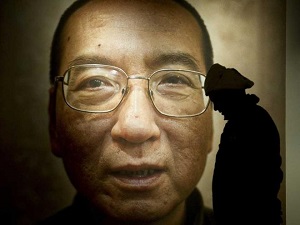
The prominent democracy advocate died aged 61, more than a month after he was transferred from prison to a heavily- guarded hospital to be treated for late-stage liver cancer.

The legal bureau in the northeastern city of Shenyang said on its website that Liu died three days after going into intensive care at the First Hospital of China Medical University.

The writer's death silences a government critic who had been a thorn in the side of the authorities for decades and became a symbol of Beijing's growing crackdown on dissenting voices.

Liu's death puts China in dubious company as he became the first Nobel Peace Prize laureate to die in custody since German pacifist Carl von Ossietzky, who passed away in a hospital while held by the Nazis in 1938.

International human rights groups, Western governments and local activists had urged authorities to free Liu and grant his final wish to be treated abroad.

Germany had offered to treat Liu, calling for a "signal of humanity" from China. The United States also said it was willing to take him in.

But officials insisted that Liu was receiving treatment from top Chinese doctors since being granted medical parole following his diagnosis in late May.

In response to calls to allow Liu to leave China, the foreign ministry repeatedly said other countries should not interfere in China's internal affairs.

In early July, Liu's Chinese doctors said he was not healthy enough to be sent abroad for treatment, a position that was contradicted by US and German medical experts invited by the hospital to examine Liu's condition. The physicians offered to treat the laureate at hospitals in their home countries.

Human rights groups decried the way the government treated Liu, accusing authorities of manipulating information about his health and refusing to let him leave because they were afraid he would use the freedom to denounce China's one- party Communist regime.

As a gaunt Liu lay in his sickbed, a video was leaked showing the Western doctors praising their Chinese counterparts -- a scene that was denounced as "grotesque propaganda" by Human Rights Watch.

The German embassy said the video seemed to show that security organs were "steering the process, not medical experts".

Liu was arrested in 2008 after co-writing Charter 08, a bold petition that called for the protection of basic human rights and reform of China's political system.

He was sentenced to 11 years in prison in December 2009 for "subversion". At the Nobel Peace Prize ceremony in Oslo in 2010 he was represented by an empty chair.

Liu is also known for his role in the 1989 Tiananmen Square protests in Beijing.

His wife, Liu Xia, was placed under house arrest in 2010, but she was allowed to see him at the hospital. Her fate will now worry human rights groups, which had urged the government to free her alongside Liu Xiaobo.

Comments

Add new comment

  • Coastaldigest.com reserves the right to delete or block any comments.
  • Coastaldigset.com is not responsible for its readers’ comments.
  • Comments that are abusive, incendiary or irrelevant are strictly prohibited.
  • Please use a genuine email ID and provide your name to avoid reject.
Agencies
July 1,2020

The ILO has warned that if another Covid-19 wave hits in the second half of 2020, there would be global working-hour loss of 11.9 percent - equivalent to the loss of 340 million full-time jobs.

According to the 5th edition of International Labour Organisation (ILO) Monitor: Covid-19 and the world of work, the recovery in the global labour market for the rest of the year will be uncertain and incomplete.

The report said that there was a 14 percent drop in global working hours during the second quarter of 2020, equivalent to the loss of 400 million full-time jobs.

The number of working hours lost across the world in the first half of 2020 was significantly worse than previously estimated. The highly uncertain recovery in the second half of the year will not be enough to go back to pre-pandemic levels even in the best scenario, the agency warned.

The baseline model – which assumes a rebound in economic activity in line with existing forecasts, the lifting of workplace restrictions and a recovery in consumption and investment – projects a decrease in working hours of 4.9 percent (equivalent to 140 million full-time jobs) compared to last quarter of 2019.

It says that in the pessimistic scenario, the situation in the second half of 2020 would remain almost as challenging as in the second quarter.

“Even if one assumes better-tailored policy responses – thanks to the lessons learned throughout the first half of the year – there would still be a global working-hour loss of 11.9 per cent at the end of 2020, or 340 million full-time jobs, relative to the fourth quarter of 2019,” it said.

The pessimistic scenario assumes a second pandemic wave and the return of restrictions that would significantly slow recovery. The optimistic scenario assumes that workers’ activities resume quickly, significantly boosting aggregate demand and job creation. With this exceptionally fast recovery, the global loss of working hours would fall to 1.2 per cent (34 million full-time jobs).

The agency said that under the three possible scenarios for recovery in the next six months, “none” sees the global job situation in better shape than it was before lockdown measures began.

“This is why we talk of an uncertain but incomplete recovery even in the best of scenarios for the second half of this year. So there is not going to be a simple or quick recovery,” ILO Director-General Guy Ryder said.

The new figures reflect the worsening situation in many regions over the past weeks, especially in developing economies. Regionally, working time losses for the second quarter were: Americas (18.3 percent), Europe and Central Asia (13.9 percent), Asia and the Pacific (13.5 percent), Arab States (13.2 percent), and Africa (12.1 percent).

The vast majority of the world’s workers (93 per cent) continue to live in countries with some sort of workplace closures, with the Americas experiencing the greatest restrictions.

During the first quarter of the year, an estimated 5.4 percent of global working hours (equivalent to 155 million full-time jobs) were lost relative to the fourth quarter of 2019. Working- hour losses for the second quarter of 2020 relative to the last quarter of 2019 are estimated to reach 14 per cent worldwide (equivalent to 400 million full-time jobs), with the largest reduction (18.3 per cent) occurring in the Americas.

The ILO Monitor also found that women workers have been disproportionately affected by the pandemic, creating a risk that some of the modest progress on gender equality made in recent decades will be lost, and that work-related gender inequality will be exacerbated.

The severe impact of Covid-19 on women workers relates to their over-representation in some of the economic sectors worst affected by the crisis, such as accommodation, food, sales and manufacturing.

Globally, almost 510 million or 40 percent of all employed women work in the four most affected sectors, compared to 36.6 percent of men, it said.

The report said that women also dominate in the domestic work and health and social care work sectors, where they are at greater risk of losing their income and of infection and transmission and are also less likely to have social protection.

The pre-pandemic unequal distribution of unpaid care work has also worsened during the crisis, exacerbated by the closure of schools and care services.

Even as countries have adopted policy measures with unprecedented speed and scope, the ILO Monitor highlights some key challenges ahead, including finding the right balance and sequencing of health, economic and social and policy interventions to produce optimal sustainable labour market outcomes; implementing and sustaining policy interventions at the necessary scale when resources are likely to be increasingly constrained and protecting and promoting the conditions of vulnerable, disadvantaged and hard-hit groups to make labour markets fairer and more equitable.

“The decisions we adopt now will echo in the years to come and beyond 2030. Although countries are at different stages of the pandemic and a lot has been done, we need to redouble our efforts if we want to come out of this crisis in a better shape than when it started,” Ryder said. 

Comments

Add new comment

  • Coastaldigest.com reserves the right to delete or block any comments.
  • Coastaldigset.com is not responsible for its readers’ comments.
  • Comments that are abusive, incendiary or irrelevant are strictly prohibited.
  • Please use a genuine email ID and provide your name to avoid reject.
News Network
February 19,2020

Washington, Feb 19: Sri Srinivasan, a prominent Indian-American judge, has created history by becoming the first person of South Asian descent to lead a powerful federal circuit court considered next only to the US Supreme Court.

Srinivasan, 52, became the Chief Judge of the United States Court of Appeals for the DC Circuit.

An Obama appointee who has already been considered for a Supreme Court seat twice, donned the mantle of the chief judge of the DC federal court circuit on February 12.

Srinivasan succeeded Judge Merrick Garland, who has been a member of the DC Circuit since 1997 and Chief Judge since 2013. He will remain on the bench, a press release said.

Notably, Garland's nomination to the Supreme Court by the then president Barack Obama was blocked by Senate Republicans in 2016.

Srinivasan, was appointed to the US Court of Appeals for the District of Columbia Circuit in May 2013.

He was the first ever Indian-American to be appointed to the second most powerful court of the US.

Neomi Rao, nominated by President Donald Trump, is the second Indian American on this powerful judiciary bench.

History being made on the DC Court of Appeals. Congratulations, Judge Srinivasan! Senator Mark Warner said.

Congratulations to Judge Sri Srinivasan on becoming the Chief Judge of the U.S. Court of Appeals for the D.C. Circuit! A milestone for the Indian-American/Kansan community (and yet another piece of evidence my family can use that I'm underachieving), US Federal Communications Commission Chair Ajit Pai said.

According to The Washington Post, Srinivasan spoke recently about his path to the bench at an event celebrating women in the law, a field where men still dominate leadership positions.

"Everybody doubts their belonging and worthiness in some measure. I definitely did and still do. This is just going to be a part of the thing when you're looking out in the world in which everyone isn't like you. It's natural to doubt whether you belong and whether you're worthy, he said, "but you do belong and you are worthy.

Born in Chandigarh, and raised in Lawrence, Kansas, he received a B.A. from Stanford University, a J.D. from Stanford Law School, and an M.B.A. from the Stanford Graduate School of Business.

Following graduation, he served as a law clerk to Judge J. Harvie Wilkinson III of the US Court of Appeals for the Fourth Circuit, as a Bristow Fellow in the Office of the US Solicitor General, and as a law clerk to US Supreme Court Justice Sandra Day O'Connor.

From 2011 until his appointment to the US Court of Appeals, Judge Srinivasan served as the Principal Deputy Solicitor General of the United States.

He has argued 25 cases before the US Supreme Court. He has also taught appellate advocacy at Harvard Law School as well as a seminar on civil rights statutes and the Supreme Court at Georgetown University Law Center.

Comments

Add new comment

  • Coastaldigest.com reserves the right to delete or block any comments.
  • Coastaldigset.com is not responsible for its readers’ comments.
  • Comments that are abusive, incendiary or irrelevant are strictly prohibited.
  • Please use a genuine email ID and provide your name to avoid reject.
Agencies
January 4,2020

Tel Aviv, Jan 4: Israeli Prime Minister Benjamin Netanyahu on Friday came out in the support of Trump administration for carrying out the strike near Baghdad's international airport which led to the killing of Iran's elite IRGC Qassem Soleimani, saying that "The US has the right of self-defence."

"Just as Israel has the right of self-defence, the United States has exactly the same right. Qassem Soleimani is responsible for the death of American citizens and many other innocent people. He was planning more such attacks," PM Benjamin Netanyahu wrote on Twitter.

In another tweet, Netanyahu also credited US President Donald Trump for acting decisively in the operation of Iraq that led to the killing of Qassem Soleimani -- a US-designated terrorist, along with six others.

"President Donald Trump deserves all the credit for acting swiftly, forcefully and decisively. Israel stands with the United States in its just struggle for peace, security and self-defence," he added.

Meanwhile, Iran on Friday vowed to take a "vigorous revenge" over the killing of General Qassem Soleimani, the head of Iran's elite IRGC.

The US had accused Soleimani of orchestrating several attacks on coalition bases in Iraq including the December 27 attack in which American and Iraqi personnel were killed. 

Comments

Add new comment

  • Coastaldigest.com reserves the right to delete or block any comments.
  • Coastaldigset.com is not responsible for its readers’ comments.
  • Comments that are abusive, incendiary or irrelevant are strictly prohibited.
  • Please use a genuine email ID and provide your name to avoid reject.