



Chinese smartphones gained 40% of Indian market last year: survey

January 4, 2017

Beijing, Jan 4: Chinese smartphone vendors last year captured about 40 per cent share in India, the second largest smartphone market in the world, the official media here reported.
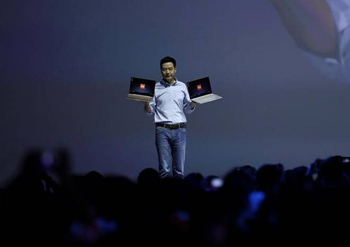
xiomiAmong all, Lenovo saw its shipment volume rise to the second only after Samsung in the third quarter last year, state-run China Daily quoted global research firm International Data Corporation (IDC) survey as saying.

Xiaomi took the third spot with a market share of 10.7 per cent, whereas Chinese vendors collectively took up 40 per cent, according to the survey conducted across 30 major Indian cities.

The forays by Chinese phone makers come as India"s domestic brands saw a decline in market share.

Micromax sees 16.7% fall

Micromax reported a 16.7 per cent month-over-month sales drop in October, the survey said.

Analysts noted that as smartphone giants look at India which has a population of 1.34 billion, to be the “new China” and the competition will be intense, the report has said.

Despite growth, price war remains fierce in what is becoming the world"s second-largest smartphone market where the price of a mobile averages only $100, the survey said.

“Lenovo has retained its duo-brand strategy in India,” Rahul Agarwal, the company"s managing director, told state-run Beijing News, adding that Motorola was focused on high-end market, taking up a third of its sales, whereas Lenovo phones targeting lower end account for two thirds.

Desis are more price-sensitive

Indian customers are even more price-sensitive than Chinese users, Ni Fei, co-founder and chief executive officer of Nubia Technology, said.

Besides price war, patent rights and tariff could also hinder further growth in India, analysts said, citing patent disputes faced by Chinese smartphone makers OPPO, VIVO and Xiaomi in recent years.

OPPO is planning to invest 1.5 billion yuan (USD 215 million) to build an industrial park in India to bring down manufacturing cost, according to media reports earlier last month. The company already has a factory in Greater Noida.

Comments

Add new comment

  • Coastaldigest.com reserves the right to delete or block any comments.
  • Coastaldigset.com is not responsible for its readers’ comments.
  • Comments that are abusive, incendiary or irrelevant are strictly prohibited.
  • Please use a genuine email ID and provide your name to avoid reject.
Agencies
July 2,2020

Leiden, Jul 2: Astronomers have discovered a luminous galaxy caught in the act of reionizing its surrounding gas only 800 million years after the Big Bang.

The research, led by Romain Meyer, PhD student at UCL in London, UK, has been presented at the virtual annual meeting of the European Astronomical Society (EAS).

Studying the first galaxies that formed 13 billion years ago is essential to understanding our cosmic origins. One of the current hot topics in extragalactic astronomy is 'cosmic reionization,' the process in which the intergalactic gas was ionized (atoms stripped of their electrons).

Cosmic reionization is similar to an unsolved murder: We have clear evidence for it, but who did it, how and when? We now have strong evidence that hydrogen reionization was completed about 13 billion years ago, in the first billion years of the universe, with bubbles of ionized gas slowly growing and overlapping.

The objects capable of creating such ionized hydrogen bubbles have however remained mysterious until now: the discovery of a luminous galaxy in which 60-100 percent of ionizing photons escape, is likely responsible for ionizing its local bubble. This suggests the case is closer to being solved.

The two main suspects for cosmic reionization are usually 1) a population of numerous faint galaxies leaking ~10 percent of their energetic photons, and 2) an 'oligarchy' of luminous galaxies with a much larger percentage (>50 percent) of photons escaping each galaxy.

In either case, these first galaxies were very different from those today: galaxies in the local universe are very inefficient leakers, with only <2-3 percent of ionizing photons escaping their host. To understand which galaxies governed cosmic reionization, astronomers must measure the so-called escape fractions of galaxies in the reionization era.

The detection of light from excited hydrogen atoms (the so-called Lyman-alpha line) can be used to infer the fraction of escaping photons. On the one hand, such detections are rare because reionization-era galaxies are surrounded by neutral gas which absorbs that signature hydrogen emission.

On the other hand, if this hydrogen signal is detected it represents a 'smoking gun' for a large ionized bubble, meaning we have caught a galaxy reionizing its surroundings. The size of the bubble and the galaxy's luminosity determines whether it is solely responsible for creating this ionized bubble or if unseen accomplices are necessary.

The discovery of a luminous galaxy 800 million years after the Big Bang supports the scenario where an 'oligarchy' of bright leakers emits most of the ionizing photons.

"It is the first time we can point to an object responsible for creating an ionized bubble, without the need for a contribution from unseen galaxies.

Additional observations with the upcoming James Webb Space Telescope will enable us to study further what is likely one of the best suspects for the unsolved case of cosmic reionization," said Meyer.

Comments

Add new comment

  • Coastaldigest.com reserves the right to delete or block any comments.
  • Coastaldigset.com is not responsible for its readers’ comments.
  • Comments that are abusive, incendiary or irrelevant are strictly prohibited.
  • Please use a genuine email ID and provide your name to avoid reject.
Agencies
June 9,2020

Soon, you may be able to withdraw cash from an ATM without touching any part of the machine. AGS Transact Technologies, a provider of cash and digital payment solutions and automation technology, on Monday said it has successfully developed and tested a touchless ATM solution in light of the COVID-19 pandemic.

The ‘contactless' solution, currently under demo at interested banks, enables a customer to perform all the steps required to withdraw cash from an ATM using the mobile app itself. 

The customer simply has to scan the QR code displayed on the ATM screen and follow the directions on their respective bank's mobile application. 

This includes entering the amount and mPIN required to dispense the cash from the ATM machine. 

According to the company, the QR code feature makes cash withdrawals quicker and more secure, and negates the chances of compromising the ATM Pin or card skimming.

"The new Touchless ATM solution is an extension of the flagship QR Cash solution which ensures safety of the users and will provide a seamless cash withdrawal experience with enhanced security," said Ravi B. Goyal, Chairman and MD, AGS Transact Technologies Ltd.

With minimum investment, the banks can enable this solution for their ATM networks by upgrading the existing software.

AGSTTL has so far installed, maintained and managed a network of over 72,000 ATMs across the country and also provides customised solutions to leading banks. 

The company earlier introduced UPI-QR based Cash withdrawal solution in partnership with Bank of India. 

This is how the solution works.

Open the Bank mobile application on your smartphone and select QR Cash Withdrawal. Enter the amount you wish to withdraw on the mobile app and scan the QR code on the ATM screen.

Next, confirm the amount by clicking on ‘proceed' in the app and enter the mPin to authenticate the transaction. Now collect the cash and receipt and you are done.

"The seamless, cardless and touchless withdrawal method is designed to provide easy transaction flow, without the need to touch the ATM screen or enter the pin," said Mahesh Patel, President and Group Chief Technology Officer, AGS Transact Technologies.

Comments

Add new comment

  • Coastaldigest.com reserves the right to delete or block any comments.
  • Coastaldigset.com is not responsible for its readers’ comments.
  • Comments that are abusive, incendiary or irrelevant are strictly prohibited.
  • Please use a genuine email ID and provide your name to avoid reject.
Agencies
January 19,2020

New Delhi, Jan 19: Messaging service WhatsApp which on Sunday faced issues in transmitting multimedia content including pictures and images, prompting social media users to share hilarious memes and messages, resumed regular services after over two hours.

#WhatsAppDown was the trending hashtag on Twitter for most part of Sunday afternoon in India along with several other countries such as Brazil, Europe and also parts of Middle-East including UAE, reported downdetector.in, a realtime problem and outage monitoring website.

Users of the popular messaging app were unable to send media files, stickers and GIFs.

Most users immediately went to Twitter to find out about the problem and check if others were facing the same issue.

Numerous tweets and memes took over the internet as soon as the news broke about the WhatsApp tech issue. After around two hours of technical glitch, the app resumed full service.

Even after full recovery of media transfer, people globally still continued checking the status of the messaging app.

WhatsApp has been one of the prime messaging apps since May 2009 and has recently collaborated with Facebook.

Comments

Add new comment

  • Coastaldigest.com reserves the right to delete or block any comments.
  • Coastaldigset.com is not responsible for its readers’ comments.
  • Comments that are abusive, incendiary or irrelevant are strictly prohibited.
  • Please use a genuine email ID and provide your name to avoid reject.