


College to jail in bomb case: How cops destroyed 12 yrs of his youth

February 18, 2017

New Delhi, Feb 18: Mohammad Rafiq Shah was a student of MA (final) at Shah-i-Hamadan, Institute of Islamic Studies, University of Kashmir, Srinagar, when on the midnight of November 21, 2005, his world plunged into darkness.
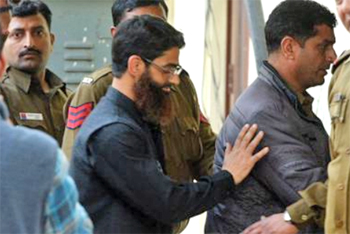
youthHe was picked up by officials of Delhi Police's special cell and Special Task Force (STF) of Kashmir Police.Two days later - after allegedly subjecting him to torture and humiliation at an STF camp - they brought him to Delhi. His crime: he was alleged to have planted a bomb in a DTC bus in Govindpuri on October 29, 2005, which injured many people.

Twelve years later, when he walked free on Thursday - after additional sessions judge Reetesh Singh acquitted him of all charges - the police were facing serious questions of credibility and human rights violations. Rafiq's claim that "he was made an accused to assuage the public perception that Delhi Police was incompetent to act against terrorism" and that "he was a vulnerable target... made a scapegoat" rang true. Police, it seems, deliberately ignored his alibi at every step to prove their case . They brushed aside his plea that it could be proved he was in his class on the day of the blast. It relied on dubious witness es who ended up contradicting themselves, exposed Rafiq to many people when he was in custody before a test identification parade (TIP) could be conducted and suppressed inconvenient facts.

TOI had as early as on February 12, 2006, raised the question whether it "could be a case of harried cops under pressure to show results, targeting an innocent boy?" In a front-page report, "Delhi bomber was in class on October 29", we had reported that Rafiq was actually attending his MA classes in his college in Srinagar. It was also reported that Rafiq had refused to appear for TIP as he had already been presented before some people, one of whom could be a witness in the Govindpuri blast.

The ground had been laid in Srinagar where Rafiq -according to his reply during framing of charges on January 21, 2008 which was cited by the judge - was allegedly forced to drink urine, kept naked and sexually abused, all in order to perhaps break his spirit. He had also alleged that rats were put in his trousers and attempts made to hurt his religious sentiments. "It seems I am being victimised only because I am a Kashmiri Muslim," he said, expressing his faith that justice would prevail and the police get exposed.

The court drew attention to Supreme Court's observation that when it comes to the notice of the investigating agency that a person accused of an offence has a good alibi, then it is the duty of that agency to investigate the genuineness of the plea of alibi and submit a report to the magistrate. "In the case of Manu Sharma versus the State (NCT) of Delhi....Supreme Court had observed that the criminal justice administration system in India places human rights and dignity for human life on a much higher pedestal. An accused is presumed to be innocent till proved guilty and is entitled to fairness and true investigation and a fair trial. The prosecution is expected to play a balanced role in the trial of crime and the investigation should be judicious, fair, transparent and expeditious to ensure compliance with the basic rule of law," the court asserted. Rafiq's case failed on all counts.

First Delhi Police produced a witness, Danbir Sharma, one of the passengers in the bus, on the basis of whose description, they got a portrait made. However, Sharma later couldn't identify Rafiq. The portrait then disappeared mysteriously - pointed out by the judge - even as another witness, Rajeev Sinha, surfaced.

His and Sharma's description of the bomber were at variance. Singh described the bomber as a young man, 22-24 years of age with a French-cut beard and prominent nose, who was wearing a cap with `New York' written on the right. He said he was wearing a white shirt with grey stripes and cotton trousers, either blue or black. Sharma, however, said the bomber was a boy of 5 feet, 10 inches height and had `sanwla' complexion. According to him, he was wearing a `coca cola' coloured shirt and white trousers.

The defence later claimed that Rafiq had a full-grown beard when he was arrested. It was alleged that on November 25, 2005, inspector Badrish Dutt brought a barber to the special cell office and got his beard trimmed to resemble a French cut. He then took a photo of his on his cellphone.

Significantly , Rafiq had refused to participate in a TIP on the ground that he had been exposed to many people while in custody at Lodi Colony and his photographs taken. He particularly mentioned a man wearing spectacles with his lawyers later alleging in court that it was Sinha, a planted witness. Sinha later accepted that he wore spectacles.

Sinha had produced a ticket to prove his presence on the bus that day . This had been left unverified by the police for long though it could have checked its authenticity with the depot manager and the registers he maintained quite easily. It chose not to do so.

The police wrote to the Registrar, University of Kashmir, on February 17, 2006, regarding verification of admission and attendance of Rafiq but chose to forget about it in court. Later, it was claimed that because of vacations, the information could not be procured from the university . However, the judge saw through the charade. DCP S K Tewari had on February 27 - just 10 days after writing the first letter - asked the Registrar "Whether " A" or "P" is marked in the attendance register of the class?" The court said this question could not have been put to the Registrar unless Tewari had access to the attendance records - the ones later produced by the defence and seen by the court - and hence the vacation plea for not being able to verify Rafiq's presence "seems to be false".The court said that in all probability the records had been collected by the police.

The police claimed the other accused, Mohammad Hussain Fazili - who too was acquitted - had led them to Rafiq. Rafiq, however, told the court that he met Fazili for the first time on November 21, 2005, at the STF camp. Fazili, too, denied taking the cops to Rafiq and claimed he was himself misled into believing by inspector Badrish Dutt that he was wanted in connection with an inquiry in a case under the Wildlife Protection Act. He too ended up in jail for 12 years.

Comments

Abdul Aziz
 - 
Saturday, 18 Feb 2017

No need to worry
Allah Almighty has his own plans to deal with injustice people
that day no one can rescue from the everlasting pain and torture

its true
since Truth will prevail and evil will perish

TRUTH
 - 
Saturday, 18 Feb 2017

The evil authorities or those authorities who do such evil acts think that they will getaway from their evil crimes... We Muslims believe, if we dont get justice here... We will surely get the justice in the Court of the lord of the worlds... Allah is just and he will give justice one day... That day the evil people will REGRET and their punishment will be permanent unless they REPENT in this world and help the society to become and stand with the TRUTH...

Shaad
 - 
Saturday, 18 Feb 2017

Without proof and knowingly they kept youth in jail for nothing and with all the proof and clear cut of involvement of Prajna singh, she gets bail.

Waav, incredible law, handler and our ruler.

Add new comment

  • Coastaldigest.com reserves the right to delete or block any comments.
  • Coastaldigset.com is not responsible for its readers’ comments.
  • Comments that are abusive, incendiary or irrelevant are strictly prohibited.
  • Please use a genuine email ID and provide your name to avoid reject.
News Network
March 13,2020

Bengaluru, Mar 13: India has registered the first confirmed case of death due to novel coronavirus. A 76-year-old man from Karnataka's Kalaburgi who passed away recently has been tested positive for Covid-19.

The doctors had suspected that the man had coronavirus, however, the test had not confirmed it.

In an official notification, a senior health official in Karnataka government Dr Suresh Shastri said that the lab test has confirmed that the deceased man had Covid-19.

"The 76-year-old man from Kalburgi who passed away and was a suspected COVID 19 patient has been confirmed for COVID 19. The necessary contact tracing, isolation and other measures as per protocol are being carried out. Telangana government has also been informed since he went to a private hospital there," Dr Suresh Shastri said.

The same information was also shared by Karnataka health minister B Sriramulu.

A senior Union health ministry official said in New Delhi that the death of the man had visited Saudi Arabia from January 29 to February 29. The official said the man had reached in Hyderabad on February 29 and went to Kalaburagi in Karnataka.

State Joint Director (Communicable Diseases) BG Prakash Kumar said all protocols were followed for disposal of the body.

"The body is disinfected completely and disposed of as per the Government of India guidelines," he added when asked to elaborate on the protocols.

He said the Telangana government has also been informed as the man had gone to a private hospital in Hyderabad earlier.

While announcing the death of the man on Tuesday, the state authorities had said the exact cause his death was being ascertained.

According to the Union health ministry official, "While he was asymptomatic on his return (from Saudi Arabia), he developed symptoms of fever and cough on 6th March. One private doctor visited him at his home and treated him there."

"On 9th March, the symptoms got aggravated and he was shifted to a private hospital in Kalaburagi. In this private hospital, he was provisionally diagnosed as 'mid-zone viral pneumonia' and 'suspected Covid-19'," the official said.

"The sample was collected on March 9... Without waiting for the test results, the attendees insisted and the patient was discharged against medical advice and the attendees took him to a private hospital in Hyderabad," the official said.

The patient was admitted to a private hospital in Hyderabad and treated. He died on Tuesday when he was being brought back to the Gulbarga Institute of Medical Sciences (GIMS) in Kalaburagi.

Apart from the deceased, Karnataka has confirmed five other positive cases of the novel coronavirus. The fifth case, confirmed on Thursday is of a 26-year-old man who recently returned from Greece.

The patient has been admitted and isolated at a hospital and his condition is stable, a department media bulletin said.

The day also saw the education department declaring summer holidays for students from kindergarten to class six and study leave for higher classes in the city as a precautionary measure.

Comments

Add new comment

  • Coastaldigest.com reserves the right to delete or block any comments.
  • Coastaldigset.com is not responsible for its readers’ comments.
  • Comments that are abusive, incendiary or irrelevant are strictly prohibited.
  • Please use a genuine email ID and provide your name to avoid reject.
coastaldigest.com web desk
May 10,2020

Mangaluru/ Bengaluru, May 10: Nearly 11,000 non-resident Kannadigas who are seeking repatriation from various countries across the world should be ready to shell out a huge amount for a two-week private quarantine in Karnataka before reaching their home.

The Kannadigas stranded in Gulf countries including UAE and Saudi Arabia have already expressed shock over the high airfare for repatriation during coronavirus lockdown. Another shocker is heavy quarantine fee once they reach their home state.

Officials in Mangaluru and Bengaluru have confirmed that administration has fixed charges for quarantine facilities starting from Rs 1,200 up to Rs 4,500, including food per day. 14 day quarantine will be mandatory for all healthy and asymptomatic international passengers. Hence, they should be ready to pay Rs 16,800  to Rs 63,000.

The other option is government quarantine centres: hostels run by social welfare, backward classes welfare and minority welfare departments but they are far from satisfactory. This is in stark contrast to the plush government quarantine facilities in Kerala.

In Mangaluru

The first repatriation flight to Mangaluru International Airport is expected to land on Tuesday, May 12 from Dubai.

The quarantine facilities include lodges, hostels and service apartments. Rates are fixed based on four categories: basic, economy, medium and premium. The basic facilities are mainly hostels of educational institutions, and the rest are budget and star hotels, said Rahul Shinde, probationary IAS officer, who is In-charge of the quarantine facilities for those being repatriated.

In Bengaluru

As many as 350 international passengers are set to arrive in Bengaluru at 3 am on Monday, May 11. So far, nobody has opted for government quarantine facilities, according to Lakshman Reddy, Joint Director, Social Welfare Department.

In Bengaluru, there are 55 hostels of the social welfare department, 51 of the backward classes welfare department and 12 of the minority welfare department. “We provide them with three square meals a day,” he added.

Comments

Add new comment

  • Coastaldigest.com reserves the right to delete or block any comments.
  • Coastaldigset.com is not responsible for its readers’ comments.
  • Comments that are abusive, incendiary or irrelevant are strictly prohibited.
  • Please use a genuine email ID and provide your name to avoid reject.
coastaldigest.com news network
July 28,2020

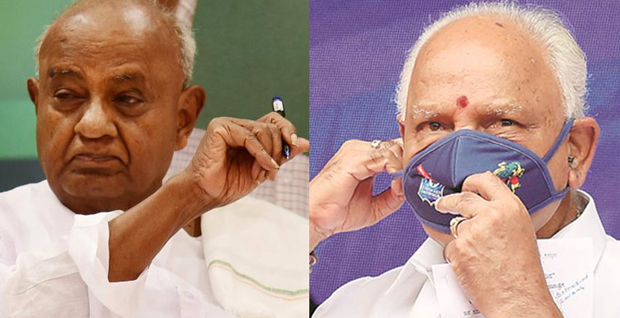
Bengaluru, July 28: Former prime minister and JD(S) chief H D Deve Gowda today threatened to launch a state-wide agitation in against the amendments made to the Karnataka Land Reforms Act.

Gowda’s opposition to the new law comes even as Congress leader Siddaramaiah is also doggedly pursuing it.

Demanding that the state government immediately rollback the ordinance empowering these amendments, the octogenarian leader said he personally would take to streets if the government failed to budge.

The B S Yediyurappa government has liberalised the land reforms law by removing restrictions on non-agriculturists from purchasing and owning farm lands.

The government has also amended the APMC Act and has tweaked labour laws, which are all “against the interest of the state and must be rolled back,” Gowda said.

Speaking to reporters here, Gowda stated that he had already written thrice to Chief Minister B S Yediyurappa in this regard. "The ordinances have to be taken back. The amendments to Karnataka Land Reforms Act, by repealing sections 79-A, B and C, is an anti-farmer move. The APMC Act amendment, too, is against the interest of the state. The government has failed to speak about the impact of these amendments," said Gowda, who is now a Rajya Sabha member.

Elaborating on the amendment to the Land Reform Act, the JD(S) patriarch opined that by throwing open agricultural land ownership to anybody at all, the government was only helping real estate developers while pushing farmers into a “vulnerable” situation.

Amidst all this, there are now reports of funds misappropriation in Covid-19 relief measures and in procurement of medical equipment, he said, adding that it seemed like only the corrupt became stronger over time.

Further, Gowda lambasted both national parties for creating political unrest, referring to the ongoing political crisis in Rajasthan and the recent developments in Madhya Pradesh. However, he added that he would not wish to dwell on it much, while emphasising that his focus was primarily on strengthening his own party at this point in time.

Comments

Add new comment

  • Coastaldigest.com reserves the right to delete or block any comments.
  • Coastaldigset.com is not responsible for its readers’ comments.
  • Comments that are abusive, incendiary or irrelevant are strictly prohibited.
  • Please use a genuine email ID and provide your name to avoid reject.