


College to jail in bomb case: How cops destroyed 12 yrs of his youth

February 18, 2017

New Delhi, Feb 18: Mohammad Rafiq Shah was a student of MA (final) at Shah-i-Hamadan, Institute of Islamic Studies, University of Kashmir, Srinagar, when on the midnight of November 21, 2005, his world plunged into darkness.
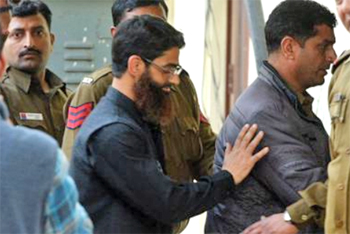
youthHe was picked up by officials of Delhi Police's special cell and Special Task Force (STF) of Kashmir Police.Two days later - after allegedly subjecting him to torture and humiliation at an STF camp - they brought him to Delhi. His crime: he was alleged to have planted a bomb in a DTC bus in Govindpuri on October 29, 2005, which injured many people.

Twelve years later, when he walked free on Thursday - after additional sessions judge Reetesh Singh acquitted him of all charges - the police were facing serious questions of credibility and human rights violations. Rafiq's claim that "he was made an accused to assuage the public perception that Delhi Police was incompetent to act against terrorism" and that "he was a vulnerable target... made a scapegoat" rang true. Police, it seems, deliberately ignored his alibi at every step to prove their case . They brushed aside his plea that it could be proved he was in his class on the day of the blast. It relied on dubious witness es who ended up contradicting themselves, exposed Rafiq to many people when he was in custody before a test identification parade (TIP) could be conducted and suppressed inconvenient facts.

TOI had as early as on February 12, 2006, raised the question whether it "could be a case of harried cops under pressure to show results, targeting an innocent boy?" In a front-page report, "Delhi bomber was in class on October 29", we had reported that Rafiq was actually attending his MA classes in his college in Srinagar. It was also reported that Rafiq had refused to appear for TIP as he had already been presented before some people, one of whom could be a witness in the Govindpuri blast.

The ground had been laid in Srinagar where Rafiq -according to his reply during framing of charges on January 21, 2008 which was cited by the judge - was allegedly forced to drink urine, kept naked and sexually abused, all in order to perhaps break his spirit. He had also alleged that rats were put in his trousers and attempts made to hurt his religious sentiments. "It seems I am being victimised only because I am a Kashmiri Muslim," he said, expressing his faith that justice would prevail and the police get exposed.

The court drew attention to Supreme Court's observation that when it comes to the notice of the investigating agency that a person accused of an offence has a good alibi, then it is the duty of that agency to investigate the genuineness of the plea of alibi and submit a report to the magistrate. "In the case of Manu Sharma versus the State (NCT) of Delhi....Supreme Court had observed that the criminal justice administration system in India places human rights and dignity for human life on a much higher pedestal. An accused is presumed to be innocent till proved guilty and is entitled to fairness and true investigation and a fair trial. The prosecution is expected to play a balanced role in the trial of crime and the investigation should be judicious, fair, transparent and expeditious to ensure compliance with the basic rule of law," the court asserted. Rafiq's case failed on all counts.

First Delhi Police produced a witness, Danbir Sharma, one of the passengers in the bus, on the basis of whose description, they got a portrait made. However, Sharma later couldn't identify Rafiq. The portrait then disappeared mysteriously - pointed out by the judge - even as another witness, Rajeev Sinha, surfaced.

His and Sharma's description of the bomber were at variance. Singh described the bomber as a young man, 22-24 years of age with a French-cut beard and prominent nose, who was wearing a cap with `New York' written on the right. He said he was wearing a white shirt with grey stripes and cotton trousers, either blue or black. Sharma, however, said the bomber was a boy of 5 feet, 10 inches height and had `sanwla' complexion. According to him, he was wearing a `coca cola' coloured shirt and white trousers.

The defence later claimed that Rafiq had a full-grown beard when he was arrested. It was alleged that on November 25, 2005, inspector Badrish Dutt brought a barber to the special cell office and got his beard trimmed to resemble a French cut. He then took a photo of his on his cellphone.

Significantly , Rafiq had refused to participate in a TIP on the ground that he had been exposed to many people while in custody at Lodi Colony and his photographs taken. He particularly mentioned a man wearing spectacles with his lawyers later alleging in court that it was Sinha, a planted witness. Sinha later accepted that he wore spectacles.

Sinha had produced a ticket to prove his presence on the bus that day . This had been left unverified by the police for long though it could have checked its authenticity with the depot manager and the registers he maintained quite easily. It chose not to do so.

The police wrote to the Registrar, University of Kashmir, on February 17, 2006, regarding verification of admission and attendance of Rafiq but chose to forget about it in court. Later, it was claimed that because of vacations, the information could not be procured from the university . However, the judge saw through the charade. DCP S K Tewari had on February 27 - just 10 days after writing the first letter - asked the Registrar "Whether " A" or "P" is marked in the attendance register of the class?" The court said this question could not have been put to the Registrar unless Tewari had access to the attendance records - the ones later produced by the defence and seen by the court - and hence the vacation plea for not being able to verify Rafiq's presence "seems to be false".The court said that in all probability the records had been collected by the police.

The police claimed the other accused, Mohammad Hussain Fazili - who too was acquitted - had led them to Rafiq. Rafiq, however, told the court that he met Fazili for the first time on November 21, 2005, at the STF camp. Fazili, too, denied taking the cops to Rafiq and claimed he was himself misled into believing by inspector Badrish Dutt that he was wanted in connection with an inquiry in a case under the Wildlife Protection Act. He too ended up in jail for 12 years.

Comments

Abdul Aziz
 - 
Saturday, 18 Feb 2017

No need to worry
Allah Almighty has his own plans to deal with injustice people
that day no one can rescue from the everlasting pain and torture

its true
since Truth will prevail and evil will perish

TRUTH
 - 
Saturday, 18 Feb 2017

The evil authorities or those authorities who do such evil acts think that they will getaway from their evil crimes... We Muslims believe, if we dont get justice here... We will surely get the justice in the Court of the lord of the worlds... Allah is just and he will give justice one day... That day the evil people will REGRET and their punishment will be permanent unless they REPENT in this world and help the society to become and stand with the TRUTH...

Shaad
 - 
Saturday, 18 Feb 2017

Without proof and knowingly they kept youth in jail for nothing and with all the proof and clear cut of involvement of Prajna singh, she gets bail.

Waav, incredible law, handler and our ruler.

Add new comment

  • Coastaldigest.com reserves the right to delete or block any comments.
  • Coastaldigset.com is not responsible for its readers’ comments.
  • Comments that are abusive, incendiary or irrelevant are strictly prohibited.
  • Please use a genuine email ID and provide your name to avoid reject.
News Network
March 29,2020

Bengaluru, Mar 29: There was no shortage of masks and testing kits for detecting coronavirus cases in Karnataka and the government would import them if a need arose, Chief Minister B S Yediyurappa on Sunday said.

Apprising leaders of political parties on measures taken by his government to combat spread of coronavirus, he also told an all-party meeting that the government has decided to provide life insurance cover to police and civil workers and has taken extra precautions to maintain supply of food grains.

"There is no shortage of testing kits, medicines and masks. If there is need, we will import more... We will distribute testing kits to all the district and Taluk hospitals," he was quoted as saying in a government release.

The state has so far reported 76 COVID-19 cases including three deaths and five discharges.

At the meeting held in the Vidhana Soudha here, former chief minister and senior Congress leader Siddaramaiah said there were shortcomings in the screening of passengers coming from abroad and stressed on the need to maintain supply of essentials.

Yediyurappa said supply of foodgrains would be made through Public Distribution System and the government had taken extra precautions to avoiod any difficulties.

He told the leaders that there was no restriction on agriculture activities in the state.

"I have been regularly holding meetings since March 13 regarding the measures taken to contain the transmission of COVID-19," the chief minister said.

Health Minister B Sriramulu, Medical Education Minister Dr K Sudhakar, IT-BT Minister C N Aswath Narayan, Deputy Chief Minister Laxman Savadi, Siddaramaiah, JD(S) MLAs H D Revanna, D K Shivakumar and former speaker K R Ramesh Kumar attended the meeting.

Yediyurappa said a task force comprising of ministers and officials has been formed to oversee the implementation of the government orders in view of the 21-day lockdown.

He highlighted the prevailing situation across the globe saying normal life has been paralysed everywhere.

The chief minister also brifed the leaders about the number of clinics all over the state, availability of medicines and protection gear for the doctors and in quarantine rooms in the state.

Flagging concerns over screening process, Siddaramaiah said around 4,500 people were yet to be tracked, which need to be taken up on a warfooting.

"The government is saying that we have not reached the third stage but in Nanjangud, a person contracted the disease though he does not have any travel history. This must be probed," he said.

The former former chief minister asked the government to make sure that the free distribution of food grains to weaker sections take place without any difficulty from April 1, as announced by the Central government.

He objected to police 'excesses' while enforcing lockdown.

Siddaramaiah also asked government to bring the police personnel under special insurance cover.

Comments

Add new comment

  • Coastaldigest.com reserves the right to delete or block any comments.
  • Coastaldigset.com is not responsible for its readers’ comments.
  • Comments that are abusive, incendiary or irrelevant are strictly prohibited.
  • Please use a genuine email ID and provide your name to avoid reject.
News Network
April 20,2020

Thiruvananthapuram, Apr 20: The Kerala government announced the relaxation of COVID-19 lockdown restrictions in two zones, allowing among other private vehicles movement in an odd-even basis and dine-in services at hotels from Monday.

State police chief Loknath Behera said the relaxations of restrictions imposed would come into effect in the Green and Orange-B zones in the state from Monday,an official release said.

Earlier, the Left government had colour-coded 14 districts of the state into four zones-- Red, Green, Orange-A and Orange-B, for containing the Covid-19 pandemic. Red zone comprises Kasaragod, Kannur, Kozhikode and Malappuram districts. In this zone, a complete lockdown will be in place until May 3 while two entry and exit points are allowed for carrying essential commodities to coronavirus hotspots. Orange-A zone comprises Pathanamthitta, Ernakulam and Kollam while orange-B zone comprises Alappuzha, Thiruvananthapuram, Palakkad, Thrissur and Wayanad.

The lockdown will be in effect until April 24 in this zone and then partial relaxation will be allowed. Kottayam and Idukki come under the Green zone, in which lockdown will be in effect until April 20 and then regulations will be eased. However, large gatherings, the functioning of educational institutions, religious functions, celebrations and travel outside the district will not be allowed in this zone.

Not more than 20 people are allowed to take part in weddings and funerals, according to government instructions. On the functioning of courts, the release said, "Courts in the Green and Orange-B zones will re-open on April 21 while that in Orange-A zone will start functioning from April 25. The courts will function with 33 per cent of staff. The cases will be heard via video conferencing."

Meanwhile, the Bankers' Council has announced that banks will function as per the usual timings from Monday in the state except four districts falling under the Red zone. The Transport Ministry has clarifiedthat public transport won't be allowed to ply in the state during the lockdown period. "Inter-district travel will not be allowed despite relaxations in the state, but essential services such as medical services, food supplies will not be stopped. However, in case of emergency, inter-district travel will be allowed with an affidavit prepared by the traveller," Behra said in a release.

On the implementation of the odd-even scheme for private vehicles, the police said, "Vehicles with odd numbers will be permitted on Mondays, Wednesdays and Fridays. Those with even numbers will be allowed on Tuesdays, Thursdays and Saturdays." Woman drivers travelling solo or with dependants are also exempted from it, police said. On Sundays, only those working for essential services are allowed to use their vehicles.

All education institutions, cinema halls, shopping malls, public parks, bars, places of worship will remain closed in all zones of the state. The health department and local administration, which carry out sanitation work before the monsoon, are allowed to operate. Four-wheelers are permitted to carry two passengers besides the driver and in case of a two-wheeler, only the driver will be allowed while the pillion rider is allowed in case the person is a family member.

On Dine-in services, a government order said it is allowed at hotels and restaurants until 7 PM in Green and Orange-B zone from Monday and in Orange-A zone from April 24. However, take-away counters can function until 8 PM, it said. Kerala on Sunday reported two positive cases of Covid-19 in the state taking the total number of affected to 401 while the health department announced that 13 people were cured.

Comments

Add new comment

  • Coastaldigest.com reserves the right to delete or block any comments.
  • Coastaldigset.com is not responsible for its readers’ comments.
  • Comments that are abusive, incendiary or irrelevant are strictly prohibited.
  • Please use a genuine email ID and provide your name to avoid reject.
News Network
February 27,2020

Bengaluru, Feb 27: The Centre has adopted Prime Minister Narendra Modi's mantra of "Make in India', for India and the world" to build strong defence and security infrastructure in the country, said Defence Minister Rajnath Singh after inaugurating the new Light Combat Helicopter Production Hangar at Helicopter Division in Hindustan Aeronautics Limited (HAL) Complex here on Thursday.

According to an official statement, the Defence Minister said in the last five years, India has made significant progress towards manufacturing military equipment indigenously under the 'Make in India' initiative.

Stressing that the defence industry plays a major role in the economic development of the country, Singh lauded the significant contribution of organisations like HAL.

Highlighting the Rs 35,000 crore exports target set for the coming years, he expressed confidence that HAL, through its various platforms, will contribute significantly to achieve this milestone.

According to the statement, Rajnath Singh commended HAL for being the backbone of the Indian Air Force and meeting the requirements of the Armed Forces.

"The HAL has excelled both in operations and finance in the last five years. It has achieved operational clearance on seven platforms, including Light Combat Aircraft and Light Combat Helicopter, and overhauled platforms like Hawk and SU 30 MKI," he said.

He also appreciated that HAL had a turnover of Rs 19,705 crore till March 2019 and it gave shareholders a healthy dividend of 198 per cent.

HAL also apprised the Defence Minister on the progress of the new design and development programme of indigenous Indian Multi-Role Helicopter (IMRH), the statement informed.

The full-scale mock-up was showcased to Rajnath Singh. The IMRH is proposed as a replacement to the existing medium-lift helicopters such as Mi17's, Kamovs and Seakings which will phase out in the next eight to ten years.

LCH is a 5.5-tonne class combat helicopter designed and developed by HAL. It is powered by two Shakti engines and inherits many technical features of the Advanced Light Helicopter. LCH has the distinction of being the first attack helicopter to land in Forward Bases at Siachen, 4,700 mts above sea level with 500kg load.

Comments

Add new comment

  • Coastaldigest.com reserves the right to delete or block any comments.
  • Coastaldigset.com is not responsible for its readers’ comments.
  • Comments that are abusive, incendiary or irrelevant are strictly prohibited.
  • Please use a genuine email ID and provide your name to avoid reject.