


College to jail in bomb case: How cops destroyed 12 yrs of his youth

February 18, 2017

New Delhi, Feb 18: Mohammad Rafiq Shah was a student of MA (final) at Shah-i-Hamadan, Institute of Islamic Studies, University of Kashmir, Srinagar, when on the midnight of November 21, 2005, his world plunged into darkness.
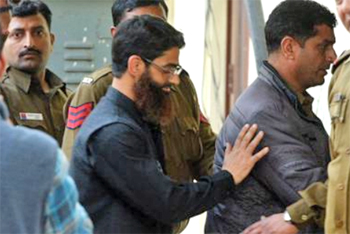
youthHe was picked up by officials of Delhi Police's special cell and Special Task Force (STF) of Kashmir Police.Two days later - after allegedly subjecting him to torture and humiliation at an STF camp - they brought him to Delhi. His crime: he was alleged to have planted a bomb in a DTC bus in Govindpuri on October 29, 2005, which injured many people.

Twelve years later, when he walked free on Thursday - after additional sessions judge Reetesh Singh acquitted him of all charges - the police were facing serious questions of credibility and human rights violations. Rafiq's claim that "he was made an accused to assuage the public perception that Delhi Police was incompetent to act against terrorism" and that "he was a vulnerable target... made a scapegoat" rang true. Police, it seems, deliberately ignored his alibi at every step to prove their case . They brushed aside his plea that it could be proved he was in his class on the day of the blast. It relied on dubious witness es who ended up contradicting themselves, exposed Rafiq to many people when he was in custody before a test identification parade (TIP) could be conducted and suppressed inconvenient facts.

TOI had as early as on February 12, 2006, raised the question whether it "could be a case of harried cops under pressure to show results, targeting an innocent boy?" In a front-page report, "Delhi bomber was in class on October 29", we had reported that Rafiq was actually attending his MA classes in his college in Srinagar. It was also reported that Rafiq had refused to appear for TIP as he had already been presented before some people, one of whom could be a witness in the Govindpuri blast.

The ground had been laid in Srinagar where Rafiq -according to his reply during framing of charges on January 21, 2008 which was cited by the judge - was allegedly forced to drink urine, kept naked and sexually abused, all in order to perhaps break his spirit. He had also alleged that rats were put in his trousers and attempts made to hurt his religious sentiments. "It seems I am being victimised only because I am a Kashmiri Muslim," he said, expressing his faith that justice would prevail and the police get exposed.

The court drew attention to Supreme Court's observation that when it comes to the notice of the investigating agency that a person accused of an offence has a good alibi, then it is the duty of that agency to investigate the genuineness of the plea of alibi and submit a report to the magistrate. "In the case of Manu Sharma versus the State (NCT) of Delhi....Supreme Court had observed that the criminal justice administration system in India places human rights and dignity for human life on a much higher pedestal. An accused is presumed to be innocent till proved guilty and is entitled to fairness and true investigation and a fair trial. The prosecution is expected to play a balanced role in the trial of crime and the investigation should be judicious, fair, transparent and expeditious to ensure compliance with the basic rule of law," the court asserted. Rafiq's case failed on all counts.

First Delhi Police produced a witness, Danbir Sharma, one of the passengers in the bus, on the basis of whose description, they got a portrait made. However, Sharma later couldn't identify Rafiq. The portrait then disappeared mysteriously - pointed out by the judge - even as another witness, Rajeev Sinha, surfaced.

His and Sharma's description of the bomber were at variance. Singh described the bomber as a young man, 22-24 years of age with a French-cut beard and prominent nose, who was wearing a cap with `New York' written on the right. He said he was wearing a white shirt with grey stripes and cotton trousers, either blue or black. Sharma, however, said the bomber was a boy of 5 feet, 10 inches height and had `sanwla' complexion. According to him, he was wearing a `coca cola' coloured shirt and white trousers.

The defence later claimed that Rafiq had a full-grown beard when he was arrested. It was alleged that on November 25, 2005, inspector Badrish Dutt brought a barber to the special cell office and got his beard trimmed to resemble a French cut. He then took a photo of his on his cellphone.

Significantly , Rafiq had refused to participate in a TIP on the ground that he had been exposed to many people while in custody at Lodi Colony and his photographs taken. He particularly mentioned a man wearing spectacles with his lawyers later alleging in court that it was Sinha, a planted witness. Sinha later accepted that he wore spectacles.

Sinha had produced a ticket to prove his presence on the bus that day . This had been left unverified by the police for long though it could have checked its authenticity with the depot manager and the registers he maintained quite easily. It chose not to do so.

The police wrote to the Registrar, University of Kashmir, on February 17, 2006, regarding verification of admission and attendance of Rafiq but chose to forget about it in court. Later, it was claimed that because of vacations, the information could not be procured from the university . However, the judge saw through the charade. DCP S K Tewari had on February 27 - just 10 days after writing the first letter - asked the Registrar "Whether " A" or "P" is marked in the attendance register of the class?" The court said this question could not have been put to the Registrar unless Tewari had access to the attendance records - the ones later produced by the defence and seen by the court - and hence the vacation plea for not being able to verify Rafiq's presence "seems to be false".The court said that in all probability the records had been collected by the police.

The police claimed the other accused, Mohammad Hussain Fazili - who too was acquitted - had led them to Rafiq. Rafiq, however, told the court that he met Fazili for the first time on November 21, 2005, at the STF camp. Fazili, too, denied taking the cops to Rafiq and claimed he was himself misled into believing by inspector Badrish Dutt that he was wanted in connection with an inquiry in a case under the Wildlife Protection Act. He too ended up in jail for 12 years.

Comments

Abdul Aziz
 - 
Saturday, 18 Feb 2017

No need to worry
Allah Almighty has his own plans to deal with injustice people
that day no one can rescue from the everlasting pain and torture

its true
since Truth will prevail and evil will perish

TRUTH
 - 
Saturday, 18 Feb 2017

The evil authorities or those authorities who do such evil acts think that they will getaway from their evil crimes... We Muslims believe, if we dont get justice here... We will surely get the justice in the Court of the lord of the worlds... Allah is just and he will give justice one day... That day the evil people will REGRET and their punishment will be permanent unless they REPENT in this world and help the society to become and stand with the TRUTH...

Shaad
 - 
Saturday, 18 Feb 2017

Without proof and knowingly they kept youth in jail for nothing and with all the proof and clear cut of involvement of Prajna singh, she gets bail.

Waav, incredible law, handler and our ruler.

Add new comment

  • Coastaldigest.com reserves the right to delete or block any comments.
  • Coastaldigset.com is not responsible for its readers’ comments.
  • Comments that are abusive, incendiary or irrelevant are strictly prohibited.
  • Please use a genuine email ID and provide your name to avoid reject.
News Network
January 15,2020

Mangaluru, Jan 15: Thousands of people on Wednesday boarded boats from Ullal's Kotepura to join a massive protest against the amended Citizenship Act and National Register of Citizens (NRC) in Adyar here.

People travelling through boats and steamers decorated with national flags, raised slogans during their journey through the Netravathi River.

The innovative mode of transportation was used by the protestors to reach the venue, as it not only saved time but was also more convenient for the fishermen, as large number of people from this community joined the protest.

The protestors docked their boats at the shore, which was barely 500 metres from the site of protest, being held at Shah Ground in Adyar.

The distance between Kotepura to the Shah Ground is approximately 15 kilometres but protesters would have to walk more five kilometres to reach the venue because of heavy traffic.

Due to protest, the national highway was also blocked and resulted in huge traffic snarls on routes leading to agitation site. 

Comments

Add new comment

  • Coastaldigest.com reserves the right to delete or block any comments.
  • Coastaldigset.com is not responsible for its readers’ comments.
  • Comments that are abusive, incendiary or irrelevant are strictly prohibited.
  • Please use a genuine email ID and provide your name to avoid reject.
News Network
May 5,2020

Dubai, May 5: Tickets on repatriation flights from UAE to India, which start on May 7, could be costlier than regular airfare, and adding to the financial woes of those flying back. Nearly 200,000 Indians in the UAE have registered on the website seeking to return home.

“A one-way repatriation ticket to Delhi will cost approximately Dh1,400-Dh1,650 - this would earlier have cost between Dh600-Dh700 [during these months],” said Jamal Abdulnazar, CEO of Cozmo Travel. “A one-way repatriation flight ticket to Kerala would cost approximately Dh1,900-Dh2,300.”

This can be quite a burden, as a majority of those taking these flights have either lost their jobs or are sending back their families because of uncertainty on the work front. To now have to pay airfare that is nearly on par with those during peak summer months is quite a blow.

Sources said that officials in Indian diplomatic missions have already initiated calls to some expats, telling them about likely ticket fares and enquiring about their willingness to travel.

Although many believed repatriation would be government-sponsored, Indian authorities have clarified that customers would have to pay for the tickets themselves. Those who thought they were entitled to free repatriation might back out of travel plans for now.

Fact of life

But aviation and travel industry sources say higher rates cannot be escaped since social distancing norms have to be strictly enforced at all times. That would limit the number of passengers on each of these flights.

“One airline can carry only limited passengers - therefore, multiple airlines are likely to get the approval to operate repatriation flights,” said Abdulnazar. “Also, airports will have to maintain safe distance for passengers to queue up at immigration and security counters.

“Therefore, it is recommended that multiple carriers fly into multiple Indian airports for repatriation to be expedited.”

The Indian authorities, so far, have not taken the easy decision to get its private domestic airlines into the rescue act. Gulf News tried speaking to the leading players, but they declined to provide any official statements. So far, only Air India, the national airline, has been commissioned to operate the flights.

Air India finds itself in the driver's seat when it comes to operating India's repatriation flights. To date, there is no confirmation India's private airlines will be allowed to join in.

UAE carriers ready to help out

UAE’s Emirates airline, Etihad, flydubai and Air Arabia are likely to also operate repatriation flights to India after Air India implements the first phase of services.

“We are fully supporting governments and authorities across the flydubai network with their repatriation efforts, helping them to make arrangements for their citizens to return home,” said a flydubai spokesperson.

“We will announce repatriation flights as and when they are confirmed, recognising this is an evolving situation whilst the flight restrictions remain in place.”

An AirArabia spokesperson said the airline is ready to operate repatriation flights when the government tells them to.

Travel agencies likely to benefit

Apart from operating non-scheduled commercial flights, the Indian government is also deploying naval ships to bring expat Indians back. Sources claim the ships are to ferry passengers who cannot afford the repatriation airfares.

Even then, considering the sheer numbers who will want to get on the flights, travel agencies are likely to see a surge in bookings since airline websites alone may not cope with the demand set off in such a short span.

Learn from Gulf governments

In instances when they carried out their own repatriation flights, some GCC governments paid the ticket fares to fly in their citizens. Those citizens who did not have the ready funds could approach their diplomatic mission and aid would be given on a case-to-case basis.

Should Indians wait for normal services to resume?

Industry sources say that those Indians wanting to fly back and cannot afford the repatriation flights should wait for full services to resume once the COVID-19 pandemic settles.

But can those who lost their jobs or seen steep salary cuts stay on without adding to their costs? And is there any guarantee that when flight services resume, ticket rates would be lower than on the repatriation trips.

As such, normal travel is expected to pick up only after the repatriation exercise to several countries is completed. UAE-based travel agencies are not seeing any bookings for summer, which is traditionally the peak holiday season.

“Majority want to stay put unless full confidence is restored,” said Abdulnazar. “I expect full normalcy to be restored not until March 2021.

“People have also taken a hit to their income. Without disposable income, you will curtail your travel.”

What constitutes normalcy?

Airfares are expected to remain high, given the need to keep the middle seats empty to practise safe distance onboard.

“We expect holiday travel to resume by October or November - but, the travel sentiment will not go back to pre-COVID-19 levels anytime soon,” said Manvendra Roy, Vice-President – Commercial at holidayme, an online travel agency. “The need to keep the middle seat vacant will add 30-40 per cent pricing pressure per seat from an airline perspective.

“This will make holidays more expensive.”

As for business travel, it will take some time to recover. Corporate staff are now used to getting work done via conference calls. “Companies will also curtail their travel expenditure since their income has taken a hit,” said Abdulnazar.

Comments

Add new comment

  • Coastaldigest.com reserves the right to delete or block any comments.
  • Coastaldigset.com is not responsible for its readers’ comments.
  • Comments that are abusive, incendiary or irrelevant are strictly prohibited.
  • Please use a genuine email ID and provide your name to avoid reject.
News Network
July 8,2020

Bengaluru, Jul 8: 15 police personnel from Bangalore's Whitefield division tested positive for COVID-19 on Wednesday.

Out of these, 12 are from the Hindustan Aeronautics Limited (HAL) police station, sources said.

A total of 27 police staff of the Whitefield division have tested positive so far and five have been discharged. The HAL police station closed on June 27 after one police staff tested COVID positive. All personnel of the police station were tested in the following days and 12 tests returned positive.

Comments

Add new comment

  • Coastaldigest.com reserves the right to delete or block any comments.
  • Coastaldigset.com is not responsible for its readers’ comments.
  • Comments that are abusive, incendiary or irrelevant are strictly prohibited.
  • Please use a genuine email ID and provide your name to avoid reject.