


College to jail in bomb case: How cops destroyed 12 yrs of his youth

February 18, 2017

New Delhi, Feb 18: Mohammad Rafiq Shah was a student of MA (final) at Shah-i-Hamadan, Institute of Islamic Studies, University of Kashmir, Srinagar, when on the midnight of November 21, 2005, his world plunged into darkness.
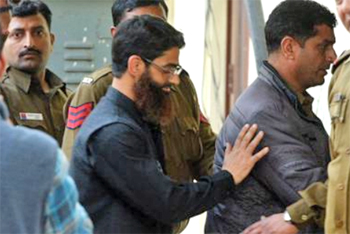
youthHe was picked up by officials of Delhi Police's special cell and Special Task Force (STF) of Kashmir Police.Two days later - after allegedly subjecting him to torture and humiliation at an STF camp - they brought him to Delhi. His crime: he was alleged to have planted a bomb in a DTC bus in Govindpuri on October 29, 2005, which injured many people.

Twelve years later, when he walked free on Thursday - after additional sessions judge Reetesh Singh acquitted him of all charges - the police were facing serious questions of credibility and human rights violations. Rafiq's claim that "he was made an accused to assuage the public perception that Delhi Police was incompetent to act against terrorism" and that "he was a vulnerable target... made a scapegoat" rang true. Police, it seems, deliberately ignored his alibi at every step to prove their case . They brushed aside his plea that it could be proved he was in his class on the day of the blast. It relied on dubious witness es who ended up contradicting themselves, exposed Rafiq to many people when he was in custody before a test identification parade (TIP) could be conducted and suppressed inconvenient facts.

TOI had as early as on February 12, 2006, raised the question whether it "could be a case of harried cops under pressure to show results, targeting an innocent boy?" In a front-page report, "Delhi bomber was in class on October 29", we had reported that Rafiq was actually attending his MA classes in his college in Srinagar. It was also reported that Rafiq had refused to appear for TIP as he had already been presented before some people, one of whom could be a witness in the Govindpuri blast.

The ground had been laid in Srinagar where Rafiq -according to his reply during framing of charges on January 21, 2008 which was cited by the judge - was allegedly forced to drink urine, kept naked and sexually abused, all in order to perhaps break his spirit. He had also alleged that rats were put in his trousers and attempts made to hurt his religious sentiments. "It seems I am being victimised only because I am a Kashmiri Muslim," he said, expressing his faith that justice would prevail and the police get exposed.

The court drew attention to Supreme Court's observation that when it comes to the notice of the investigating agency that a person accused of an offence has a good alibi, then it is the duty of that agency to investigate the genuineness of the plea of alibi and submit a report to the magistrate. "In the case of Manu Sharma versus the State (NCT) of Delhi....Supreme Court had observed that the criminal justice administration system in India places human rights and dignity for human life on a much higher pedestal. An accused is presumed to be innocent till proved guilty and is entitled to fairness and true investigation and a fair trial. The prosecution is expected to play a balanced role in the trial of crime and the investigation should be judicious, fair, transparent and expeditious to ensure compliance with the basic rule of law," the court asserted. Rafiq's case failed on all counts.

First Delhi Police produced a witness, Danbir Sharma, one of the passengers in the bus, on the basis of whose description, they got a portrait made. However, Sharma later couldn't identify Rafiq. The portrait then disappeared mysteriously - pointed out by the judge - even as another witness, Rajeev Sinha, surfaced.

His and Sharma's description of the bomber were at variance. Singh described the bomber as a young man, 22-24 years of age with a French-cut beard and prominent nose, who was wearing a cap with `New York' written on the right. He said he was wearing a white shirt with grey stripes and cotton trousers, either blue or black. Sharma, however, said the bomber was a boy of 5 feet, 10 inches height and had `sanwla' complexion. According to him, he was wearing a `coca cola' coloured shirt and white trousers.

The defence later claimed that Rafiq had a full-grown beard when he was arrested. It was alleged that on November 25, 2005, inspector Badrish Dutt brought a barber to the special cell office and got his beard trimmed to resemble a French cut. He then took a photo of his on his cellphone.

Significantly , Rafiq had refused to participate in a TIP on the ground that he had been exposed to many people while in custody at Lodi Colony and his photographs taken. He particularly mentioned a man wearing spectacles with his lawyers later alleging in court that it was Sinha, a planted witness. Sinha later accepted that he wore spectacles.

Sinha had produced a ticket to prove his presence on the bus that day . This had been left unverified by the police for long though it could have checked its authenticity with the depot manager and the registers he maintained quite easily. It chose not to do so.

The police wrote to the Registrar, University of Kashmir, on February 17, 2006, regarding verification of admission and attendance of Rafiq but chose to forget about it in court. Later, it was claimed that because of vacations, the information could not be procured from the university . However, the judge saw through the charade. DCP S K Tewari had on February 27 - just 10 days after writing the first letter - asked the Registrar "Whether " A" or "P" is marked in the attendance register of the class?" The court said this question could not have been put to the Registrar unless Tewari had access to the attendance records - the ones later produced by the defence and seen by the court - and hence the vacation plea for not being able to verify Rafiq's presence "seems to be false".The court said that in all probability the records had been collected by the police.

The police claimed the other accused, Mohammad Hussain Fazili - who too was acquitted - had led them to Rafiq. Rafiq, however, told the court that he met Fazili for the first time on November 21, 2005, at the STF camp. Fazili, too, denied taking the cops to Rafiq and claimed he was himself misled into believing by inspector Badrish Dutt that he was wanted in connection with an inquiry in a case under the Wildlife Protection Act. He too ended up in jail for 12 years.

Comments

Abdul Aziz
 - 
Saturday, 18 Feb 2017

No need to worry
Allah Almighty has his own plans to deal with injustice people
that day no one can rescue from the everlasting pain and torture

its true
since Truth will prevail and evil will perish

TRUTH
 - 
Saturday, 18 Feb 2017

The evil authorities or those authorities who do such evil acts think that they will getaway from their evil crimes... We Muslims believe, if we dont get justice here... We will surely get the justice in the Court of the lord of the worlds... Allah is just and he will give justice one day... That day the evil people will REGRET and their punishment will be permanent unless they REPENT in this world and help the society to become and stand with the TRUTH...

Shaad
 - 
Saturday, 18 Feb 2017

Without proof and knowingly they kept youth in jail for nothing and with all the proof and clear cut of involvement of Prajna singh, she gets bail.

Waav, incredible law, handler and our ruler.

Add new comment

  • Coastaldigest.com reserves the right to delete or block any comments.
  • Coastaldigset.com is not responsible for its readers’ comments.
  • Comments that are abusive, incendiary or irrelevant are strictly prohibited.
  • Please use a genuine email ID and provide your name to avoid reject.
News Network
April 3,2020

Bengaluru, Apr 3: Four people, including three who attended the Tablighi Jamat meet in Delhi, tested positive for coronavirus on Friday, taking the total number of the affected in the state to 128, the Health department said here.

The three men from Belagavi had attended the Tablighi- Jamaat congregation from March 13 to 18 at Delhi, while the other case was that of a 75-year-old man, who is a resident of Bagalkote.

A detailed investigation was underway to ascertain how he got infected, the department said in a bulletin.

It said that till date, 128 COVID-19 positive cases have been confirmed in the state, including three deaths and 11 discharges.

"With 128 cases we are in ninth position in the country in number of cases.Today four new cases were confirmed, of which three were those who attended Tablighi-Jamaat congregation," Primary and Secondary Education Minister Suresh Kumar told reporters, giving details about the bulletin.

He said 187 of the total of 288 samples collected from those who attended the congregation had tested negative and only 13 had turned positive so far.

"Out of 288 samples collected, we have got report for only 200 cases and are awaiting reports for 88," he added.

Though Kumar did not give any figures on the total number of people who went from Karnataka to attend theDelhi meet, the health department on Thursday had said nearly 1,000 people (including 19 foreigners) linked to Tablighi Jamat had been screened and swab samples of more than 200 people had been collected, while efforts are on to find out others.

Chief Minister B S Yediyurappa on Friday held a meeting with Muslim leaders and MLAs even as the government stepped up efforts to track those who might have travelled to the state after taking part in the meet in Delhi last month, which has turned out to be the hotbed of COVID-19 spread in the country.

After the meeting, the Chief Minister said Muslim MLAs agreed to provide details of those who attended the Jamaat's congregation to the government and also convince them to undergo COVID-19 tests, along with quarantining themselves.

Out of total of 114 active cases in the state so far, 111 patients (including 1 pregnant woman) are in isolation at designated hospitals and are stable, while three are in ICU (one on oxygen and two on Ventilators).

Seven of the 128 cases detected and confirmed were transit passengers of Kerala, who landed at airports in Karnataka and are being treated in the state.

Among the 128 positive cases, 51 were reported from Bengaluru, 21 from Mysuru, 10 from Bidar, nine from Dakshina Kannada, eight from Uttara Kannada, seven from Chikkaballapur, five from Kalaburgai, four from Ballari, three each from Davangere, Belagavi and Udupi, and one each from Kodagu, Tumakuru, Bagalkote and Dharwad.

Those discharged include nine patients from Bengaluru and two from Kalaburagi and among the deceased are one each are reported from Kalaburgari, Bengaluru and Tumakuru.

The Chief Minister held a series of meetings to review the measures taken to control the spread of COVID-19 and implementation of lockdown in the state.

He asked the labour department to deposit an additional Rs 1,000 from the Construction Workers Welfare Fund to the accounts of 15 lakh labourers in the sector.

The government has already deposited Rs 1000 to their accounts (amounting about Rs 150 crore) in the first round.

During the meeting the shortage of Personal Protective Equipment (PPE) Kits for Doctors and health care professionals was discussed.

"Work order has been issued for 1 lakh PPE kits, and the Chief Minister has issued directions for the supply of 2 lakh more PPE kits," Kumar said.

Yediyurappa also chaired a meeting with Ministers from Bengaluru on steps to be taken to control spread of COVID-19, as the city has more than half the confirmed cases in the state.

He also decided to covene a meeting of city legislators in this regard on Saturday morning.

Kumar said it was also decided not to provide food free of cost at the state run Indira Canteens as concerns were raised about the quality and misuse that was happening during the Chief Minister's meeting with ministers today.

"We have decided to stop free food supply...we are providing foodgrains to poor through ration already," he said.

However, the Canteens will continue to provide subsidized food- breakfast at Rs 5 and lunch and dinner at Rs 10.

The government last month had decided that Indira Canteens would provide food packets free of cost to the poor and needy in the wake of the lockdown.

Meanwhile, in view of COVID-19, emergency Additional Chief Secretary, H&FW Department ordered extension ofservices of Medical and Para-medical staff, Clinical and Nonclinical staff retiring in April and May this year, to June 30.

Amid reports of lack of co-ordination between Medical Education Minister K Sudhakar and Health and Family Welfare Minister B Sriramulu, Chief Minister Yediyurappa has tasked Suresh Kumar to brief the media on COVID-19 related daily bulletins, official sources said.

Comments

Add new comment

  • Coastaldigest.com reserves the right to delete or block any comments.
  • Coastaldigset.com is not responsible for its readers’ comments.
  • Comments that are abusive, incendiary or irrelevant are strictly prohibited.
  • Please use a genuine email ID and provide your name to avoid reject.
News Network
March 8,2020

Mysuru, Mar 8: The 'Shuka Vana' (Parrots Museum), in the sprawling Sri Ganapathy Sachchidananda Ashrama here, will remain closed for 15 days from March 9 as a precautionary measure following COVID-19, Ashram authorities said here on Sunday.

Ashram authorities told UNI that the Museum will be closed due to threat of spread of Coronavirus. This is for the first time that the Museum has been closed for such a long time earlier it had closed for one or two days due to bird flu. The decision has been taken following the tourists and devotees including foreigners are arriving to Ashram in large numbers.

The ashram authorities have also closed famous The Kishkinda Moolika Bonsai garden on-premises for same reason.

Comments

Add new comment

  • Coastaldigest.com reserves the right to delete or block any comments.
  • Coastaldigset.com is not responsible for its readers’ comments.
  • Comments that are abusive, incendiary or irrelevant are strictly prohibited.
  • Please use a genuine email ID and provide your name to avoid reject.
News Network
July 17,2020

Bengaluru, Jul 17: The Karnataka State Board of AUQAF has ordered that management committees at Muslim Khabarastans, shall not refuse burial to Muslims died due to COVID-19.

"...in exercise the powers conferred under Waqf Act 1995, it is hereby ordered that management Committees/Muthawallies/Administrators responsible for the management of Muslim Khabarastans in the state of Karnataka irrespective of registered or unregistered in the Waqf, shall not refuse the burial of Muslims died due to COVID-19 pandemic," read an order from the Karnataka State Board of AUQAF on Thursday.

"They shall co-operate with all the Nodal Officers designated for this purpose regarding the decent burial. Non co-operation or refusal on the part of the management will be construed as an insult committed to the deceased. Any violation of the above order will attract the punitive provision of Indian Penal Code and removal from the management as per the provisions of the Waqf Act 1995," the order read.

It further said that the Waqf Officers, District Wakf Advisory Committees of the state, shall ensure the adherence of this order, and circulate the same to all the Khabarastan managements, registered or unregistered in the state.

"No further deliberation in this regard is solicited except compliance of the order in letter and spirit. Any dereliction in this regard will be viewed seriously," it read.

Giving a background on the issue of burial of COVID-19 deceased, the order read, "It is observed that, number of deaths are being occurred in various Districts of Karnataka, due to COVID-19 pandemic and it is reported that, some of the management committees of Khabarastan, are not cooperating to bury the dead bodies of COVID-19."

"A decent burial is a right of the dead person" as per the law of the land and the Islamic jurisprudence. It is needless to emphasize the importance of burial of Muslim dead bodies in Shariah. The dead body of a Muslim is treated with the utmost respect by the Ummah, joining in the funeral (Tadfeen), participating in the Namaz-e-Janaza and the burial are considered as Farz-e-Kifaya in Muslim law. According to the tradition of Islam, the person who participates in the funeral is entitled to Mountain sized reward (Sawaab)," the order read.

As per the order, the board, in its earlier circular had also cautioned the management of Waqf institutions and Khabarastan which were reluctant to allow the decent burial in the Khabarastan would be punished under the provisions of Indian Penal Code and the punitive provisions of the Waqf Act 1995 as well.

"The District Magistrates and the Superintendent of Police in the districts have been requested to prosecute the erring management committees who are responsible for non co-operation in this regard. Hence, the following order," it added.

Comments

Add new comment

  • Coastaldigest.com reserves the right to delete or block any comments.
  • Coastaldigset.com is not responsible for its readers’ comments.
  • Comments that are abusive, incendiary or irrelevant are strictly prohibited.
  • Please use a genuine email ID and provide your name to avoid reject.