


College to jail in bomb case: How cops destroyed 12 yrs of his youth

February 18, 2017

New Delhi, Feb 18: Mohammad Rafiq Shah was a student of MA (final) at Shah-i-Hamadan, Institute of Islamic Studies, University of Kashmir, Srinagar, when on the midnight of November 21, 2005, his world plunged into darkness.
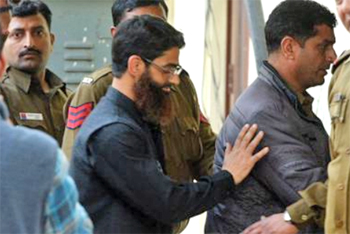
youthHe was picked up by officials of Delhi Police's special cell and Special Task Force (STF) of Kashmir Police.Two days later - after allegedly subjecting him to torture and humiliation at an STF camp - they brought him to Delhi. His crime: he was alleged to have planted a bomb in a DTC bus in Govindpuri on October 29, 2005, which injured many people.

Twelve years later, when he walked free on Thursday - after additional sessions judge Reetesh Singh acquitted him of all charges - the police were facing serious questions of credibility and human rights violations. Rafiq's claim that "he was made an accused to assuage the public perception that Delhi Police was incompetent to act against terrorism" and that "he was a vulnerable target... made a scapegoat" rang true. Police, it seems, deliberately ignored his alibi at every step to prove their case . They brushed aside his plea that it could be proved he was in his class on the day of the blast. It relied on dubious witness es who ended up contradicting themselves, exposed Rafiq to many people when he was in custody before a test identification parade (TIP) could be conducted and suppressed inconvenient facts.

TOI had as early as on February 12, 2006, raised the question whether it "could be a case of harried cops under pressure to show results, targeting an innocent boy?" In a front-page report, "Delhi bomber was in class on October 29", we had reported that Rafiq was actually attending his MA classes in his college in Srinagar. It was also reported that Rafiq had refused to appear for TIP as he had already been presented before some people, one of whom could be a witness in the Govindpuri blast.

The ground had been laid in Srinagar where Rafiq -according to his reply during framing of charges on January 21, 2008 which was cited by the judge - was allegedly forced to drink urine, kept naked and sexually abused, all in order to perhaps break his spirit. He had also alleged that rats were put in his trousers and attempts made to hurt his religious sentiments. "It seems I am being victimised only because I am a Kashmiri Muslim," he said, expressing his faith that justice would prevail and the police get exposed.

The court drew attention to Supreme Court's observation that when it comes to the notice of the investigating agency that a person accused of an offence has a good alibi, then it is the duty of that agency to investigate the genuineness of the plea of alibi and submit a report to the magistrate. "In the case of Manu Sharma versus the State (NCT) of Delhi....Supreme Court had observed that the criminal justice administration system in India places human rights and dignity for human life on a much higher pedestal. An accused is presumed to be innocent till proved guilty and is entitled to fairness and true investigation and a fair trial. The prosecution is expected to play a balanced role in the trial of crime and the investigation should be judicious, fair, transparent and expeditious to ensure compliance with the basic rule of law," the court asserted. Rafiq's case failed on all counts.

First Delhi Police produced a witness, Danbir Sharma, one of the passengers in the bus, on the basis of whose description, they got a portrait made. However, Sharma later couldn't identify Rafiq. The portrait then disappeared mysteriously - pointed out by the judge - even as another witness, Rajeev Sinha, surfaced.

His and Sharma's description of the bomber were at variance. Singh described the bomber as a young man, 22-24 years of age with a French-cut beard and prominent nose, who was wearing a cap with `New York' written on the right. He said he was wearing a white shirt with grey stripes and cotton trousers, either blue or black. Sharma, however, said the bomber was a boy of 5 feet, 10 inches height and had `sanwla' complexion. According to him, he was wearing a `coca cola' coloured shirt and white trousers.

The defence later claimed that Rafiq had a full-grown beard when he was arrested. It was alleged that on November 25, 2005, inspector Badrish Dutt brought a barber to the special cell office and got his beard trimmed to resemble a French cut. He then took a photo of his on his cellphone.

Significantly , Rafiq had refused to participate in a TIP on the ground that he had been exposed to many people while in custody at Lodi Colony and his photographs taken. He particularly mentioned a man wearing spectacles with his lawyers later alleging in court that it was Sinha, a planted witness. Sinha later accepted that he wore spectacles.

Sinha had produced a ticket to prove his presence on the bus that day . This had been left unverified by the police for long though it could have checked its authenticity with the depot manager and the registers he maintained quite easily. It chose not to do so.

The police wrote to the Registrar, University of Kashmir, on February 17, 2006, regarding verification of admission and attendance of Rafiq but chose to forget about it in court. Later, it was claimed that because of vacations, the information could not be procured from the university . However, the judge saw through the charade. DCP S K Tewari had on February 27 - just 10 days after writing the first letter - asked the Registrar "Whether " A" or "P" is marked in the attendance register of the class?" The court said this question could not have been put to the Registrar unless Tewari had access to the attendance records - the ones later produced by the defence and seen by the court - and hence the vacation plea for not being able to verify Rafiq's presence "seems to be false".The court said that in all probability the records had been collected by the police.

The police claimed the other accused, Mohammad Hussain Fazili - who too was acquitted - had led them to Rafiq. Rafiq, however, told the court that he met Fazili for the first time on November 21, 2005, at the STF camp. Fazili, too, denied taking the cops to Rafiq and claimed he was himself misled into believing by inspector Badrish Dutt that he was wanted in connection with an inquiry in a case under the Wildlife Protection Act. He too ended up in jail for 12 years.

Comments

Abdul Aziz
 - 
Saturday, 18 Feb 2017

No need to worry
Allah Almighty has his own plans to deal with injustice people
that day no one can rescue from the everlasting pain and torture

its true
since Truth will prevail and evil will perish

TRUTH
 - 
Saturday, 18 Feb 2017

The evil authorities or those authorities who do such evil acts think that they will getaway from their evil crimes... We Muslims believe, if we dont get justice here... We will surely get the justice in the Court of the lord of the worlds... Allah is just and he will give justice one day... That day the evil people will REGRET and their punishment will be permanent unless they REPENT in this world and help the society to become and stand with the TRUTH...

Shaad
 - 
Saturday, 18 Feb 2017

Without proof and knowingly they kept youth in jail for nothing and with all the proof and clear cut of involvement of Prajna singh, she gets bail.

Waav, incredible law, handler and our ruler.

Add new comment

  • Coastaldigest.com reserves the right to delete or block any comments.
  • Coastaldigset.com is not responsible for its readers’ comments.
  • Comments that are abusive, incendiary or irrelevant are strictly prohibited.
  • Please use a genuine email ID and provide your name to avoid reject.
News Network
April 29,2020

Lucknow, Apr 29: Tablighi Jamaat members, who got cured of COVID-19, have been asked by their organisation to donate their plasma for treatment of other coronavirus-infected patients, a move that the outfit thinks will help it shed its “villain” tag.

"Maulana Saad, in an open letter on April 21 to all Jamaatis who have recovered from the coronavirus (infection), has appealed them to donate their plasma to help others. The message has reached all the members," Maulana Anees Ahmad Nadvi, the manager of Tablighi Jamaat’s Lucknow branch, told PTI PTI on Wednesday.

"As per the Health Department data, over 50 per cent of corona patients are Jamaatis. Among them those who have recovered are being contacted and all of them are ready to donate their plasma," claimed Nadvi.

"We have till now contacted 400 Jamaatis. In the entire country, those who have recovered are also giving their plasma. Markaz has given instructions that no one should be left from donating plasma," he said. "Jamaatis are not doing any favour to anyone by giving their plasma.

This is a humanitarian step. This is true that Jamaatis are being presented as villains after coronavirus spread, but Maulana Saad has asked us to forgive those doing this," he said. Tablighi Jamaat leader Maulana Saad Kandhalvi is on the run after an FIR was registered against him by the Delhi police for organising a religious gathering in March this year despite restrictions to combat the coronavirus spread.

With some plasma therapy trial results rekindling hopes of it being a likely cure for COVID-19, the Uttar Pradesh government too had begun contracting patients cured of it for plasma donation, but the move was suspended after the Union Health Ministry on Tuesday said the therapy was only at an experimental stage and there was no evidence yet to support that it can be used as treatment for COVID-19.

Uttar Pradesh Surveillance Officer, Dr Vikasendu Agarwal, said all those who have recovered from coronavirus, including Jamaatis, were being contacted for plasma donation, but the move has been suspended after the Centre’s statement on the issue.

Refusing to divulge the number of cured Jamaatis, he said "We were contacting them. They are not different from us. We were contacting all our patients and asking them that they could donate if they find it appropriate, as it would help other patients." "All of those contacted by us are ready for giving plasma," he said.

Chief Medical Officer, Lucknow, Dr Narendra Agarwal said all 28 Jamaatis, who were admitted in KGMU were contacted to donate their plasma and all of them agreed. "A proposal in this regard has been sent to the government.

After approval, their plasma will be taken," he said. With the plasma therapy gaining a lot of traction as a possible cure for coronavirus, the Union Health Ministry on Tuesday clarified that it is at an experimental stage and there is no evidence yet to support that it can be used as treatment for COVID-19. Till the effectiveness of this mode of treatment is scientifically proven, its application except for research and clinical trial is illegal, Joint Secretary in the Ministry of Health Lav Agarwal said.

Dr Vikasendu said after the Centre's clarification contacting people for plasma donation has been put on hold. A further step will be taken on decision of KGMU which is working on plasma therapy here, he added.

Comments

Add new comment

  • Coastaldigest.com reserves the right to delete or block any comments.
  • Coastaldigset.com is not responsible for its readers’ comments.
  • Comments that are abusive, incendiary or irrelevant are strictly prohibited.
  • Please use a genuine email ID and provide your name to avoid reject.
Agencies
February 8,2020

Mumbai, Feb 8: Anil Ambani, the brother of Asia’s richest man has pleaded poverty in his dispute with three Chinese banks seeking $680 million in defaulted loans.

“The value of my investments has collapsed,” Anil Ambani said, according to a court filing by the banks in a London lawsuit.

“The current value of my shareholdings is down to approximately $82.4m and my net worth is zero after taking into account my liabilities. In summary, I do not hold any meaningful assets which can be liquidated for the purposes of these proceedings.”

The lawsuit was filed by three state-controlled Chinese banks which argue that they provided a loan of $925 million to Ambani’s Reliance Communications Ltd. in 2012 with the condition that he personally guarantee the debt. The comments were disclosed on Friday as Ambani sought to avoid depositing hundreds of millions of dollars with the court ahead of a trial.

The embattled Indian tycoon says that while he agreed to give a non-binding “personal comfort letter,” he never gave a guarantee tied to his personal assets -- an “extraordinary potential personal liability.”

The 60-year-old is the brother of Mukesh Ambani, who’s worth $56.5 billion and is the wealthiest man in Asia. Anil, on the other hand, has seen his personal fortune dwindle over recent years, losing his billionaire status. His Reliance Communications filed for bankruptcy last year.

The banks asked Judge David Waksman to force Ambani to put up $656 million into the court’s account.

Representatives for Ambani’s Reliance Group said they couldn’t immediately comment. They said the group will issue a statement once the court issues the final order.

Ambani’s lawyer, Robert Howe, said the court shouldn’t order his client to make a payment he can’t make. The tycoon argues that an order requiring him to do so would hinder his ability to defend himself in the case, Howe said.

“There’s no evidence of some giant pot of gold that he can pull $1 million, let alone $10 million, let alone $100 million,” Howe said.

Bankim Thanki, an attorney representing Industrial & Commercial Bank of China Ltd., China Development Bank and the Export-Import Bank of China, said in a filing that Ambani’s statements are “plainly a yet further opportunistic attempt to evade his financial obligations to the lenders.”

Ambani was caught up in another legal wrangle last year when India’s Supreme Court threatened him with prison after Reliance Communications failed to pay Rs 5.5 billion ($77 million) to Ericsson AB’s Indian unit. The judges gave him a month to find the funds, and his brother, Mukesh, stepped in just in time to make the payment.

Anil said in a filing that he recognized that the judge would want to know if he could satisfy any order to put up funds from outside resources, including his family.

“I can confirm that I have made enquiries but I am unable to raise any finance from external sources,” he said. Judge Waksman had said in an earlier ruling that he believed Ambani’s defence would be shown to be “opportunistic and false.”

Ambani’s lawyer told the judge that as a result of the comments the tycoon’s relatives were unlikely to lend any funds.

There is a “very substantial risk they will never get it back,” Howe said.

Comments

Add new comment

  • Coastaldigest.com reserves the right to delete or block any comments.
  • Coastaldigset.com is not responsible for its readers’ comments.
  • Comments that are abusive, incendiary or irrelevant are strictly prohibited.
  • Please use a genuine email ID and provide your name to avoid reject.
News Network
February 24,2020

Bengaluru, Feb 24: Census authorities in Karnataka have requested deputy commissioners in the state’s districts to hold outreach and awareness campaigns about the National Population Register (NPR), as they fear misgivings about the exercise could hurt the forthcoming enumeration of population.

The house-listing phase of the Census and updating of NPR will be rolled out simultaneously by mid-April in the BJP-ruled state.

About 1,50,000 enumerators will handle the massive exercise.

Officials believe widespread awareness will help address concerns about the NPR data-gathering process and make people cooperate with enumerators when they visit houses for both NPR and census work.

“Sensing the kind of questions that enumerators may face when they do house visits, in all video conferences with deputy commissioners of districts, we have requested to establish contact with local representatives,” SB Vijay Kumar, director of Census Operations in Karnataka told news agency. “We have asked them to organise outreach programmes to ensure that people’s doubts are resolved before the information gathering work begins,” he added.

Census operations are handled by the Union home ministry. Several district officials are said to have raised concerns about the possibility of people refusing to share information when the work on the census and NPR begins in two months. This would affect the quality of the census work, making the exercise incomplete.

news channel earlier reported that people in parts of Karnataka had declined to share personal information with officials visiting households in connection with government programmes, suspecting them of gathering data for the yet-to-be unveiled National Register of Citizens, following enactment of the Citizenship Amendment Act (CAA) recently.

Kumar said district authorities will train and sensitise enumerators to tread carefully while gathering information. Enumerators will be told not to demand information but seek it gently.

“We will tell enumerators to proactively engage with people. For instance, if an old man in a village does not know his exact date or place of birth, the enumerator may engage in a conversation with the person that may elicit some anecdotes and roughly establish the year and the place of birth,” the census director said.

As of now, the NPR questionnaire has 21queries, but officials say it has not yet been finalised.

With most of the census and NPR data gathering and storage happening digitally this time, the challenge before census officials is to convince people that the data would remain safe.

“Individual data is sealed and all that we can see is collective data. The information is consolidated and tailor-made. We are telling district officials to create awareness about data safety as well,” Kumar said.

Comments

Add new comment

  • Coastaldigest.com reserves the right to delete or block any comments.
  • Coastaldigset.com is not responsible for its readers’ comments.
  • Comments that are abusive, incendiary or irrelevant are strictly prohibited.
  • Please use a genuine email ID and provide your name to avoid reject.