


College to jail in bomb case: How cops destroyed 12 yrs of his youth

February 18, 2017

New Delhi, Feb 18: Mohammad Rafiq Shah was a student of MA (final) at Shah-i-Hamadan, Institute of Islamic Studies, University of Kashmir, Srinagar, when on the midnight of November 21, 2005, his world plunged into darkness.
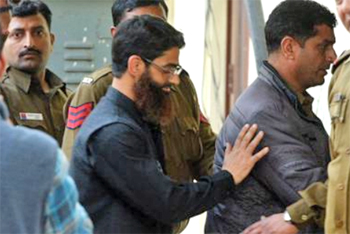
youthHe was picked up by officials of Delhi Police's special cell and Special Task Force (STF) of Kashmir Police.Two days later - after allegedly subjecting him to torture and humiliation at an STF camp - they brought him to Delhi. His crime: he was alleged to have planted a bomb in a DTC bus in Govindpuri on October 29, 2005, which injured many people.

Twelve years later, when he walked free on Thursday - after additional sessions judge Reetesh Singh acquitted him of all charges - the police were facing serious questions of credibility and human rights violations. Rafiq's claim that "he was made an accused to assuage the public perception that Delhi Police was incompetent to act against terrorism" and that "he was a vulnerable target... made a scapegoat" rang true. Police, it seems, deliberately ignored his alibi at every step to prove their case . They brushed aside his plea that it could be proved he was in his class on the day of the blast. It relied on dubious witness es who ended up contradicting themselves, exposed Rafiq to many people when he was in custody before a test identification parade (TIP) could be conducted and suppressed inconvenient facts.

TOI had as early as on February 12, 2006, raised the question whether it "could be a case of harried cops under pressure to show results, targeting an innocent boy?" In a front-page report, "Delhi bomber was in class on October 29", we had reported that Rafiq was actually attending his MA classes in his college in Srinagar. It was also reported that Rafiq had refused to appear for TIP as he had already been presented before some people, one of whom could be a witness in the Govindpuri blast.

The ground had been laid in Srinagar where Rafiq -according to his reply during framing of charges on January 21, 2008 which was cited by the judge - was allegedly forced to drink urine, kept naked and sexually abused, all in order to perhaps break his spirit. He had also alleged that rats were put in his trousers and attempts made to hurt his religious sentiments. "It seems I am being victimised only because I am a Kashmiri Muslim," he said, expressing his faith that justice would prevail and the police get exposed.

The court drew attention to Supreme Court's observation that when it comes to the notice of the investigating agency that a person accused of an offence has a good alibi, then it is the duty of that agency to investigate the genuineness of the plea of alibi and submit a report to the magistrate. "In the case of Manu Sharma versus the State (NCT) of Delhi....Supreme Court had observed that the criminal justice administration system in India places human rights and dignity for human life on a much higher pedestal. An accused is presumed to be innocent till proved guilty and is entitled to fairness and true investigation and a fair trial. The prosecution is expected to play a balanced role in the trial of crime and the investigation should be judicious, fair, transparent and expeditious to ensure compliance with the basic rule of law," the court asserted. Rafiq's case failed on all counts.

First Delhi Police produced a witness, Danbir Sharma, one of the passengers in the bus, on the basis of whose description, they got a portrait made. However, Sharma later couldn't identify Rafiq. The portrait then disappeared mysteriously - pointed out by the judge - even as another witness, Rajeev Sinha, surfaced.

His and Sharma's description of the bomber were at variance. Singh described the bomber as a young man, 22-24 years of age with a French-cut beard and prominent nose, who was wearing a cap with `New York' written on the right. He said he was wearing a white shirt with grey stripes and cotton trousers, either blue or black. Sharma, however, said the bomber was a boy of 5 feet, 10 inches height and had `sanwla' complexion. According to him, he was wearing a `coca cola' coloured shirt and white trousers.

The defence later claimed that Rafiq had a full-grown beard when he was arrested. It was alleged that on November 25, 2005, inspector Badrish Dutt brought a barber to the special cell office and got his beard trimmed to resemble a French cut. He then took a photo of his on his cellphone.

Significantly , Rafiq had refused to participate in a TIP on the ground that he had been exposed to many people while in custody at Lodi Colony and his photographs taken. He particularly mentioned a man wearing spectacles with his lawyers later alleging in court that it was Sinha, a planted witness. Sinha later accepted that he wore spectacles.

Sinha had produced a ticket to prove his presence on the bus that day . This had been left unverified by the police for long though it could have checked its authenticity with the depot manager and the registers he maintained quite easily. It chose not to do so.

The police wrote to the Registrar, University of Kashmir, on February 17, 2006, regarding verification of admission and attendance of Rafiq but chose to forget about it in court. Later, it was claimed that because of vacations, the information could not be procured from the university . However, the judge saw through the charade. DCP S K Tewari had on February 27 - just 10 days after writing the first letter - asked the Registrar "Whether " A" or "P" is marked in the attendance register of the class?" The court said this question could not have been put to the Registrar unless Tewari had access to the attendance records - the ones later produced by the defence and seen by the court - and hence the vacation plea for not being able to verify Rafiq's presence "seems to be false".The court said that in all probability the records had been collected by the police.

The police claimed the other accused, Mohammad Hussain Fazili - who too was acquitted - had led them to Rafiq. Rafiq, however, told the court that he met Fazili for the first time on November 21, 2005, at the STF camp. Fazili, too, denied taking the cops to Rafiq and claimed he was himself misled into believing by inspector Badrish Dutt that he was wanted in connection with an inquiry in a case under the Wildlife Protection Act. He too ended up in jail for 12 years.

Comments

Abdul Aziz
 - 
Saturday, 18 Feb 2017

No need to worry
Allah Almighty has his own plans to deal with injustice people
that day no one can rescue from the everlasting pain and torture

its true
since Truth will prevail and evil will perish

TRUTH
 - 
Saturday, 18 Feb 2017

The evil authorities or those authorities who do such evil acts think that they will getaway from their evil crimes... We Muslims believe, if we dont get justice here... We will surely get the justice in the Court of the lord of the worlds... Allah is just and he will give justice one day... That day the evil people will REGRET and their punishment will be permanent unless they REPENT in this world and help the society to become and stand with the TRUTH...

Shaad
 - 
Saturday, 18 Feb 2017

Without proof and knowingly they kept youth in jail for nothing and with all the proof and clear cut of involvement of Prajna singh, she gets bail.

Waav, incredible law, handler and our ruler.

Add new comment

  • Coastaldigest.com reserves the right to delete or block any comments.
  • Coastaldigset.com is not responsible for its readers’ comments.
  • Comments that are abusive, incendiary or irrelevant are strictly prohibited.
  • Please use a genuine email ID and provide your name to avoid reject.
News Network
March 24,2020

Bangalore , Mar 24: Bizom, India's leading retail intelligence platform, announced free subscription of its retailer app and tele-ordering solutions for consumer businesses in India and other emerging economies. Both solutions enable retailers to send their orders directly to the brand.
In COVID-19 times of social distancing and prophylactic measures, brands are conscious about the safety of their salespersons. Also, retailers don't want travelling salespeople to enter their premises. Consequently, many retail stores are facing stockout situations of fast-moving product categories. Bizom's self-ordering solutions help brands to avoid stockouts of their products.
Bizom trends, which analyses consumption and demand for consumer brands, showed how a near-complete shutdown during the Janta Curfew followed panic buying in early March. The asymmetrical demand and a lack of salespeople for order-taking are driving the industry towards social-distancing-based store-stocking mechanisms.
Bizom provides social-distancing-based store-stocking solutions for consumer businesses. They include the Bizom Retailer App and the Bizom Tele-ordering.
The Bizom Retailer App enables self-ordering for a brand's key retail outlets and can be implemented in under two weeks. The mobile app, a B2B shopping app, is a simple installation for retailers. It lists and groups the brand's products as per its product categories. The app's interface is no different from that of leading e-commerce apps. All the user has to do is select the preferred SKUs and add them to their shopping carts.
The app also allows brands to customize the app to meet the requirements of their continually changing product categories. For instance, if an SKU runs out of stock, the brand can disable the given SKU from the app.
With the Bizom Retailer App, brands can take orders directly from retailers instead of the traditional order-taking approach, which requires high-touch from a salesperson. Some of the key features of the app are, the ability to provide product information directly through retailers including SKUs, competitor comparison and pricing.
It also enables self-ordering from the retailer to maintain the flow of products as per demand, enables scheme rollout information through a notification on the app rather than through salespeople, tracks delivery of goods to the retailer and enables incentive payments to retailers directly rather than through distributor claims.
With Bizom Tele-ordering, as the sales teams go remote, the tele-ordering solution will become useful for brands who want to get salespeople to take orders from retailers, remotely. It ensures continued service to outlets despite not being physically present in the market.
Here, salespeople can discuss product requirements with retailers and enter orders based on specific outlet types (grocery, chemist etc.), outlet class (Class A, Class B etc.) or based on their beat or as per a distributor.
The key features of the Bizom Tele-ordering solution are, its ability to help salespeople collect orders from retailers remotely and enter it for fulfilment into Bizom using a tool, the flexibility offered to salespeople for remote servicing of retailers as per outlet type, beat, distributor area etc., secondary schemes get applied automatically, variable discounts will get applied as applicable at an SKU level.
"At Bizom, we are conscious of our responsibility to help brands run faster during these COVID-19 times. Our solutions of Bizom Retailer App and Bizom Tele-ordering have been built to ensure that brands can leverage this situation of low direct touch with retailers to enable a better way of working, remotely. I am trying to help brands go live in a few days so that they, in turn, can serve consumers better during these testing times," said Lalit Bhise, CEO, Bizom.

Comments

Add new comment

  • Coastaldigest.com reserves the right to delete or block any comments.
  • Coastaldigset.com is not responsible for its readers’ comments.
  • Comments that are abusive, incendiary or irrelevant are strictly prohibited.
  • Please use a genuine email ID and provide your name to avoid reject.
Agencies
January 16,2020

Bengaluru, Jan 16: Amping up the online payment experience for consumers, Razorpay, the leading full-stack financial services company, today launched a new product, Instant Refunds for businesses.

This new feature activates refunds and credits the customer's source account across payment methods such as credit card, net banking, and UPI within a minute of initiation.

India is one of the fastest-growing online retail markets today. About 71 per cent of internet users in the country purchase products online. Today, the refund process has two major pain points for both the end customer and the business.

First, a delay of five-seven business days for the customer in receiving the money because of multiple intermediaries like the acquiring bank, issuing bank and the networks (VISA/MasterCard/Rupay).

Second, the lack of transparency during the entire refund process for both the customer and the business. This long cycle of processing refunds is a significant problem with every popular payment method in the industry.

By issuing refunds instantly, Razorpay will help businesses retain their customers, build trust through an improved hassle-free payment experience and provide complete transparency on refunds to both the business and the end-user.

This new feature will also reduce the dependence on manpower as every refund issue on an average leads to ten service emails or calls from customer support teams.

"Instant Refunds are the new normal and central to great customer experience. A lot of consumers fail to use online payment methods as they feel getting refunds through an online platform is a very time-consuming task; hence they prefer CoD as the best alternative. Given the technological advancements being made in the fin-tech ecosystem, its fair for customers to expect refunds as fast as possible. A solution like Instant Refunds will not only help build consumer confidence in digital payments but also reduce losses for e-commerce companies where CoD has become an expensive option with more than 50 per cent online transactions made through cash", said Shashank Kumar, CTO & Co-founder of Razorpay.

"Our Instant Refunds feature ensures that the refund is processed at a 3600x faster pace than the normal expected time of five-seven business days. The team is focused on creating new technologies designed to make the entire payment lifecycle hassle-free. We believe this new feature will make customers experience a notch higher, help brands create a competitive advantage, and even make them more profitable", he added.

Razorpay's growth has been uphill, particularly in the last two years. With a 500 per cent growth in 2019, the company has been witnessing a healthy growth rate of 35 per cent month-on-month.

The company also recently launched its corporate credit cards for its partner businesses, RazorpayX current accounts, support for freelancers and homepreneurs, and acquired Opfin, a payroll and HR management software company.

Currently powering payments for over 800,000 businesses including the likes of Indigo, BSE, Thomas Cook, Reliance, SpiceJet, Aditya Birla, Sony, and Oyo, the team plans to increase this count to 1,400,000 by this year. The full-stack financial solutions company expects a 4x growth in its revenue by the end of the next fiscal year.

This story is provided by NewsVoir. ANI will not be responsible in any way for the content of this article.

Comments

Add new comment

  • Coastaldigest.com reserves the right to delete or block any comments.
  • Coastaldigset.com is not responsible for its readers’ comments.
  • Comments that are abusive, incendiary or irrelevant are strictly prohibited.
  • Please use a genuine email ID and provide your name to avoid reject.
News Network
June 21,2020

India on Sunday witnessed annual solar eclipse or 'surya grahan' 2020, the third eclipse even for this year after first two lunar eclipses took place in January and June and the last annual solar eclipse of this decade.

The solar eclipse started from around 9 a.m. across the Indian map as the Sun, the Moon, and the Earth came in a straight line, and the country witnessed the 'deepest' annular solar eclipse in over a century.

Astrologers said it a fourth super rare hybrid eclipse which is a mix between an annular and total solar eclipse.

Areas like Hyderabad, Chennai, Bhubaneshwar, Kolkata, Lucknow, Mumbai, Delhi, Patna, Shillong and more witnessed a partial phase of the annular solar eclipse from 9 a.m.

In the eclipse, the distance of the Moon and Earth will be larger than usual which means the moon will not be able to cover up the sun fully and will leave out the borders of the sun - giving an appearance of a "Ring of Fire".

Press Information Bureau in a tweet informed that it is the last annular solar eclipse in India of this decade.

People can catch glimpse of the partially covered sun between 10 a.m. and 2.28 p.m. as per the time differing as locations in India. The eclipse will continue for over three hours covering 84 per cent Sun.

There are three types of solar eclipses - total, partial, and annular.

Comments

Add new comment

  • Coastaldigest.com reserves the right to delete or block any comments.
  • Coastaldigset.com is not responsible for its readers’ comments.
  • Comments that are abusive, incendiary or irrelevant are strictly prohibited.
  • Please use a genuine email ID and provide your name to avoid reject.