


College to jail in bomb case: How cops destroyed 12 yrs of his youth

February 18, 2017

New Delhi, Feb 18: Mohammad Rafiq Shah was a student of MA (final) at Shah-i-Hamadan, Institute of Islamic Studies, University of Kashmir, Srinagar, when on the midnight of November 21, 2005, his world plunged into darkness.
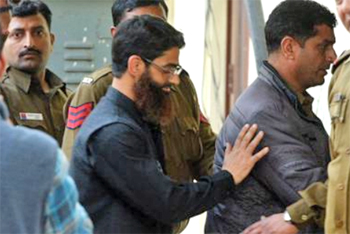
youthHe was picked up by officials of Delhi Police's special cell and Special Task Force (STF) of Kashmir Police.Two days later - after allegedly subjecting him to torture and humiliation at an STF camp - they brought him to Delhi. His crime: he was alleged to have planted a bomb in a DTC bus in Govindpuri on October 29, 2005, which injured many people.

Twelve years later, when he walked free on Thursday - after additional sessions judge Reetesh Singh acquitted him of all charges - the police were facing serious questions of credibility and human rights violations. Rafiq's claim that "he was made an accused to assuage the public perception that Delhi Police was incompetent to act against terrorism" and that "he was a vulnerable target... made a scapegoat" rang true. Police, it seems, deliberately ignored his alibi at every step to prove their case . They brushed aside his plea that it could be proved he was in his class on the day of the blast. It relied on dubious witness es who ended up contradicting themselves, exposed Rafiq to many people when he was in custody before a test identification parade (TIP) could be conducted and suppressed inconvenient facts.

TOI had as early as on February 12, 2006, raised the question whether it "could be a case of harried cops under pressure to show results, targeting an innocent boy?" In a front-page report, "Delhi bomber was in class on October 29", we had reported that Rafiq was actually attending his MA classes in his college in Srinagar. It was also reported that Rafiq had refused to appear for TIP as he had already been presented before some people, one of whom could be a witness in the Govindpuri blast.

The ground had been laid in Srinagar where Rafiq -according to his reply during framing of charges on January 21, 2008 which was cited by the judge - was allegedly forced to drink urine, kept naked and sexually abused, all in order to perhaps break his spirit. He had also alleged that rats were put in his trousers and attempts made to hurt his religious sentiments. "It seems I am being victimised only because I am a Kashmiri Muslim," he said, expressing his faith that justice would prevail and the police get exposed.

The court drew attention to Supreme Court's observation that when it comes to the notice of the investigating agency that a person accused of an offence has a good alibi, then it is the duty of that agency to investigate the genuineness of the plea of alibi and submit a report to the magistrate. "In the case of Manu Sharma versus the State (NCT) of Delhi....Supreme Court had observed that the criminal justice administration system in India places human rights and dignity for human life on a much higher pedestal. An accused is presumed to be innocent till proved guilty and is entitled to fairness and true investigation and a fair trial. The prosecution is expected to play a balanced role in the trial of crime and the investigation should be judicious, fair, transparent and expeditious to ensure compliance with the basic rule of law," the court asserted. Rafiq's case failed on all counts.

First Delhi Police produced a witness, Danbir Sharma, one of the passengers in the bus, on the basis of whose description, they got a portrait made. However, Sharma later couldn't identify Rafiq. The portrait then disappeared mysteriously - pointed out by the judge - even as another witness, Rajeev Sinha, surfaced.

His and Sharma's description of the bomber were at variance. Singh described the bomber as a young man, 22-24 years of age with a French-cut beard and prominent nose, who was wearing a cap with `New York' written on the right. He said he was wearing a white shirt with grey stripes and cotton trousers, either blue or black. Sharma, however, said the bomber was a boy of 5 feet, 10 inches height and had `sanwla' complexion. According to him, he was wearing a `coca cola' coloured shirt and white trousers.

The defence later claimed that Rafiq had a full-grown beard when he was arrested. It was alleged that on November 25, 2005, inspector Badrish Dutt brought a barber to the special cell office and got his beard trimmed to resemble a French cut. He then took a photo of his on his cellphone.

Significantly , Rafiq had refused to participate in a TIP on the ground that he had been exposed to many people while in custody at Lodi Colony and his photographs taken. He particularly mentioned a man wearing spectacles with his lawyers later alleging in court that it was Sinha, a planted witness. Sinha later accepted that he wore spectacles.

Sinha had produced a ticket to prove his presence on the bus that day . This had been left unverified by the police for long though it could have checked its authenticity with the depot manager and the registers he maintained quite easily. It chose not to do so.

The police wrote to the Registrar, University of Kashmir, on February 17, 2006, regarding verification of admission and attendance of Rafiq but chose to forget about it in court. Later, it was claimed that because of vacations, the information could not be procured from the university . However, the judge saw through the charade. DCP S K Tewari had on February 27 - just 10 days after writing the first letter - asked the Registrar "Whether " A" or "P" is marked in the attendance register of the class?" The court said this question could not have been put to the Registrar unless Tewari had access to the attendance records - the ones later produced by the defence and seen by the court - and hence the vacation plea for not being able to verify Rafiq's presence "seems to be false".The court said that in all probability the records had been collected by the police.

The police claimed the other accused, Mohammad Hussain Fazili - who too was acquitted - had led them to Rafiq. Rafiq, however, told the court that he met Fazili for the first time on November 21, 2005, at the STF camp. Fazili, too, denied taking the cops to Rafiq and claimed he was himself misled into believing by inspector Badrish Dutt that he was wanted in connection with an inquiry in a case under the Wildlife Protection Act. He too ended up in jail for 12 years.

Comments

Abdul Aziz
 - 
Saturday, 18 Feb 2017

No need to worry
Allah Almighty has his own plans to deal with injustice people
that day no one can rescue from the everlasting pain and torture

its true
since Truth will prevail and evil will perish

TRUTH
 - 
Saturday, 18 Feb 2017

The evil authorities or those authorities who do such evil acts think that they will getaway from their evil crimes... We Muslims believe, if we dont get justice here... We will surely get the justice in the Court of the lord of the worlds... Allah is just and he will give justice one day... That day the evil people will REGRET and their punishment will be permanent unless they REPENT in this world and help the society to become and stand with the TRUTH...

Shaad
 - 
Saturday, 18 Feb 2017

Without proof and knowingly they kept youth in jail for nothing and with all the proof and clear cut of involvement of Prajna singh, she gets bail.

Waav, incredible law, handler and our ruler.

Add new comment

  • Coastaldigest.com reserves the right to delete or block any comments.
  • Coastaldigset.com is not responsible for its readers’ comments.
  • Comments that are abusive, incendiary or irrelevant are strictly prohibited.
  • Please use a genuine email ID and provide your name to avoid reject.
News Network
March 21,2020

New Delhi, Mar 21: Karnataka Health and Family Welfare Minister B. Sriramulu on Saturday informed that one more person was tested positive for the coronavirus in the state.

He said that a total of 16 persons have been tested positive for COVID-19 in the state so far.

The victim had come from Mecca and was kept in quarantine facility by the state authorities.

"For a 32-year-old man, who had just returned from a trip to Mecca has found COVID-19 positive. The infection has been confirmed. He has already been treated at an isolated ward of the hospital. Citizens must not have any sort of anxiety," tweeted Sriramulu.

Also, the news and public relations department, the Indian Red Cross Society and the Karnataka State Labour Studies Institute have invited volunteers for the programme to provide real-time information to people to avoid spreading rumours and misinformation about coronavirus.

At least four volunteers will work in four shifts per day in each taluk of the state. There are about 120 volunteers in Bengaluru city and about 3,000 Corona Warriors are expected to register from across the state. Over 400 volunteers have registered via online application on the first day.

Comments

Add new comment

  • Coastaldigest.com reserves the right to delete or block any comments.
  • Coastaldigset.com is not responsible for its readers’ comments.
  • Comments that are abusive, incendiary or irrelevant are strictly prohibited.
  • Please use a genuine email ID and provide your name to avoid reject.
Agencies
February 25,2020

New Delhi, Nov 25: According to multiple media reports, at least 11 people were killed and around 150 injured in the large scale violence unleashed by the Sangh Parivar activists to suppress anti-CAA agitation in the capital of India.

Violence was reported from Jaffrabad, Chandbagh, Maujpur, Bhajanpura, Gokulpuri, Khajuri Khas, Kardampuri, Dayalpur and Hauz Rani and prohibitory orders were clamped in several areas of North East Delhi. 

The MHA said the situation was under control and paramilitary forces have been deployed in large numbers in trouble spots. The Gokulpuri tire market was set on fire. The violence has also led to the destruction of several crores worth of property. 

As tension smouldered in the national capital's northeast and the sun set over another restive day, violence cut a swathe through several localities, including Chand Bagh and Bhajanpura, with stones and other missiles hurled and shops set ablaze.

Rioters damaged two fire tenders in Gokulpuri and crowds raising incendiary slogans set on fire fruit carts, rickshaws and anything that came in their way in the epicentre of the trouble Maujpur and other places.

With US President Donald Trump also in the city, Delhi Police ramped up security. It fired teargas shells to disperse the rioters -- armed with stones, rods and even swords and many wearing helmets to protect themselves -- and was assisted by paramilitary personnel.

Streets were littered with mangled remains of vehicles, bricks and burnt tyres, mute testimony to the violence and bloodshed that took on a communal taint on Monday and injured about 180 people, including 48 police personnel.

According to GTB Hospital Medical Superintendent Sunil Kumar, six people were declared brought dead on Tuesday, taking the death toll in 11. At least 35 injured people were also taken to the hospital today.

"Fifty per cent of those injured have sustained bullet injuries," Kumar added.

As the violence continued unabated, police officials said the situation was under control and flag marches were conducted in Bhajanpura, Khajuri Khas and other places.

Union Home Minister Amit Shah convened a meeting with Delhi Lieutenant Governor Anil Baijal, Chief Minister Arvind Kejriwal, Delhi Police chief Amulya Patnaik and others to address the situation.

The meeting resolved that workers of political parties should join hands to restore peace and peace committees should be reactivated in all localities.

In scenes not seen in the national capital for decades, frenzied groups thrashed people on the road and vandalised vehicles.

The media also came under attack.

Akshay, a journalist with JK 24X7 News, received a bullet injury and was in a serious condition in hospital, and two reporters from NDTV were beaten and punched by rioters. Many other journalists were heckled and told to go back.

Schools were shut and fearful residents stayed indoors as restless crowds roamed the streets, seemingly unmindful of prohibitory orders restricting the assembly of more than four people imposed on Monday.

"There is hardly any police presence in the area. Rioters are running around threatening people, vandalising shops. Families need to be evacuated. We are unsafe in our own homes," said a resident of Maujpur, requesting anonymity.

Another added that this is the first time in 35 years -- possibly since the 1984 anti-Sikh riots -- that he has seen a situation such as this. "The area had always remained peaceful," he told PTI.

Trouble continued through the day.

Around 5 pm in Chand Bagh, for instance, security personnel were pelted with stones. They chased the mob, only to be attacked afresh with some people also armed with petrol bombs.

A few residents in Yamuna Vihar and Jaffrabad told PTI they had seen rioters with swords in their hands.

The 11 killed include Delhi Police head constable Ratan Lal. While Lal died of gunshot wounds, it is still not yet clear what killed the others or who they all were.

Among those killed was Vinod Kumar, a resident of Ghonda who was brought dead to the hospital and whose body is at the morgue of the Jag Parvesh Hospital.

Also killed was Mohammad Furkan from Kardampuri, near Jafrabad, who got married in 2014 and has two children. His brother, Mohammed Imran, overcome with grief, said they were both in the handicrafts business.

"He had gone to get some food for his children. Someone told me he had been shot. I couldn't believe it as I had met him barely an hour earlier. I kept calling him... I then rushed to GTB Hospital where I was told that he is dead," he told reporters, sobbing inconsolably outside the hospital.

Imran blamed BJP leader Kapil Mishra's tweet, giving Delhi Police an ultimatum to clear the streets of protesters and saying people would be quiet only until Trump is in India.

"Before that everything was peaceful," he said.

One person seen brandishing a gun before police on Monday was identified as Shah Rukh and been arrested yet. Police said 11 FIRs have been filed.

Kejriwal, who held a meeting with senior officials and MLAs of all parties to discuss the situation, asked people to refrain from violence and said all issues can be dealt with through dialogue.

"Stop this madness," he said after visiting the injured in GTB Hospital.

"I have met the people who were injured, also met some people who sustained bullet injuries. The biggest concern is to stop the violence. I appeal to everyone to stop the violence," he said.

Five stations on the Delhi Metro's Pink Line were closed for the second consecutive day on Tuesday in the wake of the trouble.

Deputy Commissioner of Police (Shahdara) Amit Sharma underwent an operation on Monday night for the head injury sustained during the clashes.

Comments

Angry Indian
 - 
Wednesday, 26 Feb 2020

pakistan is very very happy to see this because we indian MARONS fighting each other as a HINDu & MUSLIM destroying our country with our own hand..

great india..jai hind

Add new comment

  • Coastaldigest.com reserves the right to delete or block any comments.
  • Coastaldigset.com is not responsible for its readers’ comments.
  • Comments that are abusive, incendiary or irrelevant are strictly prohibited.
  • Please use a genuine email ID and provide your name to avoid reject.
News Network
August 7,2020

Bengaluru, Aug 7: Amid the rising number of COVID-19 cases in Karnataka, the state's health department issued fresh guidelines for the disposal of bodies of COVID patients.

"Although an increased risk of COVID infection from a dead body to health workers or family members who follow standard precautions while handling the body is unlikely, the lack of scientific data requires the utmost care to avoid the inadvertent spread of COVID-19 during these times," the statement from the health department's press release read, emphasising on the dignity of the dead and the religious and cultural tradition.

The 23-page press release elaborated on guidelines regarding testing, handling of dead bodies and other specificities in relation to the management of COVID-19 bodies.

"Testing should not be insisted in every case of death, but only when they have a recorded history of influenza-like symptoms. The body should be handed over to the family members/ relatives in a dignified manner immediately after swab collection and hospitals should provide handouts with a list of dos and don'ts in English and Kannada laying down relevant information," the statement said.

It added, "At the mortuary, health care workers, mortuary staff and the family of the deceased body shall not come in direct contact with the dead body and must wear full personal protective equipment (PPE). If the family or relative are for any reason unable to cremate or bury the body, the local health authority shall arrange for the dignified last rites as per the religious traditions of the family."

Regarding autopsies (post mortem) on COVID-19 bodies, the state department said that they should be avoided, except in necessary circumstances.

The statement also gave detailed guidelines regarding the appropriate recording of COVID-19 deaths in line with the Indian Council of Medical Research (ICMR) guidelines.

Additionally, the health department made a statement about the admission procedure for COVID positive patients referred by other district administrations saying, "It is now mandatory for all the referrals from the BBMP admission and discharge of COVID positive patients to be done through the online COVID Hospital Bed Management System (CHBMS)."

The state's count of coronavirus cases was 1,51,449 in the past 24 hours.

So far, a total of 2,804 people have died due to COVID-19 in the state, while the average recovery rate in Karnataka is 49.3 per cent.

Comments

Add new comment

  • Coastaldigest.com reserves the right to delete or block any comments.
  • Coastaldigset.com is not responsible for its readers’ comments.
  • Comments that are abusive, incendiary or irrelevant are strictly prohibited.
  • Please use a genuine email ID and provide your name to avoid reject.