


College to jail in bomb case: How cops destroyed 12 yrs of his youth

February 18, 2017

New Delhi, Feb 18: Mohammad Rafiq Shah was a student of MA (final) at Shah-i-Hamadan, Institute of Islamic Studies, University of Kashmir, Srinagar, when on the midnight of November 21, 2005, his world plunged into darkness.
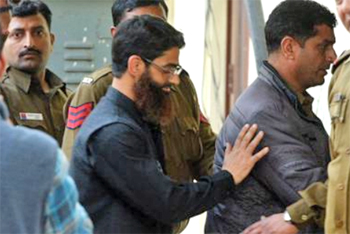
youthHe was picked up by officials of Delhi Police's special cell and Special Task Force (STF) of Kashmir Police.Two days later - after allegedly subjecting him to torture and humiliation at an STF camp - they brought him to Delhi. His crime: he was alleged to have planted a bomb in a DTC bus in Govindpuri on October 29, 2005, which injured many people.

Twelve years later, when he walked free on Thursday - after additional sessions judge Reetesh Singh acquitted him of all charges - the police were facing serious questions of credibility and human rights violations. Rafiq's claim that "he was made an accused to assuage the public perception that Delhi Police was incompetent to act against terrorism" and that "he was a vulnerable target... made a scapegoat" rang true. Police, it seems, deliberately ignored his alibi at every step to prove their case . They brushed aside his plea that it could be proved he was in his class on the day of the blast. It relied on dubious witness es who ended up contradicting themselves, exposed Rafiq to many people when he was in custody before a test identification parade (TIP) could be conducted and suppressed inconvenient facts.

TOI had as early as on February 12, 2006, raised the question whether it "could be a case of harried cops under pressure to show results, targeting an innocent boy?" In a front-page report, "Delhi bomber was in class on October 29", we had reported that Rafiq was actually attending his MA classes in his college in Srinagar. It was also reported that Rafiq had refused to appear for TIP as he had already been presented before some people, one of whom could be a witness in the Govindpuri blast.

The ground had been laid in Srinagar where Rafiq -according to his reply during framing of charges on January 21, 2008 which was cited by the judge - was allegedly forced to drink urine, kept naked and sexually abused, all in order to perhaps break his spirit. He had also alleged that rats were put in his trousers and attempts made to hurt his religious sentiments. "It seems I am being victimised only because I am a Kashmiri Muslim," he said, expressing his faith that justice would prevail and the police get exposed.

The court drew attention to Supreme Court's observation that when it comes to the notice of the investigating agency that a person accused of an offence has a good alibi, then it is the duty of that agency to investigate the genuineness of the plea of alibi and submit a report to the magistrate. "In the case of Manu Sharma versus the State (NCT) of Delhi....Supreme Court had observed that the criminal justice administration system in India places human rights and dignity for human life on a much higher pedestal. An accused is presumed to be innocent till proved guilty and is entitled to fairness and true investigation and a fair trial. The prosecution is expected to play a balanced role in the trial of crime and the investigation should be judicious, fair, transparent and expeditious to ensure compliance with the basic rule of law," the court asserted. Rafiq's case failed on all counts.

First Delhi Police produced a witness, Danbir Sharma, one of the passengers in the bus, on the basis of whose description, they got a portrait made. However, Sharma later couldn't identify Rafiq. The portrait then disappeared mysteriously - pointed out by the judge - even as another witness, Rajeev Sinha, surfaced.

His and Sharma's description of the bomber were at variance. Singh described the bomber as a young man, 22-24 years of age with a French-cut beard and prominent nose, who was wearing a cap with `New York' written on the right. He said he was wearing a white shirt with grey stripes and cotton trousers, either blue or black. Sharma, however, said the bomber was a boy of 5 feet, 10 inches height and had `sanwla' complexion. According to him, he was wearing a `coca cola' coloured shirt and white trousers.

The defence later claimed that Rafiq had a full-grown beard when he was arrested. It was alleged that on November 25, 2005, inspector Badrish Dutt brought a barber to the special cell office and got his beard trimmed to resemble a French cut. He then took a photo of his on his cellphone.

Significantly , Rafiq had refused to participate in a TIP on the ground that he had been exposed to many people while in custody at Lodi Colony and his photographs taken. He particularly mentioned a man wearing spectacles with his lawyers later alleging in court that it was Sinha, a planted witness. Sinha later accepted that he wore spectacles.

Sinha had produced a ticket to prove his presence on the bus that day . This had been left unverified by the police for long though it could have checked its authenticity with the depot manager and the registers he maintained quite easily. It chose not to do so.

The police wrote to the Registrar, University of Kashmir, on February 17, 2006, regarding verification of admission and attendance of Rafiq but chose to forget about it in court. Later, it was claimed that because of vacations, the information could not be procured from the university . However, the judge saw through the charade. DCP S K Tewari had on February 27 - just 10 days after writing the first letter - asked the Registrar "Whether " A" or "P" is marked in the attendance register of the class?" The court said this question could not have been put to the Registrar unless Tewari had access to the attendance records - the ones later produced by the defence and seen by the court - and hence the vacation plea for not being able to verify Rafiq's presence "seems to be false".The court said that in all probability the records had been collected by the police.

The police claimed the other accused, Mohammad Hussain Fazili - who too was acquitted - had led them to Rafiq. Rafiq, however, told the court that he met Fazili for the first time on November 21, 2005, at the STF camp. Fazili, too, denied taking the cops to Rafiq and claimed he was himself misled into believing by inspector Badrish Dutt that he was wanted in connection with an inquiry in a case under the Wildlife Protection Act. He too ended up in jail for 12 years.

Comments

Abdul Aziz
 - 
Saturday, 18 Feb 2017

No need to worry
Allah Almighty has his own plans to deal with injustice people
that day no one can rescue from the everlasting pain and torture

its true
since Truth will prevail and evil will perish

TRUTH
 - 
Saturday, 18 Feb 2017

The evil authorities or those authorities who do such evil acts think that they will getaway from their evil crimes... We Muslims believe, if we dont get justice here... We will surely get the justice in the Court of the lord of the worlds... Allah is just and he will give justice one day... That day the evil people will REGRET and their punishment will be permanent unless they REPENT in this world and help the society to become and stand with the TRUTH...

Shaad
 - 
Saturday, 18 Feb 2017

Without proof and knowingly they kept youth in jail for nothing and with all the proof and clear cut of involvement of Prajna singh, she gets bail.

Waav, incredible law, handler and our ruler.

Add new comment

  • Coastaldigest.com reserves the right to delete or block any comments.
  • Coastaldigset.com is not responsible for its readers’ comments.
  • Comments that are abusive, incendiary or irrelevant are strictly prohibited.
  • Please use a genuine email ID and provide your name to avoid reject.
News Network
June 5,2020

Madikeri, Jun 5: Karnataka Minister for Revenue R Ashok said a Rs 10 crore grant would be released shortly for construction of a permanent building for 'Relief Centre' in Kodagu district which is vulnerable to floods because of its hilly landscape.

According to an official release here on Friday, the Minister symbolically handed over the newly built houses to flood victims in Jambur in Somwarpet on Thursday evening.

He said that whenever the 'Relief Centre' is vacant it will be used for government meetings.

Comments

Add new comment

  • Coastaldigest.com reserves the right to delete or block any comments.
  • Coastaldigset.com is not responsible for its readers’ comments.
  • Comments that are abusive, incendiary or irrelevant are strictly prohibited.
  • Please use a genuine email ID and provide your name to avoid reject.
News Network
February 22,2020

Bengaluru, Feb 22: Thanks to joint efforts by the Protector of Emigrants in Bengaluru and Indian Embassy in Qatar, a 26-year-old woman from Karnataka who had been kept in confinement in Qatar has been rescued and brought back to India.

Anupama (name changed) from Holenarasipura in Hassan district arrived in Bengaluru on Thursday night. She was allegedly locked up in a house for 14 days, restrained from using a mobile and wasn't fed. There were three other women with her. On the midnight of February 12, they broke the window panes and fled before contacting local police.

Anupama, a diploma graduate in computer science, was jobless and her friend working in Kuwait suggested she try for a job abroad. She contacted an agency based in Chikkamagaluru which offered her a nanny's job in Qatar. After document verification, the agency demanded she pay Rs 2 lakh but she said she didn't have that kind of money.

The agency sent Anupama on a visitor visa but told her if questioned by immigration officials, she must claim she was visiting her sister. They also gave her a return ticket.

As Anupama was travelling abroad for the first time, she said she was ignorant about several things.

On January 12, Anupama left Bengaluru. But as she reached Qatar, all her documents, including passport, were confiscated by the agency. Her return ticket was cancelled and she was sent to a house to work as babysitter-cum-cook for Rs 30,000. She lived with four other maids in the same house, where they were made to work for 16-18 hours a day.

"I used to wake up around 5.30am every day and had to prepare breakfast for the employers by 6.30am. My work would end around 11pm every day. We never even got time to eat," Anupama told media on Friday. Four days into work, Anupama's nose started bleeding. However, the employers cared little and insisted she continue to work. After 18 days, she requested her employers that she be relieved.

The agency sent her to a house where three women were already present and locked her up with them. "They used to give us a glass of raw rice, an onion, tomato and potato to cook for ourselves. While we got rice every day, we had to use the vegetables for three days. We were not supposed to use mobiles or go out. Two people were monitoring us," she recalled.

Anupama and the others decided to approach police but for that they needed to escape. Around 1.30am on February 12, the four women managed to break window panes and jumped out. They ran for more than a kilometre and managed to approach police, who summoned the agency and got the women to speak to their families.

Anupama called her brother-in-law, who approached the Protector of Emigrants office in Koramangala, Bengaluru. Shubham Singh, PoE in Bengaluru, said they took up the issue with the Indian Embassy in Qatar, which immediately got in touch with Qatar police. Anupama said, "We were kept in prison for a couple of days and were sent to the deportation centre later."

Meanwhile, the Indian embassy got the agency to return the women's documents. However, the agents did not pay their salaries. Two of the women were sent to Hyderabad and the third to Kerala. On Friday, Anupama met Singh at his office, where her statement was recorded. "We have started the process of initiating action against the agency in India," he said.

Comments

Add new comment

  • Coastaldigest.com reserves the right to delete or block any comments.
  • Coastaldigset.com is not responsible for its readers’ comments.
  • Comments that are abusive, incendiary or irrelevant are strictly prohibited.
  • Please use a genuine email ID and provide your name to avoid reject.
Ram Puniyani
January 22,2020

Shivaji is a great icon in Maharashtra. Different sections of society have given him very high status, though for diverse reasons. Folklores about him abound in the state. His statues, popular songs on him are very prevalent. These folk songs (Powadas) praise his multifarious actions. So it was no surprise that when Jayabhagwan Goyal, released his book, ‘Aaj ka Shivaji: Narendra Modi’, at religious-cultural meet organized by Delhi BJP, there was a strong resentment in Maharashtra. Various leaders from Maharashtra were furious. The Shiv Sena leader Sanjay Raut challenged the Shivaji’s descendent, Sambhaji Raje who is in BJP and is member of Rajya Sabha, to resign on the issue. Sambhaji Raje in turn stated that "We respect Narendra Modi, who was elected as the prime minister of the country for the second time. But neither (Narendra) Modi nor anybody else in the world can be compared with Chhatrapati Shivaji Maharaj,"

Not to be left behind Jitendra Awhad of NCP felt Modi-BJP are insulting the pride of Maharashtra. It is not the first time that controversy is erupting around the Maharashtra warrior of medieval period. Earlier we had seen Sambhaji Brigrade demanding the ban on James Laine book, Shivaji: ‘A Hindu King in an Islamic Kingdom’, for its objectionable content. Bhandarkar Institute in Pune, which had helped James Laine in his research, was also vandalized. At another level there was a talk that Babasaheb Purandare, a Brahmin, who has written some popular material on Shivaji will be made as the Chairman of the committee for statue of Shivaji. Maratha Mahasangh and Shiv Dharm officials objected to a Brahmin heading the committee for a statue for the Maratha warrior. The caste angel in Shivaji’s case is coming to the fore from quite some time.

While there is no dearth of controversies around Shivaji, it is also true that each political tendency has created Shivaji’s image from their political point of view. Who was the real Shivaji, is the question. One can see two clear streams of projection in this matter. On one hand there is an attempt to present Shivaji as the anti Muslim King, a king who was respecting Cows and Brahmins (Go Brahman pratipalak). This view was brought forward from the times of Lokmanya Tilak and picked up by Hindu nationalists, who have been looking for icons in history to suit their political agenda. Nathram Godse, while criticizing Gandhi says that Gandhi’s nationalism was dwarf in front of the one of Shivaji or Rana Pratap.

In tune with this the Hindu nationalists are promoting both these as icons of Hindu nationalism and giving anti-Muslim slant to the whole discourse. This discourse also hides in this the Brahmanical agenda of Hindu nationalism as Cows and Brahmins are presented as the central object of veneration by Shivaji. This image of Shivaji fits well into the current agenda of Hindu nationalists, being spearheaded by RSS Combine.

It is because of this that for seeking votes in Mumbai Narendra Modi on the eve of 2014 elections stated that Shivaji attacked Surat to plunder the treasury of Aurangzeb. This also presents Shivaji-Aurangzeb, Shivaji-Afzal Khan interactions as battle between Hindus and Muslims. The truth is that Surat was plundered for its wealth as it was a rich port city and Bal Samant’s book on the topic gives in depth description of the same. It is noteworthy that Shivaji began his real career of conquest in 1656 when he conquered Javli from the Maratha Chief Chandra Rao More. He took over the treasures of this kingdom. That it was not a Hindu Muslim battle becomes clear when we know that in confrontation with Aurangzeb it was Mirza Raja Jaisingh who was negotiating and engaging with Shivaji on behalf of Aurangzeb. And Shivaji had Muslim officers like Kazi Haider as confidential secretary and many Muslim Generals in his army.

Darya Sarang was chief of armor division, Daulat Khan was in-charge of his naval division; Ibrahim Khan was another general of significance in his army.  This mixed up administration just shows that the kings were not having Hindu or Muslim administration depending on their religion. In the confrontation between Shivaji and Afzal Khan, Rustam-e-Jaman was Shivaji’s side and Afzal Khan had Krisnaji Bhaskar Kulkarni on his side.

As far as Shivaji’s popularity is concerned it was due to his being a King with welfare of his subjects in his mind. He lightened the burden of taxation on the average peasants, and reduced the domination of landlords over the serfs. This picture of Shivaji is well documents in the booklets by Com. Govind Pansare (Who was Shivaji) and Jayant Gadkari (Shivaji: Ek Lok Kalyankari Raja- Shivaji: King doing People’s Welfare). He did not belong to the warrior caste so Brahmins had refused to coronate him, for which purpose Gaga Bhatt a Brahmin from Kashi was brought in with heavy fees. Teesta Setalvad’s hand book on History for teachers underlined this fact.

Today while BJP-Brahmanical forces want to present Shivaji as worshipper of Brahmins and cows, the non upper caste have seen through the game. As such it was Jotirao Phule who brought forward the caste angel of Shivaji as he wrote Powada (Poem) in his honor and today dalit Bahujan are not toeing Hindu Nationalist projection on the issue.

The likes of Jayabhagwan Goyal of BJP as such are trying to give two messages through such attempts. One hand they want to paint Shivaji in anti Muslim and Brahmanical color, they also want to give the subtle message of similarity of this presentation of Shivaji with what Modi is doing. Non BJP forces have seen this game and want to present the other picture of Shivaji, which was highlighted by the likes of Jotirao Phule and which today many of those standing for rights of dalit-Bahujan are trying to articulate. The criticism of the said, book, since withdrawn is on these twin aspects. One about the picture of Shivaji who was concerned about welfare of the farmers, and two his respect for people of all religions.

Comments

Add new comment

  • Coastaldigest.com reserves the right to delete or block any comments.
  • Coastaldigset.com is not responsible for its readers’ comments.
  • Comments that are abusive, incendiary or irrelevant are strictly prohibited.
  • Please use a genuine email ID and provide your name to avoid reject.