


Saudi Arabia executes 47 terror convicts, including Shiite cleric

January 2, 2016

Riyadh, Jan 2: Saudi Arabia executed 47 prisoners convicted of terrorism charges today, including a Shiite cleric who was a central figure in 2011 Arab Spring-inspired protests in the kingdom.
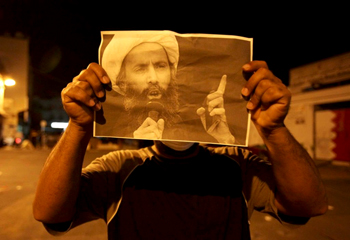
terroristThe killing of Sheikh Nimr al-Nimr may spark new unrest among Saudi Arabia's Shiite minority, largely concentrated in the kingdom's east, and in Bahrain, which has seen low-level violence since 2011 protests by its Shiite majority demanding greater rights from its Sunni monarchy.

The cleric's name was on a list of the 47 carried by the state-run Saudi Press Agency. It cited the Interior Ministry for the information. Saudi state television also reported the executions.

Of those executed, Saudi Arabia said 45 were Saudi citizens, one was from Chad and another was from Egypt.

Saudi Arabia said a royal court order was issued to implement the sentences after all appeals had been exhausted. The executions were carried out today in the capital, Riyadh, and 12 other cities and towns, it said.

Al-Nimr had been a vocal critic of Bahrain's Sunni-led monarchy, which harshly suppressed the 2011 Shiite-led protests. Saudi Arabia sent troops to help Bahrain quash the uprising, fearing it would spread.

Amnesty International has called the verdict against the cleric, who was in his mid-50s, part of a campaign by Saudi authorities to "crush all dissent."

Before his arrest in 2012, al-Nimr had said the people do not want rulers who kill and carry out injustices against protesters. He was asked at his trial if he disapproves of the Al Saud ruling family.

"If injustice stops against Shiites in the east, then (at that point) I can have a different opinion," the cleric responded, according to his brother Mohammed, who attended court sessions and spoke to The Associated Press before the verdict.

Al-Nimr did not deny the political charges against him, but said he never carried weapons or called for violence.

In announcing the verdicts, Saudi state television showed mugshots of all those executed. Al-Nimr was No. 46, expressionless with a gray beard, his head covered with the red-and-white scarf traditionally worn by Saudi men.

After listing the names and images of those executed, Saudi state television showed black-and-white footage of previous terror attacks in the kingdom, one showing bodies in a mosque after an attack. Soft, traditional music played in the background.

Saudi Arabia carried out at least 157 executions in 2015, with beheadings reaching their highest level in the kingdom in two decades, according to several advocacy groups that monitor the death penalty worldwide.

Coinciding with the rise in executions is the number of people executed for non-lethal offenses that judges have wide discretion to rule on, particularly drug-related crimes.

Comments

CID
 - 
Monday, 4 Jan 2016

Killing of Shaik Al-Nimr is the Biggest mistake by Saudi. This will change whole political scenario of the Gulf.

Arvind
 - 
Monday, 4 Jan 2016

Another demonstration of the religion of Peace as practised by the people who invented it. Looked like pretty soon the KSA will be engulfed in terrorism. And innocent bystanders will be needlessly killed.

hamees
 - 
Monday, 4 Jan 2016

this incident was happened in 2011 it took 5 years to take final decision . if it is in India it would take more than 10 years, and one thing you have to remember is terrorist doesnt have a religion...

Rumi ahmed
 - 
Saturday, 2 Jan 2016

We should be thankful that we are in India and have a democratic set up,unlike most of the middle east kingdoms where at the behest of the ruling family any body can be executed fearing rebellion.

Add new comment

  • Coastaldigest.com reserves the right to delete or block any comments.
  • Coastaldigset.com is not responsible for its readers’ comments.
  • Comments that are abusive, incendiary or irrelevant are strictly prohibited.
  • Please use a genuine email ID and provide your name to avoid reject.
News Network
March 13,2020

Bengaluru, Mar 13: District administration in Kalaburagi, where the first death in India due to COVID-19 was reported, has identified over 25 people, who come close to the deceased and quarantined for observation, Minister for Health B Sreeramulu said on Friday.

In reply to a debate on the issue during Zero Hour of the Legislative Assembly, the Health Minister said that two members of the victim’s family and 23 others are suspected of COVID-19.

Mr. Sreeramulu said all the schools of the district have been as a preventive measure to contain the deadly virus.

Comments

Add new comment

  • Coastaldigest.com reserves the right to delete or block any comments.
  • Coastaldigset.com is not responsible for its readers’ comments.
  • Comments that are abusive, incendiary or irrelevant are strictly prohibited.
  • Please use a genuine email ID and provide your name to avoid reject.
coastaldigest.com news network
May 22,2020

It has been 33 years since the night of 22 May, 1987 when nearly 50 Muslim men from Hashimpura, a settlement in Meerut were rounded up and packed into the rear of a truck of the Provincial Armed Constabulary (PAC), an armed police of Uttar Pradesh. It was the blessed month of Ramadan and all the Muslims were fasting.

That night 42 of those on board the truck were killed in two massacres in neighbouring Ghaziabad district. One along the Upper Ganga canal near Muradnagar, the other along the Hindon canal in Makanpur, on the border with Delhi.

The cops had returned home after dumping the dead bodies into the canal. A few days later, the dead bodies were found floating in the canal and a case of murder was registered. 

Vir Bahadur Singh was the chief minister of Uttar Pradesh and Rajiv Gandhi was the prime minister of India when this incident took place. 

Not much has changed for the survivors and the relatives of the victims even today. The wounds are still fresh. Hashimpura remains devoid of basic municipal amenities, the erring silence on the narrow lanes of the locality amid the activities of a daily life speaks of the horror of the fateful day in 1987.

The massacre was the result of one among the many outcomes of the decision taken by the Rajiv Gandhi government to open the locks of Babri Masjid. After a month of rioting, the situation was tense in various parts of Meerut, and a lot spilled over in the nearby areas.

Timeline

May 22, 1987

Nearly 50 Muslims picked up by the PAC personnel from Hashimpura village in Meerut, Uttar Pradesh.
Victims later shot and bodies thrown into a canal. 42 persons declared dead.

1988

UP government orders CB-CID probe in the case.

February 1994

CB-CID submits inquiry report indicting over 60 PAC and police personnel of all ranks.

May 20, 1996

Charge sheet filed against 19 accused before Chief Judicial Magistrate, Ghaziabad by CB-CID of Uttar Pradesh police. 161 people listed as witnesses.

September 2002

Case transferred to Delhi by the Supreme Court on a petition by the families of victims and survivors.

July 2006

Delhi court frames charges of murder, attempt to murder, tampering with evidence and conspiracy under the IPC against 17 accused.

March 8, 2013

Trial court dismisses Subramanian Swamy's plea seeking probe into the alleged role of P Chidambaram, then Minister of State for Home, in the matter.

January 22, 2015

Trial court reserves judgement.

March 21, 2015

Court acquits 16 surviving accused giving them benefit of doubt regarding their identity.

May 18, 2015

Trial court decision challenged in the Delhi HC by the victims' families and eyewitnesses who survived the incident.

May 29, 2015

HC issues notice to the 16 PAC personnel on Uttar Pradesh government's appeal against the trial court verdict.

December 2015

National Human Rights Commission is impleaded in the matter. NHRC also seeks further probe into the massacre.

February 17, 2016

HC tags Swamy's appeal with the other petitions in the matter.

September 6, 2018

Delhi HC reserves verdict in the case.

October 31, 2018

Delhi HC convicts 16 former PAC personnel for life after finding them guilty of the murder of 42 people.

Comments

Add new comment

  • Coastaldigest.com reserves the right to delete or block any comments.
  • Coastaldigset.com is not responsible for its readers’ comments.
  • Comments that are abusive, incendiary or irrelevant are strictly prohibited.
  • Please use a genuine email ID and provide your name to avoid reject.
News Network
July 22,2020

New Delhi, Jul 22: Sir Philip Barton visited Bengaluru on Tuesday in the first of the series of virtual regional visits as the UK's new High Commissioner and called Chief Minister BS Yeddyurappa, business leaders, and startup community to pitch for new momentum in the already strong UK-Karnataka relationship.

During his virtual call, High Commissioner Barton got a 'real' taste of Bengaluru through a traditional Masala Dosa delivered to his residence in Delhi along with authentic south Indian filter coffee, which he relished over a chat with historian and commentator Ramachandra Guha. They discussed the unique UK-India "living bridge" across culture and cuisine, history and heritage, and sports and science.

Both Yeddyurappa and the British envoy restated their commitment to working together on the immediate challenges of Covid-19 and beyond.

Barton subsequently 'traveled' to Electronics City, where he met with a range of key business leaders to discuss deepening the UK-India tech partnership and opportunities for global investors in the UK.

Barton also met with a group of entrepreneurs, business founders and innovators, who were part of the first GoGlobal UK cohort to explore the dynamic UK market considered one of the best ecosystems for startups in the world. 

They had earlier attended a week-long boot-camp in London and Manchester in December 2019 that helped them bolster their business skills, build links with UK's thriving digital sector, and paved the way for future partnerships.

"I am delighted to make my first regional virtual visit to Bengaluru, the technology hub of India. My visit comes at a difficult time for everyone. So it is also a time when the excellent collaboration between the UK and Karnataka across technology and healthcare could not be important," Barton said.

"Making the most of those close links, and drawing on the great energy, innovation and entrepreneurship that Karnataka is famous for, will be central to ensuring we all recover from Covid-19 stronger than ever," he added.

Comments

Add new comment

  • Coastaldigest.com reserves the right to delete or block any comments.
  • Coastaldigset.com is not responsible for its readers’ comments.
  • Comments that are abusive, incendiary or irrelevant are strictly prohibited.
  • Please use a genuine email ID and provide your name to avoid reject.