


Saudi Arabia executes 47 terror convicts, including Shiite cleric

January 2, 2016

Riyadh, Jan 2: Saudi Arabia executed 47 prisoners convicted of terrorism charges today, including a Shiite cleric who was a central figure in 2011 Arab Spring-inspired protests in the kingdom.
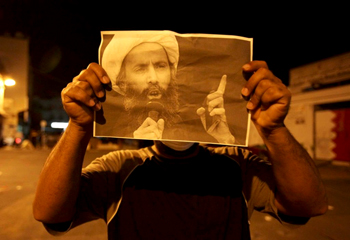
terroristThe killing of Sheikh Nimr al-Nimr may spark new unrest among Saudi Arabia's Shiite minority, largely concentrated in the kingdom's east, and in Bahrain, which has seen low-level violence since 2011 protests by its Shiite majority demanding greater rights from its Sunni monarchy.

The cleric's name was on a list of the 47 carried by the state-run Saudi Press Agency. It cited the Interior Ministry for the information. Saudi state television also reported the executions.

Of those executed, Saudi Arabia said 45 were Saudi citizens, one was from Chad and another was from Egypt.

Saudi Arabia said a royal court order was issued to implement the sentences after all appeals had been exhausted. The executions were carried out today in the capital, Riyadh, and 12 other cities and towns, it said.

Al-Nimr had been a vocal critic of Bahrain's Sunni-led monarchy, which harshly suppressed the 2011 Shiite-led protests. Saudi Arabia sent troops to help Bahrain quash the uprising, fearing it would spread.

Amnesty International has called the verdict against the cleric, who was in his mid-50s, part of a campaign by Saudi authorities to "crush all dissent."

Before his arrest in 2012, al-Nimr had said the people do not want rulers who kill and carry out injustices against protesters. He was asked at his trial if he disapproves of the Al Saud ruling family.

"If injustice stops against Shiites in the east, then (at that point) I can have a different opinion," the cleric responded, according to his brother Mohammed, who attended court sessions and spoke to The Associated Press before the verdict.

Al-Nimr did not deny the political charges against him, but said he never carried weapons or called for violence.

In announcing the verdicts, Saudi state television showed mugshots of all those executed. Al-Nimr was No. 46, expressionless with a gray beard, his head covered with the red-and-white scarf traditionally worn by Saudi men.

After listing the names and images of those executed, Saudi state television showed black-and-white footage of previous terror attacks in the kingdom, one showing bodies in a mosque after an attack. Soft, traditional music played in the background.

Saudi Arabia carried out at least 157 executions in 2015, with beheadings reaching their highest level in the kingdom in two decades, according to several advocacy groups that monitor the death penalty worldwide.

Coinciding with the rise in executions is the number of people executed for non-lethal offenses that judges have wide discretion to rule on, particularly drug-related crimes.


Comments

CID
 - 
Monday, 4 Jan 2016

Killing of Shaik Al-Nimr is the Biggest mistake by Saudi. This will change whole political scenario of the Gulf.

Arvind
 - 
Monday, 4 Jan 2016

Another demonstration of the religion of Peace as practised by the people who invented it. Looked like pretty soon the KSA will be engulfed in terrorism. And innocent bystanders will be needlessly killed.

hamees
 - 
Monday, 4 Jan 2016

this incident was happened in 2011 it took 5 years to take final decision . if it is in India it would take more than 10 years, and one thing you have to remember is terrorist doesnt have a religion...

Rumi ahmed
 - 
Saturday, 2 Jan 2016

We should be thankful that we are in India and have a democratic set up,unlike most of the middle east kingdoms where at the behest of the ruling family any body can be executed fearing rebellion.

Add new comment

  • Coastaldigest.com reserves the right to delete or block any comments.
  • Coastaldigset.com is not responsible for its readers’ comments.
  • Comments that are abusive, incendiary or irrelevant are strictly prohibited.
  • Please use a genuine email ID and provide your name to avoid reject.
News Network
June 18,2020

Mysuru, Jun 18: The Karnataka government's proposal announced on Thursday to hold online classes for students amid concerns over COVID-19 has not gone down well with thousands of tribal students residing in villages across the state.

A team from Karnataka State Commission for Protection of Child Rights (KSCPCR) visited a few tribal hamlets in Mysuru and Kodagu recently and found that the students, unlike their urban counterparts, lack accessibility to not just smartphones and computers, but basic necessities like power supply.

''When such is the situation in the tribal hamlets, how can you expect students to catch up on their studies if classes are held online?'' wondered M L Parashurama Member, KSCPCR, who toured villages like Thithimathi, Beematagere, Devamachchi and Gaddadi in Kodagu's Virajpet taluk, besides Bavali, Balyadi, Machchuru, and Anemone in Mysuru's HD Kote taluk along with Chairperson Antony Sebastian.

Comments

Add new comment

  • Coastaldigest.com reserves the right to delete or block any comments.
  • Coastaldigset.com is not responsible for its readers’ comments.
  • Comments that are abusive, incendiary or irrelevant are strictly prohibited.
  • Please use a genuine email ID and provide your name to avoid reject.
coastaldigest.com news network
August 4,2020

Mangaluru, Aug 4: The Kasaragod district administration has decided to restore the e-pass system for daily commuters between Kasaragod and Mangaluru amid covid-19 crisis. 

As covid-19 cases began to increase in Dakshina Kannada, the Kasargod district administration had unilaterally newly introduced of daily pass system on July 6 for entry and exit from Talapady border. This had inconvenienced hundreds of employees, who visited Mangaluru daily to eke a living. 

The decision to resume the pass system was taken in a video conference of Kerala Revenue Minister Chandrasekharan with officials and elected representatives on August 3.

The minister said the Kasaragod district administration will resume issuing of passes for daily commuters between Kasaragod and Mangaluru. But they should undergo rapid antigen test for every week to renew their passes.

"Similarly, one-time interstate passes will be issued for those who want to take part in marriages, funeral and other functions in both states. Even they should undergo antigen test after returning from the functions,” the minister added.

As per the previous order, daily commuters, especially employees, had to stay in Mangaluru for 28 days before returning to Kasargod. Later, Kerala government relaxed rules on July 23 allowing only bank employees from Kasaragod to travel daily in their private vehicles to their workplace in Dakshina Kannada.

Comments

Add new comment

  • Coastaldigest.com reserves the right to delete or block any comments.
  • Coastaldigset.com is not responsible for its readers’ comments.
  • Comments that are abusive, incendiary or irrelevant are strictly prohibited.
  • Please use a genuine email ID and provide your name to avoid reject.
News Network
June 22,2020

Bengaluru, Jun 22: The Central Crime Branch (CCB) of Bengaluru Police has obtained the custody of an associate of gangster Ravi Pujari and is questioning him about his role in several cases against the gangster, the police said on Monday.

According to the police, Khan is convicted in the case related to the murder of a builder named Subba Rao in the year 2017. The accused has been identified as Yousuf Bacha Khan.

"Continuing the investigation of Ravi Poojary, CCB had obtained custody of Yousuf Bacha Khan, who is associate of Pujari. Khan was convicted in the Subba Rao murder case. He is being questioned about his role in other cases," Joint Commissioner of Police (Crime) Sandeep Patil said.

The CCB had recently filed two charge sheets against gangster Ravi Pujari in Shabnam developers double murder case and an extortion case.

Pujari, who was wanted in several cases including ones related to heinous crimes like murder and extortion, was extradited to Bengaluru earlier this year from Senegal.

The gangster, who parted ways with underworld don Chhota Rajan, had jumped bail after he was arrested in Senegal in 2019 and had escaped to South Africa, where he was involved in drug trafficking and extortion.

According to sources in the Indian intelligence, Ravi Pujari was hiding under the false identity of Anthony Fernandes, a Burkina Faso passport holder, in a remote village in South Africa.

Comments

Add new comment

  • Coastaldigest.com reserves the right to delete or block any comments.
  • Coastaldigset.com is not responsible for its readers’ comments.
  • Comments that are abusive, incendiary or irrelevant are strictly prohibited.
  • Please use a genuine email ID and provide your name to avoid reject.