


Saudi Arabia executes 47 terror convicts, including Shiite cleric

January 2, 2016

Riyadh, Jan 2: Saudi Arabia executed 47 prisoners convicted of terrorism charges today, including a Shiite cleric who was a central figure in 2011 Arab Spring-inspired protests in the kingdom.
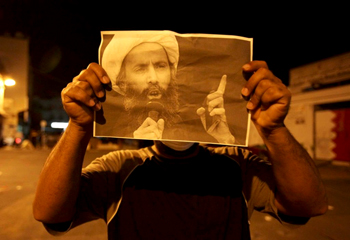
terroristThe killing of Sheikh Nimr al-Nimr may spark new unrest among Saudi Arabia's Shiite minority, largely concentrated in the kingdom's east, and in Bahrain, which has seen low-level violence since 2011 protests by its Shiite majority demanding greater rights from its Sunni monarchy.

The cleric's name was on a list of the 47 carried by the state-run Saudi Press Agency. It cited the Interior Ministry for the information. Saudi state television also reported the executions.

Of those executed, Saudi Arabia said 45 were Saudi citizens, one was from Chad and another was from Egypt.

Saudi Arabia said a royal court order was issued to implement the sentences after all appeals had been exhausted. The executions were carried out today in the capital, Riyadh, and 12 other cities and towns, it said.

Al-Nimr had been a vocal critic of Bahrain's Sunni-led monarchy, which harshly suppressed the 2011 Shiite-led protests. Saudi Arabia sent troops to help Bahrain quash the uprising, fearing it would spread.

Amnesty International has called the verdict against the cleric, who was in his mid-50s, part of a campaign by Saudi authorities to "crush all dissent."

Before his arrest in 2012, al-Nimr had said the people do not want rulers who kill and carry out injustices against protesters. He was asked at his trial if he disapproves of the Al Saud ruling family.

"If injustice stops against Shiites in the east, then (at that point) I can have a different opinion," the cleric responded, according to his brother Mohammed, who attended court sessions and spoke to The Associated Press before the verdict.

Al-Nimr did not deny the political charges against him, but said he never carried weapons or called for violence.

In announcing the verdicts, Saudi state television showed mugshots of all those executed. Al-Nimr was No. 46, expressionless with a gray beard, his head covered with the red-and-white scarf traditionally worn by Saudi men.

After listing the names and images of those executed, Saudi state television showed black-and-white footage of previous terror attacks in the kingdom, one showing bodies in a mosque after an attack. Soft, traditional music played in the background.

Saudi Arabia carried out at least 157 executions in 2015, with beheadings reaching their highest level in the kingdom in two decades, according to several advocacy groups that monitor the death penalty worldwide.

Coinciding with the rise in executions is the number of people executed for non-lethal offenses that judges have wide discretion to rule on, particularly drug-related crimes.

Comments

CID
 - 
Monday, 4 Jan 2016

Killing of Shaik Al-Nimr is the Biggest mistake by Saudi. This will change whole political scenario of the Gulf.

Arvind
 - 
Monday, 4 Jan 2016

Another demonstration of the religion of Peace as practised by the people who invented it. Looked like pretty soon the KSA will be engulfed in terrorism. And innocent bystanders will be needlessly killed.

hamees
 - 
Monday, 4 Jan 2016

this incident was happened in 2011 it took 5 years to take final decision . if it is in India it would take more than 10 years, and one thing you have to remember is terrorist doesnt have a religion...

Rumi ahmed
 - 
Saturday, 2 Jan 2016

We should be thankful that we are in India and have a democratic set up,unlike most of the middle east kingdoms where at the behest of the ruling family any body can be executed fearing rebellion.

Add new comment

  • Coastaldigest.com reserves the right to delete or block any comments.
  • Coastaldigset.com is not responsible for its readers’ comments.
  • Comments that are abusive, incendiary or irrelevant are strictly prohibited.
  • Please use a genuine email ID and provide your name to avoid reject.
News Network
May 3,2020

Bengaluru, May 3: The Commissioner of Health and Family Welfare Services in the government of Karnataka KA Dayanand issued an order approving quarantine of asymptomatic COVID-19 infected international passengers on payment basis at star hotels.

The international passengers in the state have been categorised into A, B and C groups depending on their symptoms and co-morbid conditions. Category A passengers are symptomatic and are being sent to isolation hospitals which may be COVID care centres.

Category B and C passengers are asymptomatic and are being sent to institutional facilities like hostels, guest houses, hotels, etc.

"On the basis of demands by category B and C passengers to provide them star hotel accommodation on a self-payment basis, they have been granted the choice of staying in those hotels at their own cost. The BBMP Special Commissioner/Deputy Commissioner can have a meeting with such hotels and finalise the negotiated rate," Commissioner Dayanand said in the order.

"The hotels for category B passengers should have round the clock presence of health personnel while hotels for category C passengers should be visited by health staff once a day," he added.

Comments

Add new comment

  • Coastaldigest.com reserves the right to delete or block any comments.
  • Coastaldigset.com is not responsible for its readers’ comments.
  • Comments that are abusive, incendiary or irrelevant are strictly prohibited.
  • Please use a genuine email ID and provide your name to avoid reject.
News Network
August 9,2020

Shivamogga, Aug 9: Minister of State for Railways Suresh Angadi on Saturday virtually inaugurated Malgudi Museum at Arasalu in Karantaka's Shivamogga.

The old station building at Arasalu has been converted into museum.
BJP MP from Shivamogga BY Raghavendra said that the old station building at Arasalu has been renovated keeping with 'Malgudi' theme in mind.

"It is a tribute to the makers of the popular television serial 'Malgudi Days' as the station features predominantly in the episodes which broadcast on Doordarshan in the 1980s," he said.

The museum has been designed by a famous artist John Devraj, who was the part of the serial Malgudi Days. The Mysore Divisional Railway funded the museum.

"The approach road and station area wear a new transformed look. The innovative idea of having a tea-shop in a narrow gauge coach at Arasalu station adds charm to the green surroundings," the MP said.

"Popular and internationally acclaimed serial Malgudi Days was shot here in Arasalu. The SWR Mysore division manager Aparna Garg helped to transform the station to fictional village Malgudi," he added.

The museum is about 30 km from Shivamogga city. It has steam engines and bogies besides collections of photographs hanging on the wall taken during the time of shooting for Malgudi Days.

Comments

Add new comment

  • Coastaldigest.com reserves the right to delete or block any comments.
  • Coastaldigset.com is not responsible for its readers’ comments.
  • Comments that are abusive, incendiary or irrelevant are strictly prohibited.
  • Please use a genuine email ID and provide your name to avoid reject.
News Network
February 28,2020

Suhaana shuddered with fear as she heard violent banging on her door on Sunday. The atmosphere was charged with communal tension after thousands of ruthless goons supporting contentious Citizens Amendment Act (CAA) launched a bloody onslaught against Muslims in the capital of India.

The family consists of Suhaana (name changed), her partially paralysed husband and two daughters. They are the only Muslim family in Madhuban mohalla of North Ghonda locality in north-east Delhi.

Hearts pounded louder than pounding of the door. Then the banging stopped and noises of men talking loudly came.

"I peeped out from a small window near the kitchen and saw our neighbours standing outside our entrance and arguing with 10-15 unknown people," Suhaana said.

It was the first day of the communal violence, worst in the decades, that fanned out to the entire north-east Delhi over the next three days and claimed at least 42 lives, left over 200 injured and properties worth crores destroyed. The death toll is feared to go up.

Later in the night Suhaana's family moved to one of their Hindu neighbour's house. There are about 30 Hindu households in the mohalla who kept vigil as the atmosphere deteriorated.

The next day, the violence escalated. The neighbours decided to shift Suhaana 's family to Gautampuri for their safety.

Suhaana recounted, "Our neighbours assured us that they are with us but as things were deteriorating, they said they wouldn't be able to protect us if a big mob of hundreds came. They advised us to move to the nearby Gautampuri locality and come back only after things become normal."

Rajkumar Bharadwaj brought the family to Gautampuri in the early hours on February 25.

Anil Gupta, 49, said, "It was tough to rescue them. We were asked by the rioters as to why we were saving the Muslims. But we had to, it is the people of my country who are suffering. It cannot be Hindus or Muslims."

Rajkumar Bharadwaj said, "Their youngest clung to me throughout. After I brought them here at Gautampuri, I felt good. Situation till then was not okay."

On Saturday, some semblance of normalcy returned to parts of north-east Delhi with some people opening their shops amid heavy police presence.

Meanwhile, the morbid sight outside GTB Hospital's mortuary, agonising groans in the hospital wards burnt down houses and shops remind Suhaana and others what they have been spared of.

Comments

Add new comment

  • Coastaldigest.com reserves the right to delete or block any comments.
  • Coastaldigset.com is not responsible for its readers’ comments.
  • Comments that are abusive, incendiary or irrelevant are strictly prohibited.
  • Please use a genuine email ID and provide your name to avoid reject.