


Saudi Arabia executes 47 terror convicts, including Shiite cleric

January 2, 2016

Riyadh, Jan 2: Saudi Arabia executed 47 prisoners convicted of terrorism charges today, including a Shiite cleric who was a central figure in 2011 Arab Spring-inspired protests in the kingdom.
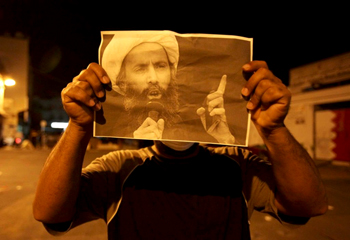
terroristThe killing of Sheikh Nimr al-Nimr may spark new unrest among Saudi Arabia's Shiite minority, largely concentrated in the kingdom's east, and in Bahrain, which has seen low-level violence since 2011 protests by its Shiite majority demanding greater rights from its Sunni monarchy.

The cleric's name was on a list of the 47 carried by the state-run Saudi Press Agency. It cited the Interior Ministry for the information. Saudi state television also reported the executions.

Of those executed, Saudi Arabia said 45 were Saudi citizens, one was from Chad and another was from Egypt.

Saudi Arabia said a royal court order was issued to implement the sentences after all appeals had been exhausted. The executions were carried out today in the capital, Riyadh, and 12 other cities and towns, it said.

Al-Nimr had been a vocal critic of Bahrain's Sunni-led monarchy, which harshly suppressed the 2011 Shiite-led protests. Saudi Arabia sent troops to help Bahrain quash the uprising, fearing it would spread.

Amnesty International has called the verdict against the cleric, who was in his mid-50s, part of a campaign by Saudi authorities to "crush all dissent."

Before his arrest in 2012, al-Nimr had said the people do not want rulers who kill and carry out injustices against protesters. He was asked at his trial if he disapproves of the Al Saud ruling family.

"If injustice stops against Shiites in the east, then (at that point) I can have a different opinion," the cleric responded, according to his brother Mohammed, who attended court sessions and spoke to The Associated Press before the verdict.

Al-Nimr did not deny the political charges against him, but said he never carried weapons or called for violence.

In announcing the verdicts, Saudi state television showed mugshots of all those executed. Al-Nimr was No. 46, expressionless with a gray beard, his head covered with the red-and-white scarf traditionally worn by Saudi men.

After listing the names and images of those executed, Saudi state television showed black-and-white footage of previous terror attacks in the kingdom, one showing bodies in a mosque after an attack. Soft, traditional music played in the background.

Saudi Arabia carried out at least 157 executions in 2015, with beheadings reaching their highest level in the kingdom in two decades, according to several advocacy groups that monitor the death penalty worldwide.

Coinciding with the rise in executions is the number of people executed for non-lethal offenses that judges have wide discretion to rule on, particularly drug-related crimes.

Comments

CID
 - 
Monday, 4 Jan 2016

Killing of Shaik Al-Nimr is the Biggest mistake by Saudi. This will change whole political scenario of the Gulf.

Arvind
 - 
Monday, 4 Jan 2016

Another demonstration of the religion of Peace as practised by the people who invented it. Looked like pretty soon the KSA will be engulfed in terrorism. And innocent bystanders will be needlessly killed.

hamees
 - 
Monday, 4 Jan 2016

this incident was happened in 2011 it took 5 years to take final decision . if it is in India it would take more than 10 years, and one thing you have to remember is terrorist doesnt have a religion...

Rumi ahmed
 - 
Saturday, 2 Jan 2016

We should be thankful that we are in India and have a democratic set up,unlike most of the middle east kingdoms where at the behest of the ruling family any body can be executed fearing rebellion.

Add new comment

  • Coastaldigest.com reserves the right to delete or block any comments.
  • Coastaldigset.com is not responsible for its readers’ comments.
  • Comments that are abusive, incendiary or irrelevant are strictly prohibited.
  • Please use a genuine email ID and provide your name to avoid reject.
News Network
February 21,2020

Bengaluru, Feb 21: A young woman in Bengaluru was detained today for holding a placard saying ''Free Kashmir'' at a demonstration in the city to protest against the arrest of college student Amulya Leona who had raised pro-Pakistan slogans at an anti-CAA rally a day ago.

The arrested has been identified as Ardra Narayan, a 20-year-old student of an engineering college at Malleshwaram in the city's western suburb.

"Ardra Narayan is being questioned at the Silver Jubilee Park police station after she was whisked away from the spot and detained for holding the placard with ''Free Kashmir'' written on it," Bengaluru Police Commissioner Bhaskar Rao said.

On a complaint by Sri Ram Sena activists, who were protesting against Amulya at the venue, the police booked a suo moto case against Ardra under sections 153A and 153B of the IPC (Indian Penal Code) for disturbing peace and harmony.

The placard also displayed ''Give Us Liberation'' and ''Freedom from India'', a Sri Ram Sena activist alleged.

The development comes a day after Amulya, 19, was arrested under section 124A of the IPC for sedition and jailed for 14 days for allegedly shouting "Pakistan Zindabad" at the anti-Citizenship Amendment Act (CAA) rally at Freedom Park in the city centre on Thursday.

"We are trying to ascertain if there is any connection between Amuly and Ardra though she was alone at the spot holding the placard," Assistant Commissioner of Police (ACP) R. Chandrashekar told news agency.

Comments

Add new comment

  • Coastaldigest.com reserves the right to delete or block any comments.
  • Coastaldigset.com is not responsible for its readers’ comments.
  • Comments that are abusive, incendiary or irrelevant are strictly prohibited.
  • Please use a genuine email ID and provide your name to avoid reject.
News Network
April 8,2020

Bengaluru, Apr 8: A 65-year-old man from Kalaburagi district became the fifth COVID-19 fatality in Karnataka, where six new positive cases were confirmed, pushing the tally in the state to 181, the health department said on Wednesday.

The man with Severe Acute Respiratory Infection (SARI), died at a designated hospital in Kalaburagi on Tuesday, a day after being shifted from a private hospital where he was initially treated for two days.

"On April 4, he had got admitted to a private hospital, on April 6 he was shifted to ESI hospital, where he passed away," Primary and Secondary Education Minister Suresh Kumar told reporters here.

The private hospital had been locked and its entire medical team quarantined, he said, adding a notice had been served on it for act of "criminal negligence" (by not referring the patient to designated hospital) and will be followed with a police case.

"He was suffering from SARI, on collecting his sample, tests have revealed that he was positive....investigation is on to find how he got infected," the Minister said.

Noting that the hospital in this case did not refer the patient to the designated hospital and kept treating him for two days, he appealed to all private healthcare facilities to inform authorities if anyone showed any indications for COVID-19.

"As of 5 PM on April 8, cumulatively 181 COVID-19 positive cases have been confirmed in the state, it includes 5 deaths and 28 discharges," the health department said in a bulletin.

Out of the positive cases, 71 are those who had come back from foreign countries, while remaining 110 are contacts and those who had gone to Delhi, the Minister said.

Kumar also said an expert committee comprising Narayana Health founder-chairman Dr Devi Prasad Shetty and Jayadeva Institute of Cardiovascular Sciences director Dr C N Manjunath among others, constitutedto devise an exit strategy for the lockdown, has submitted its reports with various recommendations to Chief Minister B S Yediyurappa.

The chief minister and officials were examining it which was likely to come up before the cabinet meeting on Thursday after which the details will be shared, he added.

The health department said the six fresh cases reported on Wednesday included the elderly man from Kalaburagi who died.

Among the positive cases are a woman from Uttara Kannada with history of SARI and contact of a Dubai returnee, a 72- year-old woman from Kalaburagi, who is mother of a patient that tested positive for the disease; a man from Mandya with contact to two patients.

Others include a man from Chikkaballapura with travel history to Delhi and a woman from Bengaluru also with a travel history to the national capital.

Contact tracing is in progress for all the cases, the bulletin added.

The department said out of 148 active cases in the state, 146 COVID-19 positive patients (including 1 pregnant woman) are in isolation at designated hospitals are stable and two in ICU (one each on oxygen and ventilators).

It said out of total 181 cases in the state, six are transit passengers of Kerala.

Bengaluru accounted for the highest in the state with 63 cases, followed by Mysuru (35), Dakshina Kannada (12) Bidar (ten), Uttara Kannada and Kalaburagi (9 each), Chikkaballapur (8) Belagavi (7), Ballari (6), Bagalkote (5), Mandya (4) Davangere, Bengaluru Rural and Udupi (three each), and Kodagu, Tumakuru, Gadag and Dharwad one each.

Those discharged include 16 from Bengaluru, four from Dakshina Kannada, two each from Uttara Kannada, Kalaburagi and Davangere, and one from Bengaluru Rural; while among those dead are two from Kalaburgari and one each are reported from Bengaluru, Bagalkote and Tumakuru.

Comments

Add new comment

  • Coastaldigest.com reserves the right to delete or block any comments.
  • Coastaldigset.com is not responsible for its readers’ comments.
  • Comments that are abusive, incendiary or irrelevant are strictly prohibited.
  • Please use a genuine email ID and provide your name to avoid reject.
News Network
February 28,2020

Bengaluru, Feb 28: Historian S. Shettar, 85, breathed his last early on February 28 in Bengaluru. He was suffering from respiratory problems and was hospitalised for over a week.

Shettar was known for his multi-disciplinary work, encompassing linguistics, epigraphy, anthropology, the study of religions and art history. He had extensively worked on the Jain practice of ritual death in Karnataka and Asoka edicts. He had studied and compiled early edicts in Kannada and worked extensively on the growth of Kannada language down the ages.

Born in 1935 at Hampasagara, Ballari district, he went on to study at Cambridge University and started his career as a Professor of History at Karnatak University, Dharwad, his alma mater. He later headed the National Museum Institute of the History of Art, Conservation and Museology in 1978 and Indian Council for Historical Research in 1996. He was also a visiting professor at the National Institute of Advanced Studies, Bengaluru.

He was a bilingual historian who wrote in English for most of his career, but started writing in Kannada in later years. In the last two decades, he developed a keen interest in linguistics and wrote multiple books on classical Kannada and Prakrit. His 2007 book “Shangam Tamilagam” is considered a seminal work in the study of the early period of Dravidian languages. It won him Bhasha Samman from Central Sahitya Akademi. He later wrote two works on Halegannada, classical Kannada. His most recent work was “Prakrita Jagadvalaya” in 2018.

Comments

Add new comment

  • Coastaldigest.com reserves the right to delete or block any comments.
  • Coastaldigset.com is not responsible for its readers’ comments.
  • Comments that are abusive, incendiary or irrelevant are strictly prohibited.
  • Please use a genuine email ID and provide your name to avoid reject.