


Centre orders release of Bajrang Dal leader who beat up and paraded Muslim

January 7, 2016

Lucknow, Jan 7: Prime Minister Narendra Modi led government at the Centre has decided to revoke the National Security Act (NSA) against Bajrang Dal leader Vivek Premi, along with the help of his associates had paraded a Muslim man through a market in Shamli after blackening his face and brutally beating him.
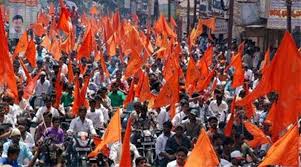
premiThe decision by the government paves the way for Premi’s release once he applies for bail in other cases lodged against him. He is lodged in jail since June, 2015.

The order revoking the NSA was conveyed by the Ministry of Home Affairs to the Uttar Pradesh Secretary (Home) on December 31 via radiogram. Copies of the order were sent to the Shamli district magistrate, Premi, and the superintendent of Muzaffarnagar District Jail, where he is lodged.

The district administration had invoked NSA against Premi, a Bajrang Dal district convener, alleging that his actions led to communal tension in the city. A video purportedly showing Premi beating up the man had gone viral on social media.

Premi and his associates had caught Mohammad Riyaz, 42, while he was carrying a calf on June 25 last year. They alleged Riyaz was taking the calf to slaughter.

Riyaz was later handed over to police and sent to jail by the court on charges of theft and under the Prevention of Cruelty to Animals Act. An FIR was lodged against Premi and five other Bajrang Dal activists, four days after Riyaz was sent to jail.

On June 30, Premi was arrested on charges of rioting, voluntarily causing hurt, intentional insult with intent to provoke breach of peace and promoting enmity between different groups on grounds of religion. The other accused were also arrested.

On July 10, the Shamli district administration invoked NSA against Premi, which was approved by the state government on July 16. The UP Advisory Board, which takes the final call on confirmation or removal of NSA, gave its approval on August 21.

Premi then sent a representation to the MHA, requesting that his detention under NSA be revoked. Premi’s father Manoj confirmed they had written to the Centre against the state government’s decision.

“Since NSA has been revoked, we are moving court to seek bail,” said Manoj. Shamli District Magistrate O P Verma said, “The MHA sent a radiogram revoking the NSA against Premi. I issued direction to jail authorities two days ago for his release.”

In its order, the MHA states: “After careful consideration of the representation, the Central government is pleased to revoke under section 14 (1) of the National Security Act, 1980. The detenu may be released forthwith from the jail unless he is required to be kept in jail for any other case. He may be tried in the cases registered under the normal law of the land and a watch may be kept on his activities.” The order, marked “urgent”, also said the Centre has to be informed about the follow-up action taken by the district administration.

Comments

Muhammed Rafique
 - 
Friday, 8 Jan 2016

Naren.....people like you think only of boos

And let me tell you, feku nationalist that we fear only the Almighty and if you get pleasure in making such faalthu comments you can do so....because you have to live the life to fullest in this temporary world

Fairman
 - 
Thursday, 7 Jan 2016

Good News,
Naren is still alive..............
Needs urgent good treatment (any where )

Mohammed Shami
 - 
Thursday, 7 Jan 2016

Naren, true believer gets puku puku only for God, keep in your mind!!

ayes p
 - 
Thursday, 7 Jan 2016

Shame on such people; what we can expect from such a communal government, it is common all communal murders and criminals are getting clean chit either from government or from the head of law dept and releasing them to roam freely and indulge in criminal and instigate more communal riots.

Rikaz
 - 
Thursday, 7 Jan 2016

Naren, exactly it boos but it does not boosts....

peace lover
 - 
Thursday, 7 Jan 2016

Welcome back Naren Kotian... its been long time .... really we miss your funny jokes .... please be here in CD....

Naren Kotian
 - 
Thursday, 7 Jan 2016

Well done. Jai Bajrang Dal. This boos confidence among nationalists and creates puku puku in the hearts of anti nationals.

Rikaz
 - 
Thursday, 7 Jan 2016

BJP itself is a criminal party...releasing criminals is their party policy...does not make any difference.....

Add new comment

  • Coastaldigest.com reserves the right to delete or block any comments.
  • Coastaldigset.com is not responsible for its readers’ comments.
  • Comments that are abusive, incendiary or irrelevant are strictly prohibited.
  • Please use a genuine email ID and provide your name to avoid reject.
News Network
July 17,2020

Bengaluru, July 17: An infant with heart-related complications died after 10 private hospitals in the city allegedly refused to admit him over coronavirus fears.

In search of a hospital to treat his one-month-old child, the helpless father drove around for 200km in the city. The child breathes its last after suffering for 36 hours.

The infant’s health worsened around 11am on Sunday. “A doctor from a nearby clinic visited our house and said the baby had heart-related issues. As advised, we decided to shift the child to a private hospital,” the father said. The family lives in Basaveshwaranagar.

The parents went to several private hospitals, but in vain. “We visited hospitals in Bavaveshwaranagar, Chord Road, Sheshadripuram, Goraguntepalya and Yeshwanthpur. None of them agreed to treat our baby, and we returned home at night,” the father said. 

“On Monday morning, we started the journey again. This time, we went to a hospital near Jayadeva flyover. We were driving near Marathahalli when our child stopped breathing. We rushed to a nearby private hospital, where doctors declared him brought dead,” he said.

Comments

Add new comment

  • Coastaldigest.com reserves the right to delete or block any comments.
  • Coastaldigset.com is not responsible for its readers’ comments.
  • Comments that are abusive, incendiary or irrelevant are strictly prohibited.
  • Please use a genuine email ID and provide your name to avoid reject.
News Network
February 5,2020

Tightening control over companies misleading advertisements of medicines and products, the Indian government could soon slap a fine of up to Rs10 lakh and up to two years' imprisonment. While repeat offender could be fined up to Rs50 and imprisonment up to five years.

The Ministry of Health and Family Welfare's new draft of the Drugs and Magic Remedies (Objectionable Advertisements) (Amendment) Bill, 2020, provides extremely stringent penalties compared to the current law.

Under the new Act, companies advertising medicines and products falsely claiming to make a person fairer, improve height and memory or cure issues like hair loss or greying and premature ageing, among several others, may attract more stringent fines and jail time.

The current Act, 1954, leaves scope for companies to create deceptive advertisements as first time offender can be jailed for six months while repeat offender can be up to one year in prison, reported The Indian Express.

Under the Bill, deceptive advertisements will cover digital advertising, notice, circular, label, wrapper, invoice, banner and poster, among others. The government also plans to expand the scope of the law under the proposed amendments to cover 24 more deceptive claims not included in the current law, like medicines that can cure AIDS, change the sex of a foetus, among others, reported Livemint.

Comments

Add new comment

  • Coastaldigest.com reserves the right to delete or block any comments.
  • Coastaldigset.com is not responsible for its readers’ comments.
  • Comments that are abusive, incendiary or irrelevant are strictly prohibited.
  • Please use a genuine email ID and provide your name to avoid reject.
Agencies
May 8,2020

Washington D.C., May 8: The prime time for brain development in a child's life is the first year, where the infant spends most of the time asleep. It is the time when neural connections form and sensory memories are encoded.

However, when sleep is disrupted, as occurs more often among children with autism, brain development may be affected, too.

New research led by the University of Washington finds that sleep problems in a baby's first 12 months may not only precede an autism diagnosis but also may be associated with altered growth trajectory in a key part of the brain, the hippocampus.

The study, which was published in the American Journal of Psychiatry, researchers report that in a sample of more than 400 taken of 6- to 12-month-old infants, those who were later diagnosed with autism were more likely to have had difficulty falling asleep.

It also states that this sleep difficulty was associated with altered growth trajectories in the hippocampus.

"The hippocampus is critical for learning and memory, and changes in the size of the hippocampus have been associated with poor sleep in adults and older children.

As many as 80 per cent of the children with autism spectrum disorder have sleep problems," said Annette Estes, director of the UW Autism Center and senior author of the study.

"In our clinical experience, parents have a lot of concerns about their children's sleep, and in our work on early autism intervention, we observed that sleep problems were holding children and families back," added Estes, who is also a UW professor of speech and hearing sciences.

"It could be that altered sleep is part-and-parcel of autism for some children. One clue is that behavioural interventions to improve sleep don't work for all children with autism, even when their parents are doing everything just right. This suggests that there may be a biological component to sleep problems for some children with autism," said Estes.

To consider links among sleep, brain development, and autism, researchers at the IBIS Network looked at MRI scans of 432 infants, surveyed parents about sleep patterns, and measured cognitive functioning using a standardized assessment.

At the outset of the study, infants were classified according to their risk for developing autism: Those who were at higher risk of developing autism -- about two-thirds of the study sample -- had an older sibling who had already been diagnosed.

Infant siblings of children with autism have a 20 per cent chance of developing autism spectrum disorder -- a much higher risk than children in the general population.

In the current study, 127 of the 432 infants were identified as "low risk" at the time the MRI scans were taken because they had no family history of autism.

They later evaluated all the participants at 24 months of age to determine whether they had developed autism. Of the roughly 300 children originally considered "high familial risk," 71 were diagnosed with autism spectrum disorder at that age.

Problems with sleep were more common among the infants later diagnosed with an autism spectrum disorder, as were larger hippocampi. No other subcortical brain structures were affected, including the amygdala, which is responsible for certain emotions and aspects of memory, or the thalamus, a signal transmitter from the spinal cord to the cerebral cortex.

The authors note that while parents reported more sleep difficulties among infants who developed autism compared to those who did not, the differences were very subtle and only observed when looking at group averages across hundreds of infants.

Sleep patterns in the first years of life change rapidly as infants transition from sleeping around the clock to a more adult-like sleep/wake cycle. Until further research is completed, Estes said, it is not possible to interpret challenges with sleep as an early sign of increased risk for autism.

Comments

Add new comment

  • Coastaldigest.com reserves the right to delete or block any comments.
  • Coastaldigset.com is not responsible for its readers’ comments.
  • Comments that are abusive, incendiary or irrelevant are strictly prohibited.
  • Please use a genuine email ID and provide your name to avoid reject.