



Rediscover Prophet; clear misconceptions about Islam

[email protected] (MAJID HYDERI for DailyO)
January 10, 2016

In the 7th century AD, when dental hygiene was in its infancy, this man, while returning home, would ensure brushing his teeth with meswak, lest bad breath irk his family, particularly the wife and children.
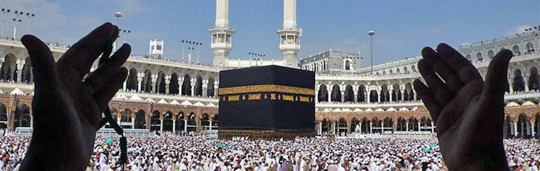
hajj

Despite having thousands of followers at his beck and call, he helped in household work.

And, in an era when women were cursed, he found heaven in the many avatars of mother, daughter and wife. This was Muhammad, the prophet of Islam, blessed with qualities an ideal family man should possess, to consolidate family, as the building block of a healthy society.

Now 1,400 years on, however, Islam is a misunderstood religion as Muslims and terrorists are often considered synonymous, making victims of hate keep the popular plea ready for defence: My name is Khan and I am not a terrorist!

Leave apart the globally-dreaded faces of terror like Abu Bakr Albaghdadi, who recently claimed to be global caliph, the image of a typical head of a Muslim family is often no less scary. These ugly faces of humanity are often attributed to Islam and its prophet.

Some accusations are downright chilling, blasphemous. A basic cause of unwanted Islamophobia is that the negatives of someone bearing a Muslim name get generalised for the entire community, without ascertaining the Prophet's preaching.

Islamic lifestyle is essentially driven by three entities, the first being Quran, which Muslims believe is the word of Allah. The other two are recorded prophetic sayings, the Hadith, and Muhammad's iconic lifestyle: Sunnah. The combination of these reflect Muhammad as the perfect man in all spheres of life, including family, which is central to Islamic society.

Also read: What Indian Muslims can learn from fatwa on AR Rahman

The ladies first: Muhammad lost his mother, Aaminah, at the age of five. His first encounter with a woman was his own wife, Khadijah. At the time of marriage, he was 25 and she a 40-year-old widow.

During her life, they lived in a society that welcomed multiple marriages for men. For 25 years, though, he did not opt for another marriage, a lesson for some of his followers who immediately after the first marriage start preparations for another.

After her death, however, Muhammad married nine women. Islamic beliefs give four main reasons for these multiple marriages: first, helping widows of his companions. Second, to create family ties between him and his illustrious companions (Muhammad married the daughters of Abu Bakr and Umar, whereas Uthman and Imam Ali married his daughters. He, therefore, had family bonds with all four of the first caliphs).

The third reason was to spread the message by uniting different clans or tribes through marriage. Another major reason was to increase credibility for his family values because confirmation from multiple sources is more credible.

From teaching how to eat, sleep or respond to nature's call, Muhammad shared with his followers the minutest details even pertaining to life in the bedroom, only to keep them guided.

As husband, his love for wife Aisha was romantic, more than many love stories that have been famous throughout history. Though most such stories are fables, Muhammad's love was real and human, not angelic.

As per recorded traditions, he once said to Aisha: "I know well when you are pleased or angry with me." Aisha replied: "How do you know that?" He said, "When you are pleased with me you swear by saying 'by the God of Muhammad' but when you are angry you swear by saying 'by the God of Ibrahim'.

She said: "You are right, I don't mention your name."

Hadith also reports that Muhammad used to search for the part that touched her lips from the utensil she used in drinking. Then, he would touch the same part with his lips when he would drink. To express love, he called her by different names, such as "Aish" and "Uaish". He would recline his head in her lap.

In a male-dominated society, where Muslim husbands often find household work demeaning, Aisha reported that Muhammad used to mend his shoes, sew his clothes and work at home.

With the exception of Aisha, he married only widows and divorced women, and he shared equal time and resources with all of them. Once, another wife, Safiyah, was on a journey with him. She was late, so he received her while she was crying. Muhammad wiped her tears with his own hands and tried his utmost to calm her down.

His affection for children was equally amazing. As soon as Fatimah, his daughter, entered the room, he would stand up, hold her hands, and make her sit where he was sitting. He would ask about her health and family, express his paternal love for her.

In a society that degraded women and rejected the birth of females to the extent that they would be buried alive, Muhammad made paradise the reward of every father who conducted himself well with his daughters and was patient in their upbringing.

As children, his grandsons, Imam Hussain and Imam Hassan, would often ride on his back. Muhammad's love was such that he would not lift his head from the ground till they would themselves not get down.

About parents, Muhammad said paradise lay beneath the mother's feet whereas in Allah's will is the father's will, and in Allah's anger is the father's anger. This again is in contrast to how Muslims often abandon aged parents, to be jihadi or "caliph" of a nuclear family, when the former need them the most.

Islam is not what Muslims do but what Muhammad wanted them to do. He was neither God nor angel, but a man of mercy, as Quran reveals in Chapter 21 verse 107: We have not sent you but as Mercy unto the mankind.

Comments

Sherin
 - 
Monday, 18 Jan 2016

May peace be upon him
Naren kotian- if u wanna make muslim youths to get angry through ua comments, sorry u r utterly wrong my dear!! May allah bless u in right path ameen

naren kotian
 - 
Wednesday, 13 Jan 2016

I read nearly 2-3 times in english ... it is exactly like what ISIS is saying ... it says kill jews , attack non muslims ... keep non muslim women as slaves .. its full halal... non muslims must clearly pay jaziya ... so there is no mis conception ... it is very much clear ... no rights for women , treat women as property ... no 72 virgins for females hahaha ... what this mama ...

Farzana Ubaid
 - 
Tuesday, 12 Jan 2016

May peace be upon him :)

Add new comment

  • Coastaldigest.com reserves the right to delete or block any comments.
  • Coastaldigset.com is not responsible for its readers’ comments.
  • Comments that are abusive, incendiary or irrelevant are strictly prohibited.
  • Please use a genuine email ID and provide your name to avoid reject.
Agencies
March 7,2020

New Delhi, Mar 7: The Union government has issued a Global Invite for Expression of Interest for disinvestment in Bharat Petroleum Corporation Limited (BPCL) from prospective bidders with a minimum net worth of $10 billion as of Saturday.

The EoI submissions can be made till May 2, whereas investor queries will be entertained till April 4.

Another condition pertains to a maximum of four members are permitted in a consortium, and the lead member must hold 40 per cent in proportion. Other members of the consortium must have a minimum $1 billion net worth.

The EOI allows changes in the consortium within 45 days, though the lead member cannot be changed.

The GoI proposes to disinvest its entire shareholding in BPCL comprising 1,14,91,83,592 equity shares held through the Ministry of Petroleum and Natural Gas, which constitutes 52.98 per cent of BPCL's equity share capital, along with the transfer of management control to the strategic buyer (except BPCL's equity shareholding of 61.65 per cent in Numaligarh Refinery Limited (NRL) and management control thereon).

The shareholding of BPCL in NRL will be transferred to a Central Public Sector Enterprise operating in the oil and gas sector under the Ministry and accordingly is not a part of the proposed transaction.

Comments

Add new comment

  • Coastaldigest.com reserves the right to delete or block any comments.
  • Coastaldigset.com is not responsible for its readers’ comments.
  • Comments that are abusive, incendiary or irrelevant are strictly prohibited.
  • Please use a genuine email ID and provide your name to avoid reject.
News Network
May 30,2020

May 30: Patients undergoing surgery after contracting the novel coronavirus are at an increased risk of postoperative death, according to a new study published in The Lancet journal which may lead to better treatment guidelines for COVID-19.

In the study, the scientists, including those from the University of Birmingham in the UK, examined data from 1,128 patients from 235 hospitals from a total of 24 countries.

Among COVID-19 patients who underwent surgery, they said the death rates approach those of the sickest patients admitted to intensive care after contracting the virus.

The scientists noted that SARS-CoV-2 infected patients who undergo surgery, experience substantially worse postoperative outcomes than would be expected for similar patients who do not have the infection.

According to the study, the 30-day mortality among these patients was nearly 24 per cent.

The researchers noted that mortality was disproportionately high across all subgroups, including those who underwent elective surgery (18.9 per cent), and emergency surgery (25.6 per cent).

Those who underwent minor surgery, such as appendicectomy or hernia repair (16.3 per cent), and major surgery such as hip surgery or for colon cancer also had higher mortality rates (26.9 per cent), the study said.

According to the study, the mortality rates were higher in men versus women, and in patients aged 70 years or over versus those aged under 70 years.

The scientists said in addition to age and sex, risk factors for postoperative death also included having severe pre-existing medical problems, undergoing cancer surgery, undergoing major procedures, and undergoing emergency surgery.

"We would normally expect mortality for patients having minor or elective surgery to be under 1 per cent, but our study suggests that in SARS-CoV-2 patients these mortality rates are much higher in both minor surgery (16.3%) and elective surgery (18.9%)," said study co-author Aneel Bhangu from the University of Birmingham.

Bhangu said these mortality rates are greater than those reported for even the highest-risk patients before the pandemic.

Citing an example from the 2019 UK National Emergency Laparotomy Audit report, he said the 30-day mortality was 16.9 per cent in the highest-risk patients.

Based on an earlier study across 58 countries, Bhangu said the 30-day mortality was 14.9 per cent in patients undergoing high-risk emergency surgery.

"We recommend that thresholds for surgery during the SARS-CoV-2 pandemic should be raised compared to normal practice," he said.

"For example, men aged 70 years and over undergoing emergency surgery are at particularly high risk of mortality, so these patients may benefit from their procedures being postponed," Bhangu added.

The study also noted that patients undergoing surgery are a vulnerable group at risk of SARS-CoV-2 exposure in hospital.

It noted that the patients may also be particularly susceptible to subsequent pulmonary complications, due to inflammatory and immunosuppressive responses to surgery and mechanical ventilation.

The scientists found that overall in the 30 days following surgery 51 per cent of patients developed a pneumonia, acute respiratory distress syndrome, or required unexpected ventilation.

Nearly 82 per cent of the patients who died had experienced pulmonary complications, the researchers said.

"Worldwide an estimated 28.4 million elective operations were cancelled due to disruption caused by COVID-19," said co-author Dmitri Nepogodiev from the University of Birmingham.

"Our data suggests that it was the right decision to postpone operations at a time when patients were at risk of being infected with SARS-CoV-2 in hospital," Nepogodiev said.

According to the researchers, there's now an urgent need for investment by governments and health providers in to measures which ensure that as surgery restarts patient safety is prioritised.

They said this includes the provision of adequate personal protective equipment (PPE), establishment of pathways for rapid preoperative SARS-CoV-2 testing, and consideration of the role of dedicated 'cold' surgical centres.

Comments

Add new comment

  • Coastaldigest.com reserves the right to delete or block any comments.
  • Coastaldigset.com is not responsible for its readers’ comments.
  • Comments that are abusive, incendiary or irrelevant are strictly prohibited.
  • Please use a genuine email ID and provide your name to avoid reject.
Agencies
June 17,2020

In a bid to help tackle rise in domestic violence during the social distancing times in India, Twitter on Wednesday launched a dedicated search prompt to serve information and updates from authoritative sources around domestic violence.

Twitter has partnered with the Ministry of Women and Child Development the National Commission for Women in India to expand its efforts towards women.

The search prompt will be available on iOS, Android and on mobile.twitter.com in India, in both English and Hindi languages, the company said in a statement.

Data shows that since the outbreak of Covid-19, violence against women and girls has intensified in India and across the globe.

"We recognise collaboration with the public, government and NGOs is key to combating the complex issue of domestic violence. Accessing reliable information through this search prompt could be a survivor's first step towards seeking help against abuse and violence," said Mahima Kaul, Director, Public Policy, India and South Asia, Twitter.

Every time someone searches for certain keywords associated with the issue of domestic violence, a prompt will direct them to the relevant information and sources of help available on Twitter.

This is an expansion of Twitter's #ThereIsHelp prompt, which was specifically put in place for the public to find clear, credible information on critical issues.

The feature will be reviewed at regular intervals by the Twitter team to ensure that all related keywords generate the proactive search prompt, said the company.

Violence against women and girls across Asia Pacific is pervasive but at the same time widely under reported.

"In fact, in many countries in our region, the number is even greater, with as many as 2 out of 3 women in some countries reporting experiences of violence," added Melissa Alvarado, UN Women Asia Pacific Regional Manager on Ending Violence against Women.

Rekha Sharma, Chairperson, the NCW, said: "With social distancing norms in place, several women are unable to contact their regular support systems. This initiative by Twitter will provide big support to the survivors, who would otherwise be easily isolated without access to relevant information and help".

Comments

Add new comment

  • Coastaldigest.com reserves the right to delete or block any comments.
  • Coastaldigset.com is not responsible for its readers’ comments.
  • Comments that are abusive, incendiary or irrelevant are strictly prohibited.
  • Please use a genuine email ID and provide your name to avoid reject.