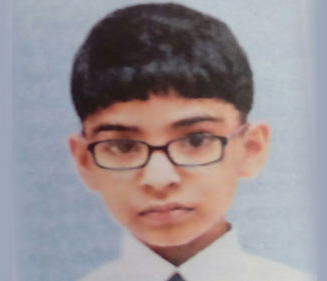
8-year-old Indian dies after falling out of car in UAE

[email protected] (CD Network)
January 12, 2016

Dubai, Jan 12: An 8-year-old Indian boy died after falling out of the car in which he was travelling with his family in United Arab Emirates.

vismayaA grade three student of the Indian School in Ras Al Khaimah (RAK), Vismaya Chandran died on Sunday night after falling through the window of the vehicle which was being driven by his father.

The family members were on their way to a picnic at Jebel Jais.

The accident happened after 4.30pm and the boy was rushed to hospital where he succumbed to his injuries.

The body is now in the Al Saif Hospital in Ras Al Khaimah and will be repatriated to India.

Vismaya’s father Sajeesh Chandran said he was driving when the accident happened near Al Rams, about four kilometres away from Ras Al Khaimah.

“It skidded off the road and stopped in the middle of rocks and rubble. The glass window was locked, but somehow it opened and he fell out.

“He had a serious head injury and died 45 minutes after reaching the hospital.”

The boy’s mother Deepa and younger sister Thanmaya were also in the vehicle.

“We are all sad that one of our best students died. We reopened school on Sunday, but Vismaya was absent,” said Mohammed Ali, Principal, Indian School, Ras Al Khaiamah.

“The school called for a special morning assembly to condole his sad demise,” he said.

Comments

Tahir
 - 
Tuesday, 12 Jan 2016

Inna Lillahi wa inna ilaihi raji'un

Add new comment

  • Coastaldigest.com reserves the right to delete or block any comments.
  • Coastaldigset.com is not responsible for its readers’ comments.
  • Comments that are abusive, incendiary or irrelevant are strictly prohibited.
  • Please use a genuine email ID and provide your name to avoid reject.
News Network
July 14,2020

Bengaluru, Jul 14: More than 80 Namma Metro workers have tested positive for COVID-19 in Bengaluru on Tuesday, said Yashwanth Chauhan BL, public relations officer of Namma Metro.

"All safety and treatment protocols would be followed at the camps," he added.

These workers were staying in a camp near Nagavara-Gottigere lane, reach-6 of phase two. More than 200 contract workers of Larsen and Toubro who had come from different states have been tested after a labourer complained of fever.

All coronavirus positive workers were shifted to a COVID care centre while others were kept in isolation as per the guidelines.

Comments

Add new comment

  • Coastaldigest.com reserves the right to delete or block any comments.
  • Coastaldigset.com is not responsible for its readers’ comments.
  • Comments that are abusive, incendiary or irrelevant are strictly prohibited.
  • Please use a genuine email ID and provide your name to avoid reject.
Agencies
May 8,2020

Washington D.C., May 8: The prime time for brain development in a child's life is the first year, where the infant spends most of the time asleep. It is the time when neural connections form and sensory memories are encoded.

However, when sleep is disrupted, as occurs more often among children with autism, brain development may be affected, too.

New research led by the University of Washington finds that sleep problems in a baby's first 12 months may not only precede an autism diagnosis but also may be associated with altered growth trajectory in a key part of the brain, the hippocampus.

The study, which was published in the American Journal of Psychiatry, researchers report that in a sample of more than 400 taken of 6- to 12-month-old infants, those who were later diagnosed with autism were more likely to have had difficulty falling asleep.

It also states that this sleep difficulty was associated with altered growth trajectories in the hippocampus.

"The hippocampus is critical for learning and memory, and changes in the size of the hippocampus have been associated with poor sleep in adults and older children.

As many as 80 per cent of the children with autism spectrum disorder have sleep problems," said Annette Estes, director of the UW Autism Center and senior author of the study.

"In our clinical experience, parents have a lot of concerns about their children's sleep, and in our work on early autism intervention, we observed that sleep problems were holding children and families back," added Estes, who is also a UW professor of speech and hearing sciences.

"It could be that altered sleep is part-and-parcel of autism for some children. One clue is that behavioural interventions to improve sleep don't work for all children with autism, even when their parents are doing everything just right. This suggests that there may be a biological component to sleep problems for some children with autism," said Estes.

To consider links among sleep, brain development, and autism, researchers at the IBIS Network looked at MRI scans of 432 infants, surveyed parents about sleep patterns, and measured cognitive functioning using a standardized assessment.

At the outset of the study, infants were classified according to their risk for developing autism: Those who were at higher risk of developing autism -- about two-thirds of the study sample -- had an older sibling who had already been diagnosed.

Infant siblings of children with autism have a 20 per cent chance of developing autism spectrum disorder -- a much higher risk than children in the general population.

In the current study, 127 of the 432 infants were identified as "low risk" at the time the MRI scans were taken because they had no family history of autism.

They later evaluated all the participants at 24 months of age to determine whether they had developed autism. Of the roughly 300 children originally considered "high familial risk," 71 were diagnosed with autism spectrum disorder at that age.

Problems with sleep were more common among the infants later diagnosed with an autism spectrum disorder, as were larger hippocampi. No other subcortical brain structures were affected, including the amygdala, which is responsible for certain emotions and aspects of memory, or the thalamus, a signal transmitter from the spinal cord to the cerebral cortex.

The authors note that while parents reported more sleep difficulties among infants who developed autism compared to those who did not, the differences were very subtle and only observed when looking at group averages across hundreds of infants.

Sleep patterns in the first years of life change rapidly as infants transition from sleeping around the clock to a more adult-like sleep/wake cycle. Until further research is completed, Estes said, it is not possible to interpret challenges with sleep as an early sign of increased risk for autism.


Comments

Add new comment

  • Coastaldigest.com reserves the right to delete or block any comments.
  • Coastaldigset.com is not responsible for its readers’ comments.
  • Comments that are abusive, incendiary or irrelevant are strictly prohibited.
  • Please use a genuine email ID and provide your name to avoid reject.
News Network
May 2,2020

Bengaluru, May 2: The Centre’s classification of districts created confusion in Karnataka as the state’s own categorisation deviates significantly from the health ministry’s list.

For instance, the Centre put the number of districts in the red zone in state at three, while the state Covid-19 war room puts it at 14. Bengaluru Urban and Mysuru figure in the red zone in both lists. While Bengaluru Rural with zero active cases on May 1makes it to the Centre’s red-zone list, it is in the orange zone according to the state.

In addition to these two, the state classifies Belagavi, Kalaburagi, Vijayapura, Bagalkot, Mandya, Bidar, Dakshina Kannada, Chikkaballapura, Dharwad, Gadag, Tumakuru and Davanagere as red-zone districts.

State Covid war-room authorities said they would take a look at the Centre’s criteria for classification and take a call. Besides, incharge Munish Mudgil pointed out that states are allowed to make additions to the red and orange zones. According to the Centre’s list, Karnataka has 13 districts in the orange zone and 14 in the green zone.

Sudan said, “the districts were earlier designated as hotspots or red zones, orange zones and green zones primarily based on the cumulative cases reported and the doubling rate. Since recovery rates have gone up, the districts are now being designated across various zones duly broad-basing the criteria.

This classification takes into consideration incidence of cases, doubling rate, extent of testing and surveillance feedback. A district will be considered under the green zone if there are no confirmed cases so far or if there is no reported case in the past 21 days.”

Comments

Add new comment

  • Coastaldigest.com reserves the right to delete or block any comments.
  • Coastaldigset.com is not responsible for its readers’ comments.
  • Comments that are abusive, incendiary or irrelevant are strictly prohibited.
  • Please use a genuine email ID and provide your name to avoid reject.