Security tightened in Mangaluru after fresh ‘communal clash’

[email protected] (CD Network)
January 18, 2016

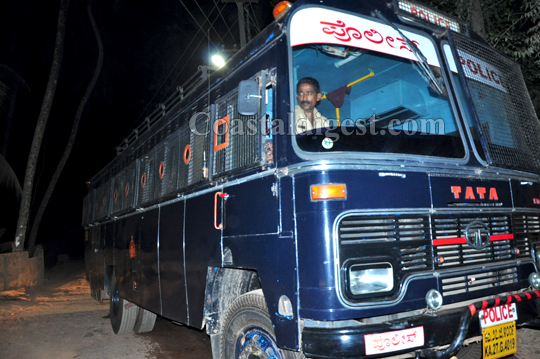
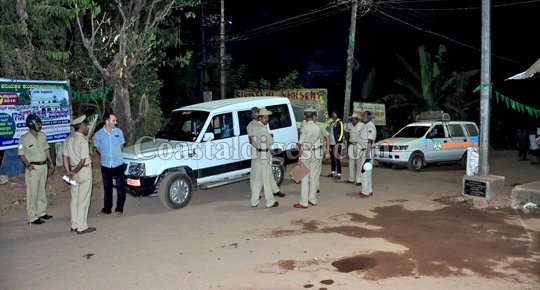
Mangaluru, Jan 18: Elaborate security arrangements are in place in Mangaluru after attack on a cleric and two Muslim youths by miscreants owing allegiance to Sangh Parivar created an atmosphere of communal clash in parts of the coastal city.

padilattck 27

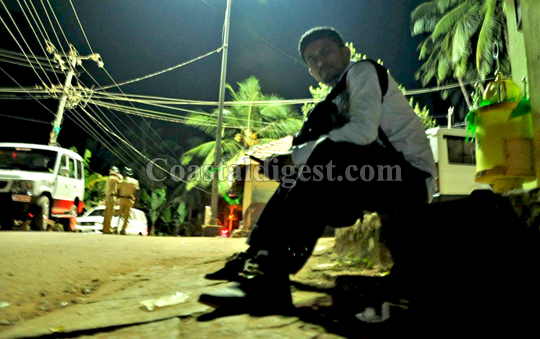
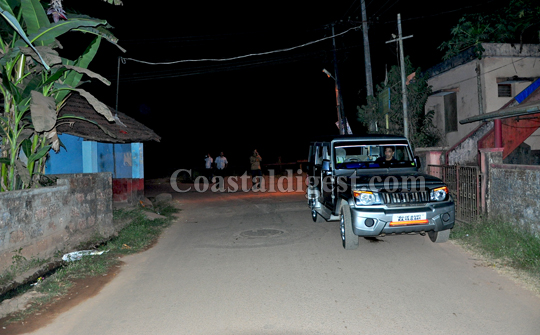
A senior police officer said that security was tightened in Padil, where a clash took place Sunday night and other sensitive parts with the deployment of additional forces.

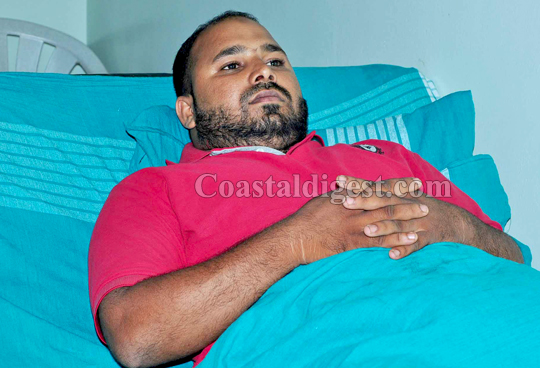
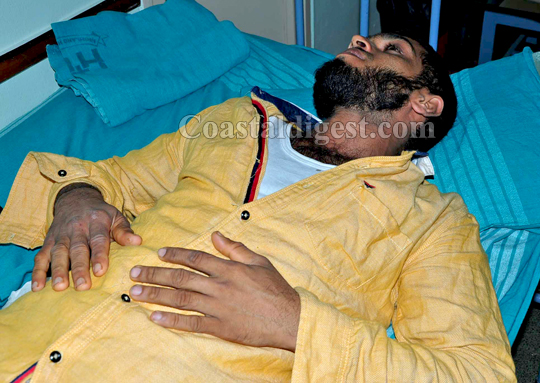
Farooq Darimi, a cleric of a mosque, and two more local youths—Sirajuddin and Fayaz— were attacked by alleged Bajrang Dal activists without any provocation on Sunday night. 

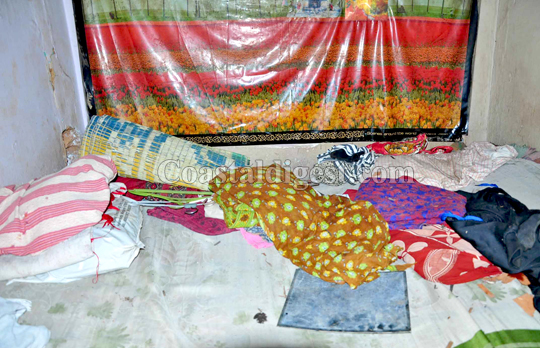
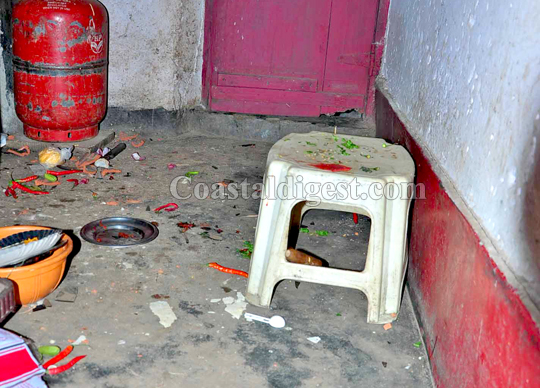
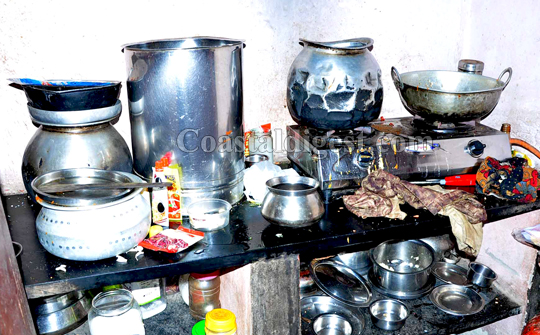
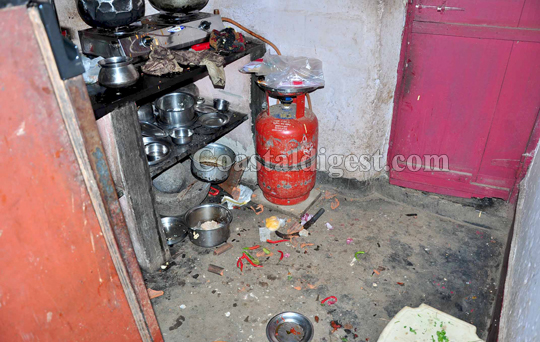
Vandalism

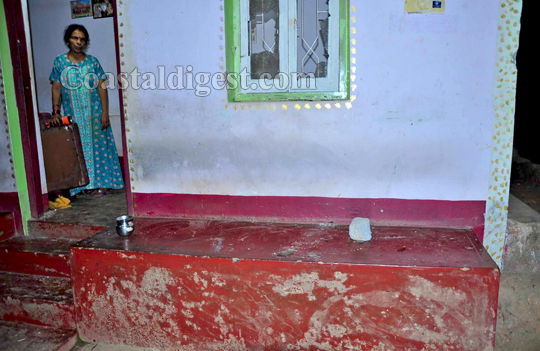
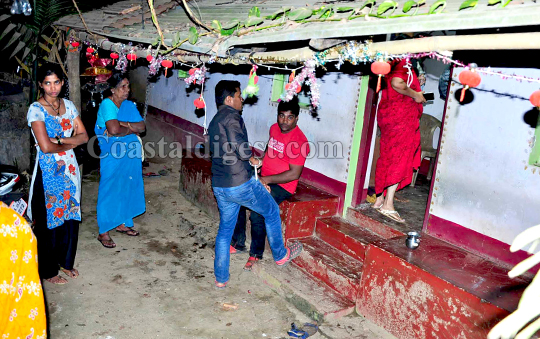
As the news began to spread, unknown miscreants pelted stones at a few houses and vehicles belonging to one particular community with an apparent intention to exacerbate the clash.

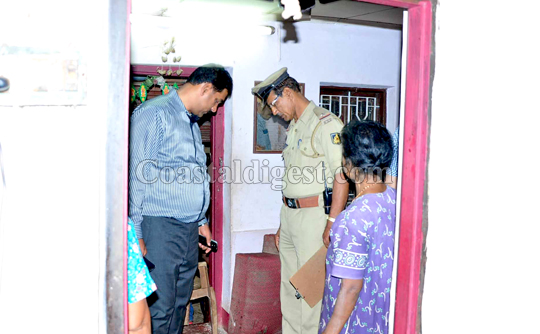
Prajwal alias Appu, a resident of Faisalnagar near Padil claimed that a group of men barged into his house and indulged in vandalism. In fact Appu was one of the miscreants who allegedly attacked the cleric and two Muslim youths. 

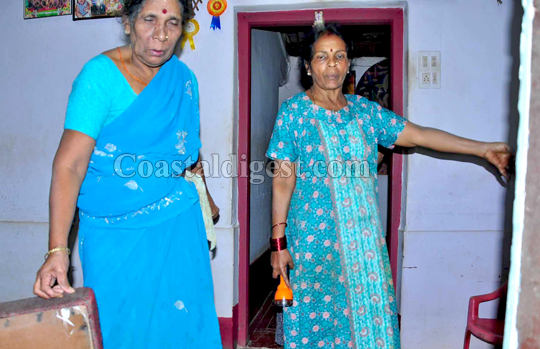
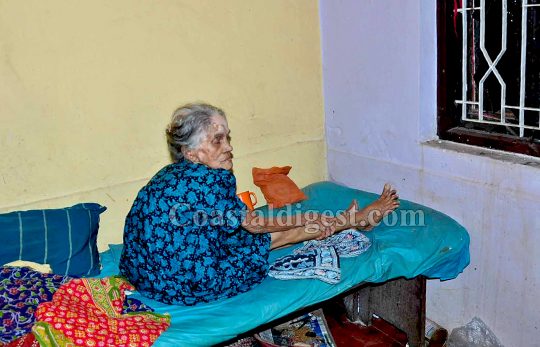
The intruders damaged the furniture and allegedly threatened an elderly woman who was present inside the home.

While fleeing the miscreants damaged an Alto car parked outside the house.

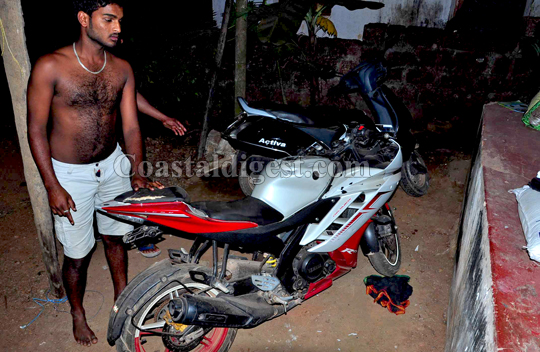
After sometimes, the miscreants damaged a motorbike belonging to one Deekshit parked near the house of Selvia. An Activa scooter parked nearby was also damaged by the same group.

Meanwhile, miscreants belonging to two communities allegedly pelted stones at each other and houses of innocents. Sleuths from Mangaluru rural police station resorted to mild baton charge to disperse the mob.

Also Read: Bajrang Dal activists attack cleric, assault Muslim youth with sword

padilattck 1

padilattck 2

padilattck 3

padilattck 4

padilattck 5

padilattck 6

padilattck 7

padilattck 8

padilattck 9

padilattck 10

padilattck 11

padilattck 12

padilattck 13

padilattck 14

padilattck 15

padilattck 16

padilattck 17

padilattck 18

padilattck 19

padilattck 20

padilattck 21

padilattck 22

padilattck 23

padilattck 24

padilattck 25

padilattck 26

padilattck 28

padilattck 29

padilattck 30

padilattck 31

padilattck 32

padilattck 33

padilattck 34

padilattck 35

padilattck 36

Comments

Munna Bhai
 - 
Tuesday, 19 Jan 2016

Jihadi MLAs of Mangalore are hell bent on supporting these muslim extremists. No action taken on people vandalising the property of innocents. What these fools are doing in the hospital?

Raif
 - 
Monday, 18 Jan 2016

Come on guys grow up, Let the people of city live with peace and love.
If some one is attacked, then don't take any revenge.
Let the police handle it. Why are you guys taking law on your side and breaking public properties.

Prem Sagar
 - 
Monday, 18 Jan 2016

why security now, whatever they wanted to they just did it.

Rikaz
 - 
Monday, 18 Jan 2016

Bajrangies dont have any work to do....why dont they take some brooms and clean the city so that they get good wishes from people as well God....by creating problems, they aren't gonna achieve anything in the world at all....

Mohammed Farooque
 - 
Monday, 18 Jan 2016

bajarangdal people are simply making nonsense and not letting us to leave peaceful life. please ban all the sangha parivars

suri vamanjoor
 - 
Monday, 18 Jan 2016

kachadi saieeri

Ahmed
 - 
Monday, 18 Jan 2016

Until unless there is a strict law and no bail , this will not stop.
Please do not disturb peace lovers, punish whoever it is and do not give bail, no community supports this type of disturbances, please do not name any religion, just join to punish whoever the trouble makers.
And fight for the law and order to the long term imprisonment.

Sriman Savasab
 - 
Monday, 18 Jan 2016

look at them they are sleeping simply in the hospital. simply making conspiracy.. all flowing because of congress support.

Sathish kumar
 - 
Monday, 18 Jan 2016

1week continues bundh needed :)

Manish Pandu
 - 
Monday, 18 Jan 2016

congress ruled mangalore, this s common to hear.

Mahendra Mawa
 - 
Monday, 18 Jan 2016

look at the property they damaged, they are shockingly watching.

Shivaji Rao
 - 
Monday, 18 Jan 2016

shoot the bloody goons whoever damages public property.

Mahesh Bhoopathi
 - 
Monday, 18 Jan 2016

some group of people want thr stick to handle, for that everyone should bare the loss of this bloody goons.

Ramachandra Suru
 - 
Monday, 18 Jan 2016

Faisalnagar, ullal ruled by PFI. beware

Suresh Manibettu
 - 
Monday, 18 Jan 2016

why simply damaging the public property, seriously what are they getting after doing like this.

Saleem
 - 
Monday, 18 Jan 2016

this bajarangdal people will not allow normal people to leave happily everytime making noise in the society.

Mohan Malekudiya
 - 
Monday, 18 Jan 2016

seriously how dare are they to damage public property

Add new comment

  • Coastaldigest.com reserves the right to delete or block any comments.
  • Coastaldigset.com is not responsible for its readers’ comments.
  • Comments that are abusive, incendiary or irrelevant are strictly prohibited.
  • Please use a genuine email ID and provide your name to avoid reject.
News Network
July 28,2020

Hounde, Jul 28: Coronavirus and its restrictions are pushing already hungry communities over the edge, killing an estimated 10,000 more young children a month as meager farms are cut off from markets and villages are isolated from food and medical aid, the United Nations warned Monday.

In the call to action shared with The Associated Press ahead of publication, four UN agencies warned that growing malnutrition would have long-term consequences, transforming individual tragedies into a generational catastrophe.

Hunger is already stalking Haboue Solange Boue, an infant from Burkina Faso who lost half her former body weight of 5.5 pounds (2.5 kilograms) in just a month. Coronavirus restrictions closed the markets, and her family sold fewer vegetables. Her mother was too malnourished to nurse.

“My child,” Danssanin Lanizou whispered, choking back tears as she unwrapped a blanket to reveal her baby's protruding ribs.

More than 550,000 additional children each month are being struck by what is called wasting, according to the UN — malnutrition that manifests in spindly limbs and distended bellies. Over a year, that's up 6.7 million from last year's total of 47 million. Wasting and stunting can permanently damage children physically and mentally.

“The food security effects of the COVID crisis are going to reflect many years from now,” said Dr. Francesco Branca, the WHO head of nutrition. “There is going to be a societal effect.”

From Latin America to South Asia to sub-Saharan Africa, more poor families than ever are staring down a future without enough food.

In April, World Food Program head David Beasley warned that the coronavirus economy would cause global famines “of biblical proportions” this year. There are different stages of what is known as food insecurity; famine is officially declared when, along with other measures, 30% of the population suffers from wasting.

The World Food Program estimated in February that one Venezuelan in three was already going hungry, as inflation rendered salaries nearly worthless and forced millions to flee abroad. Then the virus arrived.

“Every day we receive a malnourished child,” said Dr. Francisco Nieto, who works in a hospital in the border state of Tachira.

In May, Nieto recalled, after two months of quarantine, 18-month-old twins arrived with bodies bloated from malnutrition. The children's mother was jobless and living with her own mother. She told the doctor she fed them only a simple drink made with boiled bananas.

“Not even a cracker? Some chicken?” he asked.

“Nothing,” the children's grandmother responded. By the time the doctor saw them, it was too late: One boy died eight days later.

The leaders of four international agencies — the World Health Organization, UNICEF, the World Food Program and the Food and Agriculture Organization — have called for at least dollar 2.4 billion immediately to address global hunger.

But even more than lack of money, restrictions on movement have prevented families from seeking treatment, said Victor Aguayo, the head of UNICEF's nutrition program.

“By having schools closed, by having primary health care services disrupted, by having nutritional programs dysfunctional, we are also creating harm,” Aguayo said. He cited as an example the near-global suspension of Vitamin A supplements, which are a crucial way to bolster developing immune systems.

In Afghanistan, movement restrictions prevent families from bringing their malnourished children to hospitals for food and aid just when they need it most. The Indira Gandhi hospital in the capital, Kabul, has seen only three or four malnourished children, said specialist Nematullah Amiri. Last year, there were 10 times as many.

Because the children don't come in, there's no way to know for certain the scale of the problem, but a recent study by Johns Hopkins University indicated an additional 13,000 Afghans younger than 5 could die.

Afghanistan is now in a red zone of hunger, with severe childhood malnutrition spiking from 690,000 in January to 780,000 — a 13% increase, according to UNICEF.

In Yemen, restrictions on movement have blocked aid distribution, along with the stalling of salaries and price hikes. The Arab world's poorest country is suffering further from a fall in remittances and a drop in funding from humanitarian agencies.

Yemen is now on the brink of famine, according to the Famine Early Warning Systems Network, which uses surveys, satellite data and weather mapping to pinpoint places most in need.

Some of the worst hunger still occurs in sub-Saharan Africa. In Sudan, 9.6 million people live from one meal to the next — a 65% increase from the same time last year.

Lockdowns across Sudanese provinces, as around the world, have dried up work and incomes for millions. With inflation hitting 136%, prices for basic goods have more than tripled.

“It has never been easy but now we are starving, eating grass, weeds, just plants from the earth,” said Ibrahim Youssef, director of the Kalma camp for internally displaced people in war-ravaged south Darfur.

Adam Haroun, an official in the Krinding camp in west Darfur, recorded nine deaths linked with malnutrition, otherwise a rare occurrence, over the past two months — five newborns and four older adults, he said.

Before the pandemic and lockdown, the Abdullah family ate three meals a day, sometimes with bread, or they'd add butter to porridge. Now they are down to just one meal of “millet porridge” — water mixed with grain. Zakaria Yehia Abdullah, a farmer now at Krinding, said the hunger is showing “in my children's faces.”

“I don't have the basics I need to survive,” said the 67-year-old, who who hasn't worked the fields since April. “That means the 10 people counting on me can't survive either.”


Comments

Add new comment

  • Coastaldigest.com reserves the right to delete or block any comments.
  • Coastaldigset.com is not responsible for its readers’ comments.
  • Comments that are abusive, incendiary or irrelevant are strictly prohibited.
  • Please use a genuine email ID and provide your name to avoid reject.
coastaldigest.com news network
July 11,2020

Bengaluru, Jul 11: Amidst the mounting number of covid-19 cases, Karnataka is witnessing another disturbing trend of increasing number of people ending their life. After the lockdown was relaxed, the state saw a worrying jump in the number of suicides.

According to statistics, as many as 2,211 suicide cases have been registered in just two months. The number of suicides rose by 23% in May to 1,127, and by another 18% in June to 1,084, from an average of 912 suicides in the first three months of the year. 

In April, however, the number nearly halved to 477. But April was also the month during which the lockdown (announced on March 24) was complete, and everyone was at home -- which, experts say, could have prevented people with suicidal tendencies from taking their own lives.

Shockingly, number of teenagers including school children committing suicide also increased in the state in past couple of months.

With the pandemic still accelerating and impacting people in multiple ways, the World Health Organisation has urged people to pay greater attention to mental health and suicide prevention. 

Dr Poonam Khetrapal Singh, Regional Director, World Health Organisation (WHO), South-East Asia Region, said stigma related to Covid-19 infection may lead to feelings of isolation and depression. Another precipitating factor impacting mental health amidst Covid-19 could be domestic violence, which is reported to have increased globally as several countries imposed lockdowns, she said.

“Hitting lives and livelihoods, the pandemic is causing fear, anxiety, depression and stress among people. Social distancing, isolation and coping with perpetually evolving and changing information about the virus has both triggered and aggravated existing and pre-existing mental health conditions, which need urgent attention,” she said.

Dr H Chandrashekar, professor and head of the department of psychiatry at Victoria Hospital, said reasons for suicide are always multi-factored, combined, cumulative, unresolving and interrelated.

“There is grief everywhere now due to deaths related to Covid-19, and it may have an adverse effect on some. But people should be watchful of their family members, especially those who are in depression and have a history of suicide attempts. One should never ignore signs, like when someone says they feel like ending their life. They should not be left alone, and unconditional support needs to be given. Also, objects that could be used to commit suicide must be kept away from them,” Dr Chandrashekar said.

Comments

Add new comment

  • Coastaldigest.com reserves the right to delete or block any comments.
  • Coastaldigset.com is not responsible for its readers’ comments.
  • Comments that are abusive, incendiary or irrelevant are strictly prohibited.
  • Please use a genuine email ID and provide your name to avoid reject.
coastaldigest.com news network
June 23,2020

Bengaluru, June 23: A senior IAS officer allegedly, who had faced arrest in connection with I Monetary Advice (IMA) scam, today allegedly committed suicide by hanging himself at his residence in the city. 

The deceased is BM Vijay Shankar. He had been arrested by special investigation team (SIT) in the I Monetary Advice (IMA) case when he was deputy commissioner (DC) Urban Bengaluru. 

He had spent few days in the jail over his alleged involvement in the IMA scam and was released on bail. The IMA case is currently being probed by Central Bureau of Investigation.

Shankar was staying in Jayanagar near Ashoka Pillar along with his family members.

Shankar was accused of taking Rs 1.5 crore to approve a report on financial irregularities, and was accused of giving a clean chit to the main accused of IMA scam, Mohammed Mansoor Khan.

The incident came to light around 8 pm. It is alleged that Shankar ended his life around 7.00 pm, when he was alone in the house. Shankar was said to be under severe depression after his name surfaced in the scam, and his subsequent arrest.

However, the exact reason for his extreme step is yet to be identified. Tilak Nagar police have taken up the case of mysterious death under CrPc and are probing further. As of now the police officials have not found any death note. A senior officer said: "once we finish the procedures of investigating the spot his body will be shifted to Victoria hospital for post mortem. The report will find out exact cause of his death".

Police commissioner Bhaskar Rao said: "We have taken up the case of unnatural death with regard to Vijay Shankar's death. Further probe will reveal more details about it".
 

Comments

Add new comment

  • Coastaldigest.com reserves the right to delete or block any comments.
  • Coastaldigset.com is not responsible for its readers’ comments.
  • Comments that are abusive, incendiary or irrelevant are strictly prohibited.
  • Please use a genuine email ID and provide your name to avoid reject.