Gujarat varsity invites terror accused as chief guest for convocation

January 19, 2016

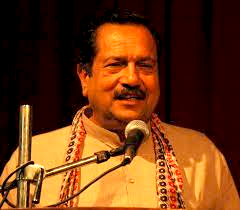
Ahmedabad, Jan 19: A university in Gujarat has kicked a row by inviting a top Rashtriya Swayamsevak Sangh (RSS) leader, who is also an accused in the Ajmer blast case, as the chief guest for the institution's annual convocation ceremony.

GujaratThe invitation to Indresh Kumar by the Hemchandracharya North Gujarat University has created a difference of opinion on and outside the campus, with many educationists in the state questioning the move.

As chief guest, Kumar will not only hand over gold medals to meritorious students, but also give a speech in the presence of governor OP Kohli on Monday.

The university said the decision to invite Kumar has been taken by vice-chancellor RL Godra himself. The invite calls the RSS leader "a social reformer and defence expert".

Kumar is one of the accused named in a CBI chargesheet on the blast at an Ajmer shrine in 2007, which killed three people and injured more than a dozen.

Interestingly, when a NavGujarat Samay reporter asked the registrar of the university Dr DM Patel about the invite, he said he had no idea who Indresh Kumar is. "The V-C fixed his name during a visit to Delhi," he said.

The RSS is the ideological mentor of the BJP.

Comments

THINKERS
 - 
Wednesday, 20 Jan 2016

Does Gujratis become sooooooooo weak to recognize the killers and the peace makers..?

Rikaz
 - 
Tuesday, 19 Jan 2016

No surprise, we have prime minister, who is the main reason for Gujrat carnage, no body gives damn on it....

Rahi
 - 
Tuesday, 19 Jan 2016

He is not accused, he is real terrorist and follower of India's first terrorist Nathuram Godse.

Goodman
 - 
Tuesday, 19 Jan 2016

Poor Gujaratis did not get any other person

May God help them to save the name of Gujarathis.

Ibrahim kunhi
 - 
Tuesday, 19 Jan 2016

unfair, so called secular india this s the hard example.

mohammed sadiq
 - 
Tuesday, 19 Jan 2016

if u wanna become famous like him, kill innocent people, its totally injustice to give him this respect.

Prem Sagar
 - 
Tuesday, 19 Jan 2016

wrongfully mentioned as terror accused, such a great person he is.

Add new comment

  • Coastaldigest.com reserves the right to delete or block any comments.
  • Coastaldigset.com is not responsible for its readers’ comments.
  • Comments that are abusive, incendiary or irrelevant are strictly prohibited.
  • Please use a genuine email ID and provide your name to avoid reject.
News Network
August 2,2020

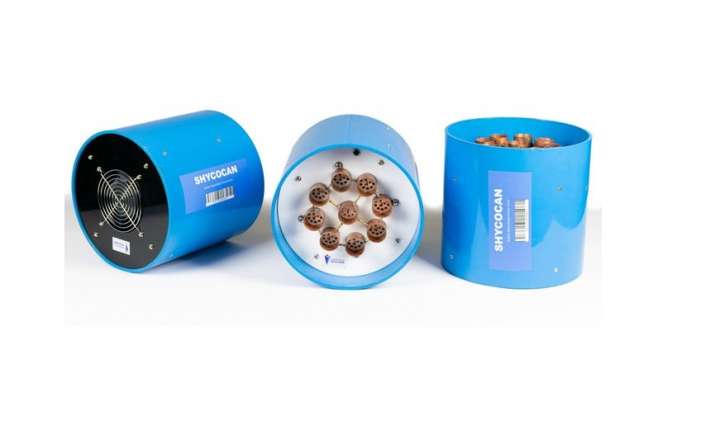
Bengaluru, Aug 2: Bengaluru based Centre for Advanced Research and Development (CARD), the research wing of organisation De scalene has come up with a device called "SHYCOCAN" (Scalene Hypercharge Corona Canon) which neutralizes the coronavirus.

Speaking to news agency Dr Rajah Vijay Kumar, Chairman, Organisation De Scalene said that the device will not kill any bacteria or fungus, however, neutralizes the coronavirus particles.

"The device was tested for its safety and efficacy and is soon going to be manufactured and marketed in the US under the Enforcement Discretion policy of USFDA and in Europe as the device is CE compliant and is CE marked," said Kumar.

He also added the device will cover a volume of 10,000 cubic feet.

The device Scalene Hypercharge Corona Canon (SHYCOCAN) is intended to be used in the residential, industrial and commercial environment and is designed for active containment by attenuation of Corona family of viruses. (Laboratories de Especialidades Immunological S.A. de C.V, Virucidal Activity concludes 99.9 per cent virus elimination), Kumar asserted.

"SHYCOCAN operates on regular 110/240V - 50/60 Hz wall socket and is a plug and play device, that delivers the necessary signals to a photon mediated electrons emitters (PMEE), that produces hypercharge high-velocity electrons by photon mediation that interacts with the negative seeking S-protein of Corona family of viruses thus reducing infectivity and prevent air and surface borne transmission of corona family of viruses," said Kumar.

The device does not use any chemicals, or any other consumables and does not produce harmful ozone gas or any other substances and is completely safe for use in any environment, he added.

"The attack mechanism of the Virus starts with the initial attachment of the virion to the host cell, it is initiated by interactions between the S-protein and its receptor on the "negative" cell membrane. The sites of receptor binding domains (RBD) within the S1 region of a coronavirus S-protein vary depending on the virus. 

The S-protein/receptor interaction is the primary determinant for a coronavirus to infect a host species and governs the tissue tropism of the virus. However, the end result is the fusion and release of the viral genome into the cytoplasm," said Kumar.

He continued saying that the counter mechanism by the device SHYCOCAN is that if negative seeking is the guidance mechanism of the S- Protein, attracted by the transmembrane potential of the host cells, then breaking this mechanism would block the Coronavirus infectivity and spread.

"The device has been in use for more than a year at the S-CARD campus, the headquarters of Scalene," said Kumar.

Comments

Add new comment

  • Coastaldigest.com reserves the right to delete or block any comments.
  • Coastaldigset.com is not responsible for its readers’ comments.
  • Comments that are abusive, incendiary or irrelevant are strictly prohibited.
  • Please use a genuine email ID and provide your name to avoid reject.
News Network
January 16,2020

Mangaluru, Jan 16: Following the widespread protests against the National Register of Citizens (NRC) and Citizenship Amendment Act (CAA), former minister and MLA UT Khader on Thursday urged the Centre and State government to address the concerns of the people.

Speaking to reporters here on Thursday, he said there is widespread confusion among the public with regard to the implementation of the Act. People are reluctant to open their doors to Asha workers, out of fear that the NRC exercise is being implemented, said Khader.

He urged the chief minister and home minister to gain the trust of the people on the CAA issue.

Comments

Add new comment

  • Coastaldigest.com reserves the right to delete or block any comments.
  • Coastaldigset.com is not responsible for its readers’ comments.
  • Comments that are abusive, incendiary or irrelevant are strictly prohibited.
  • Please use a genuine email ID and provide your name to avoid reject.
Agencies
April 15,2020

San Diego, Apr 15: Several people lost their sense of smell or taste weeks ago globally and are still waiting for it to come back and now, researchers have identified an association between sensory loss and novel coronavirus 2019 (COVID-19) infection, indicating that loss of smell and taste may be considered as early symptoms of the deadly disease.

Interestingly, the study also found that persons who reported experiencing a sore throat more often tested negative for COVID-19.

The team from University of California-San Diego found high prevalence and unique presentation of certain sensory impairments in patients positive with COVID-19.

Of those who reported a loss of smell and taste, the loss was typically profound, not mild.

"Based on our study, if you have smell and taste loss, you are more than 10 times more likely to have COVID-19 infection than other causes of infection. The most common first sign of a COVID-19 infection remains fever, but fatigue and loss of smell and taste follow as other very common initial symptoms," explained study researcher Carol Yan from UC San Diego.

"We know COVID-19 is an extremely contagious virus. This study supports the need to be aware of smell and taste loss as early signs of COVID-19," Yan added.

For the findings, published in the journal International Forum of Allergy and Rhinology, the research team surveyed 1,480 patients with flu-like symptoms and concerns regarding potential COVID-19 infection who underwent testing at UC San Diego Health from March 3 through March 29, 2020.

Within that total, 102 patients tested positive for the virus and 1,378 tested negatives. The study included responses from 59 COVID-19-positive patients and 203 COVID-19-negative patients.

Encouragingly, the rate of recovery of smell and taste was high and occurred usually within two to four weeks of infection.

"Our study not only showed that the high incidence of smell and taste is specific to COVID-19 infection but we fortunately also found that for the majority of people sensory recovery was generally rapid," said Yan.

"Among the COVID-19 patients with smell loss, more than 70 per cent had reported improvement of smell at the time of the survey and of those who hadn't reported improvement, many had only been diagnosed recently," she added.

Sensory return typically matched the timing of disease recovery.

In an effort to decrease the risk of virus transmission, UC San Diego Health now includes loss of smell and taste as a screening requirement for visitors and staff, as well as a marker for testing patients who may be positive for the virus.

"It is our hope that with these findings other institutions will follow suit and not only list smell and taste loss as a symptom of COVID-19, but use it as a screening measure for the virus across the world," Yan said.


Comments

Add new comment

  • Coastaldigest.com reserves the right to delete or block any comments.
  • Coastaldigset.com is not responsible for its readers’ comments.
  • Comments that are abusive, incendiary or irrelevant are strictly prohibited.
  • Please use a genuine email ID and provide your name to avoid reject.