Bengaluru, Jan 12: Karnataka’s ranking in Niti Aayog’s sustainable development goals (SDG) index rose by one place to No. 6 in 2019, compared to the year before.
Of the 17 SDGs that are used to compute the overall index, Karnataka topped in two – ‘climate action’ and ‘life on water’. The former is a measure of how well a state integrates climate action into policies and strategies and promote mechanisms for raising capacity for effective climate change planning and management. The latter focuses on preventing marine pollution, ending illegal and destructive fishing practices, and sustainably managing and protecting marine and coastal ecosystems.
It also did well in ‘decent work and economic growth’ and ‘peace, justice and strong institutions’. But it fared poorly, slipping 16 places – from No. 5 in 2018 to No. 21 in 2019 – in ‘industry, innovation and infrastructure’. Rankings in ‘quality education’ and ‘zero hunger’ have also fallen. While in education it is now ranked 7, a drop of three places, in ‘zero hunger’, it has dropped to No. 17 from 13. SDG is a United Nations initiative. Niti Aayog has customised it for India, and 36 states and union territories are ranked. The organisation admits there is an issue of data availability in India, indicating the numbers may not exactly reflect the ground situation.
In ‘industry, innovation and infrastructure, Karnataka scored just 40 out of a target of 100. The country average was 65. It failed to achieve targets in all the four parameters for the category, except in the number of mobile connections, where it has 100 connections per 100 population. The biggest dip was in manufacturing industry jobs and in providing allweather roads under Pradhan Mantri Gram Sadak Yojana to targeted habitats. Niti Ayog has given a score of 0 for the latter. Speaking on the dismal performance in the ‘industry and infrastructure’ category, state planning commission vice-chairman BJ Puttaswamy said he was yet to look into this parameter. “I have asked the departments concerned to meet me by Monday,” he said.



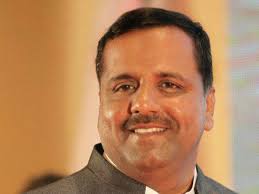 After public outcry, health and family welfare minister UT Khader had urged the finance department on Tuesday for ICU tax exemption.

Comments
It is only in India and many under-developed nations that Health and Education is made costly. Health and Education in many developed countries is their Birth Right and hence they are available to them either free of cost or highly subsidized form. We pay taxes for every thing we buy and use but why can't Govt. afford to implement the scheme. In the present scenario only rich can have good health and education, others have to either do some diploma or look for job early. The Govt. College and Hospitals are pathetic to go. Can they develop such that they are in par with Private institutions? Or do politicians have stakes in private companies that they don't want to improve the services of Govt. run institutions?
Add new comment