



China pushes India to the wall on Brahmaputra

August 8, 2015

New Delhi, Aug 8: On July 30, the usually combative Uma Bharti, the union minister for water resources, exhibited a diffident demeanor in the Lok Sabha when she gave out that China may construct three more hydropower projects on the Brahmaputra in Tibet (called Yarlung Tsangpo there) under its recently announced 12th Five Year Plan.
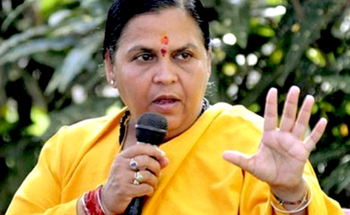
UmaBhartiThe minister added two other important facts. First, she indicated that an earlier such power project at Zangmu, other than the proposed three, is a run-of-the-river type. Secondly their effects and significance cannot be judged at the moment due to non-availability of data.

The minister's statement, instead of clearing the air of confusion and apprehension, is however likely to cause more doubts. There is an existing agreement between India and China which covers exchange of hydrological data between the two countries on the Brahmaputra. Has this agreement fallen into disuse? Secondly, the said projects being run-of-the-river type does not hold out any assurance because even these types of projects entail creation of storage dams.

The aforementioned hydro power projects will be located at Dagu, Jiexu and Jiacha, all in the middle reaches of the Brahmaputra. Another one at a place called Zangmu, whose existence was long denied by China but ultimately conceded in 2010 after repeated Indian protestations, has already been partly commissioned. In spite of Uma Bharti's apparent calm and nonchalance in the Lok Sabha, doubt persists in New Delhi's corridors of power. During the time of the previous UPA government it was decided that the ministries of defence, external affairs and the department of space would take up the matter jointly with China. Was it really done? An answer is necessary.

Ominous warnings are close at hand. On March 1, 2012, the river Siang (the local name of the Brahmaputra in Arunachal Pradesh) had run completely dry at a place called Pasighat where it normally used to be very wide. Although the river picked up momentum later on, it has not yet attained its former virility.

Moreover, all the four hydro projects will be situated very close to each other and this complicates the matter further as large amounts of water will be stored within a narrow geographical expanse leading to the possibility of depriving northeastern India of not only water but also the much-needed silt which makes the Assam plains fertile. There may also be floods in the region if China decides to arbitrarily release water from these dams during the monsoon.

How many hydroelectric dams has China been constructing in Tibet? There is a great divergence of opinion on the matter. Some say the number adds up to more than 100. However Jana Jagriti, an Assam based NGO, thinks that 26 are coming up. According to its estimate, Assam will get 64 percent less water during the monsoon season and 85 percent less water during in the rest of the year due to China's dam building activities.

But the real cause of concern for India is the widespread report that China would construct a giant hydro power project at a place called Medog which is very near the Great Bend, a great U turn which the mighty Brahmaputra takes before entering India after a 2,000-metre fall. It is slated to generate 38-49 gigawatts of electricity, which is more than India's installed hydro capacity of 33 gigawatts. If it materializes, the dam will be twice as big as the Three Gorges Dam on the Yangtze river. That China is serious about the Medog plant is borne out by the development and upgradation of the Bome-Medog highway, a kind of infrastructural development which generally precedes beginning of such projects. There are reports that China has constructed two huge water reservoirs at the Great Bend area with storage capacities of 42 million and 31 million cubic metres.

All these projects are situated in an earthquake-prone area and very close to the geological fault line where the Indian Plate collides with the Eurasian Plate. According to many experts, the massive earthquake in 2008 breaching parts of the Three Gorges Dam was caused by the stupendous weight of water of the nearby Zipingpu Dam which was just half-a-kilometre from the geological fault line. If such a catastrophe occurs again, vast areas of Assam and Arunachal Pradesh will go under water.

The crux of the problem is that there is no water sharing treaty between India and China covering trans-national rivers and using the international law that existing usage of water will determine respective shares of countries, Beijing has pushed New Delhi to the wall. India has only itself to blame.

Comments

Rufus
 - 
Tuesday, 26 Jan 2016

I seriously love your site.. Very nice coors & theme.
Diid you develop this website yourself? Please reply back aas I'm wanting too
create my own blog and want to know where yyou got this from or just what thee theme is named.
Many thanks!

my web page: Replace Me Please: http://home.Dddxs.com/space.php?uid=8243&do=blog&id=1668

Add new comment

  • Coastaldigest.com reserves the right to delete or block any comments.
  • Coastaldigset.com is not responsible for its readers’ comments.
  • Comments that are abusive, incendiary or irrelevant are strictly prohibited.
  • Please use a genuine email ID and provide your name to avoid reject.
News Network
February 28,2020

Thane, Feb 28: Former BJP MLA Narendra Mehta was on Friday charged for allegedly  raping and harassing a woman corporator in Bhayandar, which is in the Thane district near Mumbai, on Friday, police said.

His associate Sanjay Tharthare has also been charged in the case, they said.

The district rural police lodged an FIR against Narendra Mehta, who resigned from the BJP three days ago, and his associate, an official from the Mira-Bhayandar police station said.

No arrest has been made till now.

A video of the corporator purportedly speaking about the alleged harassment and abuse she suffered at the hands of Narendra Mehta went viral on social media two days ago, the official said.

The corporator has alleged that the abuse is going on since 1999 and her family is facing threats from him, he added.

Narendra Mehta and Sanjay Tharthare were charged under relevant section of the Indian Penal Code for rape and other relevant provisions of the Scheduled Castes and Scheduled Tribes (Prevention of Atrocities) Act, 1989, he said.

Meanwhile, Shiv Sena MLA Pratap Sarnaik demanded the immediate arrest of Narendra Mehta, saying it is a "tragedy" that the BJP, which raises the issue of women's safety in the state, has not taken any action against its leader.

"Law and order issue will arise if such a person (facing rape and harassment charges) roams freely. He should be arrested as soon as possible," Mr Sarnaik said.

The Thane legislator also termed Narendra Mehta as "Marathi-hater" and alleged that he had once questioned Chief Minister Uddhav Thackeray's culture.

"I wonder why the BJP did not take strict action against Mehta, it needs to introspect," Mr Sarnaik said.

Comments

Add new comment

  • Coastaldigest.com reserves the right to delete or block any comments.
  • Coastaldigset.com is not responsible for its readers’ comments.
  • Comments that are abusive, incendiary or irrelevant are strictly prohibited.
  • Please use a genuine email ID and provide your name to avoid reject.
News Network
March 25,2020

India will suspend all domestic flights from midnight Tuesday, the final piece of a nationwide lockdown that threatens Prime Minister Narendra Modi’s attempts to revive an economy already expanding at the slowest pace in more than a decade.

The flight ban compliments a cancellation of all passenger trains through March 31, as authorities try to halt the spread of the coronavirus in the world’s second-most populous country, which has poorly equipped hospitals and inadequate social security. Modi on Monday held a conference call with some of India’s top entrepreneurs and bankers, who urged policymakers to immediately slash interest rates by as much as a full percentage point, transfer cash to the poorest citizens, and suspend loan-repayments.

Over the past three days, state after state has declared curfews and India’s international borders have been shut for most visitors since March 11. India so far has 492 virus cases, including nine deaths. But experts say the country could be on the same trajectory as Italy, where the outbreak quickly escalated, causing hospitals to overflow.
A traveller stands outside a near-empty Delhi Junction Railway Station in Delhi, March 22.

"This is the biggest lockdown in world history,” said Raghu Raman, a former soldier with the Indian Army and founder of the National Intelligence Grid, an umbrella database aimed at countering terrorism. “This strategic pause gives decision-makers more time to arrest the exponential spread of the virus and evaluate trade-offs.”

Controlling the outbreak is crucial for Modi, who remains India’s most popular political leader currently though his economic management has faced criticism. Foreign investors are selling Indian assets at an unprecedented pace and failure to contain deaths and infections could erode some of the prime minister’s personal appeal at home.

Oxford Economics slashed India’s January-March growth forecast to 3%, a number not seen even during the worst of the global financial crisis. The main equity gauge rose about 3% on Tuesday after a record 13.2% plunge Monday, and the rupee stayed near its all-time low.

“A part of the cerebral cortex that senses fear and survival seems to have activated in the minds of investors,” said Umesh Mehta, Mumbai-based head of research at Samco Securities Ltd. “The only relief in this market can come from either policy makers and regulators, or from some positive news that a cure for the pandemic is near.”

Bloomberg Economics estimates Modi’s administration needs at least 1% of gross domestic product -- $30 billion -- to meaningfully respond to the virus outbreak. Meanwhile, the nation’s billionaires are diverting their factories to manufacture medical equipment and pledging to keep paying their staff even as production grinds to a halt. India allowed companies to use their philanthropy funds to prevent the spread of the coronavirus.

Reliance Industries Ltd., controlled by India’s richest man Mukesh Ambani, has helped equip a hospital in Mumbai dedicated to patients of Covid-19, the disease caused by the coronavirus. It will also build quarantine centers and produce 100,000 facemasks a day and other personal protective equipment for health workers. The group’s telecom unit will offer free broadband to enable work-from-home during the lockdown and will pay its lowest paid workers twice a month to protect household incomes.

Ambani joins Mahindra & Mahindra Ltd. Chairman Anand Mahindra and Vedanta Resources Ltd. Chairman Anil Agarwal -- a combined worth of more than $40 billion between the trio -- who have so far made pledges.

Indian companies are responding to Modi’s shutdown call. Maruti Suzuki India Ltd., Tata Motors Ltd., Toyota Kirloskar Motor, Hero MotoCorp., Samsung Electronics Co. and LG Electronics Inc., Mahindra Group, TVS Motor Co., Kia Motors Corp., Renault Nissan Automotive India Private Ltd., and Yamaha Motor India are among companies that have announced factory suspensions.

Policymakers are aware of the risks of such a move. India -- with a record 5.9 trillion rupees of local corporate debt maturing this year -- faces “waves of default” if cash flows aren’t maintained, the government’s principal economic adviser Sanjeev Sanyal said an interview.

Finance Minister Nirmala Sitharaman last week said the government will announce a relief package for coronavirus-affected sectors as soon as possible. The Reserve Bank of India, which is due to review interest rates April 3, announced a 1 trillion rupee cash injection on Monday.

“Let me assure, whatever it takes to keep the cash flow going in the economy will be done,” Sanyal said. “We need to make sure that when we are past the health storm, we still have an economy that has not gotten gridlocked. Because unwinding that would be more difficult.”

Comments

Add new comment

  • Coastaldigest.com reserves the right to delete or block any comments.
  • Coastaldigset.com is not responsible for its readers’ comments.
  • Comments that are abusive, incendiary or irrelevant are strictly prohibited.
  • Please use a genuine email ID and provide your name to avoid reject.
News Network
May 9,2020

Lucknow, May 9: The first patient to receive plasma therapy as an experimental treatment for coronavirus infection in Uttar Pradesh died following a heart attack on Saturday.

The patient, a 58-year-old doctor, was admitted at the King George’s Medical University (KGMU) here.

The doctor, who was on ventilator since the last 14 days, died on Saturday evening following a heart attack, KGMU Vice-Chancellor M L B Bhatt said.

Since he had high blood pressure and diabetes, he was under the continuous observation of doctors in the isolation ward, Bhatt said.

“The patient was in a stable condition. His lungs had improved, but he later developed urinary tract infection. Two reports of his samples came out as negative (for COVID-19) today,” the vice-chancellor said.

“He, however, suffered a heart attack around 5 pm. Despite all efforts, he could not be saved,” he said.

The doctor from Orai in Uttar Pradesh was administered plasma therapy at the state-run KGMU on April 26. He was administered the plasma donated by a doctor from Canada who was the first COVID-19 patient admitted at the hospital and later recovered.

Tulika Chandra of Blood Transfusion Department, KGMU said, "When the patient was given plasma therapy, his condition was very bad. His lungs, however, improved. But as he was an old patient with diabetes, he was kept on the ventilator.”

Convalescent Plasma Therapy is an experimental procedure for treating COVID-19 patients. In this treatment, plasma, a blood component, from a cured patient is transfused to a critically ill coronavirus patient.

The blood of a person who has recovered from COVID-19 develops antibodies to fight the virus. This therapy uses the antibodies from the blood of a cured patient to treat another critical patient.

The Union health ministry, however, had advised against considering the therapy to be a regular treatment for coronavirus, adding it should be used for research and trial purposes till there is a piece of robust scientific evidence to support its efficacy.

Comments

Add new comment

  • Coastaldigest.com reserves the right to delete or block any comments.
  • Coastaldigset.com is not responsible for its readers’ comments.
  • Comments that are abusive, incendiary or irrelevant are strictly prohibited.
  • Please use a genuine email ID and provide your name to avoid reject.