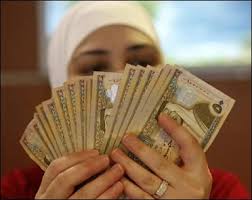
Kerala: India's first Islamic bank gets RBI approval

[email protected] (News Network)
August 18, 2013

Kochi, Aug 18: The Kerala government has got a go-ahead from the Reserve Bank of India to launch a financial institution following the principles of Islamic finance.islamic_banking

Cheraman Financial Services Limited (CFSL) will be floated by Kerala State Industrial Development Corporation to function as a non-banking finance company (NBFC). A formal announcement on CFSL, the latest incarnation of Al Baraka Financial Services, was made on Saturday.

Industries minister PK Kunhalikutty and CFSL chairman P Mohamad Ali told reporters here that the firm would function as a non-banking finance company with an authorised capital of Rs 1,000 crore.

CFSL has already received clearances from the RBI, the Securities and Exchanges Board of India ( SEBI) and the wakf board, the chairman said.

The Kerala State Industrial Development Corporation ( KSIDC) will be the single largest shareholder in the company, holding 11% shares. The other individual shareholders can hold a maximum of 9% shares.

Counting on the state's traditional Gulf links, the previous government had hoped to raise Rs 40,000 crore. The Sharia-compliant CFSL will launch road shows in various cities of India and the Gulf countries from next month

The body will desist from charging interest on loans or give interests on deposits. It will target sectors like infrastructure, services and manufacturing sectors and keep off taboo areas including liquor, tobacco and gambling or speculation. Financing start-up projects is one of its pilot programmes.

The firm will float an alternative investment fund under the banner of Cheraman Fund, with a corpus of Rs 250 crore. The fund will focus on manufacturing and service sectors, mainly in Kerala.

Initially, the fund will raise about Rs 50 crore and one of the early projects to be taken up will be to provide support to startup schemes, managing director APM Mohammed Hanish said.

Comments

Sharif
 - 
Tuesday, 29 Mar 2016

Assalamu alaikum. Hi I got stuck in a private bank borrowing 13 lakhs for home loan. I need to get relief from that paying interest. Because I need to pay 17 lakhs as interest in 15 years. Please help me in this and do the needful.

NAZEER MOOSAFI
 - 
Monday, 28 Mar 2016

Looking for Islamic business loans and opening account in the same

Juber Khan
 - 
Sunday, 27 Mar 2016

Please give me details, how I can open my account in Islamic bank

Juber Khan
 - 
Sunday, 27 Mar 2016

Please give me details, how I can open my account in Islamic bank

Mohammad Azhar…
 - 
Friday, 18 Mar 2016

I would like to take money from Islamic banking for doing business without interest.As interest is haram in Islam.
PLEASE Give me the RIGHT GUIDANCE.

Rifaj Iqbal
 - 
Thursday, 10 Mar 2016

I want business loan...

MD ASLAM
 - 
Friday, 4 Mar 2016

I am very happy to know that R.B.I approves an Islamic Bank.
Sir I completed my diploma in civil engineering and I want to continue my higher studies. So I want to know the procedure to get education loan from your bank and shariah bonding while taking loan.

mujeeb
 - 
Saturday, 13 Feb 2016

I want to starts buisness in kerala. Can i get the loan if possible what is the procedure...?

mujeeb
 - 
Saturday, 13 Feb 2016

I want to starts buisness in kerala , can i get loan .If possible what is the procedure?

SYED MOHD. ZEYAUDDIN
 - 
Tuesday, 9 Feb 2016

SUBHANALLAH. DEAR SIR I WANT TO OPEN MY ACCOUNT IN ISLAMIC BANK IN INDIA, SIR CAN YOU GIVE ME LOAN TO EXPAND MY BUSINESS

Mohammed sauban khan
 - 
Tuesday, 26 Jan 2016

Assalam alaikum,
Well I need financial help to boost my business in Lucknow. We are in FnB segment of hospitality industry.I don't want to get involved in anything which have to deal with interest.moreover I hire my staff from our community only more preferably.
My no & email is mention below.
9794492760
[email protected]

Asma
 - 
Tuesday, 26 Jan 2016

Assalamu Walaikum Rahmatullah,
Sir I want to open an account in Islamic Bank in India please sent me details to my mail.
Thank & Regards.
b8

Mohammed Yaseen
 - 
Monday, 18 Jan 2016

Sir, It is nice to know that an Islamic Bank has been approved by RBI. I wish that its branches should be opened in Jammu and Kashmir. So that we will prevent ourselves from taking interests and help the persons who need loans to run their business.

Add new comment

  • Coastaldigest.com reserves the right to delete or block any comments.
  • Coastaldigset.com is not responsible for its readers’ comments.
  • Comments that are abusive, incendiary or irrelevant are strictly prohibited.
  • Please use a genuine email ID and provide your name to avoid reject.
Agencies
June 21,2020

Bengaluru, Jun 21: As many as 518 private hospitals and medical colleges empanelled under the Suvarna Arogya Suraksha Trust (SAST) have been allowed to treat Covid-19 patients in Karnataka amid rising cases, an official said on Saturday.

"These 518 institutions across the state empanelled under ABArK are permitted to admit and treat Covid patients as per government protocols and criteria," the health official said.

The private hospitals can treat patients only if referred by public authorities such as BBMP Commissioner, Health department Director, District Health Officers and others.

In Bengaluru, there are 44 such empanelled private facilities. The entire list is available at www.arogya.karnataka.gov.in and also on the Health Department's website.

The hospitals will be paid an appropriate package rate for Covid management, said the official.

The state has not barred private hospitals from treating Covid patients but they have to mandatorily report all positive cases.

"Due to increasing number of Covid cases in the state, it was decided to involve private hospitals in treatment of such patients," said Additional Chief Secretary Jawaid Akhtar.

Also Read: These private hospitals in Mangaluru and Udupi can now treat covid patients
 

Comments

Add new comment

  • Coastaldigest.com reserves the right to delete or block any comments.
  • Coastaldigset.com is not responsible for its readers’ comments.
  • Comments that are abusive, incendiary or irrelevant are strictly prohibited.
  • Please use a genuine email ID and provide your name to avoid reject.
Media Release
February 13,2020

On Friday, February 7, 2020 Tulu Koota Kuwait under the leadership of Dynamic President Ramesh S Bhandary and coordination of Sports Secretary Roshan Quadras  held its annual picnic at Mishref Garden, Kuwait.  Although slight drizzling on the   previous night had caused great concern amongst committee members , yet the  windy and dusty weather did not lessen the enthusiasm and excitement of Tulu Koota Kuwait members.  Over 1000 members enjoyed the fun filled day.

MC of the occasion Mr. Manoj Shetty & Ms. Priya Devadiga welcomed the audience and Chief guests for the event Dr Jeshna Rajan- Badr Al Samaa Clinic, Dr. S.M.Hyther Ali- Chairman of TVS Hyder Group, Mr. John Simon- Group Manager for Corporate Sales and Event Marketing ,  Al Mulla Exchange, Mr Pradeep, owner of Geetherb medicine and Mr. Lokesh & Team from NH Assets.  The program kicked off with Kuwait & Indian National anthem. The guests in their address to audience, praised Tulu Koota Kuwait unwavering efforts to unite people through language, and also the solid philanthropy and charity work being carried by the association was applauded. The presidents  of different South Canara  association in Kuwait were also amongst invited dignitaries for the event, and were welcomed with flower bouquet. This was followed by the release of “ Tulu Nada Jathre flyer”.

Tulu Koota Kuwait President, Ramesh S Bhandary in his speech welcomed the dignitaries and emphasized the significance of the annual picnic gathering. He further elaborated on the innovative concept of “Tulunada Jathre ” being initiated this year, and requested fervent support and participation from all members in  this wonderful program scheduled to be held on Friday,  March 27, 2020 at Indian Central School Indoor Ground Abbasiya. 

As part of days celebration TKK’s Flag hosting  was done  by President , Ramesh Bhandary. “Go Green Global concept” by Tulu Koota members   was the highlight of the inaugural ceremony.  This act was directed by talented committee member Mr. Suresh Salian.

The act beautifully conveyed the message of sustainability, and climate change and raised awareness on how to fight it, how to live green.  The traditional inaugural of the sports event was done by breaking of coconut by Sports Secretary Mr. Roshan Quadras.  TKK First Lady Mrs Anitha Ramesh Bhandary led the sports march holding the traditional torch followed by the  Go Green Global team holding different country flags with plant pots, followed by President, committee members and Sponsors of TKK. The president officially inaugurated the Sports Event by officially lighting the Sports Lamp.

After the inauguration ceremony, the members and kids actively participated in day long sports games and activities meticulously planned out by the Sports committee  for different age groups.  Passing the parcel, Veggies collection, ball bucket, veg shopping , macroni race, hockey, kutti donne, sack race, lagori,  breaking the pot , tyre race, slow cycling, water ballon race, musical chair , kabbadi, volley ball, throw  ball , tug of war, housie housie, kept the members and their families  engaged and entertained. The winners for the competitions were awarded with trophies towards the end of the exciting day.

Delicious and authentic Mangalorean lunch for the event was served by Oriental Restaurant Kuwait.  Sounds and lights support for the event was provided by Anand, while the beautiful moments were captured in camera by Mr.Blen Dsouza and Mr.Rajesh Devadiga

Tulu Koota Kuwait takes this opportunity to thank its committee members, members and volunteers for their dedicated efforts and team spirit and active participation that eventually lead to the huge success of Family Picnic 2020. The Event Sponsors were Al Ahleia Insurance Company SAKP, Al Mulla Exchange, Khain Properties Udupi, Badr Al-Samaa Clinic, TVS Hyder Group and Geetherb.

Comments

Add new comment

  • Coastaldigest.com reserves the right to delete or block any comments.
  • Coastaldigset.com is not responsible for its readers’ comments.
  • Comments that are abusive, incendiary or irrelevant are strictly prohibited.
  • Please use a genuine email ID and provide your name to avoid reject.
Ram Puniyani
January 14,2020

In the beginning of January 2020 two very disturbing events were reported from Pakistan. One was the attack on Nankana Sahib, the holy shrine where Sant Guru Nanak was born. While one report said that the place has been desecrated, the other stated that it was a fight between two Muslim groups. Prime Minister of Pakistan Imran Khan condemned the incident and the main accused Imran Chisti was arrested. The matter related to abduction and conversion of a Sikh girl Jagjit Kaur, daughter of Pathi (One who reads Holy Guru Granth Sahib in Gurudwara) of the Gurudwara. In another incident one Sikh youth Ravinder Singh, who was out on shopping for his marriage, was shot dead in Peshawar.

While these condemnable attacks took place on the Sikh minority in Pakistan, BJP was quick enough to jump to state that it is events like this which justify the Citizenship Amendment Act (CAA). Incidentally CAA is the Act which is discriminatory and relates to citizenship with Religion, which is not as per the norms of Indian constitution. There are constant debates and propaganda that population of Hindus has come down drastically in Pakistan and Bangla Desh. Amit Shah, the Home minister stated that in Pakistan the population of Hindus has come down from 23% at the time of partition to 3.7% at present. And in Bangla Desh it has come down from 22% to present 8%.

While not denying the fact that the religious minorities are getting a rough deal in both these countries, the figures which are presented are totally off the mark. These figures don’t take into consideration the painful migrations, which took place at the time of partition and formation of Bangla Desh later. Pakistan census figures tell a different tale. Their first census was held in 1951. As per this census the overall percentage of Non Muslim in Pakistan (East and West together) was 14.2%, of this in West Pakistan (Now Pakistan) it was 3.44 and in Eat Pakistan it was 23.2. In the census held in Pakistan 1998 it became 3.72%. As far as Bangla Desh is concerned the share of Non Muslims has gone down from 23.2 (1951) to 9.6% in 2011.

The largest minority of Pakistan is Ahmadis, (https://minorityrights.org/country/pakistan/) who are close to 4 Million and are not recognised as Muslims in Pakistan. In Bangla Desh the major migrations of Hindus from Bangla Desh took place in the backdrop of Pakistan army’s atrocities in the then East Pakistan.

As far as UN data on refugees in India it went up by 17% between 2016-2019 and largest numbers were from Tibet and Sri Lanka.  (https://www.un.org/en/development/desa/population/migration/publication…)

The state of minorities is in a way the index of strength of democracy. Most South Asian Countries have not been able to sustain democratic values properly. In Pakistan, the Republic began with Jinnah’s classic speech where secularism was to be central credo of Pakistan. This 11th August speech was in a way what the state policy should be, as per which people of all faiths are free to practice their religion. Soon enough the logic of ‘Two Nation theory” and formation of Pakistan, a separate state for Muslim took over. Army stepped in and dictatorship was to reign there intermittently. Democratic elements were suppressed and the worst came when Zia Ul Haq Islamized the state in collusion with Maulanas. The army was already a strong presence in Pakistan. The popular formulation for Pakistan was that it is ruled by three A’s, Army, America and Allah (Mullah).

Bangla Desh had a different trajectory. Its very formation was a nail in the coffin of ‘two nation theory’; that religion can be the basis of a state. Bangla Desh did begin as a secular republic but communal forces and secular forces kept struggling for their dominance and in 1988 it also became Islamic republic. At another level Myanmar, in the grip of military dictatorship, with democratic elements trying to retain their presence is also seeing a hard battle. Democracy or not, the army and Sanghas (Buddhist Sang has) are strong, in Myanmar as well. The most visible result is persecution of Rohingya Muslims.

Similar phenomenon is dominating in Sri Lanka also where Budhhist Sanghas and army have strong say in the political affairs, irrespective of which Government is ruling. Muslim and Christian minorities are a big victim there, while Tamils (Hindus, Christians etc.) suffered the biggest damage as ethnic and religious minorities. India had the best prospect of democracy, pluralism and secularism flourishing here. The secular constitution, the outcome of India’s freedom struggle, the leadership of Gandhi and Nehru did ensure the rooting of democracy and secularism in a strong way.

India so far had best democratic credentials amongst all the south Asian countries. Despite that though the population of minorities rose mainly due to poverty and illiteracy, their overall marginalisation was order of the day, it went on worsening with the rise of communal forces, with communal forces resorting to identity issues, and indulging in propaganda against minorities.

While other South Asian countries should had followed India to focus more on infrastructure and political culture of liberalism, today India is following the footsteps of Pakistan. The retrograde march of India is most visible in the issues which have dominated the political space during last few years. Issues like Ram Temple, Ghar Wapasi, Love Jihad, Beef-Cow are now finding their peak in CAA.

India’s reversal towards a polity with religion’s identity dominating the political scene was nicely presented by the late Pakistani poetess Fahmida Riaz in her poem, Tum bhi Hum Jaise Nikle (You also turned out to be like us). While trying to resist communal forces has been an arduous task, it is becoming more difficult by the day. This phenomenon has been variously called, Fundamentalism, Communalism or religious nationalism among others. Surely it has nothing to do with the religion as practiced by the great Saint and Sufi traditions of India; it resorts mainly to political mobilization by using religion as a tool.


Comments

Ashi
 - 
Tuesday, 14 Jan 2020

If Malaysia implement similar NRC/CAA, India and China are the loser.

Add new comment

  • Coastaldigest.com reserves the right to delete or block any comments.
  • Coastaldigset.com is not responsible for its readers’ comments.
  • Comments that are abusive, incendiary or irrelevant are strictly prohibited.
  • Please use a genuine email ID and provide your name to avoid reject.