Overeating, stress = high BP, diabetes = chronic kidney diseases: Dr Vivek Pathak

[email protected] (CD Network | Photos by Suresh)
June 15, 2015

Mangaluru, Jun 15: Stating that diabetes and high blood pressure are the two primary reasons for chronic kidney diseases (CKD), Dr Vivek Pathak, a renowned nephrologist, said that the prevention of such diseases is cheaper to undergoing treatment later.

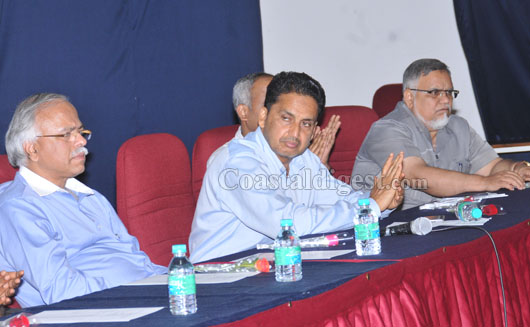
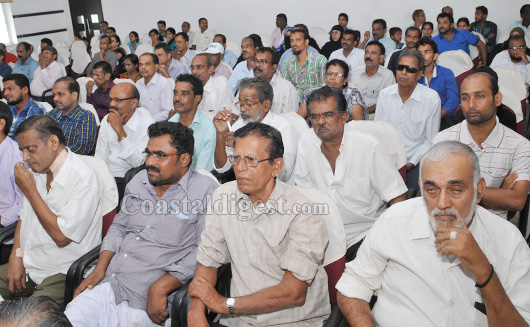
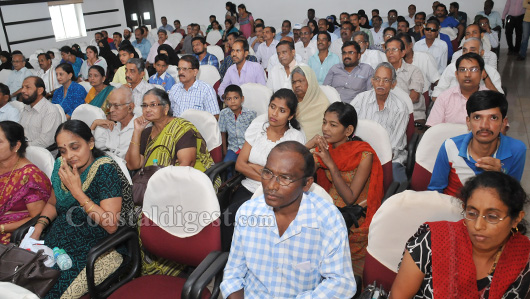
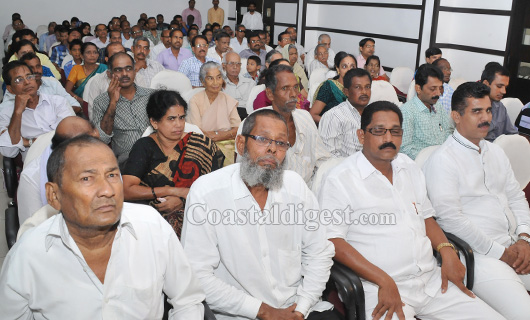
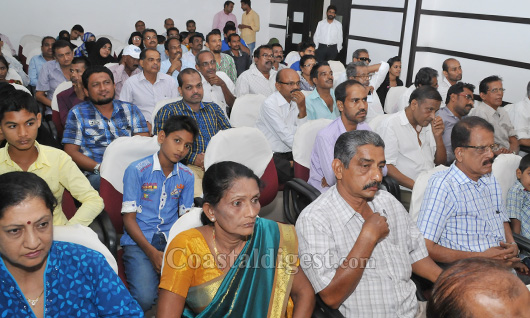
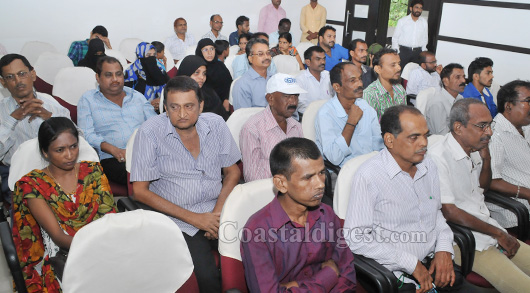
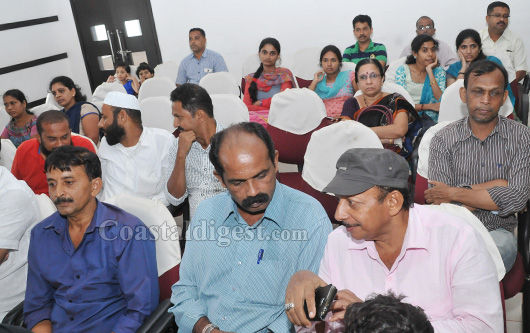
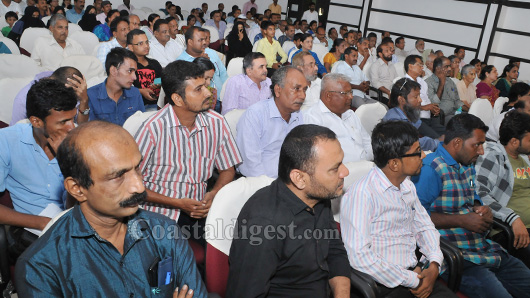
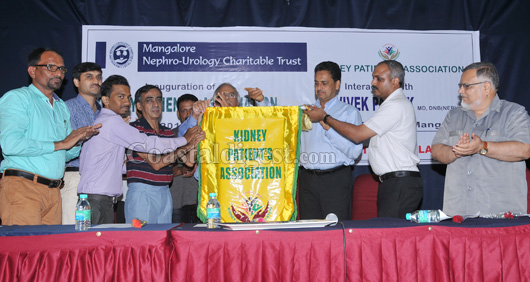
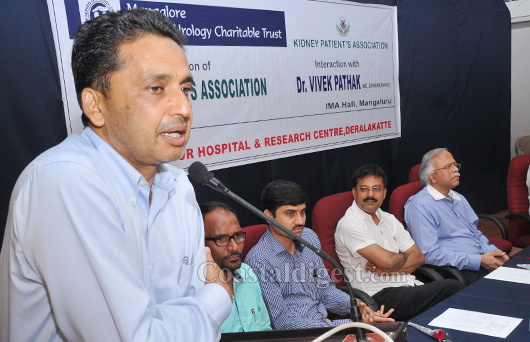
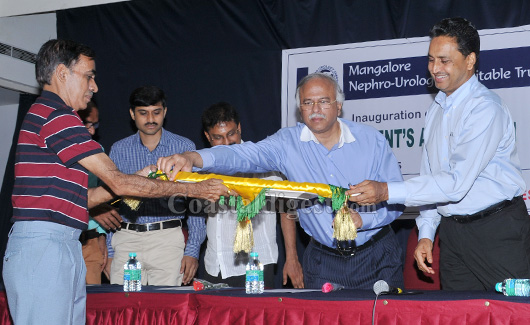
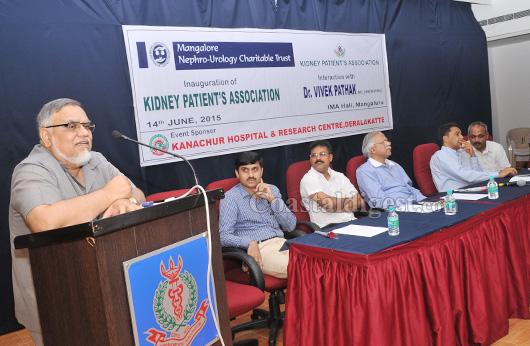
Dr Pathak, a consultant nephrologist at Kovai Medical Center and Hospitals, Coimbatore, known for steroids-free kidney transplantations, was speaking at the inauguration of Kidney Patients’ Association in the city on Sunday.
Kidney association 14 1

“Overeating leads to obesity which in turn leads to diabetes and high BP. No one dies by eating less,” he reminded, adding that stress also would invariably contribute to diabetes and high blood pressure.

Besides diabetes and high BP, such diseases could also happen hereditarily, especially when marriages were done among close relatives. Such practices should stop, he said.

Earlier, the association was formally inaugurated by A B Ibrahim, Deputy Commissioner, DK. Speaking on the occasion, he said that CKD were not included in health schemes because of the alleged involvement of kidney rackets.

Kidney association 14 1

However, it was true that patients were forced to undergo physical and financial ordeal, he said. “I will send a proposal to the government to bring them under the Vajpayee Arogyashree scheme,” Mr. Ibrahim said.

In his introductory address, Umar U.H., one of the members of Mangalore Nephro-Urology Charitable Trust that is promoting the association, said unlike other diseases, kidney disease would not be known till both the kidneys were damaged. While many other diseases were covered under government health schemes, chronic kidney diseases were not part of them.
Kidney association 14 1

Those undergoing dialyses as well as transplantation would have to spend thousands of rupees every month for medicines and treatment, he said.

Mohammed Saleem, chairman of the Trust, said it had been conducting awareness programmes on kidney diseases for the past three years. So far, help from society — associations, organisations, temple committees, Masjid jamats etc. — was being taken for treatment or dialysis of poor kidney patients. However, such a practice cannot go for long and the association was conceptualised.

Besides creating a corpus for the financial needs of patients, the association would also work as a collective to demand facilities for them, Dr. Saleem said.

Every dialysis centre would have information centres of the association where new patients would be informed about the procedure of treatment and available alternatives. It would primarily aim at disseminating information, he said.
Kidney association 14 1

Kidney association 14 1

Kidney association 14 1

Kidney association 14 1

Kidney association 14 1

Kidney association 14 1

Kidney association 14 1

Kidney association 14 1

Kidney association 14 1

Kidney association 14 1

Comments

Michel
 - 
Thursday, 18 Feb 2016

I havee been surfing online more than 3 hours today, yet I never found any interesting article like yours.
It is pretty worth enough for me. Personally, if all site owners and
bloggerrs made gookd content as you did, the internet will be much
more useful than ever before.

Here is my web-site; private storage gold iras (Florene: http://www.fellas.nl/Activiteiten/Activiteit/26-04-2013/TGIF-borrel_Gro…)

Levi
 - 
Friday, 29 Jan 2016

Many researchers believe that cinnamon might help
maintain normal levels of blood glucose levels.
Results noticed in patients have been administered 3 doses of cinnamon every day for 40 days included lowered blood triglycerides, reduced blood sugar, and decreased cholesterol.
Cinnamon was also given in other experiments alongside a placebo and
patients who received the cinnamon were found to possess significantly lower amounts of glucose inside blood.

Also visit my homepage diabetes
diet: http://diabetesbetter.com/

Add new comment

  • Coastaldigest.com reserves the right to delete or block any comments.
  • Coastaldigset.com is not responsible for its readers’ comments.
  • Comments that are abusive, incendiary or irrelevant are strictly prohibited.
  • Please use a genuine email ID and provide your name to avoid reject.
News Network
July 17,2020

Bengaluru, July 17: A 60-year-old woman who tested positive for Covid-19 allegedly ended her life in the Covid ward at KC General Hospital in the early hours of Friday.

The woman, the fourth Covid positive patient to end her life since April, was a resident of Mariyappanapalya near Jnanabharathi in West Bengaluru. She was found hanging from a window grille in the passage of the Covid ward around 5 am. She had used her sari to hang herself.

The police said that the woman was admitted to the hospital on July 1. She was responding well to the treatment and was almost cured. Her son was infected first and admitted to the same hospital. As she later tested positive and got admitted, her son was discharged on July 11. The police suspect that the woman may have resorted to the extreme step due to depression.

An investigating officer quoted doctors telling the police that they were about to inform the woman about her discharge date on Friday. Doctors were waiting for the report on her latest test before discharging her.

The woman’s body will be subjected to an autopsy as per the Covid standard procedure. The Malleswaram police have taken up a case of unnatural death. Investigations are on. 

On July 11, a 70-year-old man ended his life in the toilet of the Covid ward in Victoria Hospital, while a suicide was reported in the same ward on June 26. A 60-year-old woman also hanged herself in the toilet. Her son, daughter-in-law, and grandson were also admitted to hospital for Covid-19.

Comments

Add new comment

  • Coastaldigest.com reserves the right to delete or block any comments.
  • Coastaldigset.com is not responsible for its readers’ comments.
  • Comments that are abusive, incendiary or irrelevant are strictly prohibited.
  • Please use a genuine email ID and provide your name to avoid reject.
News Network
August 9,2020

Bengaluru, Aug 9: karnataka's Health Minister B Sriramulu has tested positive for the novel coronavirus. He has been hospitalised and is being treated for Covid-19. The minister has also asked all of those who came in contact with him recently to take necessary precautions.

Sriramulu made the announcement in a series of tweets on Sunday. He said, “After symptoms of flu, I have tested positive for coronavirus today.”

“Under the leadership of Honorable Chief Minister (BS Yediyurappa), all the departments of the government, including my department, have been working hard against Covid-19. From the time of corona's appearance, I have had the opportunity to visit 30 districts and work in harmony with the government's desire to treat people well. It is in this backdrop that I am going to be hospitalized and treated,” B Sriramulu said.

Karnataka’s Health Minister also added, “All those who have been in contact with me recently have been requested to take precautionary measures.”

Earlier this month, Karnataka Chief Minister BS Yediyurappa also tested positive for Covid-19. The state's Leader of Opposition and former CM Siddaramaiah of the Congress also declared that his samples too had returned positive for the infection. Both of the leaders are undergoing treatment for Covid-19 at the privately-owned Manipal hospital in Bengaluru.

According to the Ministry of Health and Family Welfare (MoHFW), Karnataka has 79,773 active cases while a total of 89,238 patients have been discharged in the state after recovering from Covid-19 and 3091 have succumbed to it.

Comments

Add new comment

  • Coastaldigest.com reserves the right to delete or block any comments.
  • Coastaldigset.com is not responsible for its readers’ comments.
  • Comments that are abusive, incendiary or irrelevant are strictly prohibited.
  • Please use a genuine email ID and provide your name to avoid reject.
Agencies
June 17,2020

Riyadh, Jun 17: Saudi Arabia is expected to scale back or call off this year's hajj pilgrimage for the first time in its modern history, observers say, a perilous decision as coronavirus cases spike.

Muslim nations are pressing Riyadh to give its much-delayed decision on whether the annual ritual will go ahead as scheduled in late July.

But as the kingdom negotiates a call fraught with political and economic risks in a tinderbox region, time is running out to organise logistics for one of the world's largest mass gatherings.

A full-scale hajj, which last year drew about 2.5 million pilgrims, appears increasingly unlikely after authorities advised Muslims in late March to defer preparations due to the fast-spreading disease.

"It's a toss-up between holding a nominal hajj and scrapping it entirely," a South Asian official in contact with Saudi hajj authorities said.

A Saudi official said: "The decision will soon be made and announced."

Indonesia, the world's most populous Muslim nation, withdrew from the pilgrimage this month after pressing Riyadh for clarity, with a minister calling it a "very bitter and difficult decision".

Malaysia, Senegal and Singapore followed suit with similar announcements.

Many other countries with Muslim populations -- from Egypt and Morocco to Turkey, Lebanon and Bulgaria -- have said they are still awaiting Riyadh's decision.

In countries like France, faith leaders have urged Muslims to "postpone" their pilgrimage plans until next year due to the prevailing risks.

The hajj, a must for able-bodied Muslims at least once in their lifetime, represents a major potential source of contagion as it packs millions of pilgrims into congested religious sites.

But any decision to limit or cancel the event risks annoying Muslim hardliners for whom religion trumps health concerns.

It could also trigger renewed scrutiny of the Saudi custodianship of Islam's holiest sites -- the kingdom's most powerful source of political legitimacy.

A series of deadly disasters over the years, including a 2015 stampede that killed up to 2,300 worshippers, has prompted criticism of the kingdom's management of the hajj.

"Saudi Arabia is caught between the devil and the deep blue sea," Umar Karim, a visiting fellow at the Royal United Services Institute in London, told AFP.

"The delay in announcing its decision shows it understands the political consequences of cancelling the hajj or reducing its scale."

"Buying time"

The kingdom is "buying time" as it treads cautiously, the South Asian official said.

"At the last minute if Saudi says 'we are ready to do a full hajj', (logistically) many countries will not be in a position" to participate, he said.

Amid an ongoing suspension of international flights, a reduced hajj with only local residents is a likely scenario, the official added.

A decision to cancel the hajj would be a first since the kingdom was founded in 1932.

Saudi Arabia managed to hold the pilgrimage during previous outbreaks of Ebola and MERS.

But it is struggling to contain the virus amid a serious spike in daily cases and deaths since authorities began easing a nationwide lockdown in late May.

In Saudi hospitals, sources say intensive care beds are fast filling up and a growing number of health workers are contracting the virus as the total number of cases has topped 130,000. Deaths surpassed 1,000 on Monday.

To counter the spike, authorities this month tightened lockdown restrictions in the city of Jeddah, gateway to the pilgrimage city of Mecca.

"Heartbroken"

"The hajj is the most important spiritual journey in the life of any Muslim, but if Saudi Arabia proceeds in this scenario it will not only exert pressure on its own health system," said Yasmine Farouk from the Carnegie Endowment for International Peace.

"It could also be widely held responsible for fanning the pandemic."

A cancelled or watered-down hajj would represent a major loss of revenue for the kingdom, which is already reeling from the twin shocks of the virus-induced slowdown and a plunge in oil prices.

The smaller year-round umrah pilgrimage was already suspended in March.

Together, they add $12 billion to the Saudi economy every year, according to government figures.

A negative decision would likely disappoint millions of Muslim pilgrims around the world who often invest their life savings and endure long waiting lists to make the trip.

"I can't help but be heartbroken -- I've been waiting for years," Indonesian civil servant Ria Taurisnawati, 37, told AFP as she sobbed.

"All my preparations were done, the clothes were ready and I got the necessary vaccination. But God has another plan."

Comments

Add new comment

  • Coastaldigest.com reserves the right to delete or block any comments.
  • Coastaldigset.com is not responsible for its readers’ comments.
  • Comments that are abusive, incendiary or irrelevant are strictly prohibited.
  • Please use a genuine email ID and provide your name to avoid reject.