


Karnataka needs 1,725 new liquor stores, estimates Excise dept

News Network
February 10, 2016

Bengaluru, Feb 10: Based on the 2011 census, the Excise department has estimated that 1,725 new liquor retail shops (CL-2) are required in the State. The new licences would generate more revenue for the State exchequer and will also help curb the illegal sale of liquor.
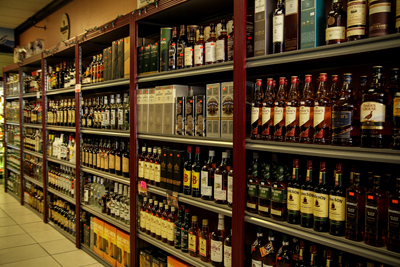
liquorPreviously, the CL-2 estimation was done based on the norms of the Excise Act, which permits one liquor shop for every 15,000 persons in rural areas and one shop for every 7,500 persons in urban areas. The government had granted more arrack shops in rural areas before 2007 (sale of arrack was banned that year). As there were more arrack shops the number of CL-2 lincences in rural areas was confined.

The State issued 3,935 licences (CL-2)?in 1992 based on the population data released in 1991. Though it has been two-and-half decades since then, the government has not issued any new licences in this category or for bar and restaurants (CL-9).

On the other hand, the government has been issuing new licences in the categories of CL-4 (clubs), CL-6A (star hotels), CL-7 (hotels and boarding houses), CL-7D (hotels and boardings houses owned by SC and ST), CL-8 (military canteen stores) and CL-8A (bonded warehouse). It had put a ban on CL-2 and CL-9.

A total of 9,871 liquor licences in various categories bring the State a good revenue. Increase in sales every year and additional tax impositions are also helping the government double liquor revenue.

An official from the department told Deccan Herald that issuing fresh licences would fetch the State exchequer more revenue, as the CL-2 shops have to pay the licence fee every year. The move will also help stop shops from charging extra as they face no competition.

The department has submitted its estimation report and had also sent a proposal to the government on three different occasions to issue new licences. But it has not yet made a decision in this regard, said Excise Commissioner Umashankar R S.

The department has fixed the licence fee for each category based on various parameters. For instance a CL-2 licence holder has to pay Rs 4.6 lakh every year if it is located in a corporation city with a population of more than 20 lakh, otherwise it costs Rs 3.64 lakh per year.

Comments

Subhan
 - 
Saturday, 27 Jun 2020

I want to bar licence

Jotiba jondhale
 - 
Saturday, 18 May 2019

I want new Bear bar licence

Jotiba jondhale
 - 
Saturday, 18 May 2019

J​​​​​​​​​​otiba jondhale

Sumith Kumar
 - 
Thursday, 10 Jan 2019

I want new bar licence

Need more info…
 - 
Thursday, 16 Nov 2017

Contact 8660779219

hariba. pavane
 - 
Saturday, 24 Dec 2016

cl 2 bar license information

hariba. pavane
 - 
Saturday, 24 Dec 2016

bar licence information

vinod
 - 
Wednesday, 10 Feb 2016

employment is generate through this to the shop & to the hospital too, nurses, Pharmacy, Dr; ambulance drives & all their family, this is the other side of the coin

vinod
 - 
Wednesday, 10 Feb 2016

If some body wants to drink, let them enjoy their life, let them drink sensibly, if some one is determined to drink no one can stop, you can see cases in Saudi Arabia, Gujarat people still drink cheap liquor, see always other side of the coin also, sharab, juaa or shabab this are man's weekness, now dont start give lecture on this, if you have not done any of this then you are welcome for the lecture

Fayaz Abdullah
 - 
Wednesday, 10 Feb 2016

please ban liquor seriously some family is suffering from it, for the development of the family everyone should work hard, but this liquor make them to spend all hard worked money to their habit.

Narvante
 - 
Wednesday, 10 Feb 2016

Only liquor hoses ? Brothels no need?
God knows y this Siddu govt is acting like Yeddy govt

IBRAHIM.HUSSAIN
 - 
Wednesday, 10 Feb 2016

It seems that Government of Karnataka need more money to spend their MLA's/MLC's and ministers expenditures. There are other states are thinking total ban on liquor whereas Karnataka is thinking of more licenses to liquor shops. The scapegoats are poor and middle class people of this state.

Siddaramayya must think more time on this and no more licenses are issued and don't bend down to the liquor lobby.

Santhosh
 - 
Wednesday, 10 Feb 2016

helmet compulsory, its saves head from accident, Liquor compulsory again it kills all part of the body, look at the govt policy, shame on selfish policy of karnataka govt, fools ruling govt.

Add new comment

  • Coastaldigest.com reserves the right to delete or block any comments.
  • Coastaldigset.com is not responsible for its readers’ comments.
  • Comments that are abusive, incendiary or irrelevant are strictly prohibited.
  • Please use a genuine email ID and provide your name to avoid reject.
coastaldigest.com web desk
June 9,2020

With the steep hike in excise duty in the past couple of months, an average consumer of petrol now pays over 275% in taxes to centre and states on a litre of the fuel.  The base price of petrol is just about Rs 18. The taxes are close to Rs 50 and the pump price is over Rs 72.

India imports 85% of all its crude oil demand.  After a steep hike in excise duty in the past two months despite a hold on daily price revisions by the oil public sector undertakings (PSUs), Indian consumers now pay 275% collectively in excise duty to state and centre. 

The central government hiked excise on petrol and diesel by Rs 10 and Rs 13 respectively last month. The excise duty on petrol is taxed around Rs 33-a-litre while the same on diesel it is Rs 32.

The Value-Added Tax (VAT) on both petrol and diesel is Rs 16.44 and Rs 16.26 respectively. Both the taxes together are around Rs 49 while it is sold at petrol pumps at 73-per-litre.

These two taxes cumulatively account for 69% of tax which is higher than anywhere else in the world. The same is taxed at 19% in the US, 47% in Japan, UK 62% and 63% in France. The government does not pass on the benefit of lower crude oil prices to the customer.

It is to be noted that Indian consumers continued to pay Rs 70-a-litre even when crude oil prices hit a paltry US $ 20-a-barrel on April 12.

Former finance minister and Congress leader recently took a jab at the Centre over rising prices stating, “Fuel selling prices raised twice in two days, following tax hikes two weeks ago. This time to benefit oil companies. Government is poor, it needs more taxes. Oil companies are poor, they need better prices. Only the poor and middle class are not poor, so they will pay”.

Comments

Lovely indian
 - 
Wednesday, 10 Jun 2020

Acche din for modi bakth....lets enjoy


you need only ram mandir and NRC

Add new comment

  • Coastaldigest.com reserves the right to delete or block any comments.
  • Coastaldigset.com is not responsible for its readers’ comments.
  • Comments that are abusive, incendiary or irrelevant are strictly prohibited.
  • Please use a genuine email ID and provide your name to avoid reject.
coastaldigest.com web desk
June 27,2020

New Delhi, June 27: The Prime Minister Narendra Modi-led union government of India is not ready to stop all imports from aggressive China in spite of mount calls to boycott Chinese products in India.

The Centre is reportedly considering to stop only non-essential imports from the neighbouring country.

However, the Inward shipment in sectors such as automobiles, pharmaceuticals, certain electronics and others will continue until a domestic alternative is found.

“India will gradually move towards import substitution. It will not happen overnight. In the meantime, attention has to be paid on production and job creation. We cannot throttle our industry. There are certain absolutely essential imports. Needless to say, those will keep going,” official sources said.

Sources said that both the government and the industry are in the process of identifying products that can be domestically manufactured in the medium term. There are certain chemicals, automotive components, handicrafts, cosmetics, agriculture items and certain consumer electronics, which can be manufactured domestically in the short to medium term. The government is doing all it can to raise the capacity of domestic industries.

However, there are certain other imports in the automobile and the pharmaceutical sectors which cannot be done away within the short to medium term. Their domestic production at the moment may not be that cost-effective.

The six-crore strong traders’ body CAIT has been at the forefront of such a demand and has launched a campaign to celebrate Indian Diwali this year with a total absence of Chinese goods.

“Ease of doing business, capital availability at lower rates and globally competitive logistics and energy costs are some of the prerequisites that the government should look into to ensure the growth of the domestic auto component industry,” according to Automotive Component Manufacturers Association of India (ACMA) Director General Vinnie Mehta.

Maruti Suzuki Chairman R C Bhargava said, “People who are boycotting Chinese goods have to remember that in some cases it may lead to their being asked to pay more for the same product."

Meanwhile, domestic rating agency Acuite Ratings & Research has analysed the current import portfolio from China and found 40 sub-sectors have the potential to lower their import dependency on China. These sectors contribute to $33.6 billion worth of imports from China and about 25% of these imports can be substituted by local manufacturing without any significant additional investments.

Comments

Add new comment

  • Coastaldigest.com reserves the right to delete or block any comments.
  • Coastaldigset.com is not responsible for its readers’ comments.
  • Comments that are abusive, incendiary or irrelevant are strictly prohibited.
  • Please use a genuine email ID and provide your name to avoid reject.
News Network
April 23,2020

Bengaluru, Apr 23: The Karnataka government on Wednesday promulgated 'The Karnataka Epidemic Diseases Ordinance 2020' that provides the state with a power to seal borders, restrict essential services and punish those attacking public servants and damaging public property.

The Ordinance comes after violence in Padarayanapura when the police and BBMP officials were attacked while they tried to take some secondary contacts of a deceased COVID-19 patient into quarantine on April 19.

The Ordinance, which was promulgated after the Centre's guidelines in this regard, said, "The offender shall be liable for a penalty of twice the value of public or private property damaged as determined by the Deputy Commissioner after an inquiry."

It further said that if the penalty is not paid by the offender, then the amount shall be recovered under provisions of the Karnataka Land Revenue Act, 1964. The Deputy Commissioner can even attach the property of such offender in due course.

Also, abetment of offence would attract imprisonment of up to two years and a penalty of Rs 10,000 or both.

"No person shall commit or attempt to commit or instigate, incite or otherwise abet the commission of offence to cause loss or damage to any public or private property in any area when restrictions and regulations are in force to contain any epidemic disease," the Ordinance said.

Whoever contravenes such provision shall be punished with imprisonment for a term which shall not be less than six months, but may extend to three years and with fine which may extend to Rs 50,000, it added.

On Wednesday, the Centre brought an Ordinance to end violence against health workers, making it a cognisable and non-bailable offence with imprisonment up to seven years for those found guilty.

"We have brought an Ordinance under which any attack on health workers will be a cognisable and non-bailable offence. In the case of grievous injuries, the accused can be sentenced from six months to seven years. They can be penalised from Rs 1 lakh to Rs 5 lakhs," Union Minister Prakash Javadekar briefed media after Cabinet meeting.

Javadekar said that an amendment will be made to the Epidemic Diseases Act, 1897 and ordinance will be implemented.
This comes amid nationwide lockdown in the wake of COVID-19.

Comments

Add new comment

  • Coastaldigest.com reserves the right to delete or block any comments.
  • Coastaldigset.com is not responsible for its readers’ comments.
  • Comments that are abusive, incendiary or irrelevant are strictly prohibited.
  • Please use a genuine email ID and provide your name to avoid reject.