


Facebook is asking you to act now and save the "free" Internet; but so are activists!

December 17, 2015

Dec 17: Many of us woke up today to notifications on our Facebook timeline where our friends showed their support for the free internet. In India, free means a lot.
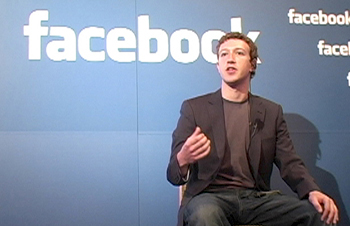
fbSo if Facebook and activists both expect you to act to save the free Internet, who do you trust? Although the world also has two distinct meanings for the word free, in India both meanings matter a lot. In 1947, we got to know one side of the word free! Free as in freedom. The open source movement thrives on this idea of freedom, which emphasises on the liberty to make a choice. Even if it may be convoluted, or take an extra while to accomplish a simple task; it is, nonetheless, a privilege to be able to decide for oneself.

On a similar front, free has another meaning. Where free comes with no charge. It"s the best thing to happen during the year end. Obviously nothing is every given for free! It"s usually a bundle. For instance, you buy a shirt and get another free. What it usually comes down to is you get 2 shirts for the price of one. Or one shirt at half the price. In effect, you paid for one shirt, but end up getting two.

Clearly free is the most exciting word we can hear of. It excites us, and we look forward to free around any deal we may get.

So essentially, what is it with Faceb

ook that it has managed to put off so many people and get them to vociferously oppose its Free Basic package.

It"s interesting how the debate to net neutrality began with activists setting up a website (savetheinternet.in). And now Facebook is taking the same route, but countering the Net Neutrality camp by influencing its user base to send emails to Trai that renders their support for Free Basics in India.

The user clicking on the Send Email button is showing support for Digital Equality, which is a good term for free as in free of charge. But that free, hinders the basic aspect of freedom, of choice, that many more want to defend with all might!

The email that is drafted by Facebook on your behalf reads:

To the Telecom Regulatory Authority of India, I support digital equality for India. Free Basics provides free access to essential Internet services, such as communication, education, healthcare, employment, farming information and more. It helps those who can"t afford to pay for data, or who need a little help with getting started online. And it"s open to all people, developers and mobile networks. With 1 billion Indian people not yet connected, shutting down Free Basics would hurt our country"s most vulnerable people. I support Free Basics and digital equality for India. Thank you.

Over the series of meetings that Mark Zuckerberg has had with the Indian Prime Minister Narendra Modi, and his subsequent interest in India, there has been some key messages that have stood out. And that is the need to get more Indians on the Internet. In reality, Facebook. We"ve seen Sundar Pichai also take an active interest to push for Wi-Fi, which is good. But we believe, there"s much more that needs to be done!

You"d probably agree, there"s a strong business case to focus on India. Over the years, our sheer population has moved from being a liability to being our greatest asset. For we"ve created a huge internet hungry audience. The best thing for companies such as Google and Facebook.

However, there"s a key difference in the approach taken by Google and Facebook. While Google is enabling free internet through Wi-Fi networks, Facebook is riding on a fine line, between what is noble and what isn"t. Free internet would eventually come at a price. And that price is freedom itself. Strong activists who have been fighting for net neutrality, or the objective independence of data packets we access online have vehemently opposed Facebook"s Free Basics plan. Some of these individuals include Sir Tim Berners-Lee, the creator of the modern web.

In addition, Google is also working towards speeding up the mobile internet experience by delivering lighter, leaner web pages, which is quite similar to Opera Turbo that enabled closer delivery of web content, through more optimised and compressed data packets.

Update: In response to this story, Facebook has issued an official statement, attributed to its spokesperson: “Hundreds of millions of people in India use the Internet every day and understand the benefits it can bring. This campaign gives people the opportunity to support digital equality in India. It lets people speak in support of the one billion people in India who remain unconnected, and lets them participate in the public debate that is being held by The Telecom Regulatory Authority of India on differential pricing for data services. And it gives them the opportunity to support Free Basics, which is proven to bring more people online and accelerate full internet adoption.”

Effectively, you are expected to take a stand. Which side of free are you on? If you"re undecided, then the basic rule may help – there"s nothing like a free beer!

Comments

Parthenia
 - 
Sunday, 14 Feb 2016

Wow, awesome blog layout! How long have you been blogging for?
you made blogging look easy. The overall look of your site is great, let alone the content!

Also visit my web site create custom shirts: http://createteeshirts.net

Kenny
 - 
Wednesday, 13 Jan 2016

Akuratny przesiew twardosci zasilacza pragnie z niniejszego, co zakladamy zanim wspomóc Totez te, jesliby planuja Mocarstwo zjednac rozswietlenie LED
reklamuje wypominac: Zasilacze do rozjasnienia LED
wykonuja na trendzie zrównowazonym DC, na rozciagnieciu 12V (wylacznie 24V szyldy potrzebuja
wiekszego zasilania

Also visit my web page :: Tasma LED 300 wodoodporna: http://www.xinsheng3.com/comment/html/?5072.html

Add new comment

  • Coastaldigest.com reserves the right to delete or block any comments.
  • Coastaldigset.com is not responsible for its readers’ comments.
  • Comments that are abusive, incendiary or irrelevant are strictly prohibited.
  • Please use a genuine email ID and provide your name to avoid reject.
Agencies
June 27,2020

Mumbai, Jun 27: The Bombay High Court observed that COVID-19 patients from poor and indigent sections cannot be expected to produce documentary proof to avail subsidised or free treatment while getting admitted to hospitals.

The court on Friday was hearing a plea filed by seven residents of a slum rehabilitation building in Bandra, who had been charged ₹ 12.5 lakh by K J Somaiya Hospital for COVID-19 treatment between April 11 and April 28.

The bench of Justices Ramesh Dhanuka and Madhav Jamdar directed the hospital to deposit ₹10 lakh in the court.

The petitioners had borrowed money and managed to pay ₹10 lakh out of ₹12.5 lakh that the hospital had demanded, after threatening to halt their discharge if they failed to clear the bill, counsel Vivek Shukla informed the court.

According to the plea, the petitioners were also overcharged for PPE kits and unused services.

On June 13, the court had directed the state charity commissioner to probe if the hospital had reserved 20% beds for poor and indigent patients and provided free or subsidised treatment to them.

Last week, the joint charity commissioner had informed the court that although the hospital had reserved such beds, it had treated only three poor or indigent persons since the lockdown.

It was unfathomable that the hospital that claimed to have reserved 90 beds for poor and indigent patients had treated only three such persons during the pandemic, advocate Shukla said.

He further argued that COVID-19 patients, who are in distress, cannot be expected to produce income certificate and such documents as proof.

However, senior advocate Janak Dwarkadas, who represented the hospital, said the petitioners did not belong to economically weak or indigent categories and had not produced documents to prove the same.

A person who is suffering from a disease like COVID-19 cannot be expected to produce certificates from a tehsildar or social welfare officer before seeking admission in the hospital, the bench noted and asked the hospital to deposit ₹10 lakh in court within two weeks.

Comments

Add new comment

  • Coastaldigest.com reserves the right to delete or block any comments.
  • Coastaldigset.com is not responsible for its readers’ comments.
  • Comments that are abusive, incendiary or irrelevant are strictly prohibited.
  • Please use a genuine email ID and provide your name to avoid reject.
Agencies
May 15,2020

Kolkata, May 15: Veteran Bengali author Debesh Roy, who was conferred the Sahitya Akademi award for his novel 'Teesta Parer Brittanto', died at a private hospital in Kolkata on Thursday, his family members said.

Roy was 84 and he is survived by his son. His wife had died earlier.

He was admitted to the hospital near his residence at Baguihati, in the eastern fringes of the city, on Wednesday after having symptoms like sodium potasium imbalance, sugar problem and breathing problem, his family members said.

He suffered a massive cardiac arrest and died at 10.50 PM.

A regular contributor to a number of Bengali dailies, he was a staunch critic of the attacks on liberals by in the country in recent times and attended protest meetings despite his failing health.

He was born in Pabna in present-day Bangladesh on December 17, 1936. He had five decades of career as a writer.

Besides Teesta Parer Britanta', he will be remembered for books like Borisaler Jogen Mondal , Manush Khun Kore Keno and Samay Asamayer Brittanto . His first book was Jajati.

His last rites will be performed tomorrow.

Comments

Add new comment

  • Coastaldigest.com reserves the right to delete or block any comments.
  • Coastaldigset.com is not responsible for its readers’ comments.
  • Comments that are abusive, incendiary or irrelevant are strictly prohibited.
  • Please use a genuine email ID and provide your name to avoid reject.
Agencies
February 27,2020

Feb 27: With the window to submit comments on India's proposed personal data protection law closing on Tuesday, a period of anxious wait for final version of the Bill started for social media firms.

This comes even as global Internet companies have called on the government for improved transparency related to intermediary Guidelines (Amendment) Rules and allay fears about the prospect of increased surveillance and prompting a fragmentation of the Internet in India that would harm users.

As per the proposed amendments, an intermediary having over 50 lakh users in the country will have to be incorporated in India with a permanent registered office and address.

When required by lawful order, the intermediary shall, within 72 hours of communication, provide such information or assistance as asked for by any government agency or assistance concerning security of the state or cybersecurity.

This means that the government could pull down information provided by platforms such as Wikipedia, potentially hampering its functioning in India.

In the open letter to IT Minister Ravi Shankar Prasad, leading browser and software development platform like Mozilla, Microsoft-owned GitHub and Cloudflare earlier called for improved transparency by allowing the public an opportunity to see a final version of these amendments prior to their enactment.

According to a Business Insider report, Indian users may lose access to Wikipedia if the new intermediary rules for internet and social media companies are approved.

Since the rules would require the website to take down content deemed illegal by the government, it would require Wikipedia to show different content for different countries.

Anusha Alikhan, senior communications director for Wikimedia told Business Insider that the platform is built though languages and not geographies. Therefore, removing content from one country, while it is still visible to other country users may not work for the company’s model.

India is one of Wikipedia’s largest markets. Over 771 million Indian users accessed the site in just November 2019.

Also read: Explained: What is the Personal Data Protection Bill and why you should care

The Personal Data Protection Bill, 2019, which was introduced in Lok Sabha in the winter session last year, was referred to a Joint Parliamentary Committee (JPC) of both the Houses.

The government last month decided to seek views and suggestions on the Bill from individuals and associations and bodies concerned and the last date for submitting the comments was on Tuesday.

Prasad, while introducing the Personal Data Protection Bill, 2019, in the Lok Sabha on December 11, announced that the draft Bill empowers the government to ask companies including Facebook, Google and others for anonymised personal data and non-personal data.

There was a buzz when the Bill's latest version was introduced in the Lok Sabha, especially the provision seeking to allow the use of personal and non-personal data of users in some cases, especially when national security is involved.

Several legal experts red-flagged the issue and said the provision will give the government unaccounted access to personal data of users in the country.

In their submission to the JPC, several organisations also flagged that the power to collect non-personal and anonymised data by the government without notice and consent should not form part of the Bill because of issues regarding effective anonymisation and potential abuse.

"Clauses 35 and 36 of the Bill provide unbridled access to personal data to the Central Government by giving it powers to exempt its agencies from the application of the Bill on the basis of various broad worded grounds," SFLC.in, a New Delhi-based not-for-profit legal services organisation, commented.

The Software Alliance, also known as BSA, a trade group which includes tech giants such as Microsoft, IBM and Adobe, among others said that the current version of the privacy bill pose substantial challenges, including the sweeping new powers for the government to acquire non-personal data, restrictions on data transfers, and local storage requirements.

"We urge the Joint Parliamentary Committee, as it considers revisions to the Bill, to eliminate provisions concerning non-personal data from the Personal Data Protection Bill and to remove the data localisation requirements and restrictions on international data flows," said Venkatesh Krishnamoorthy, Country Manager-India, BSA.

The Personal Data Protection (PDP) Bill, 2019 draws its origins from the Justice B.N. Srikrishna Committee on data privacy, which produced a draft of legislation that was made public in 2018 ("the Srikrishna Bill").

The mandatory requirement for storing a mirror copy of all personal data in India as per Section 40 of the Srikrishna Bill has been done away with in the PDP Bill, 2019, meaning that companies like Facebook and Twitter would be able to store data of Indian users abroad if they so wish.

But the bill prohibits processing of sensitive personal data and critical personal data outside India.

What is more, what constitutes critical data has not been clearly defined.

As per the proposals, social media companies will have to modify their application as they are required to have a system in place by which a user can verify themselves.

So legal experts believe that some system to upload identification documents should be there and something like the Twitter blue tick mark should be there to identify verified accounts.

"The 2019 Bill introduces a new category of data fiduciaries called social media intermediaries ('SMIs'). SMIs are a subcategory of significant data fiduciaries ('SDFs') and will be notified by the Central government after due consultation with the DPA, or the Data Protection Authority. Clause 26(4) of the Bill defines SMIs as intermediaries who primarily or solely enable online interaction between two or more users," SFLC.in said.

"On a plain reading of the definition, online platforms like Facebook, Twitter, YouTube, TikTok, ShareChat and WhatsApp are likely to be notified as SMIs under the Bill," it added.

Comments

Add new comment

  • Coastaldigest.com reserves the right to delete or block any comments.
  • Coastaldigset.com is not responsible for its readers’ comments.
  • Comments that are abusive, incendiary or irrelevant are strictly prohibited.
  • Please use a genuine email ID and provide your name to avoid reject.