


Black money: SIT asks agencies to share data on ongoing case

June 29, 2014

New Delhi, Jun 29: The Special Investigation Team (SIT) on black money has sought details of all major cases of tax evasion and criminal financial fraud being probed by various investigative agencies which are mandated to keep a check on such instances.
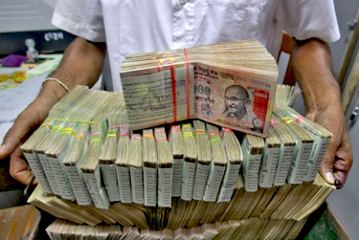
Black moneySources said that the SIT headed by retired Supreme Court Justice M B Shah has asked the 11 departments on its panel to furnish fine details of these cases and the status of their probes, including any problems being faced by investigators in taking the cases forward for prosecution or penalty.

The member departments/agencies of SIT are the Department of Revenue (under the Ministry of Finance), RBI, Intelligence Bureau, Enforcement Directorate, CBI, Income Tax department, Narcotics Control Bureau, Directorate of Revenue Intelligence, Financial Intelligence Unit, Research and Analysis Wing and the Foreign Tax and Tax Research wing under the Central Board of Direct Taxes (CBDT).

The sources said the SIT has asked for the data in order to understand the trends and magnitude of the menace of black money and generation of illegal funds in the country, which is done through a variety of ways like evasion of taxes and duties, flouting of foreign exchange laws, creation of disproportionate assets, creation of 'benami' properties within the country and outside and laundering of wealth obtained through illegal and corrupt means.

The departments, they said, are in the process of submitting these details in the stipulated format to SIT and these will be taken up during the next meeting of the panel, expected to take place some time next month.

RBI has recently directed all banks and financial institutions to provide the information and documents sought by the high-profile panel.

The SIT, formed upon the directions of Supreme Court, had its first meeting earlier this month here at the North Block office of the Finance Ministry.

The high-level team has also decided to look into the contentious issue of secrecy clauses in India's tax treaties with Switzerland and other countries.

Retired apex court judge Arijit Pasayat is the Vice Chairman of the SIT while top officials of the 11 high-profile agencies and departments are its members.

After the first meeting of the SIT, the government had said the detailed modalities of proceeding further with the Supreme Court mandate were discussed and the road map decided.

The SIT's mandate, as notified, requires it to go into "all issues relating to matters concerning and arising from unaccounted monies of Hasan Ali Khan and Kashinath Tapariah".

Pune-based Khan, a stud farm owner, was arrested by Enforcement Directorate in connection with money laundering and tax evasion cases. Tapariah is his aide.

The other tasks of SIT include all investigations already started and pending or awaiting to be initiated with respect to any other known instances of the stashing away of unaccounted cash in foreign bank accounts by Indians or other entities operating in India.

The panel has also been empowered "to further investigate even where charge-sheets have been previously filed and SIT may register further cases and conduct appropriate investigations and initiate proceedings for the purpose of bringing back unaccounted monies unlawfully kept in bank accounts abroad."

The SIT will also keep the apex court informed about all major developments by filing periodic status reports in this regard, the government notification had said.

Comments

Add new comment

  • Coastaldigest.com reserves the right to delete or block any comments.
  • Coastaldigset.com is not responsible for its readers’ comments.
  • Comments that are abusive, incendiary or irrelevant are strictly prohibited.
  • Please use a genuine email ID and provide your name to avoid reject.
News Network
March 2,2020

New Delhi, Mar 2: As communal violence spiked in north-east Delhi earlier this week, Hindu, Muslim and Sikh residents of a colony came together and stood guard against frenzied mobs which ran riot in nearby areas vandalising homes, shops and torching cars.

They have not let their guard down even as the situation is limping back to normalcy following four days of violence that has claimed at least 42 lives and left over 200 injured.

The B-Block colony in Yamuna Vihar has a Hindu-dominated Bahjanpura on one side and Muslim populated Ghonda on the other.

People from all faiths in the locality sit outside their homes at night and deal with any suspected outsider, Arib, a dentist in his 30s, said.

"It is the sloganeering by mobs that causes panic in the dead of night. Such slogans are from both sides and we hear groups of people moving forward towards our area.

"This is where we let the Muslim locals deal with Muslim groups and Hindu residents deal with Hindu groups coming from outside," he said.

Businessmen, doctors and people working at government offices stuck together as violence reached its crest on Monday and Tuesday, and have been guarding the locality round the clock.

Earlier, the locals had claimed inadequate police deployment in the area, but were satisfied as patrolling by security personnel increased in the last two days.

Charanjeet Singh, a Sikh who owns a transport firm, said residents have ensured that not too many people gather to guard the colony at night. It has been decided not use sticks or rods, an idea which seems to have worked in maintaining peace, he said.

"I was 10 years old when we came to this locality from Uttar Pradesh's Meerut in 1982. There were riots in 1984 and tension in 2002, but even then our area remained peaceful. We have always been united and that is the way we have helped each other," Singh, who is now in his 50s, told PTI.

Faisal, a businessman in his 30s, said after two days of major violence, there was palpable tension in the area. "Nobody could sleep in the neighbourhood even on Wednesday and Thursday when the situation was brought under control," he said.

Faisal said around 4 am on Wednesday, three to four miscreants had torched a car, but were chased away by vigilant residents. They raised an alarm and others gathered, saving other vehicles parked nearby from being damaged, he added.

On the idea of not keeping sticks while guarding B-Block, Singh said, "Violence begets violence, crowd begets crowd. We thought if somebody would see sticks or rods in our hands from a distance and large crowds standing guard, it is likely they would want to come prepared. This could fuel violence."

"Now, if there is some young man returning late in the night, we identify if he belongs to our area. If not, we normally inform him about the situation and guide him to his destination, if required," he added.

Seventy-year-old V K Sharma said people in his colony never had any trouble with each other, as he blamed "outside elements" for the violence in north-east Delhi.

"Some people have some problem with symbols. If they find a particular religion's symbol on a shop, home or a car, they vandalise it.

"This is on both sides, Hindus as well as Muslims. But not all people in all religion are like that. There are good people who outnumber these handful people involved in violence," he said.

The violence happened for two days but it would take months for fear to subside, Sharma said, as he took out his two granddaughters, aged nine and two, out for ice cream.

"I cannot reduce the tension outside my home, but at least I can make these kids feel good by reducing their craving for ice cream,” he added.

Colony resident Shiv Kumar, a property consultant, and Wasim, a government official, said they too were members of this voluntary guards' team of the colony which stays up at night to fend off miscreants.

Comments

Add new comment

  • Coastaldigest.com reserves the right to delete or block any comments.
  • Coastaldigset.com is not responsible for its readers’ comments.
  • Comments that are abusive, incendiary or irrelevant are strictly prohibited.
  • Please use a genuine email ID and provide your name to avoid reject.
News Network
January 6,2020

Jan 6: India’s Finance Ministry has delivered a challenge to its revenue collectors: meet tax targets despite $20 billion of corporate tax cuts.

Through a video conference on Dec. 16, officials were exhorted to meet the direct tax mop-up target of 13.4 trillion rupees ($187 billion), a government official told reporters. Collection in the eight months to November grew at 5% from a year earlier, against the desired 17%.

The missive shows Prime Minister Narendra Modi’s urgent need to buoy public finances in a slowing economy where April-November tax collections were half the amount budgeted. Authorities withheld some payments to states and have capped ministries’ expenditure as the fiscal deficit ballooned beyond the target.

The government’s efforts to maintain its deficit goal goes against advice from some quarters, including central bank Governor Shaktikanta Das, who urged more spending to spur economic growth.

It’s uncertain though how much room Modi’s administration has to boost expenditure, given that it may already be borrowing as much as 540 billion rupees through state-run companies, a figure that isn’t reflected on the federal balance sheet. Uncertainty about public finances pushed up sovereign yields in November and December, compelling Das to announce unconventional policies to keep costs in check.

“This is not a time to conceal the fiscal deficit by off-budget borrowing or deferring payments,” said Indira Rajaraman, an economist and a former member of the Reserve Bank of India’s board. “If they were to stick to the target, that would be catastrophic because there is so much pump-priming that is needed right now.”

GDP grew 4.5% in the quarter ended September, the slowest pace in more than six years as both consumption and investments cooled in Asia’s third-largest economy. Only government spending supported the expansion, piling pressure on Modi to keep stimulating.

S&P Global Ratings warned in December it may downgrade India’s sovereign ratings if economic growth doesn’t recover. Government support seems to be waning now, with ministries asked to cap spending in the final quarter of the financial year at 25% of the amount budgeted rather than 33% allowed earlier. This new rule will hamstring sectors including agriculture, aviation and coal, where not even half of annual targets have been disbursed.

As the federal government runs short of money, it’s been delaying payouts to state administrations.

Private hospitals have threatened to suspend cash-less services to government employees over non-payment of dues, while a builder informed the stock exchange about delayed rental payments from no less than the tax office itself.

India is considering a litigation-settlement plan that will allow companies to exit lingering tax disputes by paying a portion of the money demanded by the government, the Economic Times newspaper reported Saturday.

The move will help improve the ease of doing business besides unlocking a part of the almost 8 trillion rupees ($111 billion) caught up in these disputes. The step, which is being considered as part of the annual budget, could also bridge India’s fiscal gap.

Finance Minister Nirmala Sitharaman has refused to comment on the deficit goal before the official budget presentation due Feb. 1.

A deviation from target, if any, “will need to be balanced with a credible consolidation plan further-out,” said Radhika Rao, an economist at DBS Group Holdings Ltd. in Singapore.

Comments

Add new comment

  • Coastaldigest.com reserves the right to delete or block any comments.
  • Coastaldigset.com is not responsible for its readers’ comments.
  • Comments that are abusive, incendiary or irrelevant are strictly prohibited.
  • Please use a genuine email ID and provide your name to avoid reject.
News Network
March 19,2020

Mar 19: Amidst spiralling cases of COVID-19 in the country, Union Minister of State for Health and Family Welfare Ashwini Kumar Choubey on Thursday advocated "absorbing sunlight" as a possible precaution against coronavirus that has claimed over 8,000 lives globally.

Speaking to reporters outside parliament, Choubey said 10-15 minutes in the sun would build immunity as sunlight provides Vitamin D.

"From 11 am to 2 pm the sun is shining brightly. We should spend at least 10-15 minutes to absorb sunlight so that we get vitamin D which improves the immunity of our body and also kills such viruses. All should be aware of (this fact)," he said when asked about the spread of coronavirus.

COVID-19 cases in India climbed to 169 on Thursday after 18 fresh cases were reported from various parts of the country, according to the Union health ministry.

The cases include 25 foreign nationals -- 17 from Italy, 3 from the Philippines, two from the UK, one each belonging to Canada, Indonesia and Singapore.

The figure also includes three deaths reported from Delhi, Karnataka and Maharashtra so far.

According to the World Health Organisation, the novel coronavirus has killed over 8,000 people globally and infected more than two lakh.

Comments

Add new comment

  • Coastaldigest.com reserves the right to delete or block any comments.
  • Coastaldigset.com is not responsible for its readers’ comments.
  • Comments that are abusive, incendiary or irrelevant are strictly prohibited.
  • Please use a genuine email ID and provide your name to avoid reject.